How much does a season as a professional golfer cost—and how much of the prize money is left over?
Flights, hotels, caddies: Professional golfers spend a lot before they start earning. We compare costs and prize money on the four major Tours.
Million-dollar checks define the image of professional golf. But anyone playing on the Tour has to cover the costs of travel, a caddie, and training. A look at four major tournament series shows just how differently this business pays off.
Hannah Gregg made the cut. At the 2024 Women’s New South Wales Open, the American finished 54th and received $1,244 in prize money. Nevertheless, she ended the week in the red financially: her earnings were offset by $3,672 in expenses, as Golf Digest reported on April 26, 2024. Accommodations and her caddie’s fee cost her nothing. The biggest expense was the flight from Phoenix to Australia.
A loss of about $2,400 despite making the cut: Gregg’s example shows what remains invisible on the leaderboard. The amount listed there is revenue, not profit.
Running Their Own Show While on the Road
Professional golfers must organize and pay for significant portions of their athletic work themselves. Flights and hotels are booked before it’s even certain whether the tournament week will yield any prize money at all. The caddie usually receives a base salary plus an agreed-upon performance bonus. Coaches, fitness trainers, and physical therapy incur additional costs.
“We have to pay for everything ourselves and in advance for every tournament,” says Alexandra Försterling, describing her experience in an interview with Golf Post. How high the bill ends up being depends primarily on the travel itinerary and the support team. Insurance, accounting, management, and training opportunities are also part of the professional expenses. Clubs and clothing, on the other hand, are often provided by equipment sponsors. Individual tournaments also support participants with lodging, vehicles, or grants.
For comparison: The prize money figures below are for 2025. The costs are derived from experience reports of varying ages or explicitly labeled model calculations. Sponsorship, personal taxes, and private living expenses are not uniformly recorded components. The comparison therefore provides orders of magnitude, not audited average net profits.
PGA Tour: High Operating Costs, High Revenues
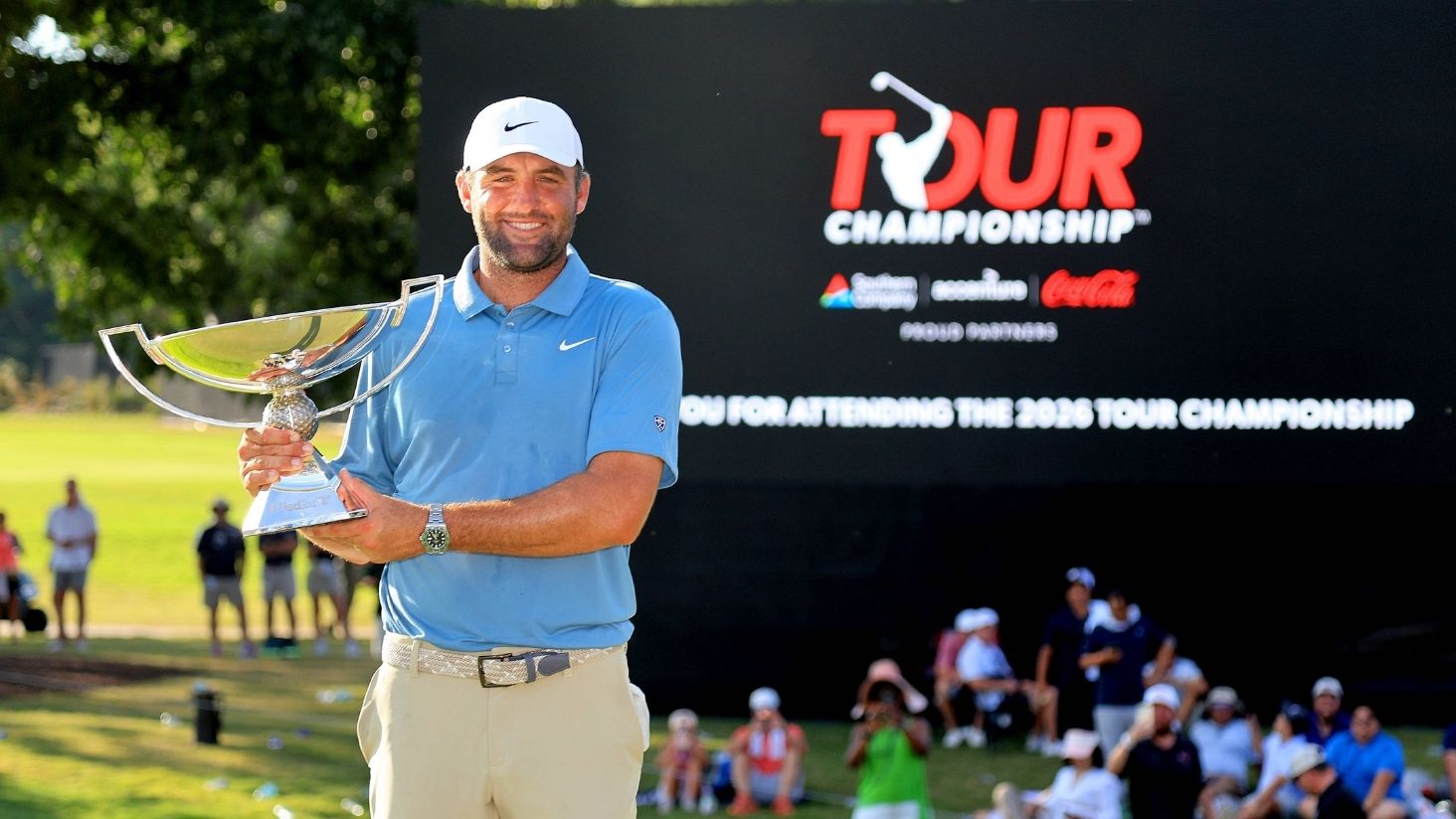
For 2025, Golf Monthly reports an average of approximately $2.3 million in prize money among the 236 players on the PGA Tour’s official money list. However, 161 of them fell below this average. The top earners significantly skew the average upward. In September 2026, Scottie Scheffler broke Tiger Woods’ record by pushing his career prize money past $130 million.
GOLF.com documented as early as 2018 just how extensive an established player’s expenses can be. At the time, an experienced agent estimated annual expenses of about $554,000: $192,000 for the caddie, including a performance bonus; $130,000 for travel, lodging, and meals; and a combined $80,000 for a coach and a fitness trainer. Other major expenses included management and accounting.
The historical model included $2 million in prize money and $700,000 in other income. After professional expenses, that left about $2.15 million before taxes. It does not represent a current tour average, but it does show that high costs do not necessarily mean financial insecurity.
In fact, success makes operations more expensive. In an interview published in 2026, Ben Griffin estimated his average weekly expenses at about $50,000. He cited his team’s performance-based compensation as one reason. Therefore, this figure does not represent a typical travel budget.

DP World Tour: About 180,000 euros for a season
In 2021,Golf Post published a detailed breakdown of expenses for the former European Tour—now the DP World Tour— featuring Florian Fritsch. With 25 tournaments, the individual professional expenses totaled around 180,000 to 190,000 euros.
Of this amount, 62,500 euros went to the caddie, with 25,000 euros each for lodging and meals as well as logistics. Added to this were expenses for coaches, insurance, administration, management, and equipment. The bill also includes equipment purchases, which do not necessarily recur every year. Personal living expenses are on top of that.
“From the caddie to insurance, you have to pay upfront. And you don’t know until the end whether it’s worth it,” said Fritsch. On the revenue side, 2025 brought in an average of about 1.04 million euros for the 115 players who retained their playing rights via the season rankings. This is according to our own analysis of the figures published by Golf Digest Middle East. The median was around 723,000 euros: half of this group earned more, the other half less.
Compared to the historical budget, this represents a considerable cushion. However, this group does not include players who lost their cards. It is not an average of all tour starters.
LPGA Tour: The middle tier earns significantly less than the average
For the 2025 LPGA season, the average figures published by GolfRaw and Golf Monthly range from about $600,000 to $700,000. Their calculations differ from one another. When it comes to the median, they are closer in their estimates: approximately $270,000 to $290,000.
This difference is crucial. A high mean says little about how comfortably a player in the middle of the field is managing financially.
The Boston Globe cites 2,026 caddie base fees ranging from $1,700 to $2,500 per week, plus a performance bonus. In addition, there is usually an entry fee of about $200 per tournament.
A sample calculation for 24 starts assumes $48,000 in base caddie fees, about $55,000 for flights and lodging, and $13,000 for food and transportation. Entry fees and estimated additional annual costs for training, insurance, and administration bring the total base expenses to approximately $141,000. An additional estimated caddie commission of eight percent results in:
| Prize money in the model | Professional expenses | Remaining amount before taxes and personal expenses |
|---|---|---|
| $275,000 | about $163,000 | about $112,000 |
| $650,000 | about $193,000 | about $457,000 |
Our own model calculation: The figures describe scenarios, not actual player earnings. Dollar amounts are in U.S. dollars.
These are scenarios, not actual player earnings. However, they illustrate how differently the same Tour can look financially—and why higher revenues also mean higher team costs.

LET: A Small Cushion—or a Funding Gap
On the Ladies European Tour, Försterling estimates that a season with a personally hired caddie costs between 80,000 and 100,000 euros. “With a caddie, you’ll certainly end up spending 80,000 to 100,000 euros a year, depending on how frugal you are,” she told Golf Post in September 2026. She planned to play about 23 tournaments and emphasized that she hadn’t prepared an exact annual statement.
Our own analysis of the 2025 LET Money List shows that the 204 listed players earned an average of around 98,000 euros in prize money. The median is only about 40,000 euros. However, the list also includes numerous players with few LET starts.
To compare this with a full season, it is therefore worth taking a closer look: The 89 players with at least 15 starts averaged 20 tournaments, approximately 132,000 euros in prize money, and a median of about 75,000 euros. This appearance threshold is an editorial selection, not an official tour category.
If we compare this to Försterling’s budget, the group average leaves her with 32,000 to 52,000 euros before taxes and personal expenses. Based on the median, however, she would be short 5,000 to 25,000 euros to cover this budget.
This does not mean that half of them actually lost money: Fewer starts can be more cost-effective, sponsors provide support, and some players earn additional income on other Tours. However, it does highlight just how limited their financial leeway can be.
Four Tours at a Glance
| Tour | Estimated Prize Money for 2025 | Seasonal Operating Costs |
|---|---|---|
| PGA Tour | Approx. $2.3 million on average | Approx. $550,000 in the 2018 model |
| DP World Tour | Approx. 1.04 million euros on average for the 115 cardholders | Approx. 180,000–190,000 euros in the 2021 model |
| LPGA Tour | Published averages: approximately $600,000–700,000 | Approximately $160,000–$200,000 in our scenarios |
| LET | Approximately 98,000 euros in total; approximately 132,000 euros with at least 15 starts | 80,000–100,000 euros according to Försterling |
The groups and cost models are defined differently. The table is intended as a guide, not a standardized tour statistic.
Sponsors can fill the critical gap
Logo deals aren’t just a side business for stars. They can help cover ongoing expenses before prize money comes in. In-kind benefits also help: According to the Boston Globe, the FM Championship offers, among other things, free hotel rooms, flight vouchers, and vehicles, as well as $1,000 for players who miss the cut.
Even a professional surplus isn’t necessarily disposable income. Taxes, housing, family, and retirement savings must also be paid for.
Gregg’s week in Australia brings this reality home: Playing well enough to make the weekend isn’t always enough to earn money. A professional career therefore requires more than just good shots. It requires the financial resources to be able to wait for the next success.
Brandname
Title will go here and can run on two lines
Brandname
Title will go here and can run on two lines

Brandname
Title will go here and can run on two lines
Brandname
Title will go here and can run on two lines
Brandname
Title will go here and can run on two lines
Brandname
Title will go here and can run on two lines
Brandname
Title will go here and can run on two lines
Brandname
Title will go here and can run on two lines
Brandname
Title will go here and can run on two lines
Brandname
Title will go here and can run on two lines
Release date
09 Oct 2026
photos
The prize money for professional golfers is astronomical. But what’s left for the average person? (Photo: Imago / Zuma Press Wire)