McIlroy Expects Departures: What Will Happen to the LIV Stars Now?
Uncertainty is growing at LIV Golf following the filing for bankruptcy. The DP World Tour is opening a door, but the path to the PGA Tour remains complicated.
Rory McIlroy expects several players to leave LIV Golf in the coming months. The Northern Irishman does not necessarily see this as a problem for professional golf—on the contrary: the return of prominent LIV players could enhance the competitive quality of tournaments on the traditional Tours.
“I would predict that some players will leave the Tour,” McIlroy said at a press conference ahead of the DP World Tour’s Irish Open. At the same time, he doubts that the planned new version of the league will be as attractive to players as the original LIV model. “From a financial standpoint, LIV was significantly more attractive at the outset than what LIV 2.0 might be,” he explained.
This brings a second, at least equally important question into focus following the Chapter 11 filing: Which players will stay with LIV Golf—and who will seek a new home on the tour?
The bankruptcy filing is just the starting point
LIV Golf has filed for Chapter 11 bankruptcy protection in the U.S. and intends to continue the league in a modified form. The planned reorganization is expected to succeed with the support of BC Partners, bridge financing from the Saudi Public Investment Fund, and a more player-driven ownership model.
We have summarized the financial background, the list of creditors, and the plans for LIV 2.0 known so far in detail in a separate background article. The new proceedings now hinge primarily on whether LIV can attract enough players for its relaunch.
According to current plans, LIV 2.0 is expected to be significantly smaller than the original version. Under discussion are approximately ten tournaments, fields of 75 players, a cut, and additional qualification opportunities. A reduction in prize money is also planned. Depending on the report, approximately seven to ten million U.S. dollars per tournament is being discussed—significantly less than in the original version of the league, which was characterized by high guaranteed payments.
Read all about LIV Golf’s bankruptcy filing here.
Jon Rahm Is the Key Indicator
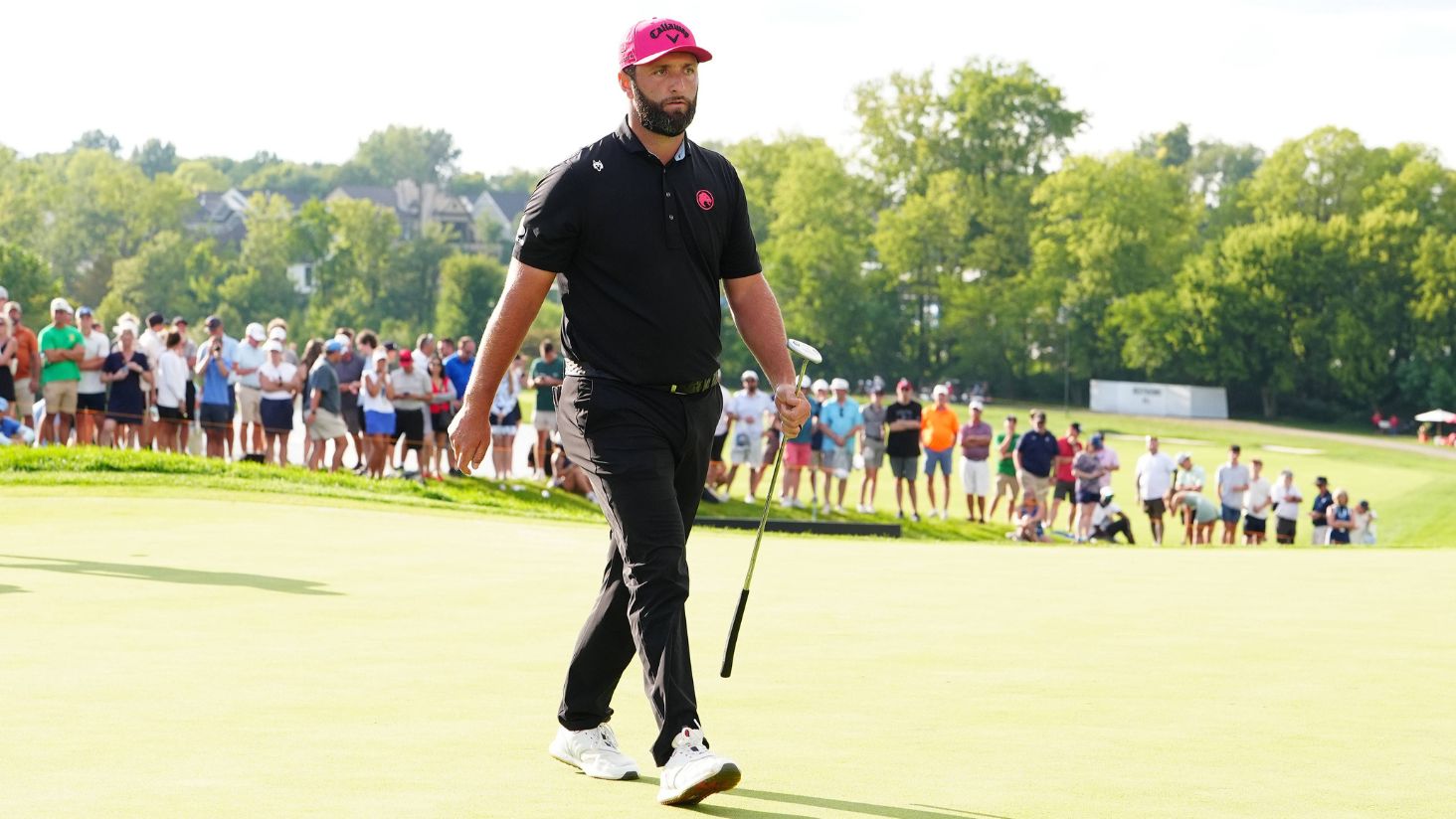
Particular attention is being paid to Jon Rahm’s future. The Spaniard is one of the league’s best-known players and also tops the list of the largest unsecured claims against LIV Golf. According to consistent reports, the league owes him approximately $7.5 million—for the last quarter alone.
Rahm has not yet made a definitive commitment to LIV 2.0. The social media channel “Flushing It,” which is usually well-informed on LIV matters, also points out that Rahm is said to have left a group chat through which LIV CEO Scott O’Neil was informing players about the planned restructuring. If this report is accurate, Rahm would be the only player besides Danny Lee to have left the group. Lee, however, left LIV Golf before the end of the last season.
This move would be a clear indication of his distancing himself from the new league, but it does not yet constitute an official announcement of a switch. Rahm has neither confirmed his departure from LIV Golf nor announced a return to the PGA Tour. His decision could nevertheless send a strong signal. As one of the sport’s most important players and a major creditor, he is likely to play a special role in negotiations regarding the future of LIV.
LIV Golf players were informed of the Chapter 11 bankruptcy filing via a lengthy message from CEO Scott O’Neil in a player group chat. Notably, Jon Rahm left that group chat on August 9, before the final event was played. He is the only player to have done so apart from Danny Lee,… https://t.co/fiuiJZBKKQ pic.twitter.com/dBbnJ2kMtS
— Flushing It (@flushingitgolf) September 8, 2026
Hatton and McKibbin Are Cited as Possible Departures
Tyrrell Hatton and Tom McKibbin are also cited in the available reports as potential candidates for a move. Both could improve their competitive prospects in Europe by returning to the DP World Tour. For McKibbin, a move would also be significant in terms of qualifying for the 2027 Ryder Cup.
There has been no official confirmation regarding either player. However, the reports show that the discussion about LIV 2.0 is not limited to Rahm. Rather, there appears to be fundamental uncertainty among the players as to whether the new league can maintain the financial and competitive incentives it has offered so far.
A report from “Flushing It” paints a particularly stark picture of the mood. “I haven’t spoken to a single player so far who feels committed to LIV Golf 2.0,” the report states. Several current players have reportedly stated that they are “done” with the league. These statements come from an investigation based on unnamed sources and should therefore be viewed as a snapshot of the prevailing sentiment, not as a confirmed list of impending departures.
DeChambeau and Smith: Their Future Is Also Uncertain
The sources are contradictory when it comes to Bryson DeChambeau and Cameron Smith. Both are named in individual reports as players who might, in principle, support LIV 2.0. At the same time, they appear in assessments of potential returnees to the traditional Tours.
DeChambeau’s contract with LIV is said to have expired at the end of the season. Furthermore, he is listed in the bankruptcy filings as one of the largest unsecured creditors. Smith is also among the players to whom LIV reportedly still owes substantial amounts. However, the size of an outstanding debt does not necessarily indicate whether a player will stay with the new league or leave it.
The same applies to both of them: They are key figures for the future of LIV 2.0, but according to reports so far, they have not made a clear decision. How they handle this new financial situation in particular is likely to play a decisive role in determining how attractive the planned field of players ultimately turns out to be.
Westwood Wants to Wait and See for Now
Lee Westwood is a prime example of those players who do not yet want to commit. “I think some will stay and others won’t,” the Englishman told TalkSport. He said he wants to take a close look at LIV 2.0 first and then make a decision.
Westwood’s stance makes it clear what is likely to matter most to many players: the future schedule, the amount of prize money, the contract terms, and the competitive opportunities outside of LIV. The Englishman also pointed out that bankruptcy would not be good news for many of those involved. The new league must therefore not only explain its new business model but also regain the players’ trust.

LIV Needs Enough Players Fast
For LIV Golf, the composition of the new field is not just a sporting issue. The restructuring documents apparently set a short deadline for the affected players to give their consent. Within 35 days of the bankruptcy filing, a sufficient number of them must join the restructuring agreement.
According to the conditions described in the sources, the consenting players must collectively represent at least half of the relevant claims by number and at least two-thirds of the total amount of the claims. The decisive factor here is not simply half of the previous LIV field. What matters is the group of players with the corresponding claims against the league.
This increases the pressure on LIV. The players with the largest outstanding claims are also some of the best-known names on the Tour. If Rahm, DeChambeau, Dustin Johnson, Smith, or other prominent players do not go along with the plan, it could complicate the restructuring and weaken the new league’s appeal as a sport.
The DP World Tour Signals a Willingness to Negotiate
The DP World Tour, in particular, could benefit from potential departures. The European Tour stated that it had received a large number of inquiries from LIV players and their circles in recent weeks and is examining the conditions under which it could accept these players.
“Given the high volume of expressions of interest and inquiries we have received in recent weeks, we are reviewing the conditions under which we can accept players,” a spokesperson for the DP World Tour told the BBC. The prerequisite is that the players be free of contractual obligations to third parties and accept the Tour’s membership rules.
This does not yet constitute a blanket permission to return. The Tour must assess each case individually to determine whether the legal requirements are met and how a former LIV player can be integrated into the schedule. Nevertheless, this response indicates that the European Tour views this development not only as a problem but also as an opportunity.
An influx of several top players could enhance the competitive quality of the DP World Tour’s fields. At the same time, the Tour would strengthen its position as a potential pathway back into established professional sports.
The path to the PGA Tour remains complicated
A return to the PGA Tour, on the other hand, would by no means be automatic. The U.S. Tour has not yet announced a general path back for all former LIV players. The example of Brooks Koepka illustrates just how far the conditions can go: To return, he had to, among other things, donate $5 million to charity, forgo payments from the FedExCup bonus program, and refrain from participating in the PGA Tour’s Equity Program until 2030.
Patrick Reed took a different path. After leaving LIV, he is now trying to qualify for the PGA Tour again via the DP World Tour. Things are going well for him at the moment; the former Masters champion leads the season standings. Other players may need to take a similar detour—especially if the PGA Tour does not reinstate its special program for returning LIV players.
The bankruptcy filing could change the contractual situation for LIV players. However, it does not guarantee them a spot on another Tour. As a result, a competitive and legal gap could arise between the end of an agreement with LIV and a regular return to the PGA Tour.
McIlroy Sees Benefits for the Sport of Golf
McIlroy views this potential realignment as generally positive. In his assessment, former LIV players could make tournaments on the traditional Tours more competitive. The DP World Tour, in particular, could benefit from this because it works closely with the PGA Tour and could use additional top players during certain months.
“There are many players on LIV who can strengthen tournaments and make them more competitive. That’s why I would see this as a good thing for the DP World Tour,” McIlroy said. Overall, he said the development is “very good for the golf ecosystem.” McIlroy’s assessment should also be viewed in the context of his long-standing criticism of LIV Golf. It therefore reflects not only a sporting evaluation but also his fundamental stance in the conflict between the Saudi-funded league and the traditional Tours.
Rory McIlroy has arrived ahead of his Amgen Irish Open defense 🛡️#AmgenIrishOpen pic.twitter.com/m34e7SzVc5
— DP World Tour (@DPWorldTour) September 8, 2026
The Ryder Cup is also affected
The consequences extend beyond the tour calendars. Luke Donald, who is set to lead Europe again as Ryder Cup captain in 2027, pointed to the uncertainty surrounding the LIV players. For him, it is crucial that the best players are available and compete in as many qualifying tournaments as possible.
If Rahm, Hatton, or other prominent players compete regularly on the DP World Tour in the future, they could once again earn important qualifying points there. That would improve their chances of securing one of the automatic spots on the European Ryder Cup team. At the same time, Donald would need to monitor how quickly the players integrate into the established calendar.
LIV Golf Isn’t Automatically Over
Despite the numerous question marks, the end of LIV Golf is not yet certain. The league has a plan for a scaled-down continuation, a prospective new investor, and bridge financing for the bankruptcy proceedings. Some players might also consciously opt for a scaled-down model if they find the team-based format, a compact schedule, or the prospect of a stake in the new company appealing.
However, the relaunch will take place under different circumstances than the original LIV version. The league must make do with less money, apparently can no longer promise the same guarantees, and is dependent on the approval of its players. The more stars who turn away, the harder it is likely to become to convince sponsors, viewers, and other investors of the project’s viability.
Important decisions will be made in the coming weeks
The Chapter 11 filing has not decided the future of LIV Golf. However, it has opened a narrow window for decision-making. Rahm and other top players must weigh whether LIV 2.0 offers prospects despite a shorter schedule and lower financial incentives. Meanwhile, the DP World Tour is assessing how many former LIV players it can accommodate. For the PGA Tour, a return remains significantly more difficult.
This raises not only the question of whether LIV Golf can continue to exist as a smaller league. It’s also a matter of whether professional golf will once again see more joint tournaments and stronger fields after years of division. McIlroy’s assessment could then prove correct—or LIV might still find enough players for an independent fresh start.
Brandname
Title will go here and can run on two lines
Brandname
Title will go here and can run on two lines

Brandname
Title will go here and can run on two lines
Brandname
Title will go here and can run on two lines
Brandname
Title will go here and can run on two lines
Brandname
Title will go here and can run on two lines
Brandname
Title will go here and can run on two lines
Brandname
Title will go here and can run on two lines
Brandname
Title will go here and can run on two lines
Brandname
Title will go here and can run on two lines
Release date
10 Sep 2026
photos
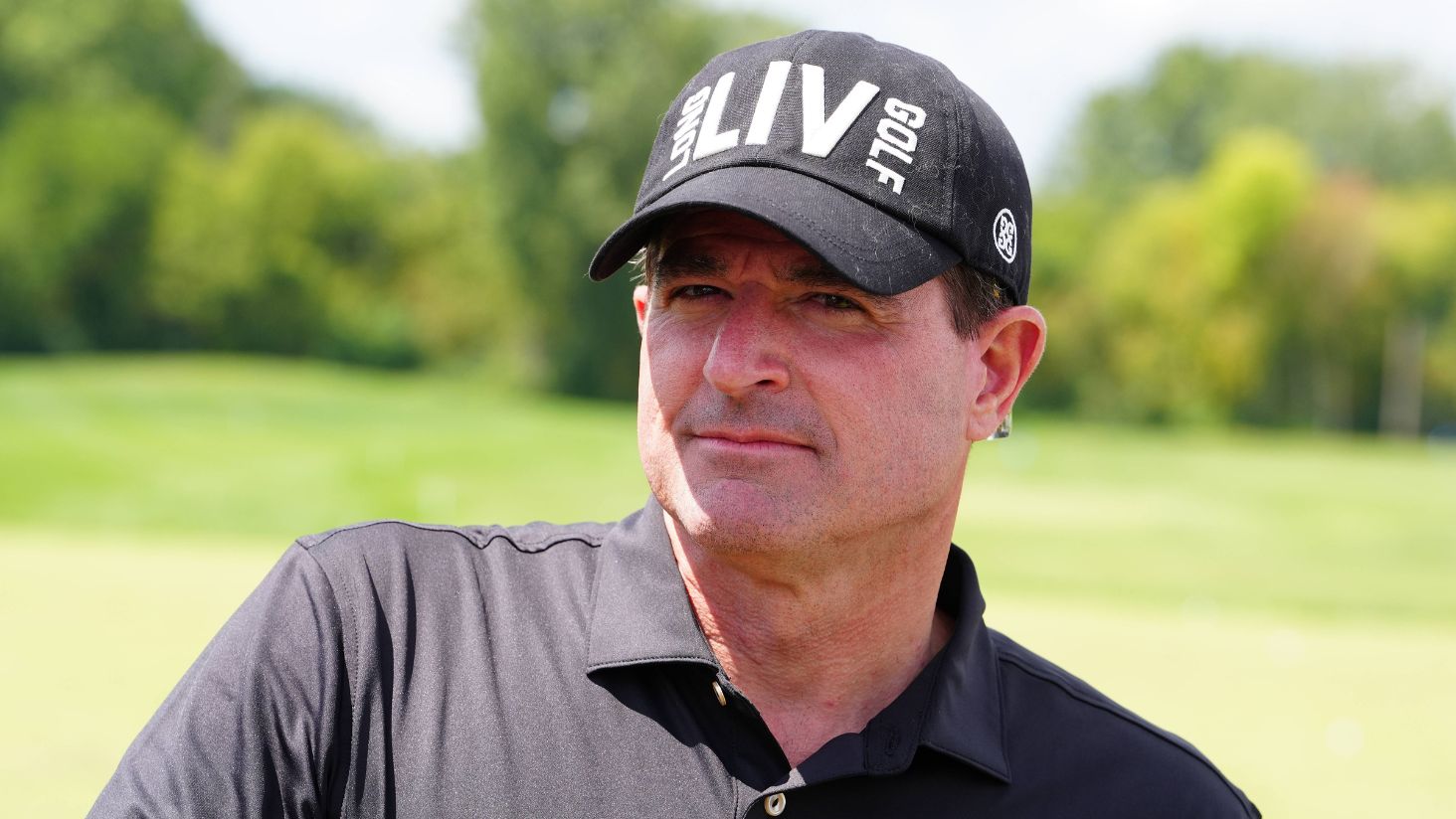
Rory McIlroy expects many players to turn their backs on LIV Golf. (Photo: Imago / Inpho Photography)