

Bernhard Langer: "I feel like I can win tournaments."
Golf legend Bernhard Langer talks about his season results, the future of the Champions Tour, and why the right shoes can make the difference between winning and losing.
Bernhard Langer is 68 years old, hits the ball an average of 270 yards—and still believes he can win tournaments. In an interview with Greenfeed, Germany’s most successful professional golfer gives an honest assessment of his season on the PGA Tour Champions, explains why the Skechers World Champions Cup has the potential to become a tournament of the century, and speaks openly about the structural changes currently shaking up professional golf. He also reveals what makes a golf shoe comfortable even after twelve hours on the course—and why Jack Nicklaus was right about it decades ago.
Interview with Bernhard Langer
Greenfeed: Mr. Langer, you’re in the middle of the major season—are you already on site for the Senior Open?
Bernhard Langer: No, I won’t be playing this week. I already withdrew six or seven weeks ago. It’s simply not my favorite course—that’s the main reason. I played the Senior Open there three years ago and then decided to take this week off and play in Portugal next week.
Greenfeed: Could you give us your take on the season so far?
Bernhard Langer: It’s been a good, solid season so far. I’ve had some relatively good results. There were also two or three that could have been better. Of course, I’m finding it a bit harder these days because I can no longer keep up with Stewart Cink and 30 or 40 others in terms of driving distance. I think my average drive is around 270 yards—and many of my 50-year-old colleagues are hitting around 300 yards. It’s a bit harder to keep up with that. But I still feel like I can win tournaments, that I can be right up there at the top. I just have to make sure my short game is on point.
Read more here about the many records Bernhard Langer has set throughout his career.
Highlights of the Second Half of the Season
Greenfeed: Do you still have any priorities for the second half of the season? Are there any events you’re focusing on in particular?
Bernhard Langer: Yes, of course there are tournaments that are more fun. I’m really looking forward to Portugal now—it’s a new tournament in Vilamoura on the Algarve, where I always used to love playing. One tournament I’m definitely looking forward to is the Skechers World Champions Cup in December—it’s a team match play event, somewhat similar to the Ryder Cup. That’s a lot of fun. And of course, we also have the Schwab Cup at the end of the year, where the top 36 players compete. I have a few great tournaments coming up in the next few months.
Greenfeed: I’d like to follow right up with the Skechers World Champions Cup—a global team event that’s often compared to the Ryder Cup. You’ll essentially be representing Germany there. What does it mean to you to compete for your country? And what are your hopes for the next generation of German golfers at an event like this?
Bernhard Langer: Yes, it means a great deal to me to represent Germany—or to be part of a team, of course alongside other great golfers, the top six in Europe in our age group. It’s always fun to play on a team where we get together in the locker room before and after the event to talk, have dinner together, share stories, and much more. And I think this tournament isn’t just any tournament, but could become what’s known as a “tournament of the century”—similar to the Ryder Cup, which has also been around for about 100 years. I can imagine that the Skechers World Champions Cup will still be around for many, many years to come and will become increasingly popular because it’s simply a very interesting tournament: featuring six of the best Americans, six of the best Europeans, and six from the rest of the world—like Ernie Els, Vijay Singh, or K.J. Choi, and players like that. It’s a lot of fun for the players and, from what we’ve heard, for the spectators as well. And I think it’s significant that Skechers has the foresight to be involved and to promote this great tournament and this wonderful sport worldwide.

Upheaval on the PGA Tour—Opportunity or Risk?
Greenfeed: Let’s switch topics to the PGA Tour—which is currently undergoing some pretty major changes. To what extent are you aware of the upcoming changes for next season—and how do you assess them?
Bernhard Langer: Yes, of course I’m keeping an eye on it, because the Champions Tour is part of the PGA Tour—it’s even called the PGA Tour Champions. That makes us part of the PGA Tour—which is, of course, crucial for us. I was surprised, to be honest. I didn’t expect this, and I’m not convinced it’s a good thing. A lot will happen in the coming months and years. I hope this is the right path and that they’ll be successful. On the other hand, it could also have some advantages for the Champions Tour. In the past, the Sony Open in Hawaii was always the first tournament on the PGA Tour. The sponsor is now moving to the Champions Tour because they say, “We don’t want to spend 20 or 40 million dollars, which is what a tournament like that costs on the PGA Tour.” On the Champions Tour, they can do it much more affordably. They have two pro-ams where they can invite hundreds of guests to play with us in the pro-am. And I think we can benefit from that—that we might even be able to poach a sponsor or two from the PGA Tour in the future.
Greenfeed: Aside from this trickle-down effect, do you also expect structural changes for the PGA Tour Champions?
Bernhard Langer: We’ve been encouraged by the PGA Tour to become financially independent, more or less. Up until now, we’ve received a bit of financial support from the PGA Tour. Some things have changed—with Brian Rolapp and also with the investors a few years ago, who, after all, invested 1.5 billion. Naturally, they want to see a return on that investment. And yes, there’s a lot going on; some things are going to change. I just hope everything is heading in the right direction.
Greenfeed: Are there any changes you’d like to see in your day-to-day life on the Champions Tour?
Bernhard Langer: We used to have a program for pension funds. It was funded by the PGA Tour—and it was cut. I don’t think that’s a good thing, not necessarily for me personally—but I’m on the PAC, the Player Advisory Council, and of course we discuss issues that affect the Champions Tour. I’m not dependent on that money, but other players found the situation quite extreme. So, of course, we’ll try to ensure we’re in a better financial position in the future. There are ways and means we’re now carefully evaluating, and hopefully we’ll be able to implement them in the coming weeks and months.
“We play the game from the ground up”
Greenfeed: Changing the subject again: Do you have a rough idea of how many kilometers you’ve walked on golf courses in your life—or how many rounds that might have been?
Bernhard Langer: I have absolutely no idea—but I imagine there aren’t many people who’ve walked more on the golf course than I have.
Greenfeed: I believe you. After all, you spend most of your time on the course in golf shoes. When you’ve played so many rounds and covered so many kilometers over so many decades—what makes a good golf shoe for you? What does it need to do so that you feel comfortable and can perform at your best on the golf course?
Bernhard Langer: Yes, that’s a very good question. Of course, I’m out in these golf shoes for eight to twelve hours a day—sometimes in rain or wet weather, in the cold, or in the heat. And it’s very important to have good footwear. It’s absolutely crucial that the shoe is comfortable, because you don’t want blisters, pain, or anything else at the end of the day or in the middle of a round. So: the shoe has to fit, it has to look good, and it has to be sturdy—because we swing, and that generates incredible forces when we turn and lift off the ground. As Jack Nicklaus said many years ago: “We play the game from the ground up.” What he meant was the connection between the feet—the golf shoes—and the ground. Incredible forces are generated there, and the shoe has to help out—and that’s very, very crucial. And that’s exactly what I found in the Skechers golf shoe. It was comfortable; it was lightweight. When I take them off in the late afternoon or evening, my feet still feel fine. They didn’t hurt. And I have the stability I need so I don’t slip—so my foot doesn’t move during the golf swing—and I end up hitting a bad shot.
World Cup in America: A Different Kind of Major
Greenfeed: Unfortunately, we don’t have that much time, so I’ll jump around a bit between topics. The World Cup ended the day before yesterday, and you’ve been living in the U.S. for decades. Were you able to attend any games?
Bernhard Langer: I wanted to go to the game in New Jersey where Germany was playing—that was their third group-stage match against Ecuador. My son also lives in New York, just an hour away from the stadium. And I was there at the time for a tournament in Endicott, New York—which is about three hours away from the stadium. But I wasn’t feeling well. I had a cold and a slight fever, so I decided at the last minute not to go. I ended up watching the game on TV—it was a beautiful stadium, and the final was held there a short time later. Too bad it didn’t work out.
Greenfeed: Soccer isn’t exactly one of the classic American sports. How did you find the experience in the U.S. in general—the atmosphere, the access to soccer?
Bernhard Langer: I think this World Cup really helped spread soccer in America and bring it closer to the public. There was a great atmosphere in many of these cities where thousands of fans had traveled—whether they were Scottish or Japanese. The Japanese came more often—I don’t know if this was reported in Europe—but they brought trash cans or bags and cleaned up the stadium after the game. They picked up all the trash—which was certainly a first in this sport. And the Scots, I believe, spent money—they first drank all the bars dry until there was no more beer left, and then donated money to charity. The atmosphere was truly impressive. And I hope it served as a promotion for soccer in America—or worldwide.
Greenfeed: I’d like to use “great atmosphere” as a keyword for my last question. It’s been two years since your farewell in Eichenried —there was a fantastic atmosphere back then, too; I was there myself. Do you miss the tournament already? After all, it was played just three or four weeks ago.
Bernhard Langer: Yes, it was definitely a very emotional week for me. The organizers really went out of their way to make this farewell special for me. And yes, the spectators were one of a kind. It really was a dream—and of course I miss moments like that. But life goes on, and I’m now focusing on the Champions Tour and mainly the U.S. for the next few years—and then we’ll see how things go from there.
Greenfeed: Thank you very much, Mr. Langer. I wish you all the best and continued success.
Bernhard Langer: Thank you as well, Mr. Hennig. All the best. Until next time.
(Interview conducted by Tobias Hennig)
Brandname
Title will go here and can run on two lines
Brandname
Title will go here and can run on two lines

Brandname
Title will go here and can run on two lines
Brandname
Title will go here and can run on two lines
Brandname
Title will go here and can run on two lines
Brandname
Title will go here and can run on two lines
Brandname
Title will go here and can run on two lines
Brandname
Title will go here and can run on two lines
Brandname
Title will go here and can run on two lines
Brandname
Title will go here and can run on two lines
Release date
28 Jul 2026
photos
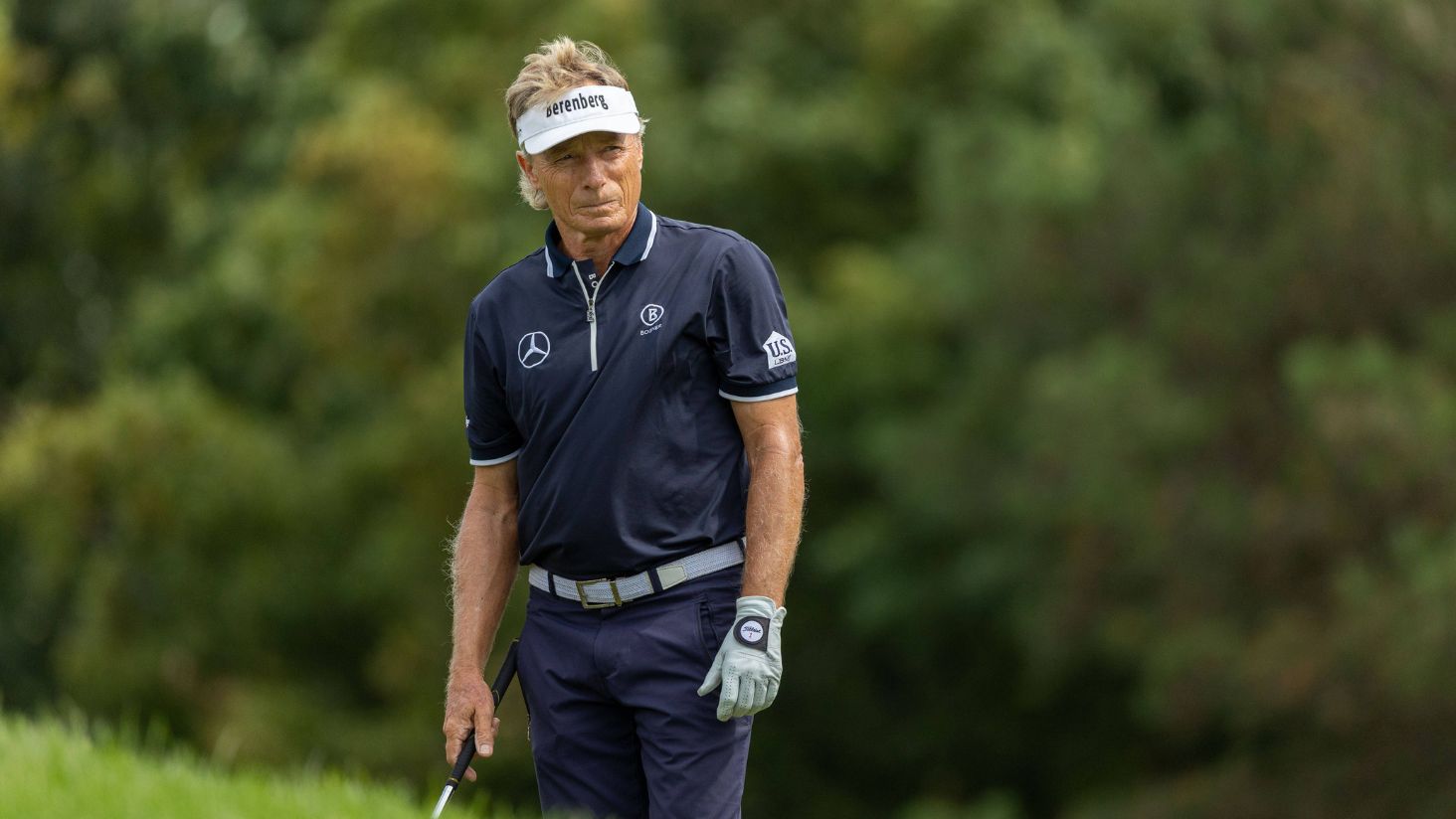
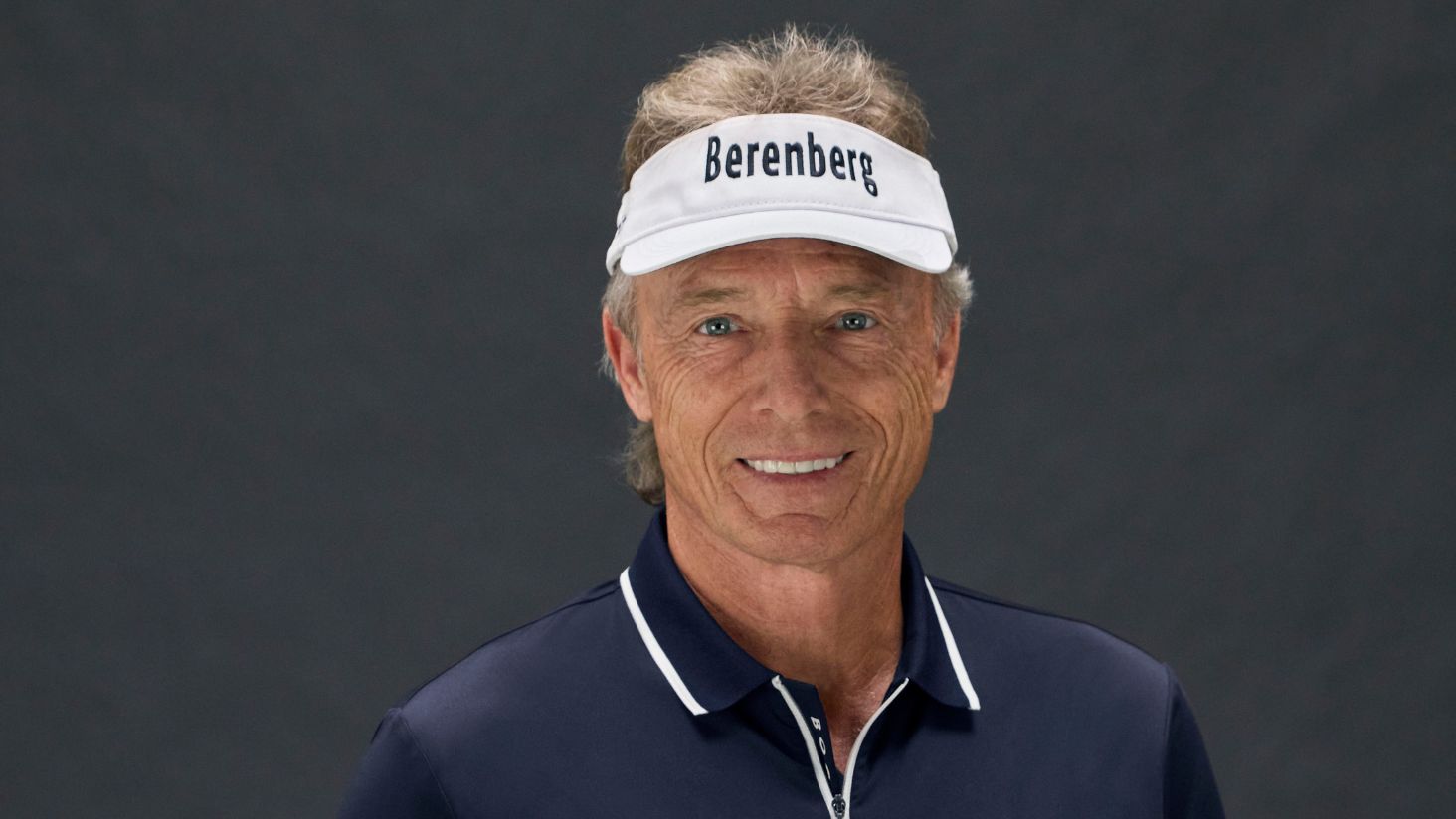
In an interview with Greenfeed, Bernhard Langer talks about his season so far and looks to the future with confidence. (Photo: Skechers)