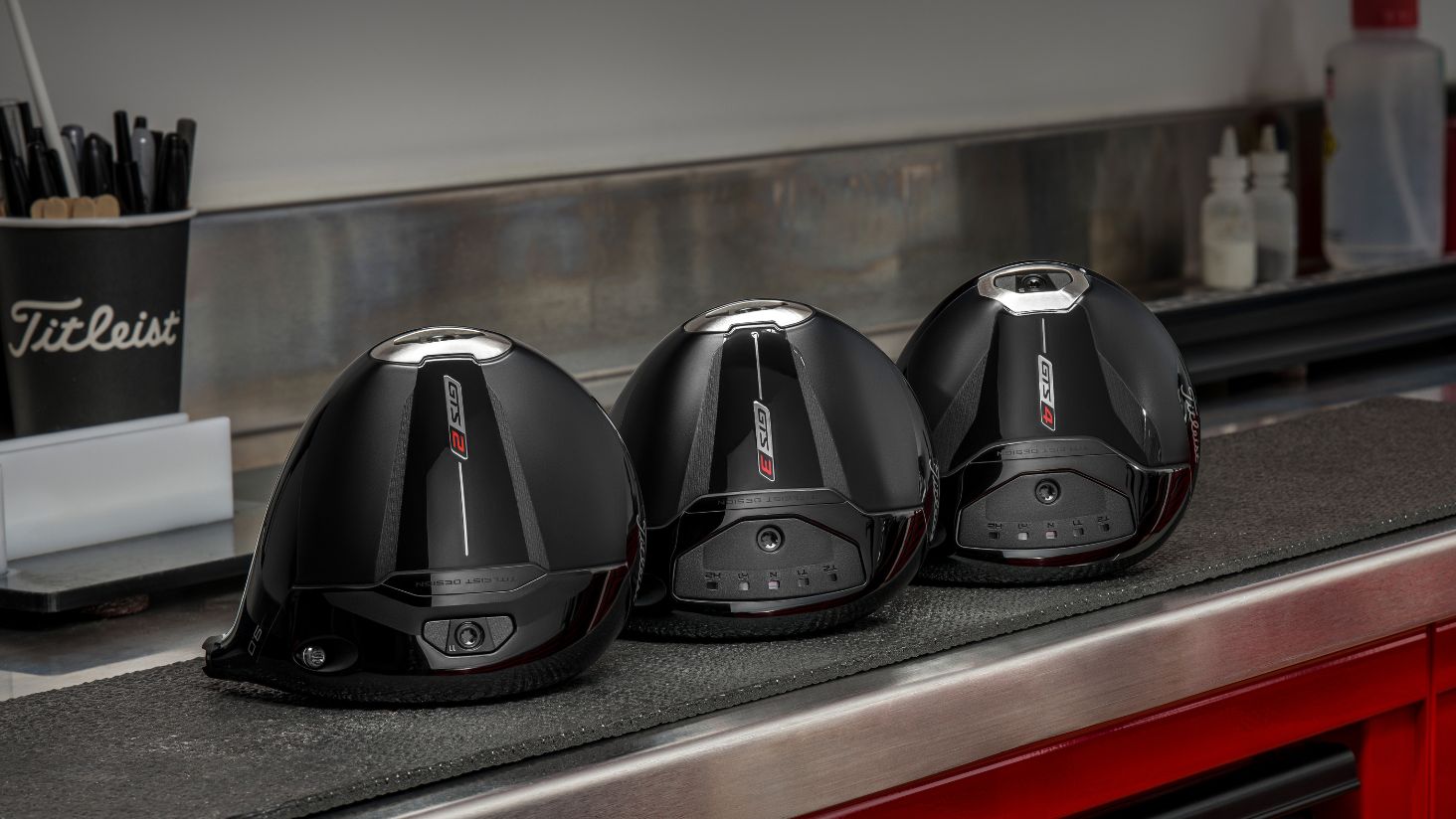
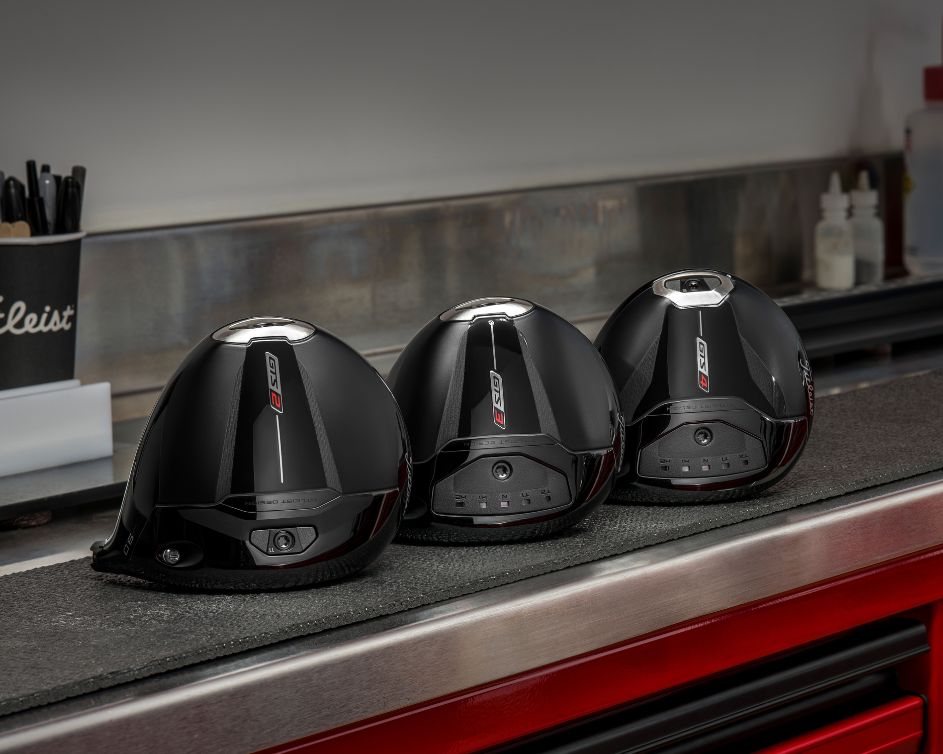
Titleist Drivers at a Glance: GTS2, GTS3, GTS4, and All Previous Models
An Overview of the New 2026 Titleist GTS Drivers: GTS2, GTS3, and GTS4 Compared—Featuring Technology, Buying Advice, and SureFit Settings.
With the GTS Series 2026, Titleist has unveiled the next generation of its Drivers—featuring technological advancements that were previously impossible to achieve on this scale. More composite material, an innovative weighting concept, and a redesigned face deliver greater distance, more forgiveness, and greater customization—for golfers of all skill levels.
Titleist – No. 1 on the PGA Tour
For seven consecutive seasons, Titleist has been the most-played Driver on the PGA Tour. Approximately 40 percent of all players on the world’s top professional Tour rely on a Titleist Driver—a figure that is unparalleled in the history of golf.
What does this mean for amateur golfers? The technologies developed on the Tour and tested under competitive conditions are directly incorporated into the models available at golf retailers. Anyone who plays a Titleist Driver benefits from the same innovations that the world’s best players use every day.
Discover Titleist golf balls here.
The Current Series: Titleist GTS Driver 2026
With the new GTS drivers, Titleist is once again setting new standards. The “S” in GTS stands for a significant leap in materials: While the previous GT series already utilized the exclusive Matrix Polymer (PMP)—a thermoformed composite that saves weight without compromising sound or feel—the GTS series takes this much further.
With 26 grams of PMP —twice as much as in the GT series—the material accounts for nearly 60% of the clubhead’s surface area but contributes only 13% to the total mass. The result: significantly more freely available weight, which Titleist engineers were able to use specifically to position the center of gravity lower and further back—directly influencing launch, spin, and stability.
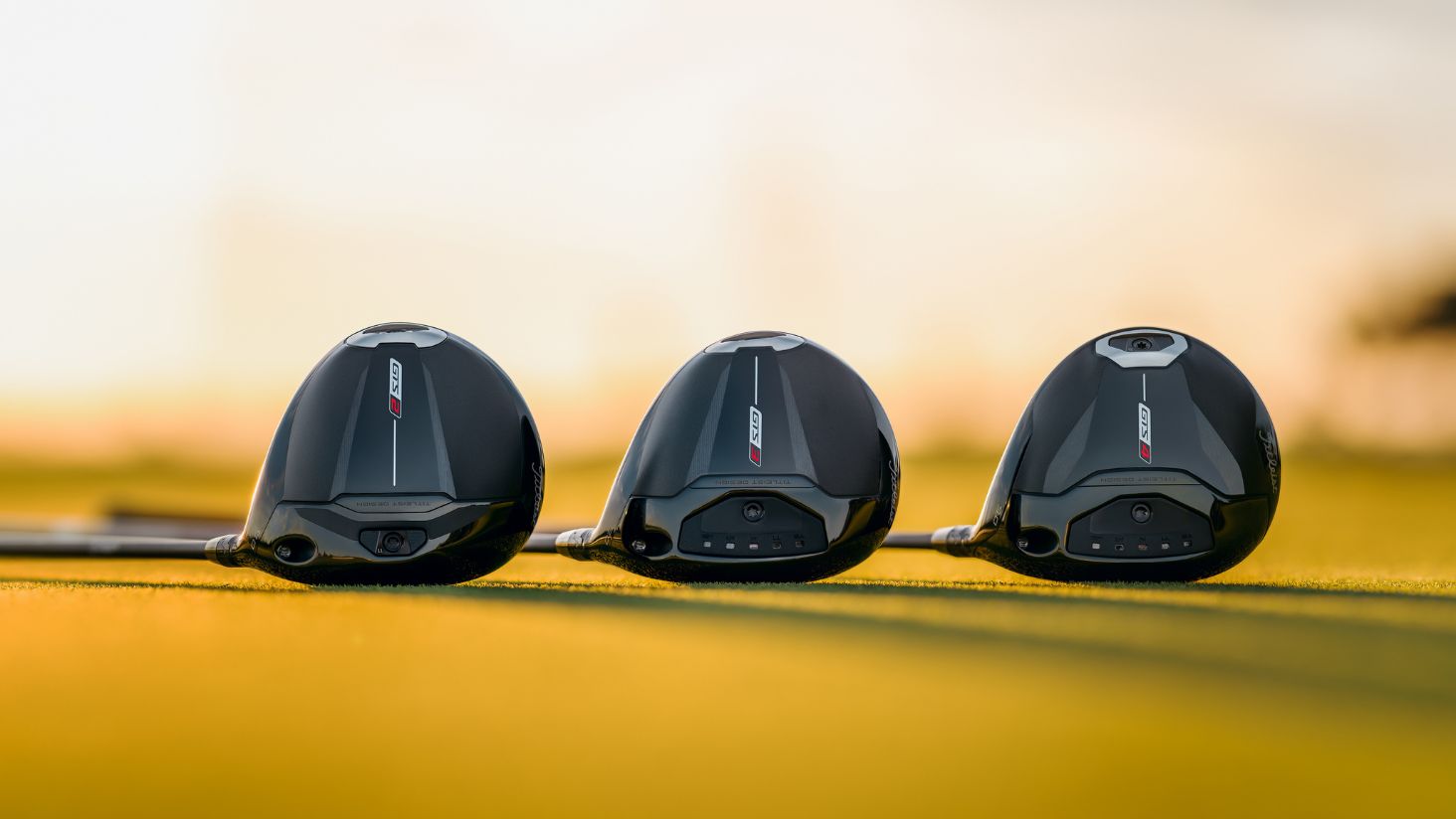
The three GTS drivers— GTS2, GTS3, and GTS4 —have been available worldwide at golf retailers since June 11, 2026, and can already be booked for fittings.
Brandname
Title will go here and can run on two lines
Brandname
Title will go here and can run on two lines
The Core Technologies of the Titleist GTS Driver
Split Mass Frame – Placing Mass Where It Matters
At the heart of GTS technology is the new Split Mass Frame. The weight saved by the PMP body is not distributed evenly, but rather strategically allocated to two specific positions:
- Far back in the head: Increases the moment of inertia (MOI) and thus stability on off-center hits
- Deep and far forward on the face: Optimizes ball speed, launch angle, and spin dynamics on centered hits
This combination was previously not technically possible. While a center of gravity positioned further forward generates speed and optimal launch characteristics, it typically comes at the expense of stability. The Split Mass Frame resolves this trade-off—making the GTS Drivers superior to the GT generation in both areas.
“We know that a center of gravity positioned further forward generates speed as well as optimal launch and spin characteristics. At the same time, stability must be maintained. Achieving these center of gravity and moment of inertia values simultaneously was not possible for us until now—and that’s exactly what the GTS design now accomplishes.”
— Stephanie Luttrell, Senior Director of Metalwood R&D, Titleist
Speed Sync Face – More Ball Speed, Especially at the Top
The new Speed Sync Face technology optimizes face performance across the entire hitting area. The upper support ring of the face has been strategically opened: This allows the face and outer area to flex more when the ball is struck in the upper region, maximizing the Coefficient of Restitution (COR) and noticeably increasing ball speed in this area—one of the most common impact points on a Driver.
Who owns Titleist? Find out here.
Optimized Aerodynamics—Faster Without Compromise
On the GTS2 and GTS3, the rear section of the clubhead has been raised. This allows airflow to be better channeled along the crown and sole—the clubhead moves faster through the air, increasing head speed. Thanks to the Split Mass Frame, Titleist engineers were able to achieve these aerodynamic benefits without compromising the CG position.
Dual Weighting System – A New Level of Customization
Each GTS model features a dual-weighting system with interchangeable weights. Depending on the configuration, the center of gravity can be precisely adjusted to customize launch, spin, and ball flight. This system makes the GTS Drivers a particularly powerful fitting tool.
A Comparison of the Three GTS Driver Models
All three models are built on the same core GTS technologies—but differ specifically in their performance profiles.
| GTS2 | GTS3 | GTS4 | |
|---|---|---|---|
| Profile | Elegant, confidence-inspiring | Compact, deeper clubface | New: 460 cc, larger than its predecessor |
| Ball launch | High | Medium | Medium |
| Spin | Medium | Low | Lowest |
| Lofts (RH/LH) | 8°, 9°, 10°, 11° | 8°, 9°, 10°, 11° | 8°, 9°, 10° |
| Weight System | Dual-Flat: 11 g front / 5 g rear | Track + Flat: 8 g Track front / 5 g rear | Track + Flat: 8 g Track front / 5 g rear |
| Recommended for | Forgiveness & Power | Control & moderate spin | Maximum spin reduction |
GTS2 – Speed with Maximum Stability
The GTS2 is the most forgiving model in the series. With its elegant, confidence-inspiring profile and the highest ball launch, it’s designed for golfers seeking consistent Performance across the entire clubface. The dual flat weight system (11 g in the front, 5 g in the back as standard) ensures a high launch with medium spin—ideal for players with moderate swing speeds.
Recommended for: Handicap 10+, golfers who prefer forgiveness over workability
How do you pronounce “Titleist” correctly? Find out here.
GTS3 – Speed with Optimized Precision
The GTS3 features a more compact profile with a deeper face and appeals to players who want more control over ball flight and spin. Compared to the GTS2, it produces a lower launch with less spin—which can lead to more distance when combined with sufficiently high clubhead speed. The Track Weight System allows for highly precise adjustment of the center of gravity depth, as well as a Draw or Fade setting across five positions.
Recommended for: Low handicaps, higher swing speeds, players who want to actively shape their ball flight
GTS4 – Speed with Maximum Spin Reduction
The GTS4 is the low-spin model in the series—and has been significantly refined compared to its predecessors. For the first time, the “4” model features a full 460cc head volume, which noticeably increases forgiveness on off-center hits. It is specifically designed for players who tend to generate high spin rates and consequently lose distance. The new shape was directly inspired by the Tour.
Recommended for: High clubhead speed, high spin rates, golfers who have found previous low-spin Drivers to lack forgiveness
Titleist SureFit – How to Adjust Your Driver
Titleist Drivers aren’t just equipped with state-of-the-art technology—they can also be precisely adjusted to your individual swing. The SureFit system is the key tool for this.
Where are Titleist golf clubs manufactured? Find out here.
SureFit Hosel – 16 Loft and Lie Combinations
The SureFit hosel features a sleeve and a ring, each with four settings (sleeve: 1–4, ring: A–D). This results in 16 individual loft and lie angle combinations in 0.75° increments . The standard position is A•1 (right-handed) or D•4 (left-handed).
To make the adjustment:
- Insert the SureFit key into the hosel screw
- Turn it counterclockwise until the hosel loosens
- Adjust the ring and sleeve to the desired position
- Tighten the screw clockwise until you hear and feel a distinct click
Important: Do not change the settings during a round of golf. Please also note that the SureFit system is compatible only with genuine Titleist components.
Shaft compatibility: GTS, GT, TSR, TSi, TS, 917, 915, and 913 Driver shafts are compatible with and interchangeable among themselves. This makes it easy to switch to a shaft from an earlier model.
Which version of the Titleist Pro V1 golf ball is right for you? Find out here.
SureFit CG Rail – Draw and Fade Adjustment (GTS3 & GTS4)
With the GTS3 and GTS4, the SureFit CG weight rail also allows you to control the Draw or Fade tendency of the ball’s flight. Five positions are available:
| Setting | T2 | T1 | N | H1 | H2 |
|---|---|---|---|---|---|
| Result | More Fade | Fade | Neutral | Draw | More Draw |
| Best for | Toe-strike pattern | Toe-strike pattern | Central strike pattern | Heel-strike pattern | Heel-strike pattern |
Dual Weighting System – CG Position and Ball Flight
By swapping the weights between the front and rear positions, you can precisely fine-tune the ball flight:
| Model | CG Position | Ball Launch | Spin |
|---|---|---|---|
| GTS2 | Standard (front) | High | Medium |
| GTS2 | Weights swapped (rear) | Highest | Medium |
| GTS3 | Standard (front) | Medium | Low |
| GTS3 | Weights swapped (rear) | Medium | Medium |
| GTS4 | Standard (front) | Medium | Lowest |
| GTS4 | Weights swapped (rear) | Medium | Lower |
For optimal results, Titleist recommends making these adjustments as part of a professional fitting.
GTS on the PGA Tour—Impressive Right from the Debut
The world’s best players are often the harshest critics of new equipment technologies. The fact that more than 50 PGA Tour players switched to a GTS Driver during the GTS series’ debut at the Texas Children’s Houston Open sends a clear signal.
Among the most notable players to make the switch are:
- Justin Thomas – GTS2, 9.0°
- Jordan Spieth – GTS2, 10.0°
Internationally, too, the GTS drivers secured victories right from their first tournament appearance:
- Bernd Wiesberger (DP World Tour)
- Davis Lamb (Korn Ferry Tour)
- Sangyeop Lee (KPGA)
Titleist has been the most-played Driver on the PGA Tour for seven consecutive seasons —the GTS series continues this legacy.
Previous generations: GT, GT1 & TSR
Titleist GT Drivers (2024/2025) – GT1, GT2, GT3, GT4
The GT series was the first generation of Titleist drivers to be built using Matrix Polymer (PMP). Even back then, this composite material allowed for more freely available weight, enabling better center of gravity (CG) positions. The GT drivers also featured Speed Ring VFT technology for high ball speeds across the entire clubface.
The GT Series comprised four models:
- GT1 – The lightweight model in the series, designed for players with moderate swing speeds. A low-rear weight placement ensured maximum MOI and a high, stable ball flight. Ideal for golfers looking to gain distance by optimizing launch and spin.
- GT2 – The most forgiving model with an elegant profile, high ball launch, and medium spin. Five victories on the PGA Tour during the 2025 season, including wins by Justin Thomas and Cameron Young.
- GT3 – The precision model with a CG-Track rail for active ball flight adjustment. Also five Tour victories in 2025, including J.J. Spaun’s U.S. Open triumph.
- GT4 – The low-spin model for players with high clubhead speed and high spin.
The GT family was expanded with the GT280 Mini-Driver: With a 280cc head volume, 43.5-inch length, and 13° loft, it sits between a Driver and a 3-Wood—ideal for golfers seeking more control off the tee on narrow fairways.

Brandname
Title will go here and can run on two lines
Brandname
Title will go here and can run on two lines
Titleist TSR Driver (2022/2023) – TSR2, TSR3, TSR4
The TSR series marked a major step forward in Titleist’s metalwood history prior to the GT generation. The TSR2 and TSR3 impressed with high ball speeds and precise customizability—and enjoyed tremendous success on the PGA Tour. Even today, some players on the professional tour still rely on these proven TSR models, underscoring the timeless quality of the technology. For buyers looking for a high-quality Driver at a more affordable entry-level price, used or discounted TSR Drivers can be an attractive option.
Which Titleist Driver Is Right for You? – Buying Guide
Choosing the right Driver depends on your skill level, swing speed, and personal preferences. The following overview will help guide you:
| Player Type | Recommendation |
|---|---|
| Handicap 18+, Focus on Forgiveness | GTS2 |
| Medium handicap, balanced game | GTS2 or GT2 |
| Low handicap, ball flight control | GTS3 |
| High swing speed, high spin | GTS4 |
| Moderate swing speed, needs height | GT1 |
| Budget-friendly, proven technology | GT2 or GT3 |
| Narrow fairways, control off the tee | GT280 Mini-Driver |
Important: This table is intended as a general guide. The most reliable way to determine whether the GTS2, GTS3, or GTS4 is the right choice is through a professional fitting—since the model, loft, weight configuration, and shaft all work together.
Titleist Driver Fitting at ALL4GOLF
The technological capabilities of the GTS series truly shine during a professional fitting. Even small differences in model, loft, CG configuration, and shaft selection can have a major impact on distance, accuracy, and enjoyment of the game.
A fitting at ALL4GOLF will help you:
- Identify the right model (GTS2, GTS3, or GTS4)
- Find the optimal loft and the right CG configuration
- Choose the shaft that best supports your swing
Brandname
Title will go here and can run on two lines
Brandname
Title will go here and can run on two lines
FAQ – Frequently Asked Questions About Titleist Drivers
What does GTS stand for at Titleist?
GTS stands for the latest generation of the Titleist metalwood series (2026). The “S” refers to the significant leap in materials compared to the previous GT generation: With 26 grams of Matrix Polymer (PMP)—twice as much as in the GT—the composite material accounts for just under 60% of the clubhead’s surface area while contributing only 13% to the total mass. The weight saved is strategically utilized by the new Split Mass Frame to achieve better MOI values and optimized launch characteristics.
What is the difference between the GTS2, GTS3, and GTS4?
All three models share the same technological foundation (Split Mass Frame, Speed Sync Face, dual weighting system), but differ in their Performance profiles: The GTS2 is the most forgiving model, offering a high ball launch and medium spin. The GTS3 offers a more compact profile with a lower launch and less spin for players who prioritize control. The GTS4 is the low-spin model in the series—featuring a full 460cc head volume for the first time, providing greater forgiveness.
How do I adjust a Titleist Driver?
The SureFit hosel allows you to adjust the loft and lie angles in 16 combinations (in 0.75° increments). To do this, insert the SureFit key counterclockwise into the hosel screw until the hosel loosens. After making the adjustment, tighten the screw clockwise until you hear a click. With the GTS3 and GTS4, you can also use the SureFit CG rail to adjust for a Draw or Fade tendency in five positions (T2 to H2). Adjustments must not be made during an ongoing round of golf.
Are older Titleist shafts compatible with the new GTS Drivers?
Yes. GTS, GT, TSR, TSi, TS, 917, 915, 913, and 910 Driver shafts are compatible with one another and interchangeable. So if you already own a high-quality shaft from a previous generation, you can easily combine it with a new GTS Driver during a fitting.
Which Titleist Driver is the most forgiving?
In the current GTS series, the GTS2 is the most forgiving model. It features the sleekest profile, the highest launch angle, and delivers consistent results even on off-center hits. It’s the top choice for players with moderate swing speeds or higher handicaps.
Is Titleist the most-played Driver on the PGA Tour?
Yes. Titleist has been the most played Driver on the PGA Tour for seven consecutive seasons. About 40 percent of all players on the Tour rely on a Titleist Driver—more than any other brand. When the GTS series debuted at the Texas Children’s Houston Open, more than 50 PGA Tour players had already switched to the new GTS Driver.
Brandname
Title will go here and can run on two lines
Brandname
Title will go here and can run on two lines
Brandname
Title will go here and can run on two lines
Brandname
Title will go here and can run on two lines
Release date
30 Jul 2026
photos
Titleist drivers are the most widely used drivers on the major professional Tours. (Photo: Titleist)