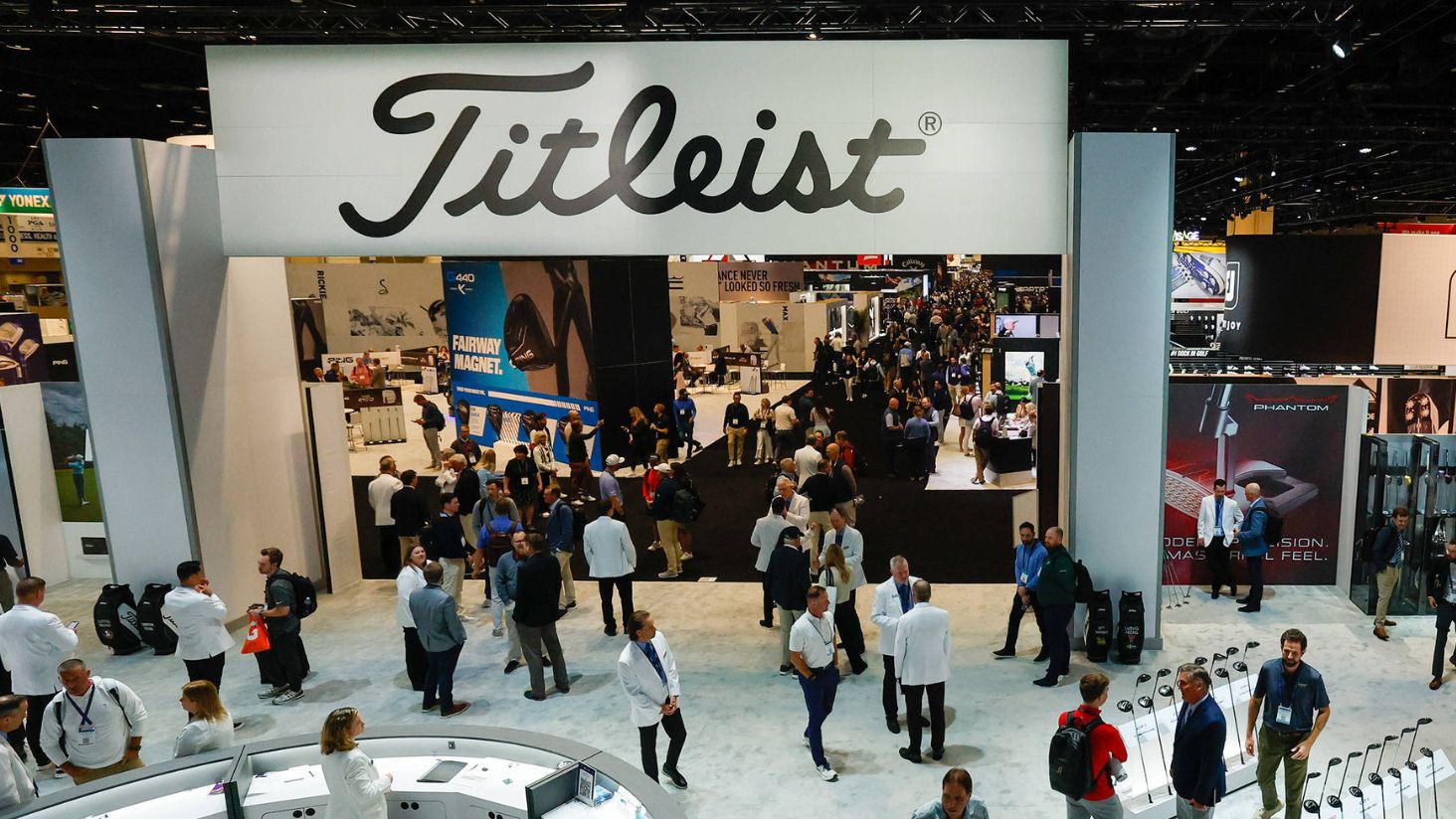
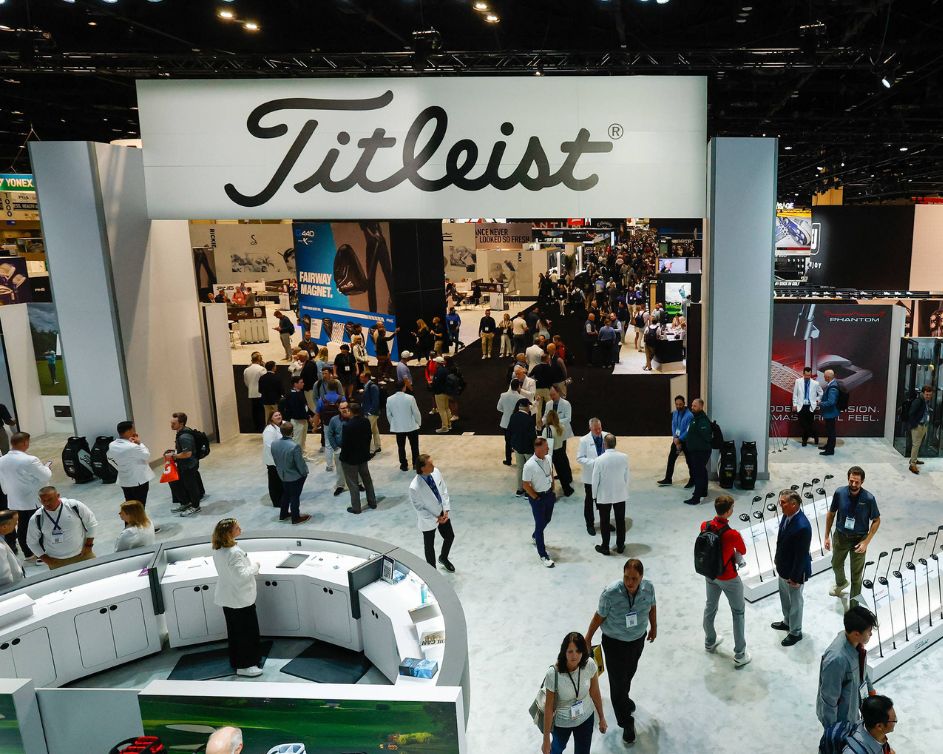

Where are Titleist golf clubs manufactured? Production and Locations
Where are Titleist golf clubs manufactured? Carlsbad, Cambridgeshire, Tokyo: All the factories, components, and what “Made in the USA” really means.
Titleist stands for precision, quality, and reliability—but where exactly are the clubs, balls, and equipment trusted by millions of golfers worldwide manufactured? The answer is more nuanced than the brand’s “Made in the USA” image might suggest at first glance: Titleist develops and tests its products in the United States, has components manufactured by specialized suppliers worldwide, and assembles the finished clubs at several locations around the globe.
In this article, we explain what that means in concrete terms—for golf clubs, golf balls, and the question of whether place of manufacture and quality are actually related.
Titleist Production at a Glance
| Headquarters | Fairhaven, Massachusetts, USA |
| Research & Development / Tour Testing | Carlsbad and Oceanside, California, USA |
| Club Assembly (USA) | Carlsbad, California |
| Club Assembly (Worldwide) | Japan (Tokyo), United Kingdom (St. Ives, Cambridgeshire), Australia (Victoria), South Africa (Randburg), and South Korea |
| Scotty Cameron Putters | Milled in the USA (Southern California) |
| Golf balls (USA) | New Bedford and North Dartmouth, Massachusetts |
| Golf balls (international) | Rayong, Thailand (Ball Plant 4) |
| Components | Sourced globally (Japan, China, Taiwan, Thailand, and others) |
Club Development: Made in California
The heart of Titleist club development is located in Carlsbad and Oceanside, California —a region that is also home to the development centers of TaylorMade, Callaway, and Cobra. This is no coincidence: this area boasts the highest concentration of golf equipment expertise in the world.
Carlsbad is home to the Titleist Performance Institute (TPI) as well as the central R&D team, which is responsible for clubhead design, shaft technology, acoustics, center of gravity (CG) placement, and turf interaction. Here, feedback from PGA Tour players flows directly into new product generations. This means that every generation of Titleist clubs—whether GT Drivers, T-Series Irons, or Vokey Wedges—is designed, tested, and approved in Southern California before going into production.
Who owns Titleist? Find out here.
Where are Titleist clubs assembled?
USA: The plant in Carlsbad, California
The largest and most important assembly facility for Titleist clubs worldwide is located in Carlsbad, California (2819 Loker Avenue). Approximately 2.5 million of the roughly 4 million Titleist clubs the company produces globally are manufactured here each year.
The plant covers approximately 170,000 square feet (about 15,800 m²) of production space and employs around 200 people, of whom about 140 are directly involved in club assembly. The assembly process is highly precise and largely automated, with each step documented via barcode:
- Head preparation & incoming inspection (weight, dimensional accuracy, appearance)
- Shaft Trimming & Bonding (two-component epoxy resin, precise alignment)
- Loft & Lie Adjustment (using a high-resolution camera, ±⅛ degree tolerance)
- Swing Weight / MOI Calibration (including tip weights and hot melt)
- Grip Installation & Alignment
- Final Inspection (Serial Numbering, Barcode, Shipping)
A unique feature: Titleist develops its own manufacturing machines—the precision requirements exceed what is available on the market. No other company in the world uses these machines.
If a customer loses their 7-iron, Titleist can produce an exact replica based on the stored manufacturing data—with identical swing weight, loft, lie, and shaft length.
International Assembly Locations
In addition to Carlsbad, Titleist operates four other assembly plants in strategically located markets:
| Location | Region | Market |
|---|---|---|
| St. Ives, Cambridgeshire | United Kingdom | Europe |
| Tokyo | Japan | Asia / Japan |
| Victoria | Australia | Australasia |
| Randburg / North Rhine-Gauteng | South Africa | Africa |
| South Korea | Korea | Asia / Korea |
The principle behind this: “We build our product on the continent where it’s used” —Titleist assembles its clubs where they’re played. This shortens delivery times, reduces shipping costs, and enables local customer service. All five locations worldwide use the same machines, the same processes, and the same quality standards as the main plant in Carlsbad.
How do you pronounce “Titleist” correctly? Find out here.
Where do the components come from?
As with all premium golf brands, Titleist sources its components from a global network of specialized suppliers:
| Component | Origin |
|---|---|
| Clubhead (cast / forged) | Japan, Taiwan, China |
| Graphite shafts | Japan (Mitsubishi, Fujikura, Graphite Design), some from Vietnam / China |
| Steel shafts | U.S. / global (True Temper, KBS, Nippon) |
| Grips | Thailand, China, Japan (Golf Pride, Lamkin) |
| Small parts, weights | Various markets |
This is the industry standard—TaylorMade, Callaway, and Ping also source components globally. What sets Titleist apart is its centralized quality control: All suppliers are inspected according to Titleist specifications; deviations are identified at the supplier’s facility before parts reach the factory.
A club is not a single component, but a system consisting of the head, shaft, grip, and precise assembly. The country of origin on the sticker indicates where this club was finally assembled —not where each individual component comes from.
Scotty Cameron Putters: CNC-Milled in the U.S.
Scotty Cameron putters are an exception in Titleist’s global production system. They are CNC-milled in Southern California from solid 303 stainless steel —a fully American production process that has remained unchanged for over 25 years.
All Scotty Cameron stock putters for the global market are manufactured in Carlsbad and shipped from there. The milling center is located just a few minutes away from the assembly plant.
Machining from solid material guarantees:
- No pores or air pockets (as can occur with casting)
- Precision in the thousandths range
- Consistency between the first and the millionth Putter
- The ability to adjust the neck without compromising stability
Where are Titleist golf balls manufactured?
At Titleist , golf balls and clubs are completely separate product lines — each with its own teams, its own manufacturing facilities, and its own history.
Titleist golf balls have been manufactured in the New Bedford, Massachusetts, area for over 85 years. To this day, there are two active plants there:
- Ball Plant 2: 256 Samuel Barnett Blvd, North Dartmouth, MA
- Ball Plant 3: 215 Duchaine Blvd, New Bedford, MA
In addition, there is one international plant:
- Ball Plant 4: Acushnet Titleist [Thailand] Ltd., 500/40 Moo 3, Tambon Tasit, Amphur Pluakdaeng, Rayong 21140, Thailand
Ball Plant 4 in Thailand primarily produces golf balls for international markets but also supplies the U.S. market. According to the company, Titleist golf balls sold in the U.S. are predominantly manufactured in Massachusetts.
The quality standards are identical at all three plants: The Pro V1 and AVX undergo approximately 90 process and quality checks, while the Pro V1x with its dual core undergoes as many as 120 checks —and every single ball is X-rayed, as has been the tradition since 1935.
Size, weight, dimples: Learn everything about golf balls here.
What does “Made in” mean on a Titleist club?
From a legal standpoint, the “Country of Origin” on a Titleist club indicates where the final assembly took place —that is, where individual components were assembled into a finished club. This is the “substantial transformation” as defined by U.S. and international trade law.
Specifically, this means:
- A T-Series iron assembled in Carlsbad bears the “Made in USA” label
- An iron of the same model assembled in Japan for the Japanese market bears the label “Made in Japan”
- In both cases, the clubhead component may originate from Taiwan
This does not contradict the brand’s quality—rather, it is the result of a deliberately global production system that Titleist has operated for decades with consistent standards.
FAQ: Frequently Asked Questions About Titleist Production
Are Titleist clubs manufactured in the U.S.?
Yes, in part. The largest assembly plant is located in Carlsbad, California, where approximately 2.5 million clubs are manufactured annually. However, components such as the clubhead, shaft, and grip are sourced globally.
Where are Titleist golf balls manufactured?
Titleist golf balls are produced in New Bedford and North Dartmouth, Massachusetts, as well as at the international plant in Rayong, Thailand. Golf balls sold in the U.S. are primarily sourced from Massachusetts.
Are Scotty Cameron putters manufactured in the U.S.?
Yes. Scotty Cameron putters are CNC-milled entirely in the U.S. from solid 303 stainless steel and assembled in Carlsbad, California. This applies to all standard models worldwide.
Where are Vokey wedges manufactured?
Vokey wedges are designed in the U.S. and manufactured in the same Titleist assembly plants as irons and woods. Heads and components are sourced from the global supplier network.
Does Titleist have assembly plants in Europe?
Yes. The European assembly plant is located in St. Ives, Cambridgeshire, England, and produces clubs for the European market—using the same machinery and quality standards as the U.S. plant.
Does the production location make a difference in performance?
No—at least not with Titleist. All five assembly locations worldwide use identical machinery, processes, and tolerances. The performance of a Titleist club does not depend on where it is assembled, but rather on fitting, shaft selection, and construction configuration.
Brandname
Title will go here and can run on two lines
Brandname
Title will go here and can run on two lines

Brandname
Title will go here and can run on two lines
Brandname
Title will go here and can run on two lines
Brandname
Title will go here and can run on two lines
Brandname
Title will go here and can run on two lines
Brandname
Title will go here and can run on two lines
Brandname
Title will go here and can run on two lines
Brandname
Title will go here and can run on two lines
Brandname
Title will go here and can run on two lines
Release date
25 Jul 2026
photos
Where are Titleist golf clubs manufactured? Find out in this article. (Photo: Imago / Zuma Presswire)


