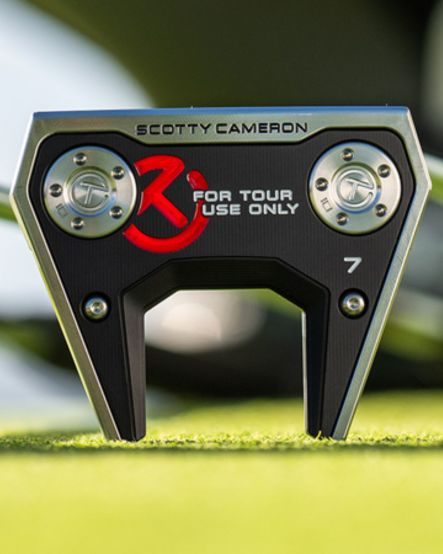
Scotty Cameron Putters – The Most Sought-After Putters in the World
Why Scotty Cameron putters are the most popular choice on the PGA Tour—a comprehensive overview of their history, technology, and models.
There are golf clubs, and then there are Scotty Cameron putters. Anyone who has ever held one of these precision-milled putters in their hands immediately understands why professionals and ambitious amateur golfers worldwide are willing to spend several hundred euros on a single model —and why the waiting lists for limited editions are sometimes longer than the season itself. Scotty Cameron Putters aren’t just ordinary golf equipment. They’re a statement. A cult phenomenon. And above all: the result of decades of craftsmanship, scientific materials research, and intensive collaboration with the world’s best Putters.
This article explores who is behind the brand, the corporate structure that supports it, the technologies that make its Putters so special—and which models might be the right choice for which players.
2. Who Is Scotty Cameron? – The Person Behind the Brand
The story of Scotty Cameron doesn’t begin in a modern high-tech lab, but in a garage in Southern California. Around 1989, Scott Cameron began crafting handmade Putters for professional players on the PGA Tour—the early models were stamped “Scott Cameron” and milled from soft carbon steel. What set him apart from other Putter makers was his eye for detail: he left nothing to chance—not even a millimeter—and constantly refined his craft.
In 1994, Scotty Cameron partnered with Titleist—a move that catapulted the brand into a new league without altering its essence. The move to the Scotty Cameron Putter Studio in Carlsbad, California, laid the foundation for a putter philosophy that remains true to this day: Fine Milled Putters—We Only Mill Putters.
At the Putter Studio, Scotty Cameron and his team of designers, engineers, and fitting specialists work every day to develop putters that not only look like works of art but also feel like them. Each Putter is milled from a solid block of metal—a process that guarantees the highest precision and repeatability. No casting, no forging: only milling.
“The goal is always to help people putt better. Everything we do is focused on that,” explains Austie Rollinson, Senior Director of Putter R&D at Scotty Cameron, who has led the design team for more than three years.

3. Scotty Cameron & Acushnet – The Corporate Structure
Scotty Cameron is part of Acushnet Holdings Corp., one of the most influential companies in the sport of golf. Acushnet brings together some of the industry’s best-known brands under one roof: Titleist, one of the world’s most widely used manufacturers of golf balls; FootJoy, the leading manufacturer of golf shoes and gloves; as well as Pinnacle and Scotty Cameron itself.
This corporate structure is no coincidence, but rather a strategic choice: On the PGA Tour and other major Tours worldwide, most Scotty Cameron users also play the Titleist Pro V1 or Pro V1x ball—as the weekly Tour reports clearly confirm. The ecosystem of golf balls, clubs, and Putters is seamlessly coordinated, creating unparalleled synergy.
The collaboration between the brands is also evident in the development process: Feedback from Titleist tour sponsors flows directly into Putter designs. When a professional golfer raises an issue with their setup, the team at the Putter Studio sometimes responds within a few days with a custom-made Tour prototype.
This integration into a global sports company gives Scotty Cameron the resources of a corporation—without losing the distinctive touch of an artisan.
Learn more here about Titleist, FootJoy, and the other Acushnet brands.
4. The History of Materials and Technologies
Carbon Steel – The Roots
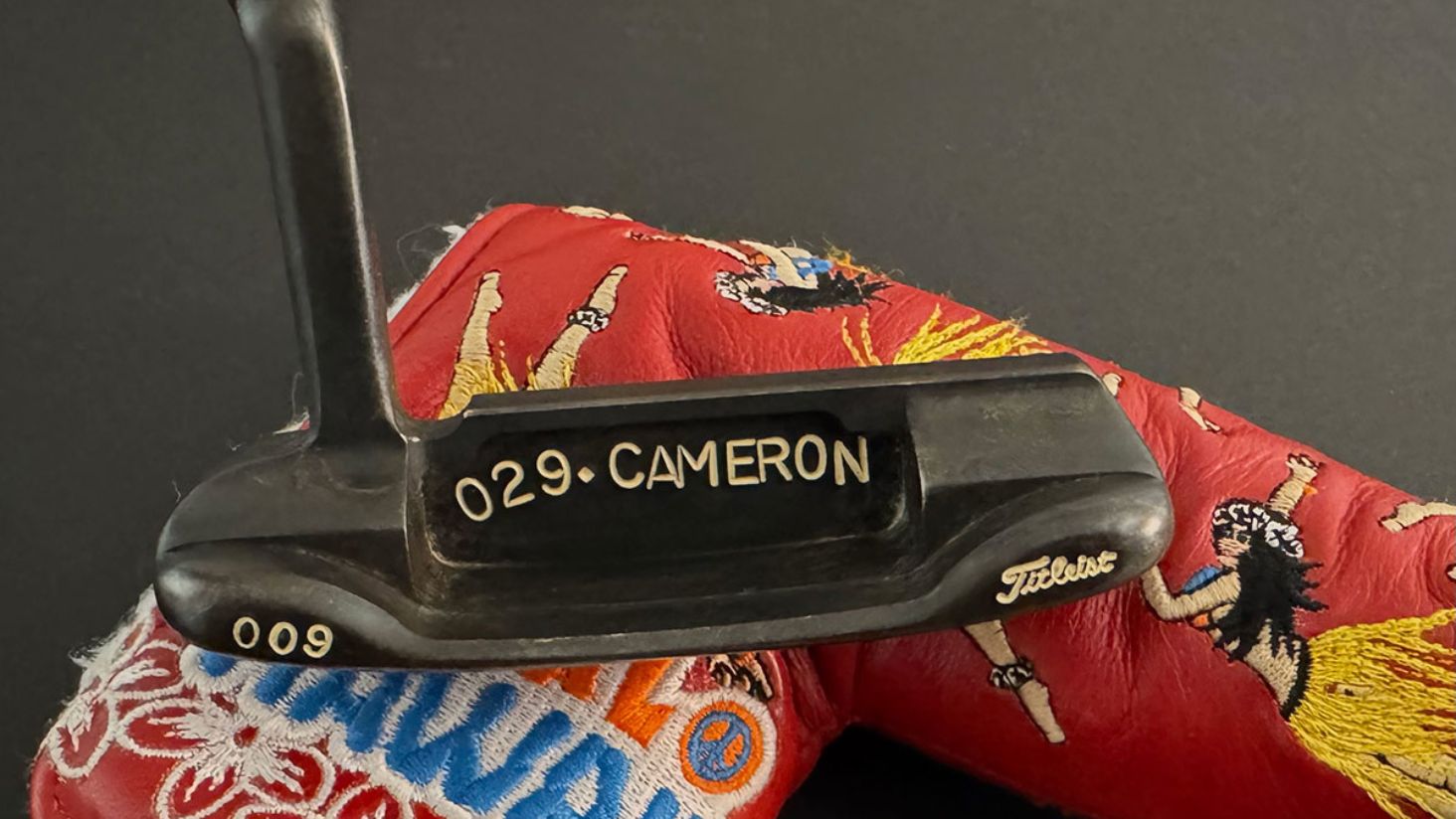
From its beginnings around 1989 until about 2008, carbon steel was the dominant material in Scotty Cameron putters. Carbon steel could be milled with precision, delivered a characteristically soft feel, and was ideal for the various finishes for which Cameron became known: Oil Can, Chromatic Blue, Copper Plating, Black Pearl, Tour Oil Can—each finish told its own story and developed a unique patina over time.
“Carbon steel is relatively soft and was easy to work with,” explains collector Bill Vogeney, known as “Vog” in the collector community. “When Scotty developed models like the Newport and Laguna—inspired by popular cast-iron designs—his carbon steel offered tour players the softer feel they needed on greens that were getting faster and faster.”
For collectors, early carbon steel Putters remain highly sought-after items to this day—precisely because of the distinctive patina they develop over the years.
The Transition to Stainless Steel
Starting around 2003, Scotty Cameron began using stainless steel more extensively—initially in the Studio Style series. Stainless steel offered key advantages: it doesn’t rust, allows for interchangeable sole weights, and is easier to maintain. With the growing importance of interchangeable weights—to optimally adjust to ever-faster greens—the switch was almost inevitable.
Teryllium—The Secret Behind the Legendary Feel
In late 1996, Scotty Cameron introduced the Teryllium insert into his Tour putters—and achieved immediate success. Teryllium is an alloy of twelve different metals that produces an unmistakably soft and precise feel. No polymer, no cheap plastic insert: Cameron wanted to use only materials that met the Putter’s high standards.
Cameron could even hear the difference: During a visit to the Putter Studio by a former world No. 1, he noticed that the polymer insert used in the competitor’s putter produced a slightly different sound. Upon inspection, it turned out the insert was cracked. A cracked insert—and thus altered Performance—was barely perceptible, but audible to Scotty Cameron.
Since then, the Teryllium inserts have been refined in countless variations: T10, T22, Champions Choice, Button Back—each generation a tribute to the original and a step forward. Even today, the H25 Limited Teryllium Newport 2 (December 2025) celebrates the 25th anniversary of this special material.
GSS – German Stainless Steel
The abbreviation GSS stands for German Stainless Steel and refers to the highest-quality stainless steel that Scotty Cameron uses for its putters. Tour putters with GSS inserts are regarded by players as particularly precise and responsive—a promise of quality that is proven on the Tour every day.
Discover the TaylorMade Spider putters here.
Studio Carbon Steel (SCS) and Chain-Link Face Milling – The Future Is Back
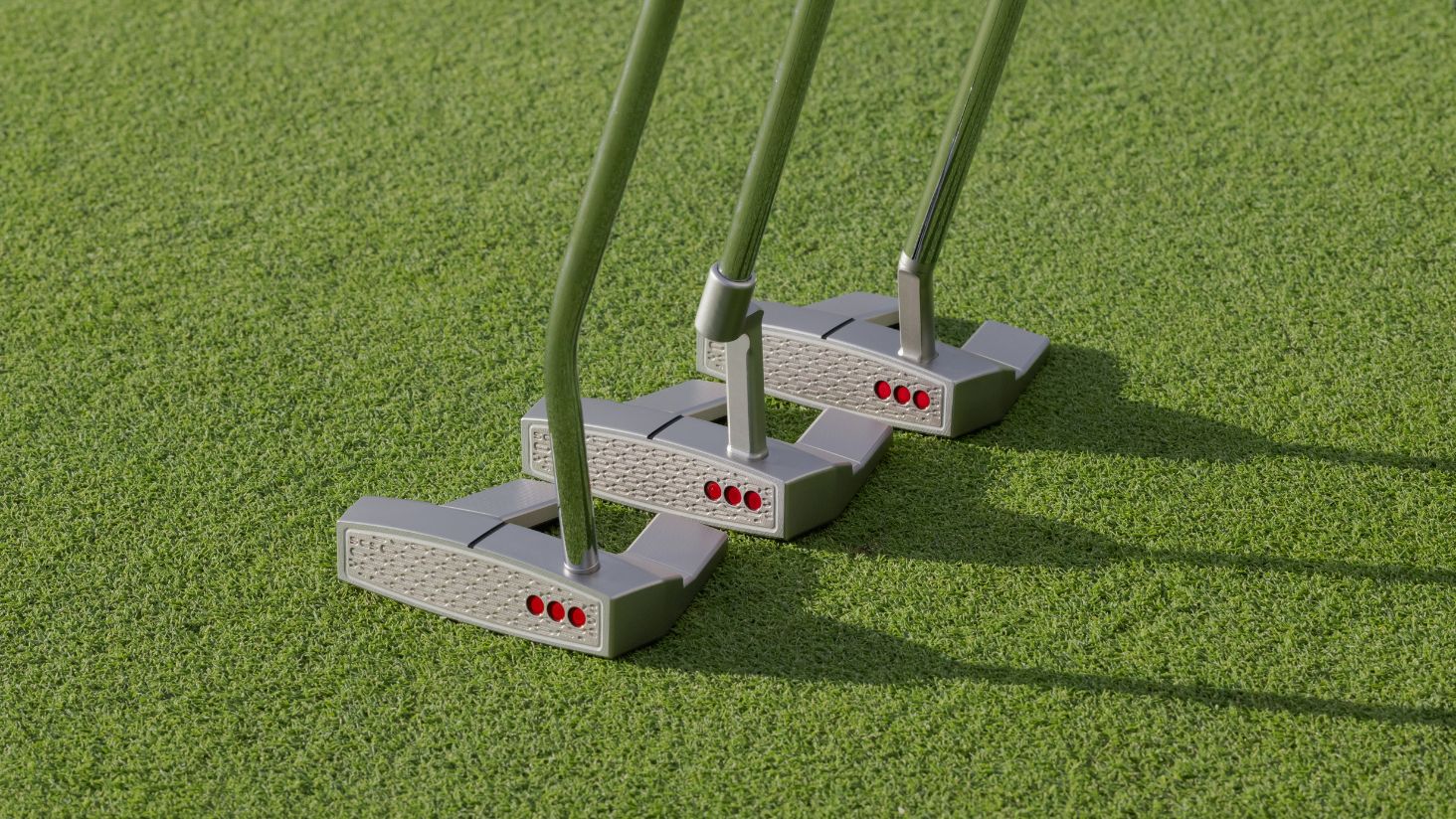
With the introduction of the Studio Style line in 2025, Scotty Cameron brought carbon steel back in a modern form: as the Studio Carbon Steel (SCS) face insert. After extensive testing, Carbon Steel proved to be the material with the highest damping capacity—better than Teryllium, stainless steel, or aluminum. A new nickel-plating process (electroless nickel plating) protects the insert from corrosion without compromising its soft feel.
The SCS insert is complemented by Chain-Link Face Milling technology: a special milling pattern that reduces the number of contact points between the putter face and the ball at impact. The result is a softer sound, a more consistent roll—yet still delivers the precise feedback that Scotty Cameron Putters are known for.
“The combination of carbon steel and Chain-Link milling delivers exceptional feel, roll, and feedback from the putter face,” says Austie Rollinson.
5. The Art of Milling – R&D Philosophy
Scotty Cameron mills every single Putter from solid material—casting and forging are out of the question. The reason: Only CNC (Computer Numerical Control) milling can guarantee the necessary precision and repeatability. Putter number 1 must look and feel exactly the same as putter number 1,000.
“The face must be perfectly flat. Seeing which way the face is pointing is crucial to where the ball rolls,” explains Rollinson. “And by using different milling patterns—deep, medium, or shallow—we can fine-tune the sound very precisely. More texture means less contact area with the ball upon impact—which makes the sound softer.”
MOI and CG Depth: Finding the Right Balance
A frequently discussed topic in putter design is the moment of inertia (MOI) —that is, the putter head’s resistance to twisting on off-center strikes. The higher the MOI, the more forgiving the Putter. Due to their larger shape, Mallet putters naturally offer a higher MOI than Blade putters.
Rollinson, however, warns against the misconception that more MOI is always better: “The larger the Putter gets, the further back the center of gravity (CG) shifts. And a lower CG means: Even with a slight mis-hit, the clubface moves far away from its starting position.” According to Rollinson, the ideal combination is a high MOI with a CG that’s as low as possible —a challenge that Scotty Cameron solves through multi-material constructions (stainless steel + aluminum).
How good are Odyssey putters? Find out here.
Loft and Length: The Perfect Setup
Scotty Cameron putters come standard with 3.5 degrees of loft —a figure derived from modern agronomy. Today, greens are mowed so short that the golf ball rests in a small depression. The 3.5-degree loft gently lifts it out of this depression and sets it on a smooth rolling path—without bouncing or skipping.
The length system is just as well thought out: For every inch the shaft is shorter, 10 grams of head weight are added—to maintain a consistent feel of balance. A 33-inch Putter therefore has heavier sole weights than a 35-inch model. “Scotty figured this out through years of working with Tour players—and it aligns perfectly with the physical calculations,” says Rollinson.
Brandname
Title will go here and can run on two lines
Brandname
Title will go here and can run on two lines
6. An Overview of the Product Lines
6a. Phantom Mallet Lineup (2026)
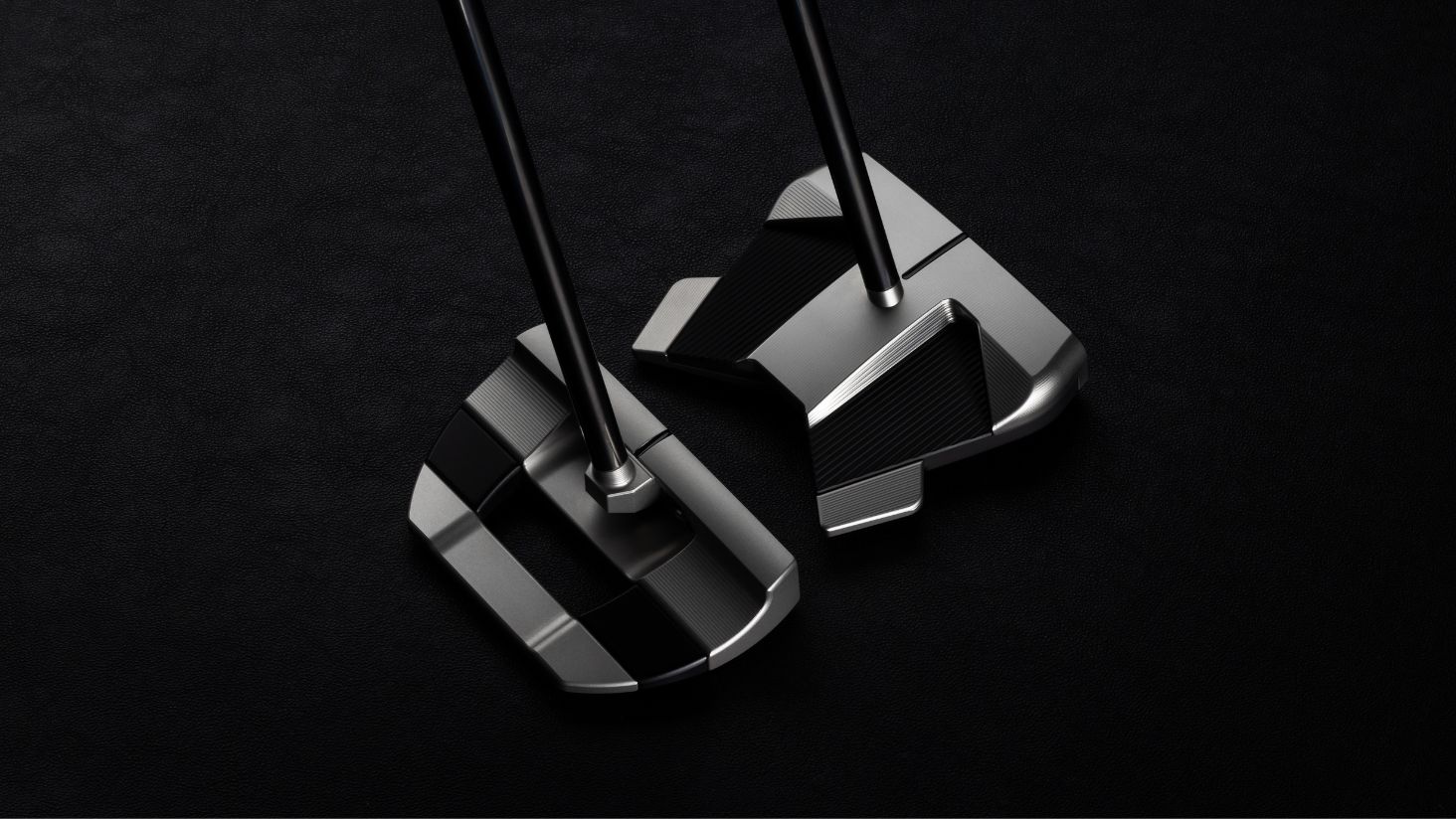
The Phantom series is Scotty Cameron’s response to the growing demand for Mallet putters—both on the Tour and among dedicated amateur golfers. With the 2026 generation, the Phantom family has undergone a significant evolution: All models now feature the new Full-Face Studio Carbon Steel Insert with Chain-Link Face Milling, a flatter sole for more stable ground contact, and redesigned head shapes developed based on direct Tour feedback.
“The popularity of Mallet putters continues to grow, both on the Tour and among dedicated golfers everywhere,” explains Rollinson. “There’s no one ‘right’ way to putt—and the new Phantom line is a great example of that.”
Phantom 5 / 5.2 / 5.5 / 5 OC
The Phantom 5 is a modern wingback Mallet with a compact shape—a longtime Tour favorite. It is available in four configurations:
- Phantom 5 (Mid-Bend Shaft): Nearly face-balanced, ideal for a straight pendulum swing
- Phantom 5.2 (Plumbing Neck): Medium toe flow, blade-like appearance at address
- Phantom 5.5 (Jet Neck): Maximum toe flow for players with a pronounced arcing swing
- Phantom 5 OC (Onset Center): Low-torque configuration for a square-to-square putting path
Played by Tour stars such as Justin Thomas and Russell Henley, the Phantom 5 is the most widely used Mallet in the Phantom family on the Tour.
Phantom 7 / 7.2 / 7.5
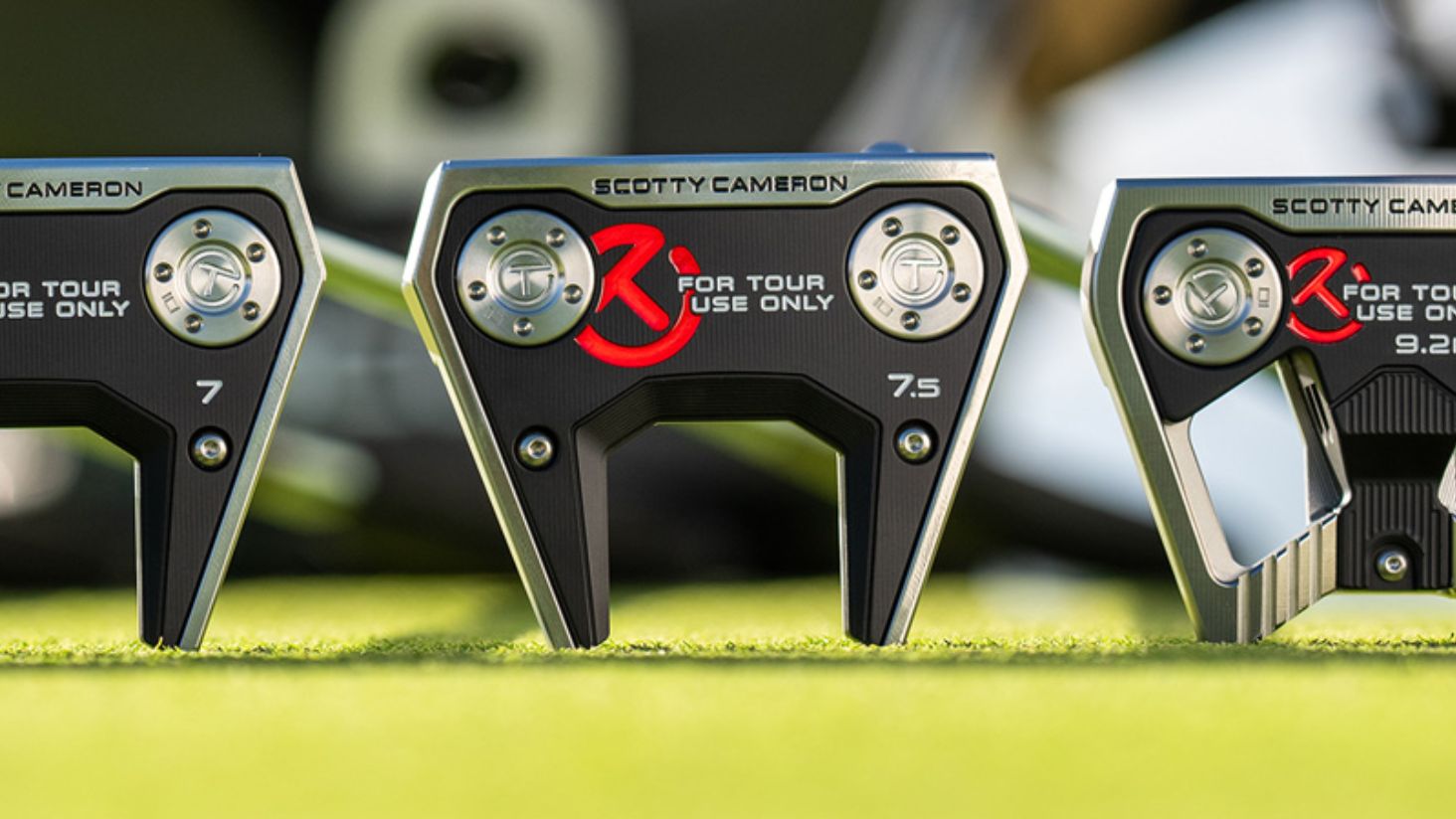
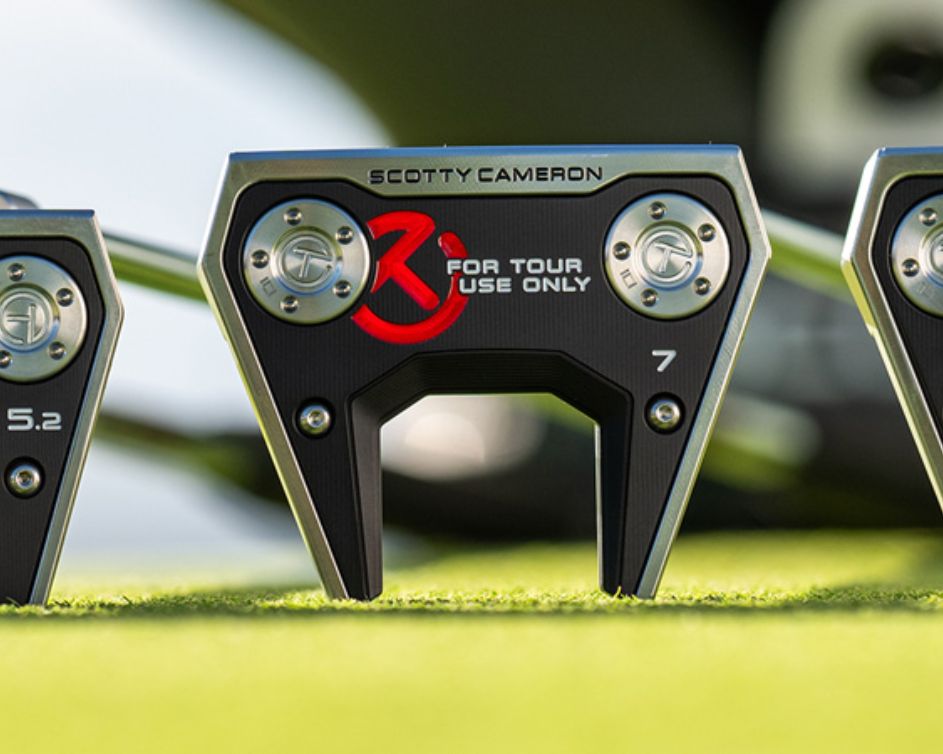
The Phantom 7 features a larger, angular wingback profile and longer wings that provide rail-like alignment assistance. Three shaft configurations—Double Bend, Plumbing Neck, and Jet Neck—cater to different player profiles.
Phantom 9R / 9.2R
The “R” stands for “Rounded”: The Phantom 9R is the enhanced version of the Phantom 9, featuring softer contours and redesigned edges. Cameron Young, two-time PGA Tour winner in 2025 and 2026, has relied on this head for years. Two alignment options (long or short sightline) make this model versatile for different preferences.
Learn more here about the Scotty Cameron Phantom 5, 7, and 9R putters.
Phantom 3.2 (new as of June 2026)
The Phantom 3.2 is a compact mid-Mallet that combines soft, rounded contours with straight alignment lines. Featuring a Plumbing Neck and multiple alignment aids (Tri-Line, T-Crown, open slots), it’s designed for players looking to transition from Blade-style putters to a compact Mallet.
Phantom 12 (new as of June 2026)
The Phantom 12 is the largest and most stable Putter in the Phantom family—with the deepest and lowest CG in the entire line. A multi-material construction combining Space Gray aluminum (face/mid-body) and stainless steel (approximately 65% of the head weight, perimeter-weighted) maximizes stability and forgiveness.
Phantom 11 / 11R OC / 11 Long Design
The Phantom 11 is a highly stable, face-balanced Mallet with high MOI and a multi-material construction. Three variants cater to different needs:
- Phantom 11: Standard version with a mid-bend shaft and arrow alignment markers
- Phantom 11R OC: Low-torque version with Onset Center configuration and rounded edges
- Phantom 11 Long Design: 38-inch version with a heavy tungsten head weight and a 17-inch handle for players who want to stabilize their hands and engage their shoulders
6b. Studio Style Lineup
The Studio Style line combines Scotty Cameron’s classic Blade philosophy with modern technology. All models feature the SCS insert with Chain-Link Face Milling. The line includes blades as well as compact mid-Mallets.
Newport Family
The Newport models are at the heart of the Scotty Cameron identity—timeless Blade putters with a plumbing neck or Jet Neck that have a decades-long track record of victories on the Tour:
- Newport / Newport Plus: Classic blades with an SCS insert and modern sole weights
- Newport 2 / Newport 2 Plus: The most iconic shape in the Scotty Cameron lineup, featuring an I-Beam Plumbing Neck, Tri-Sole design, and adjustable tungsten weights
- Newport 2.5 Plus: Jet Neck version of the Newport 2 Plus for greater toe flow
- Santa Fe (new for 2026): A redesigned Scotty Cameron classic with a Flow Neck for maximum toe flow
Fastback Family
Compact mid-Mallets with ring weighting and high-contrast alignment (black aluminum inlays against a stainless steel body):
- Fastback / Fastback Long Design: Mid-bend shaft, nearly face-balanced
- Fastback 1.5: Jet Neck for more toe flow
- Fastback 2 (new for 2026): Plumbing Neck version of the Fastback family
- Fastback 2 Long Design (new in 2026): 38-inch variant with counterweight
- Fastback OC: Onset Center low-torque version
Squareback Family
Square mid-mallets with a distinctive two-tone look and high MOI:
- Squareback / Squareback 2: I-Beam Plumbing Neck, optimized sole draft angle for square response
- Squareback 2 Long Design: Counterweighted 38-inch model
Catalina
Slightly wider Blade shape with a single-bend shaft for near-face-balanced Performance—also available for left-handed players.
6c. Limited Editions and Special Models
Scotty Cameron regularly releases strictly limited editions that combine collectible value with Tour-level Performance. A selection of current releases:
Phantom Black Series (July 2025)
Four Phantom models (5.5, 7, 9.2R, 11) in a Tour Black PVD finish—inspired by specific Tour player requirements. Featuring Chain-Link Face Milling, custom alignment configurations, and an MSRP of €750.
Studio Xperimental Limited (October 2025)
Squareback 2 and Fastback 2 in a Steel Gray PVD finish with a black nickel SCS insert and a custom graphite shaft. Limited edition, tour-inspired, priced at €999—an article about this edition has already been published on greenfeed.news.
H25 Limited Teryllium Newport 2 (December 2025)
Celebrating the 25th anniversary of the Teryllium insert—featuring retro TEi3 engraving, a black PVD finish, and copper paintfill accents. Limited to a small number of units.
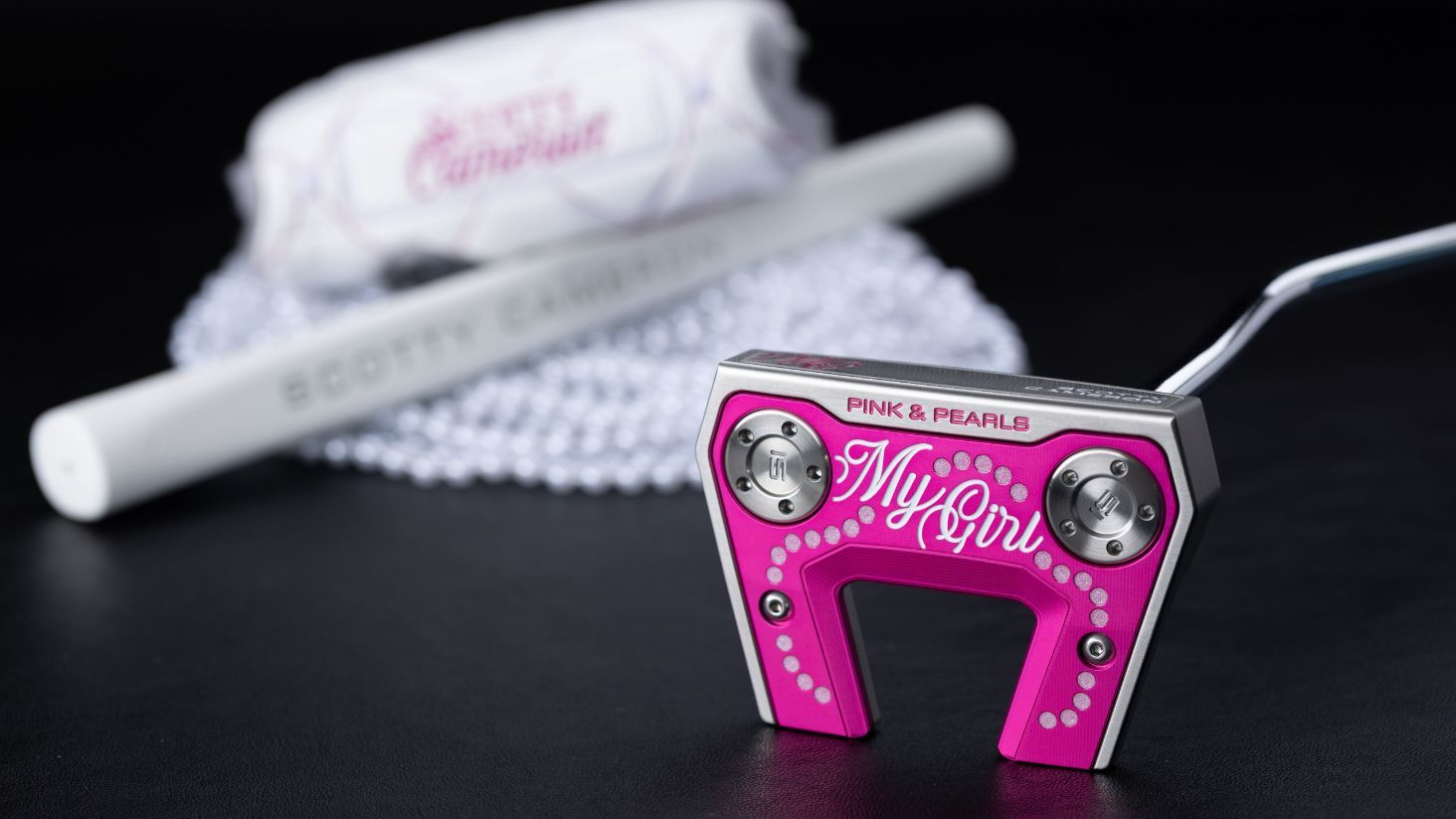
My Girl “Pink & Pearls” (November 2025)
Scotty Cameron’s 24th My Girl edition: a Phantom 5 prototype in bright pink with mother-of-pearl details—both a collector’s item and a high-performance putter.
Learn more about the Scotty Cameron My Girl “Pink & Pearls” Putter here.
6d. Historic Models and Collector’s Items
In addition to the current lines, there is a wealth of models that are or have been played on the Tour and are of particular interest to collectors and ambitious players alike:
- GoLo / GoLo S3 / GoLo S5: Mid-shaft Putters for players who are left-eye dominant and can aim better with a centered shaft
- GOLO 6 / GOLO 6.2: Round, Blade-style shapes with a soft feel proven on the Tour
- 009 / 009M (Masterful): Newport-style Blade, popular among Tour players who prefer the classic Blade feel
- Futura / Futura 5MB: Highly stable Mallets with a multi-piece construction
- Flowback: Classic Blade with a Flow Neck
- Tour Rat / Tour Rat 1.5: Compact, Newport-style tour prototypes with a distinct sense of authenticity
- Timeless / Timeless TT (Tour Type): GSS-insert variants of the Newport 2 body for the finest feel
- Del Mar / Super Select Del Mar: Scotty Cameron’s homage to classic Japanese Putter aesthetics
- Select Squareback: Predecessor to the Studio-Style Squareback with interactive weights
7. Putter Fitting: Which Scotty Cameron Putter Is Right for You?
Choosing the right Putter is one of the most personal decisions in golf. According to the Scotty Cameron Putter Studio, four factors determine which model best suits a player:
Toe Flow and Face Awareness
Toe Flow —also known as Face Awareness—describes how much the putter head rotates during the swing. This depends directly on the neck and shaft configuration:
| Configuration | Toe Flow | Typical Golfer |
|---|---|---|
| Onset Center (OC) | Minimal | Straight pendulum swing, little rotation |
| Mid-Bend Shaft | Low | Light arc swing, high stability desired |
| Plumbing Neck | Medium | Natural swing, Blade-like appearance |
| Jet Neck | High | Pronounced arc with noticeable face rotation |
| Flow Neck | Maximum | Very pronounced bow swing |
Alignment Preference
Players who prefer to align with the leading edge will feel more comfortable with Jet Neck or Mid-Bend—the shaft visually “disappears” at address. Players who use the Plumbing Neck as an alignment aid (many former Blade players) will find the .2 models (Phantom 5.2, 7.2, Newport 2) to be a familiar entry point into the Mallet segment.
Hand Height and Stance
Deep hands and a bent posture tend to favor shorter Putters (33 inches) and models with more toe flow. High hands and an upright posture suggest a longer Putter (34–35 inches) and a face-balanced model.
Blade or Mallet?
The classic question with no universal answer:
- Blade putters (Newport family): For players with a naturally arched swing and a preference for a direct, responsive feel
- Compact mallet (Phantom 5, Fastback): The ideal compromise—mallet stability with a Blade-like appearance
- Large Mallet (Phantom 11, Phantom 12): For maximum forgiveness and alignment assistance
The Scotty Cameron Putter Studio offers professional fitting sessions in which all these factors are systematically analyzed. ALL4GOLF also offers fitting services—for players who don’t want to guess, but want to know exactly what suits their game.
8. Scotty Cameron on the Tour – Dominance in Numbers
No other putter brand in the world has as strong a presence on the major golf Tours as Scotty Cameron. Week after week, the statistics confirm it: Scotty Cameron is the most-played putter brand on the PGA Tour—and has been for years.
In the 2025–2026 season alone, Scotty Cameron putters secured dozens of tournament victories on the PGA Tour, LPGA Tour, DP World Tour, Korn Ferry Tour, Asian Tour, JLPGA, KLPGA, and other Tours. Here’s a selection of the most notable successes:
Cameron Young – The Phantom Specialist
Since his PGA Tour debut,Cameron Young has played exclusively with Phantom mallet putters. In 2025, he won the Wyndham Championship with the Phantom 9.5R —his first PGA Tour title—and finished the season ranked seventh in Strokes Gained: Putting. In 2026, he won both THE Players Championship and the Cadillac Championship at Doral with the same model.
“There’s an element of forgiveness that just makes sense to me. I’ve come to like the way Phantom mallets look. Now, when I look at a Blade, I have trouble aligning it,” says Young.

Jackson Koivun – The Youngest Winner
Jackson Koivun, just 21 years old and only 24 days into his professional career, won the 2026 3M Open with a Scotty Cameron Phantom 9.5R Tour Prototype —setting a new tournament record of 25 under Par in the process. He led the field in the “Strokes Gained: Putting” statistic with 6.395.
Russell Henley – From Blade to Phantom
Russell Henley switched from a Newport-style Blade to the Phantom 5 at the end of 2023 and improved his ranking in Strokes Gained: Putting from 120th to 39th in just one season. In 2026, he used it to win the Charles Schwab Challenge —with four consecutive Birdies on the final holes, including three 15-foot Puts and a playoff Birdie.
“He was playing a Putter with low MOI, and we switched to the Phantom 5, which is face-balanced and has a higher MOI. That really helped—he’s starting more putts on the line,” commented putting coach Phil Kenyon.
Justin Thomas – The Phantom 5 Loyalist
For Justin Thomas, the Phantom 5 isn’t just a tool—it’s a conviction. With this Mallet, he won the 2025 RBC Heritage after a playoff with a 21-foot Birdie putt. The setup of his Phantom 5 was developed in close collaboration with the Scotty Cameron Putter Studio—a custom-bent shaft for the perfect hand height.
Tom Kim – Loyal to the Newport 2
Tom Kim is living proof that a Scotty Cameron doesn’t have to be the latest model to dominate. With his Timeless TT GSS Newport 2-style Tour Prototype —the same Putter he used to secure his first PGA Tour victory in 2022—he won the Genesis Scottish Open in 2026. His Putter has accompanied him on several European tours and has helped shape his career.
Bud Cauley – The Power of the Center Shaft
Bud Cauley had always been a Newport 2 player on the PGA Tour—until he opted for the mid-shaft GoLo 7 CS (Center Shaft) shortly before the 2026 RBC Canadian Open. The result: a victory, 6.709 Strokes Gained Putting, and over 317 feet of Puts made. “I’m left-eye dominant, and I was told that a center-shaft Putter can look better visually for players like me. It’s true—the Putter looks much squarer to me,” said Cauley.
9. FAQ – Frequently Asked Questions About Scotty Cameron Putters
Why are Scotty Cameron putters so expensive?
Scotty Cameron putters are milled exclusively from solid blocks—a labor-intensive process that guarantees the highest precision but requires more time and material than casting or forging. Add to that high-quality materials (303 stainless steel, 6061 aircraft-grade aluminum, carbon steel inserts), intensive R&D work with the world’s top professionals, and the fact that every Putter is developed and tested at the Scotty Cameron Putter Studio in Carlsbad, California. A Scotty Cameron isn’t just a Putter—it’s a precision-crafted instrument.
Do pros really play Scotty Cameron?
Yes—and in impressive numbers. Scotty Cameron is the most widely used putter brand on the PGA Tour. In the 2025–2026 season alone, dozens of tournament victories were achieved on all the major tours around the world with Scotty Cameron putters. The Phantom family and the Newport 2-style Blades, in particular, dominate the tour statistics.
What’s the difference between Phantom and Studio Style?
The Phantom series features Mallet putters with larger heads, higher MOI, and various shaft/neck configurations. They offer greater stability and more alignment aids. The Studio Style line includes classic blade putters as well as compact mid-mallets—for players who appreciate the direct, responsive feel of a traditional Blade.
Which Scotty Cameron Putter is right for me?
That depends on your swing style, eye dominance, preferred alignment, and personal feel. As a rough guide: If you have a pronounced arcing swing and love a direct feel, the Newport 2 is an ideal starting point. If you’re looking for more stability and forgiveness, a Phantom 5 or 7 is a good choice. A professional fitting will give you the most reliable answer.
What does “Circle T” mean at Scotty Cameron?
The Circle T stamp identifies Tour models that were specially manufactured for professional players. These putters are not intended for general retail and are therefore particularly prized by collectors.
What does GSS stand for at Scotty Cameron?
GSS stands for German Stainless Steel —the highest-quality stainless steel that Scotty Cameron uses for its face inserts. Tour putters with GSS inserts are considered particularly responsive and precise in their feedback.
10. Conclusion
Scotty Cameron putters are the result of more than three decades of dedication to a single craft: making putting better. From a garage in Southern California to the hands of the world’s best golfers, the brand has always remained true to itself—uncompromising material quality, innovative technology, and direct engagement with the Tour.
Whether it’s the classic Newport 2, the modern Phantom 5, or the limited-edition Studio Xperimental: every Scotty Cameron tells a story of precision, passion, and the unwavering determination to maximize every Putt opportunity.

Brandname
Title will go here and can run on two lines
Brandname
Title will go here and can run on two lines
Brandname
Title will go here and can run on two lines
Brandname
Title will go here and can run on two lines
Brandname
Title will go here and can run on two lines
Brandname
Title will go here and can run on two lines
Brandname
Title will go here and can run on two lines
Brandname
Title will go here and can run on two lines
Release date
06 Aug 2026
photos
Scotty Cameron putters have been the gold standard for premium putters for years. (Photo: Scotty Cameron)