


J.Lindeberg turns 30: How a brand has redesigned the sport of golf
founded in 1996 to shake up golf fashion - and that's exactly what J.Lindeberg has done. On its 30th anniversary, the brand looks back and forward.
Three decades ago, a Swedish brand brought a breath of fresh air into the world of golf clothing, which until then had not been very experimental. Today, J.Lindeberg is one of the best-known sports lifestyle brands in the world. A look back at a success story - and a look ahead to what is yet to come.
An unlikely beginning
It was not an obvious career decision: Johan Lindeberg, who as Marketing Director at Diesel had made a significant contribution to building up the jeans brand in the USA, turned to golf in 1996 - not as a player, but as a designer with a clear message. Golf clothing, he realized, had long since lost touch with contemporary fashion trends. He founded a brand in Stockholm to change this.
From the outset, J.Lindeberg was conceived as a counter-design: fashionable, self-confident, Scandinavian - and yet functional on the golf course. The reactions to the brand's break in style were not long in coming. When Swedish professional golfer Jesper Parnevik appeared in eye-catching pink J.Lindeberg Trousers at The Open Championship in 1998, it was more than just a fashion statement - it was a cultural moment that wrote the brand into the history of golf.
Three decades: change as a constant
The history of J.Lindeberg is not a straightforward success story, but one full of twists and turns. Johan Lindeberg left his company in 2007, and in the following years the brand went through a phase of reorientation before coming under the umbrella of the Bestseller Group in 2012 - a Danish family business run by Anders Holch Povlsen, Dan Friis and Allan Warburg. A separate division for the Chinese market has been operating under license ever since.
In the first 23 years of its existence, the brand was only profitable in two financial years - an unusual finding for a company that has nevertheless always remained present and influential. Hans-Christian Meyer has been in charge of the brand's fortunes as CEO for around six years. Born in Denmark, he knows the premium segment inside out: he previously held a management position in Ralph Lauren's European retail business.
A phase of strategic concentration began with Meyer. The product range was systematically put to the test - and rid of everything that was spectacular in terms of fashion but far removed from the brand: hand-painted white boots, leather jackets, red-carpet tuxedos. That sounded like renunciation, but was in fact a sharpening. "The biggest part of our business is still golf - that's the DNA of the brand. We were born 30 years ago as a fashion brand on the golf course, and that's how the brand has evolved. But people are much more active today, which is why these active elements can now be found in all of our concepts," Meyer explained to Women's Wear Daily (WWD) magazine in April.
Neil Lewty has been responsible for the brand's design signature as Creative Director since 2020. The British designer, who began his career at Hugo Boss and Tommy Hilfiger, is working closely with Meyer to combine a sense of style and sporty function into a coherent brand language.
Golf as the core - sport as the horizon
Golf remains the foundation. Around 60 percent of sales - most recently 130 million US dollars in 2022, the latest figure published by the company - are attributable to sports products, the majority of which are in the golf sector. However, J.Lindeberg no longer sees itself as a pure golf brand. Skiing, racket sports and ready-to-wear complement the range and reflect the modern, active lifestyle that the brand wants to embody.
The growth in the women's segment is particularly striking. For a long time, golf was a male-dominated world - also in the fashion sector. This is changing, as Meyer observes: "In the last three to four years, we have seen growth in our women's sports segment. Something is happening in golf. Female players are placing increasing importance on looking fashionable on the golf course," he told WWD. J.Lindeberg has used this momentum to not only expand its women's athletic offering, but also to establish a women's ready-to-wear line that is available online and in European stores.
The brand is now represented in over 35 countries worldwide. 157 own stores - including locations in Copenhagen, Hong Kong and Shanghai - as well as around 2,000 wholesale partners worldwide testify to a reach that extends far beyond the golf course. In Scandinavia, the company operates 14 of its own stores. In April 2025, a flagship store opened in Seoul, which was deliberately designed as a "clubhouse" - a concept that aims to bring sport, lifestyle and community together.
The anniversary collection: memory meets the present
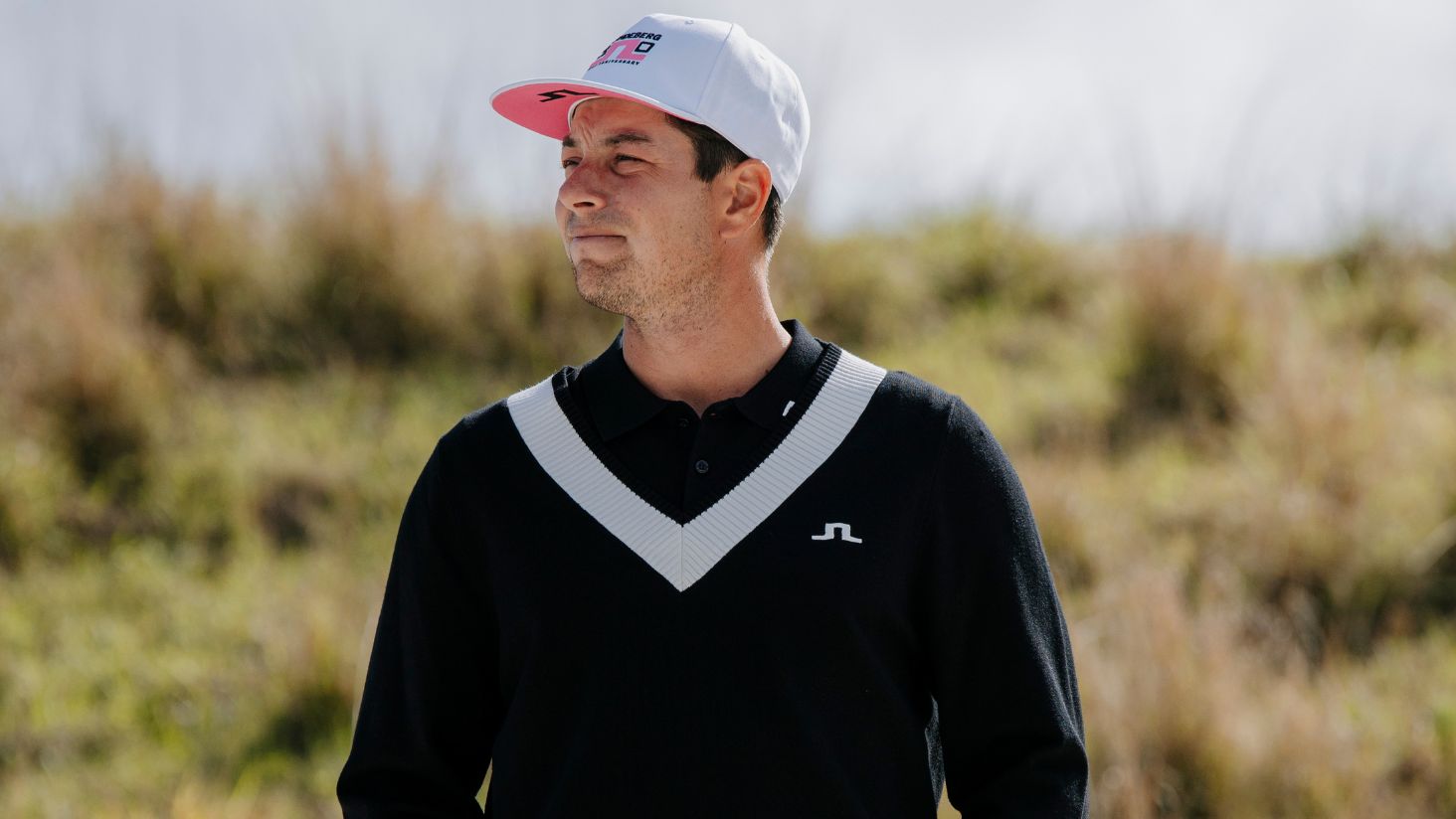
For its 30th anniversary, J.Lindeberg is looking back at the moment that once defined the brand: Jesper Parnevik's appearance in the spotlight of professional golf, dressed in Trousers in bright pink. The anniversary collection picks up on this moment - not as a nostalgic copy, but as a contemporary reinterpretation.
The color palette of the capsule - pink, black and white - is a direct echo of its origins. The silhouettes, on the other hand, are contemporary: polos, striped sweaters, pleated skirts, tailored shorts and lightweight layering pieces that make the transition from Fairway to everyday seamless. Designed for both men and women, each piece bears the brand's exclusive 30-year branding.
"Reinterpreted for today - in menswear and womenswear alike - the collection combines golf and ready-to-wear through a modern, confident lens. With the distinctive cap and exclusive 30th anniversary branding, each piece honors our heritage while pushing the legacy forward," says Neil Lewty, Creative Director at J.Lindeberg in a brand press statement.
A prominent face will accompany the collection on the big stage: brand ambassador Viktor Hovland will wear it at the 126th U.S. Open Championship, which will be held from June 18 to 21, 2026 at Shinnecock Hills Golf Club in Southampton, New York. It's a deliberate statement - honoring the past, focusing on the present.
Here you can find Tee Times and Leaderboard of the US Open 2026.
Clarity as a strategy: looking ahead
Thirty years is no mean feat for a fashion brand. J.Lindeberg is profitable today - a fact that Meyer sees not as an end point, but as a starting point. "Our 30th anniversary is not just a milestone - it's a launch pad for the future. We share a bold vision that empowers performance and style for a global community that is on fire for sport, fashion and innovation," Meyer said in a company statement.
The strategic guideline for the coming years can be summarized in one word: Clarity. The range focuses on five core categories - Outerwear, Knitwear, Trousers, Hybrids and Jerseys - which are consistently developed for men and women. Black and white remain the dominant colors, complemented by seasonal accents. Meyer cites brands such as Ralph Lauren, Apple and Coca-Cola as points of reference to WWD: "The more clearly a brand is positioned, the easier it is to understand - and the more limitless the possibilities become."
The owners of the Bestseller Group are behind this long-term approach and have signaled their willingness to invest. New store concepts - such as the Stockholm flagship that opened in early 2026 - will gradually be rolled out across the entire store network.
With the autumn/winter 2026 collection, J.Lindeberg is continuing on this course: the new line combines advanced silhouettes and technically high-quality materials with a fashion-forward understanding of sporty performance - while remaining true to the spirit that has characterized the brand from the very beginning. The message for the anniversary is as simple as it is programmatic: "30 years of making a dent."
An impact with reverberations
J.Lindeberg gave golf something that it desperately needed at the time: style, attitude and the courage to be different. Three decades after its foundation in Stockholm, the brand is more mature, more focused and - not least - more successful. The anniversary does not mark a conclusion, but a caesura from which the next step is being prepared. Anyone who knows J.Lindeberg knows that the next 30 years will be just as exciting.
Brandname
Title will go here and can run on two lines
Brandname
Title will go here and can run on two lines

Brandname
Title will go here and can run on two lines
Brandname
Title will go here and can run on two lines
Brandname
Title will go here and can run on two lines
Brandname
Title will go here and can run on two lines
Brandname
Title will go here and can run on two lines
Brandname
Title will go here and can run on two lines
Brandname
Title will go here and can run on two lines
Brandname
Title will go here and can run on two lines
Release date
29 May 2026
photos
J.Lindeberg presents a new collection to mark its 30th anniversary. (Photo: J.Lindeberg)

