
New Golf Rules for Pros? Three Options for Limiting Distance
The USGA and the R&A are considering stricter regulations for golf balls, Drivers, and clubs. For now, amateurs' current equipment remains compliant.
The debate over increasing driving distances in men’s professional golf is entering a new phase. On September 21, 2026, the USGA and the R&A issued an official statement to manufacturers of golf clubs and golf balls. In it, the governing bodies put forward three possible Model Local Rules for discussion, which could be used to more specifically limit distance gains at the elite level.
Under consideration are specifications for golf balls, Drivers, and club lengths. The potential special rules could be implemented at selected tournaments as early as January 2028. A general change to the so-called Overall Distance Standard (ODS), however, is not expected to take effect before January 2030. For recreational golfers and equipment currently available on the market, nothing will change for the time being.
No Rule Change Has Been Finalized Yet
The announcement dated September 21 is not a final set of rules. Rather, the document—designated as a “Notice to Manufacturers”—launches a consultation process. Manufacturers have until October 21, 2026, to submit their comments. Only then will the USGA and the R&A decide which approaches to pursue.
According to the associations, the initiative stems from discussions with the PGA Tour and the DP World Tour. Both tours have requested that potential “Model Local Rules” be explored. These are rules that a tournament organizer or a tour can activate for specific competitions without changing the general equipment rules for the sport of golf as a whole.
In their letter, the organizations describe the objective using language that goes beyond the debate to date. They state that they are examining “a range of additional approaches that could potentially have a much greater impact on the pace of future distance gains at the elite level.” At the same time, the goal is to prevent elite golf from becoming too one-dimensional and losing the significance of different shot variations.
The USGA and R&A have just issued a formal Notice to Manufacturers on potential Model Local Rules for elite play, open for comment until Oct. 21:
— Jonathan Wall (@jonathanrwall) September 21, 2026
To be clear, these are Tour-level opt-in rules only—your equipment at retail doesn’t change. And the global ODS rollback is still pushed to… pic.twitter.com/YYQOXVRwlM
Three Options for Golf Balls, Drivers, and Clubs
1. Golf balls without the additional three-yard tolerance
The first option concerns the golf ball. In a test conducted by the USGA or the R&A, a model used must not exceed a total distance of 317.0 yards. Another requirement is that the ball must be on the list of conforming golf balls.
The proposal differs from the current regulation primarily in terms of the tolerance. The current Overall Distance Standard is 317 yards plus a tolerance of three yards. In the option now being proposed, this additional tolerance is not taken into account.
This refers to a standardized association test conducted under specified conditions—not a blanket rule stipulating that every ball in actual play may fly no farther than 317 yards.
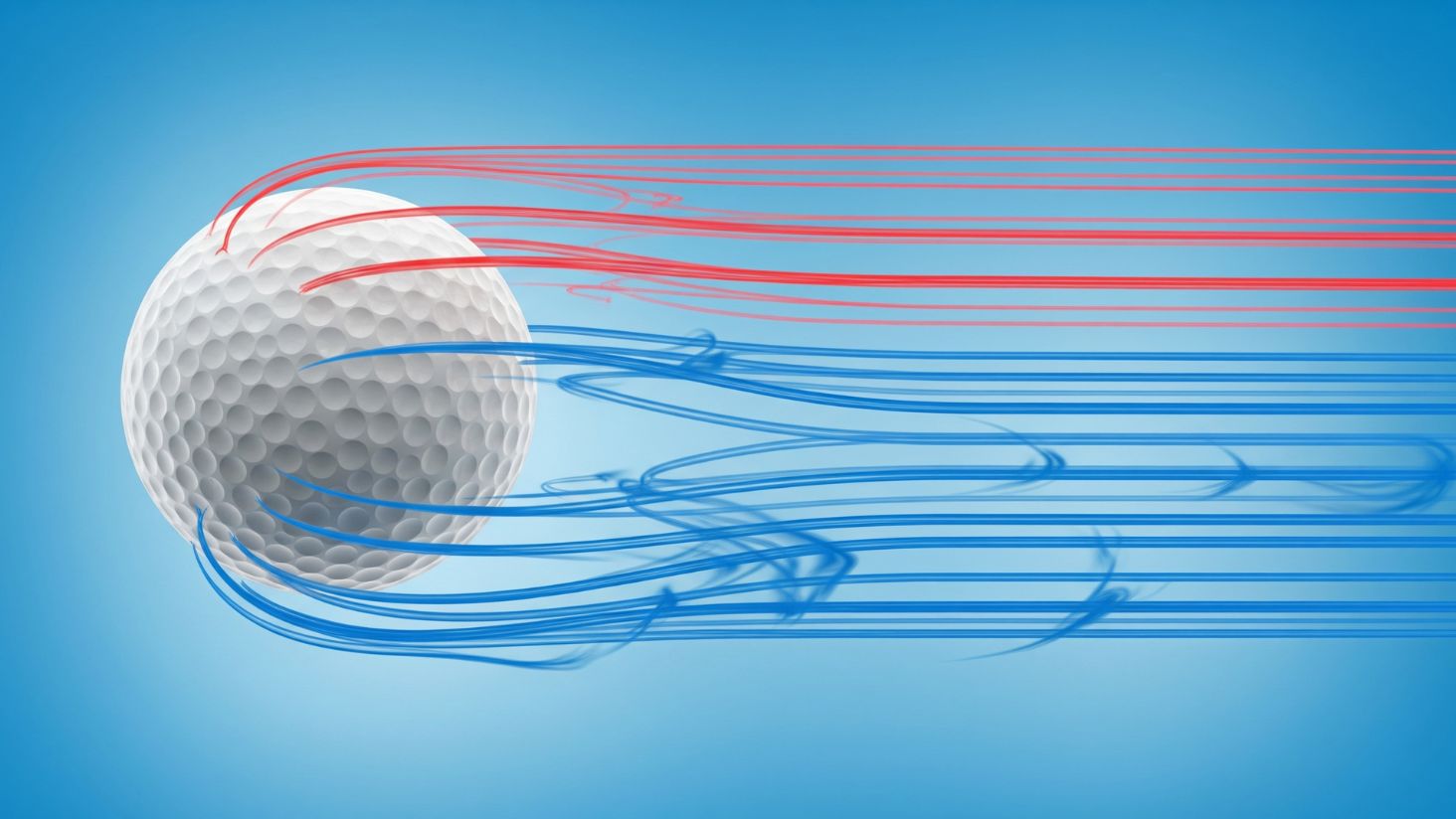
Read more: Little Helpers: How Dimples Affect a Golf Ball’s Flight
2. Lower CT Value for Drivers
The second option pertains to the driver head. Under this option, a model from the list of conforming drivers would be permitted if it has a Characteristic Time (CT) of no more than 239 microseconds prior to competition.
Simply put, the CT value describes the spring-like effect of the clubface. The more a clubface deforms at the moment of impact, the higher the ball speed can be under certain conditions. A lower limit could therefore restrict the maximum performance of the driver head.
The proposed rule would be particularly relevant because modern Drivers are designed to achieve high ball speeds not only through loft but also through material, construction, and the properties of the clubface.
3. Shorter Clubs
The third option would limit the maximum length of all clubs, with the exception of the Putter, to a value below the current 46-inch limit. The proposal thus affects not only the Driver but potentially every club in the bag.
As early as 2022, the USGA and the R&A introduced a Model Local Rule allowing tournament organizers to limit driver length to 46 inches. The approach described here could have a much broader impact, as it would impose a limit on all clubs except the Putter.
Read more: 2026 Driver Test – Buying Guide for Every Skill Level
What does this mean for amateurs?
For most golfers, the immediate answer would be reassuring: Equipment currently on the market would not automatically lose its approval due to the potential Model Local Rules. In their letter, the associations explicitly clarify that the proposed rules would not constitute a change to the existing Equipment Rules. The compliance status of golf balls and clubs already approved would remain unchanged.
This means that a ball or Driver that is compliant today would not become non-compliant simply because a Tour adopts a stricter Model Local Rule for a professional tournament. Nor does the current proposal imply any requirement for recreational golfers to purchase special balls or clubs in the future.
The distinction lies between the general approval of a product and the conditions of an individual competition. A ball may still be generally conforming but may nevertheless be prohibited from use in a tournament with specific requirements.
Why Model Local Rules Are Back on the Agenda
This discussion is not new. As early as 2023, the USGA and the R&A had explored a solution involving Model Local Rules. At that time, the focus was also on the possibility of applying different testing conditions for equipment in elite competitions than in the amateur sector.
The approach was subsequently not pursued further at first. USGA CEO Mike Whan explained in June 2026 that the organizations had previously assumed that distance-related Model Local Rules would not be implemented at the PGA Tour level. He said, verbatim: “Three years ago, we were told quite unequivocally that distance-based Model Local Rules would not be implemented at the PGA Tour level.” If a rule were not to be applied, its development would have been merely a theoretical exercise, Whan continued.
Following discussions with the tours and players, the situation has apparently changed. Mark Darbon, CEO of the R&A, said in July 2026: “The stance of the PGA Tour and its players has obviously shifted somewhat. There is now an openness to considering certain Model Local Rules.”
Underlying this is a growing concern that the measures taken so far may not be sufficient to permanently limit driving distances in elite golf. Added to this is the criticism that a blanket change to ball testing would not affect all types of players equally. Cameron Young was cited as one example; he was able to win major tournaments using a ball that would likely have remained conforming under the previous testing conditions.
Local Rules and Course Rules in Golf: Where to Find Them and What Really Applies
Two processes with different timelines
The current debate can only be understood if two regulatory approaches are distinguished: the potential Model Local Rules and the planned change to the Overall Distance Standard.
| Measure | Content | Earliest Mentioned Date |
|---|---|---|
| Model Local Rules | Additional requirements for specific Tours or competitions | January 2028 |
| ODS Change | Adjustment to the standardized golf ball test | January 2030 |
The joint statement issued by the USGA, the R&A, the PGA Tour, and the DP World Tour on June 17, 2026, had already made it clear that there would be no change to the ODS test in 2028. The announcement on September 21 confirms this timeline. Accordingly, the earliest possible date for an ODS change is a joint start date in January 2030.
This renders earlier reports obsolete, which had suggested that an ODS change for elite golf would begin as early as 2028. The organizations plan to provide another update on the ODS test within five months. A corresponding update would therefore be expected around February 2027.
The Question of a Split Remains Unresolved
If professionals were to play in the future with specially tested balls, less-springy Drivers, or shorter clubs, the fundamental debate over a division within the sport of golf is likely to flare up again. Critics could argue that different equipment requirements for professionals and amateurs effectively constitute a so-called “bifurcation”—even if the general equipment rules remain unchanged. The USGA, however, points out that Model Local Rules have long been part of golf and are already applied to equipment.
Thomas Pagel, Chief Governance Officer of the USGA, said: “Our view is that uniform rules of play and equipment are among the great strengths of the sport of golf.” However, Model Local Rules have always existed, including in the area of equipment. For this reason, the USGA does not view such an approach as a bifurcation.
Whether this argument will convince players, manufacturers, and golf associations remains to be seen. One thing is certain, however: The introduction of special requirements for elite golf would redefine the line between a uniform set of rules and differing competitive conditions.
Additional Work for Manufacturers
For the equipment industry, such a model could have significant practical consequences. Manufacturers might have to develop, test, and make additional balls available for professional use. Further testing and technical adjustments might also be required for Drivers.
In tournament play, separate inventories would be conceivable. Equipment teams would have to familiarize players with the new products and recalibrate shot distances, spin rates, and tee conditions. At the same time, additional development and production costs would arise—for products that might have only limited demand outside of professional golf.
The reports currently available do not yet include an official statement from the manufacturers. Their feedback by October 21 is therefore likely to play an important role in future developments.
Many questions remain unanswered
It has not yet been decided whether one or more of the three options will actually be implemented. It is also unclear which competitions and Tours would adopt potential Model Local Rules. In addition to the PGA Tour and the DP World Tour, questions could arise regarding the Korn Ferry Tour, the PGA Tour Champions, college golf, and the LPGA, among others.
It also remains to be seen whether the governing bodies will examine additional technical characteristics of Driver heads. The announcement notes that the R&A and the USGA are already investigating how the design characteristics of Drivers could be regulated so that well-struck shots are rewarded more heavily than poor shots.
The September 21 announcement is therefore primarily a signal: The distance debate is not over but will continue on two fronts. For professional golf, potential special rules are on the table starting in 2028. The general ODS change, however, is still scheduled for 2030 at the earliest. For amateurs, nothing will change for the time being—but for professional men’s golf, the equipment model could undergo fundamental changes.
Brandname
Title will go here and can run on two lines
Brandname
Title will go here and can run on two lines

Brandname
Title will go here and can run on two lines
Brandname
Title will go here and can run on two lines
Brandname
Title will go here and can run on two lines
Brandname
Title will go here and can run on two lines
Brandname
Title will go here and can run on two lines
Brandname
Title will go here and can run on two lines
Brandname
Title will go here and can run on two lines
Brandname
Title will go here and can run on two lines
Release date
23 Sep 2026
photos
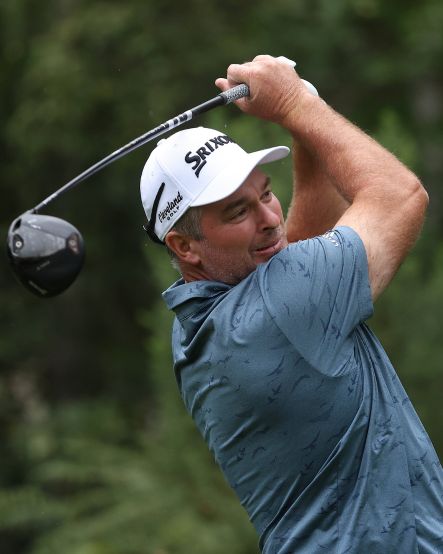
Golf rules makers continue to look for ways to limit the increasing driving distances. (Photo: Imago / Crystal Pix)