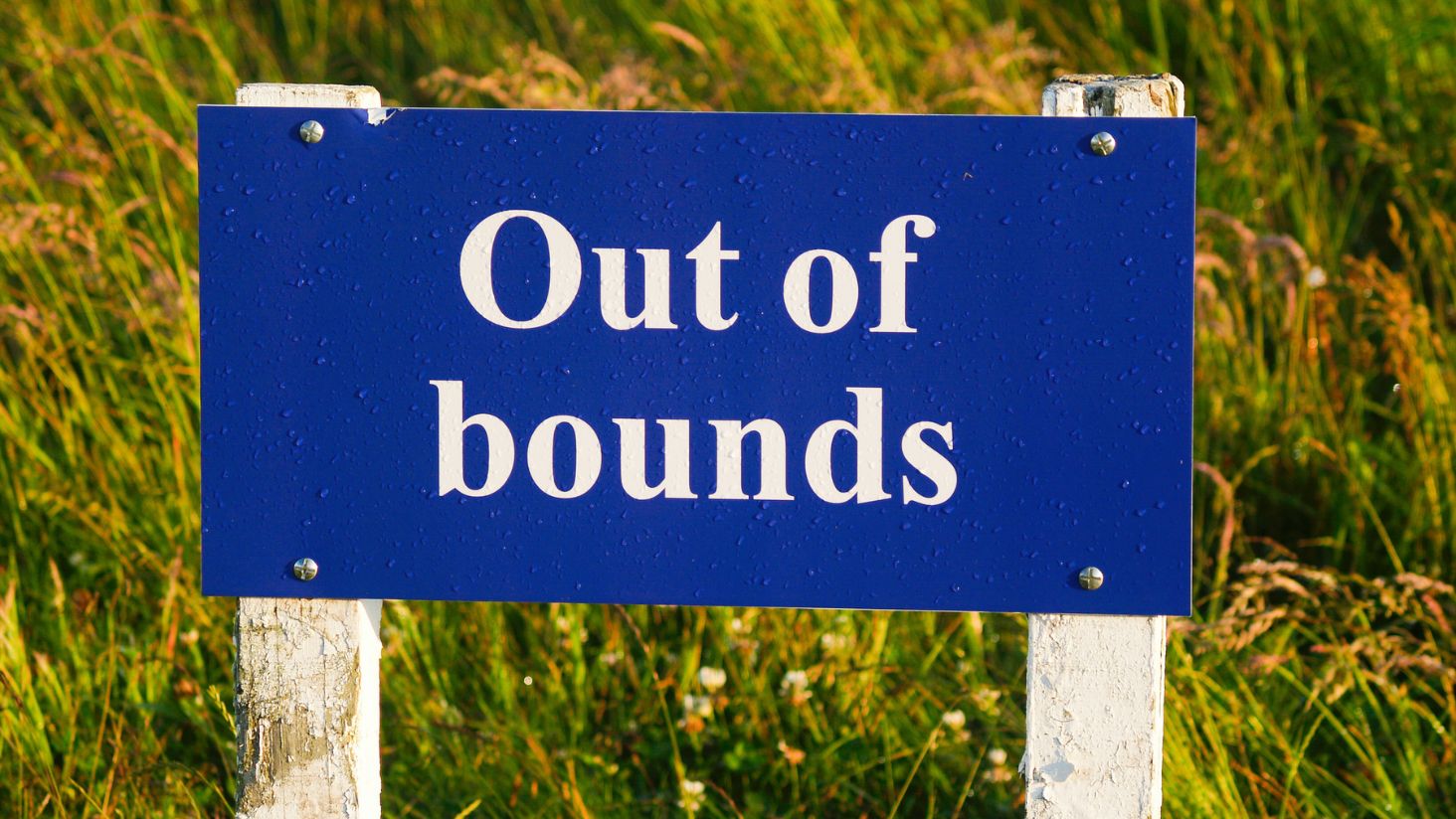


Golf course rules: where to find them and what really applies
Course rules in golf ("local rules"): Where to find them, who sets them and what typical rules (e.g. out of bounds/lost alternative) may apply.
Course rules in golf (often referred to as "local rules" in the first step) are additional, course-related rules that supplement or specify the official rules of golf for a specific course or tournament. They only apply if they have been defined and clearly published by the responsible committee - typically on the scorecard, on the notice board, in the start list/tournament info or digitally (e.g. club website/app).
Starting scenario
You are standing on the tee, the ball is flying towards the white stakes - or you are lying in a muddy spot in the Fairway. And suddenly questions arise that are less "rule book" and more course-specific:
- Can you lay up better here?
- Are there drop zones?
- Is there a special rule that avoids the way back when out of bounds?
- And above all: What really applies - and what is just "that's how we always do it"?
This is exactly where course rules can help - if you read them correctly.
Golf course rules explained in 30 seconds
- Where are the course rules? Scorecard, notice board, tournament info, website/app.
- Do they really apply today? (Tournaments may have different local rules than normal play)
- Pay attention to the "big 3":
- Better Lay/Winter Rules (Preferred Lies)
- Drop zones / exclusion zones
- Special rule for Off/Lost (alternative to Stroke and Distance - only if explicitly activated)
- If unclear: Ask the committee in the tournament, in case of doubt clarify uniformly in the flight in the private round.
What are course rules - and what are they not?
Course rules are ..
... officially defined additional rules for this area or this event. They are intended to:
- resolve special course conditions fairly (e.g. building sites, wet areas),
- Improve the pace of play (in suitable formats),
- Eliminate ambiguities (e.g. boundary definitions, exclusion zones).
Court rules are not ..
- House rules "by hearsay" ("We always drop over there.")
- pure etiquette/dress code specifications (these can be important, but are not automatically "course rules" in the regulatory sense)
- "Free decisions" of individual flights
Where can you reliably find the course rules?
Depending on the club and type of game, you can typically find course rules here:
- Scorecard (classic: short and sweet)
- Notice / notice board at the clubhouse / starter's house
- Tournament announcement / tournament information (often the most important source in the competition)
- Club website or club app (increasingly common)
- Starter/marshals (as an aid - but the published text at the end is reliable)
Practical tip: Do not rely on what was valid "last week" during the tournament. Course rules can be adapted on a daily basis.

Who issues course rules in golf - and who decides in the event of ambiguities?
Course rules are determined by the responsible committee (in tournaments: tournament management/game management; in normal play: club/course operator in the role of the rules competence team).
If something is unclear:
- in the tournament: the committee is the authoritative body.
- in a private round: you come to an agreement in the flight - but please base it on the published course rules, not on gut feeling.
What really applies: basic rules vs. course rules
A good principle for classification:
- The rules of golf are the standard.
- Course rules may only be supplemented or concretized within a clear framework.
- A course rule must apply explicitly (in writing/communicated).
"That's the way it's done here" is not a basis for a rule.
Typical contents of course rules (with practical relevance)
1) Space boundaries: What is "off" - and how is the boundary defined?
Course boundaries are not implemented identically on every course. Course rules can, for example, specify
- which posts/lines form the relevant boundary,
- how to deal with fences, walls or paths as boundaries,
- whether certain areas are defined as out of bounds even though there are no posts (e.g. safety zones).
"Out of bounds": rule, penalty and provisional ball
2) Practical example: Alternative to stroke and distance for out/out of bounds
Many players have already heard: "Out of bounds means two penalty strokes and you drop in the Fairway."
Important: This is not the basic rule.
- The basic rule for out of bounds/lost is stroke and distance (penalty stroke + continue playing from the previous position).
- An alternative with two penalty strokes is only possible if a corresponding course rule is explicitly activated.
This is an ideal example because it shows how strongly local rules can influence practice - and why you should check what applies today before the round.
"Out of bounds": rule, penalty and provisional ball
"Drop rules": What is a drop? How to drop correctly
3) Drop zones, exclusion zones and special areas
Many courses use local rules to solve problem areas cleanly, e.g:
- Drop zones (predefined drop areas)
- Restricted zones (areas from which play is not permitted)
- temporary zones (e.g. construction sites, freshly laid sods)
The decisive factor here is
- What is the reference point?
- In which relief area is dropping permitted?
- Is there mandatory facilitation(must) or optional facilitation(can)?
4) Better laying/winter rules (preferred lies)
A classic: If pitches are very wet or damaged, some pitch rules allow better laying in the short mown area (details can vary greatly).
The important thing is always
- where does it apply (Fairway? also semi-rough?),
- how far the ball may be moved,
- how to mark and return the ball correctly.
5) Course conditions and unusual conditions
Unusual course conditions (e.g. unusually wet conditions) are also often specified using local rules, especially when clearly defined areas and procedures are involved.
Obstacles/ course conditions: How to use the rules of golf to your advantage

Common mistakes with course rules (and how to avoid them)
Mistake 1: "This always applies here" - without checking
Course rules can be changed, especially during tournaments or after weather changes.
Better: Check the scorecard/notices/tournament information shortly before the round.
Mistake 2: Penalty area and out of bounds mixed up
If you confuse "red" (penalty area) with "white" (out), you will quickly use the wrong continuation.
Better: Check the marking color + court rules; if in doubt, clarify once.
Mistake 3: Drop procedure applied incorrectly
Even if the local rule allows a drop zone or alternative: Dropping must still be done in accordance with the rules.
Better: If in doubt, briefly check the drop rules.
Mistake 4: Unclear rule = improvised solution
"We'll agree on something" is risky in a tournament and can result in penalties.
Better: Ask the committee in the competition; in the private round, find a standardized solution that matches the published local rules.
FAQ: Frequently asked questions about course rules in golf
Where can I find the course rules?
On the scorecard, on the notice board, in the tournament info or digitally (website/app).
Who decides which course rules apply?
The responsible committee (in a tournament: the game management; otherwise: the club/course with the relevant responsibility).
Do course rules always apply, even in private rounds?
If they are published for the course, they apply in principle. However, additional or different local rules may apply in tournaments - so always check the tournament information.
Can course rules "override" the rules of golf?
Course rules may only supplement/specify the rules within a defined framework. They must be clearly published and must not be arbitrary.
Is "2 penalty strokes and Fairway drop" correct for out of bounds?
Only if a corresponding Local Rule is expressly in force. Without this local rule, the basic stroke and distance rule applies.
Conclusion
- Course rules are official, course- or tournament-specific supplements ("Local Rules").
- They only apply if they have been defined and clearly published by the committee.
- A quick check is worthwhile before the round because course rules (e.g. on out/lost, drop zones or improvement) can significantly change the correct procedure.
- In the tournament, the committee is the right address for any uncertainties.
Brandname
Title will go here and can run on two lines
Brandname
Title will go here and can run on two lines

Brandname
Title will go here and can run on two lines
Brandname
Title will go here and can run on two lines
Brandname
Title will go here and can run on two lines
Brandname
Title will go here and can run on two lines
Brandname
Title will go here and can run on two lines
Brandname
Title will go here and can run on two lines
Brandname
Title will go here and can run on two lines
Brandname
Title will go here and can run on two lines
Release date
05 May 2026
photos
Local rules are additional rules for individual areas of the golf course that usually only apply temporarily. (Photo: Adobe Stock)