


Drop rules in golf: What is a drop? How to drop correctly
What is a drop in golf - and when does it go unpunished? We explain drops and relief, show knee height, club lengths, typical mistakes, drop zones and frequently asked questions.
Short answer: A drop is the "dropping" of the ball in accordance with the rules so that a player can continue to play according to the rules of golf. This usually happens because relief is taken - either penalty-free relief (without a penalty stroke) or relief with a penalty stroke. It is not only important that a drop is made, but above all where (relief area) and how (from knee height, in accordance with the rules).
Entry scenario (typical on many courses)
The ball lands on a paved path or in a penalty area. Many players ask themselves in such situations: Am I allowed to drop? If so, where exactly? And what happens if the ball rolls away again after the drop? This article explains the basics and shows a clear procedure for the most common cases.
What is a drop in golf?
A drop is when a player drops the ball in accordance with the rules in order to continue the game. The drop is not an "end in itself", but is usually part of the relief:
- Drop = How the ball is brought back into play (process).
- Relief = Why this happens (reason for the rule: penalty-free or with a penalty stroke).
Why are there drops? The drop rules ensure that all players continue to play according to the same standards. This avoids discussions and unfair advantages and maintains the flow of the game.
When is a player allowed to drop?
Basically, a drop is possible (or necessary) if the rules provide for relief. There are two main groups.
Dropping without penalty (penalty-free relief / "free drop")
Free drop means that a player may change the situation without incurring a penalty stroke - but only within the limits of the rules. Typical examples are
- the ball lies on an immovable obstruction (e.g. path/cart path),
- the ball lies in temporary water (puddle),
- the ball lies in certain special space conditions.
Further information: Penalty-free relief in the event of obstacles and space conditions: How to proceed in accordance with the rules
Dropping with a penalty (relief with a penalty stroke)
In other situations, relief is possible, but with a penalty stroke. This is often the case with:
- Penalty areas (red/yellow),
- unplayable ball.
Further:
- Penalty areas (red and yellow): Overview of relief options and dropping
- Unplayable or lost ball: What options do players have under the rules?
How the drop works - step by step (clear instructions)
Quick checklist: Drop in 30 seconds
- Determine the situation: penalty-free relief (without a penalty stroke) or relief with a penalty stroke?
- Determine reference point (everything depends on this).
- Measure the relief area (in practice often 1 or 2 club lengths - depending on the case).
- Drop the ball: Drop ball from knee height (do not throw, do not lay down).
- Check: The ball must come to rest in the relief area.
- If not: drop again; if it fails again, the ball is placed.
1) The drop itself: Drop the ball from knee height
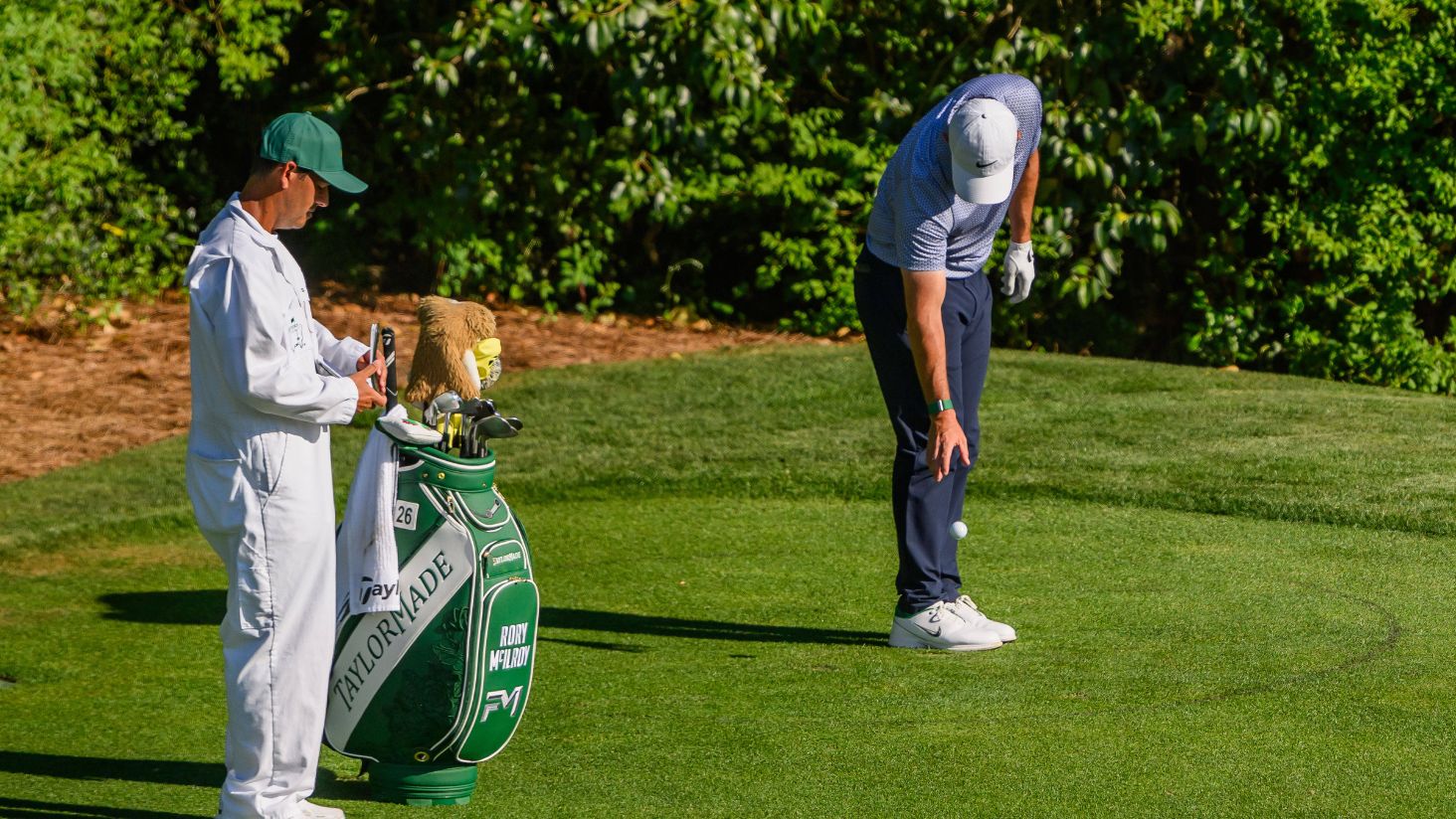
The drop is clearly defined: A player drops the ball from knee height so that it falls freely downwards. The ball is not thrown forward and is not placed. In addition, the ball should touch the ground in the relief area first.
2) Where can the ball be dropped? (Reference point + relief area)
For many players, the problem is not the drop itself, but the question: Where exactly am I allowed to drop?
This requires two terms:
- Reference point: the starting point from which to measure.
- Facilitation area: the area in which the ball must remain at the end.
In practice, the relief area is often determined using club lengths.
3) Common cases - and how many club lengths typically apply
Important: The following information is deliberately formulated as "common practical cases". Depending on the chosen relief option or course rule, the reference point and relief range may differ.
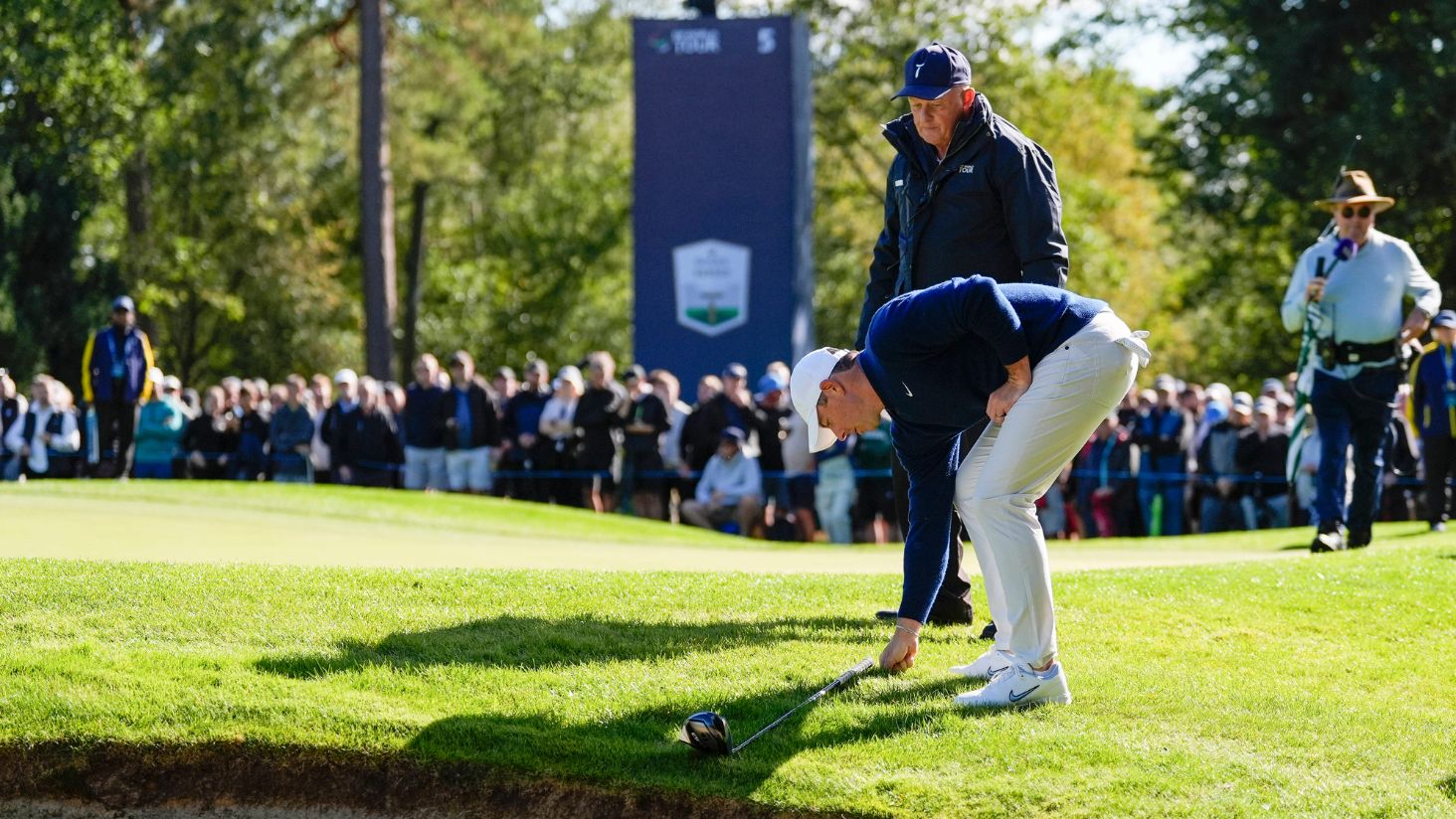
Case A: Non-penalized relief from a path/cart path (immovable obstacle) - often 1 club length
- Reference point: in practice often the nearest point of complete relief (i.e. the nearest point at which the obstacle no longer interferes).
- Relief area: often 1 club length from the reference point (not closer to the flag).
- The ball is then dropped from knee height within this area.
Case B: Penalty area (red/yellow) - often 2 club lengths (lateral relief)
- Reference point: often the point at which the ball last crossed the boundary of the penalty area (lateral relief).
- Relief area: often 2 club lengths from the reference point (not closer to the flag).
- The ball is then dropped from knee height within this area.
Read more: Penalty areas (red and yellow): Overview of relief options and dropping
Case C: Unplayable ball - often 2 club lengths
- Reference point: often the original position of the ball.
- Relief area: often 2 club lengths (not closer to the flag).
- Then drop from knee height in the relief area.
Read more: Unplayable or lost ball: what options do players have under the rules?
4) What happens if the ball rolls away after the drop?
A drop is only "finished" when the ball comes to rest in the relief area. If it rolls out or comes to rest outside, a correction is usually necessary.
Typical procedure in practice:
- First drop
- If the ball does not come to rest correctly: second drop
- If it fails again: place the ball (in the relief area in accordance with the rules)
This prevents players from having to drop the ball endlessly.

The most important terms
- Drop = dropping the ball from knee height
- Relief = reason for the rule (relief without penalty or with a penalty stroke)
- Reference point = starting point for measuring
- Relief area = target area in which the ball must come to rest
Common mistakes when dropping (and how to avoid them)
Wrong reference point / wrong place chosen
This is the most common mistake: A player takes relief, but orients themselves to the wrong point. This results in the relief area being incorrectly marked out.
Practical tip: Clarify briefly before the drop: Which point is really the reference point in this situation?
Ball comes to rest outside the relief area - and is still played
Sometimes the drop is executed correctly, but the ball then rolls out of the area. If you then simply play from there, you may be playing against the rules.
Practical tip: Check briefly after the drop: Is the ball really within the relief area and not closer to the flag, if that is relevant?
Drop and placement confused
A drop is a drop - and placing is placing. These are different steps in the rule sequence.
Practical tip: If the situation looks like "laying down", first check whether this is really allowed - or whether it must be dropped (again).
Dropping without a reason ("just like that")
Not every unpleasant situation allows relief. Golf rules are often practical, but not arbitrary.
Practical tip: Briefly ask the question: Which rule allows relief here - without penalty or with a penalty stroke?
What is a drop zone in golf?
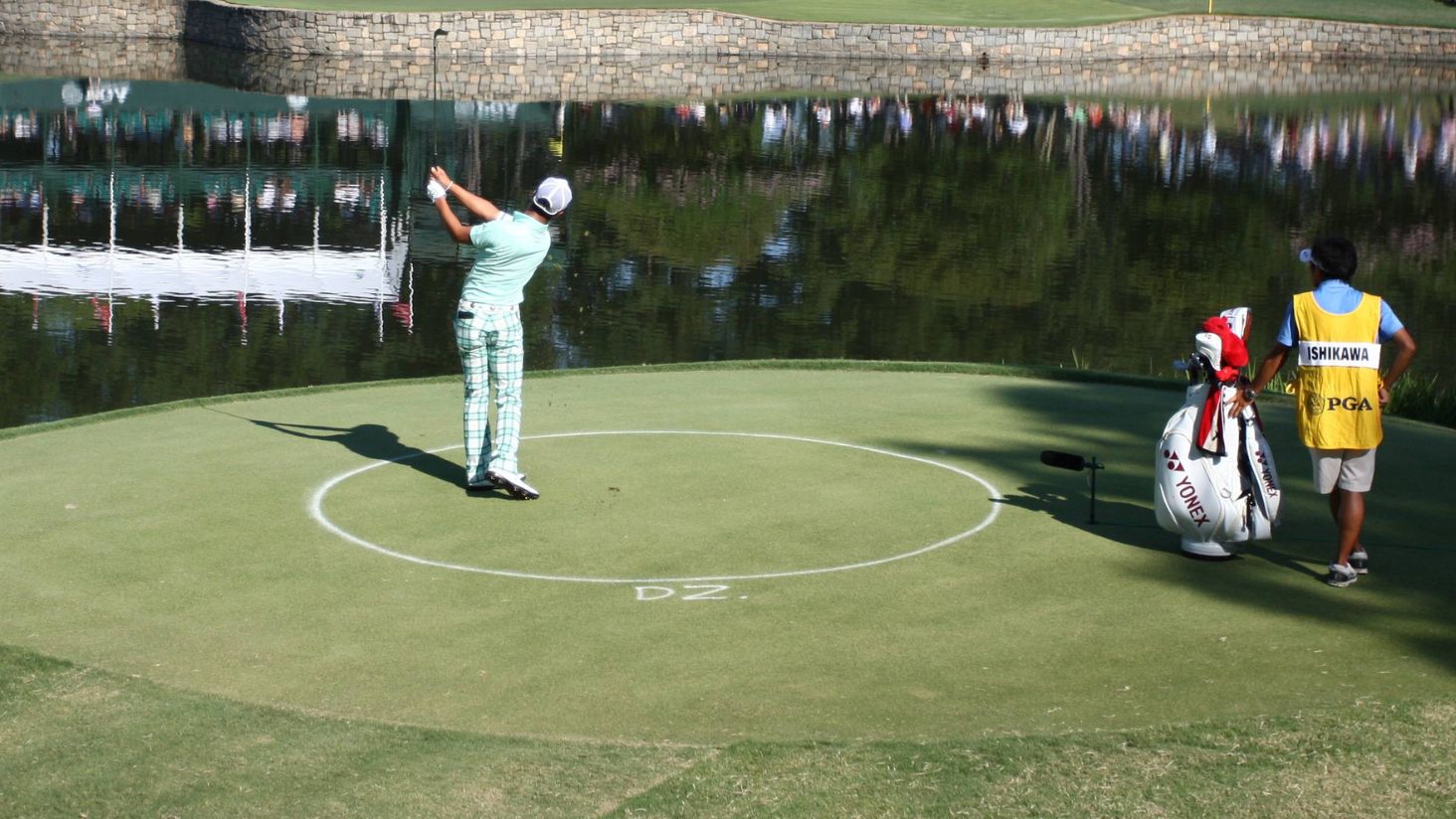
A drop zone is a defined area from which a player may or must continue play in certain situations. Drop zones are often
- defined by the committee,
- Part of the course rules (local rules),
- provided at special holes or at certain obstacles.
When does a drop zone apply - and when does it not?
Drop zones do not apply automatically. Whether a drop zone may or must be used is typically stated in the course rules, on the scorecard or on the notice board. If no corresponding rule applies, a drop zone is generally not "freely selectable".
Short mini-examples (typical situations)
Penalty area: Dropping with penalty stroke
If the ball lies in a penalty area or is considered lost there, relief is possible - often with a penalty stroke and with clear instructions as to the reference point from which the ball is dropped. Further information: Penalty areas (red and yellow): Overview of relief options and dropping
Immovable obstacle (path): penalty-free relief
If the ball is on a path, penalty-free relief is often possible. The reference point and relief area are then determined and the ball is dropped from knee height. Further information: Penalty-free relief in the event of obstacles and space conditions: How to proceed in accordance with the rules
Unplayable ball: Dropping with a penalty stroke
If a ball is unplayable, a player can often take relief with a penalty stroke. The reference point and relief area are also decisive here. Further information: Unplayable or lost ball: What options do players have under the Rules of Golf?
FAQ: Frequently asked questions about drop rules
What is a drop in golf?
A drop is the dropping of the ball (from knee height) in accordance with the rules in order to be able to continue playing according to the rules of golf. This is usually done as part of a relief - without penalty or with a penalty stroke.
How many club lengths apply to a drop?
That depends on the specific relief procedure. In practice, 1 club length (e.g. in the case of penalty-free relief from an immovable obstacle) or 2 club lengths (e.g. in the case of some reliefs with a penalty stroke such as penalty area on the side or unplayable ball) are often relevant. The decisive factor is that the ball comes to rest in the prescribed relief area.
What is the reference point for the drop?
The reference point is the starting point from which the relief area is determined. Depending on the situation, this may be, for example, the nearest point of complete relief (non-penalized relief) or a specific point in connection with a penalty area or an unplayable ball.
When is a drop penalty-free?
A drop is non-punishable if the rules provide for non-punishable relief in the specific situation (e.g. in the case of certain immovable obstacles or court conditions). The reference point and relief zone must be correctly determined.
What is a drop zone - and must it be used?
A drop zone is a fixed area that is usually defined by course rules or tournament rules. Whether it may or must be used depends on these rules.
What happens if the ball rolls out of the relief area after the drop?
Then the drop is often not valid because the ball has not come to rest in the relief area. Typically, the ball is then dropped again and - if necessary - placed in accordance with the rules.
Does the same ball have to be dropped?
In many situations, the ball that was previously in play continues to be used. Whether a replacement ball is permitted depends on the specific situation. If there is uncertainty, it makes sense to check the basis of the rules or (in a tournament) ask the committee.
Can the ball be cleaned before the drop?
Whether cleaning is allowed depends on the context (e.g. identifying the ball or certain relief situations). The same applies here: do not act "by feel", but according to the appropriate rule.
Further: Equipment and Ballmarkers: What happens if the ball, racket or marker interfere with the game?
Conclusion
- A drop is the rule-compliant way to get the ball back into play after a relief.
- The reference point, relief zone and the correct drop from knee height are decisive.
- Drop zones only apply if they are provided for by the course or tournament rules.
Brandname
Title will go here and can run on two lines
Brandname
Title will go here and can run on two lines

Brandname
Title will go here and can run on two lines
Brandname
Title will go here and can run on two lines
Brandname
Title will go here and can run on two lines
Brandname
Title will go here and can run on two lines
Brandname
Title will go here and can run on two lines
Brandname
Title will go here and can run on two lines
Brandname
Title will go here and can run on two lines
Brandname
Title will go here and can run on two lines
Release date
28 Apr 2026
photos
A player drops his golf ball from knee height. We explain how to do it according to the rules. (Photo: Imago / UPI Photo)