

Driver Test 2026 – Buying Guide for Every Skill Level
Buying a Golf Driver in 2026: Loft, Shaft Flex, Driver Types, and the Best Models—Everything Golfers Need to Know Before Buying.
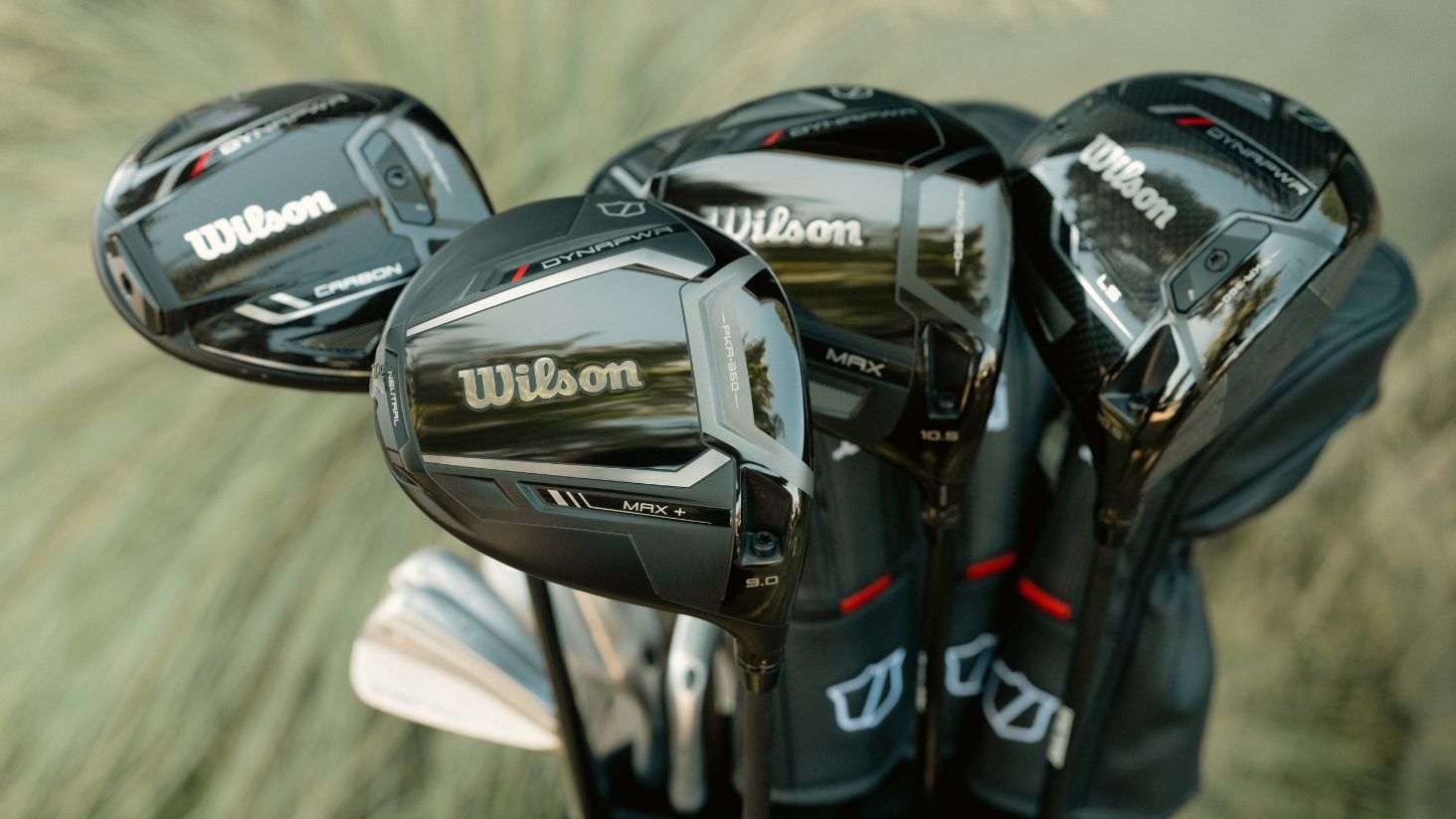
The Driver is the club that evokes the most emotion on the golf course—and, unfortunately, also leads to the most mistakes. No other club in the bag is chosen incorrectly as often: too little loft, the wrong flex, too long, or simply the wrong model for your swing. Yet the selection of outstanding golf drivers has never been as wide as it is in 2026. The good news: With the right knowledge, golfers of all skill levels can quickly find the right Driver today—and it doesn’t even have to be the most expensive model.
This buying guide takes you step by step through all the relevant factors: from loft and shaft length to the different Driver types, right down to specific recommendations for men and women—including the best new Drivers of 2026. By the end, you’ll know exactly what matters when buying a Driver.
Note: If you’d like to delve deeper after reading this buying guide, we recommend our article on driver fitting —because the best driver is always the one that’s perfectly tailored to your swing.
What Makes a Good Driver? The Most Important Buying Criteria
Before we dive into specific models, it’s worth taking a look at the technical parameters that define a Driver. Understanding these will help you make much better purchasing decisions.
Clubhead Size – What Does 460 cc Mean?
The size of the clubhead is measured in cubic centimeters (cc). The USGA allows a maximum of 460 cc—and most modern Drivers take full advantage of this limit. There’s a good reason for this: A larger clubhead means a larger hitting surface, a higher moment of inertia (MOI), and thus greater forgiveness. Shots that don’t hit the sweet spot exactly lose less distance and direction.
More compact heads between 430 and 450 cc are designed for advanced golfers with fast swings who want to shape the ball intentionally and actively control spin. For most players—and without exception, all beginners—a 460-cc head is the right choice.
Loft – The Underestimated Adjustment
Loft describes the angle of the clubface and is one of the most important—and most commonly misjudged—parameters for a Driver. Men’s Drivers are typically available between 8° and 12°, while women’s Drivers range from 10.5° to 13°.
A common misconception: Less loft means more distance. This is only true for golfers with very high swing speeds. Those who swing more slowly need more loft to get the ball to the optimal flight height at all. As a guide, use the following rule of thumb:
| Swing Speed | Recommended Loft |
|---|---|
| Under 85 mph | 12° and above |
| 85–95 mph | 10.5° – 12° |
| 95–105 mph | 9° – 10.5° |
| Over 105 mph | 8° – 9° |
The goal is a backspin range of about 2,000 to 3,000 revolutions per minute immediately after takeoff—this creates the optimal balance between distance and roll on the Fairway.
Many modern drivers feature an adjustable hosel that allows the loft to be increased or decreased by up to two degrees. This gives golfers the ability to fine-tune their setup without having to buy a new club right away.
Shaft Length – Shorter Can Mean Longer
A standard men’s driver measures about 45.5 to 45.75 inches off the factory line, while a women’s driver measures around 44 inches. The USGA allows a maximum of 46 inches. Interestingly, the average Driver on the PGA Tour—at around 44.5 inches—is significantly shorter than what’s available in retail stores.
Why? Because a shorter shaft improves control and ensures more consistent contact with the sweet spot. While a longer shaft can theoretically generate more clubhead speed, it’s of little use if it increases the error rate. Shorter options are especially worth considering for golfers who struggle with consistency.
Shaft Weight and Flex – The Invisible Difference
The weight of the shaft affects how light the club feels and how fast it can be swung:
- 40–50 grams (ultra-light): Ideal for slow swings—the light shaft helps generate more speed.
- 50–65 grams (medium): The standard range for most golfers.
- 65+ grams (heavy): For fast swingers who prefer stability and control.
Equally important is the flex, or the shaft’s resistance to bending. The common categories range from Lady (L) to Senior (A), Regular (R), and Stiff (S), all the way up to X-Stiff (X). Basic rule: The faster the swing, the stiffer the shaft should be. Playing with a shaft that’s too soft risks causing unwanted Hooks; a shaft that’s too stiff often leads to Slices and a loss of distance.
The most reliable way to determine the optimal flex and weight is through a professional Driver fitting—read more about this in our separate article on fitting.
Center of Gravity (CG) – What’s Behind the Center of Gravity?
The position of the center of gravity in the clubhead significantly influences ball flight and forgiveness. If the CG is low and far back in the head, the ball launches high and the MOI is high—ideal for forgiveness and moderate swing speeds. A CG positioned further forward reduces spin and increases ball speed—a preference among advanced golfers with fast swings.
Many modern drivers feature adjustable weights that allow you to fine-tune the CG and, consequently, the ball flight.
Brandname
Title will go here and can run on two lines
Brandname
Title will go here and can run on two lines
The Different Types of Drivers—Which One Is Right for You?
Not all Drivers are the same. Manufacturers have tailored their models to different player profiles. Here’s an overview of the main categories:
Game-Improvement Drivers – The Best Choice for Beginners
Game-improvement drivers are designed for maximum forgiveness. They feature a large 460-cc head, a deep and rear-positioned center of gravity (CG), and often a slight Draw bias to reduce the dreaded Slice. For golfers with a handicap between 54 and 24, these models are the clear first choice. They enable longer, straighter shots—even when the ball isn’t struck perfectly.
Many game-improvement drivers are also suitable for low swing speeds, as they’re often available with lighter shafts and more loft.
Adjustable Drivers – For golfers who want to customize their clubs
Adjustable drivers offer the ability to customize the loft, lie angle, and weight distribution. Nearly all modern 2026 drivers are adjustable in some way—whether through an adjustable hosel or movable weights. This flexibility is especially valuable if your swing changes over time or if you want to experiment with different ball flights without having to buy a new club right away.
Draw-Biased Drivers – The Anti-Slice Weapon
Draw-biased Drivers have more weight in the heel area. This shifts the center of gravity toward the heel and helps the clubface close faster at impact—which reduces or completely prevents a Slice. Golfers who regularly struggle with a pronounced Slice benefit significantly from this design. Many manufacturers now offer such models as a separate variant within their main line.
Tour Drivers – For Advanced Players
Tour drivers are more compact (430–450 cc), have a CG positioned further forward, and generate less spin. This makes them more precise and allows you to shape the ball intentionally—but requires a high swing speed and a consistent swing. For beginners and players with a mid-range handicap, these models are generally counterproductive, as off-center hits are penalized more severely.
Mini-Driver – The Alternative for Control Freaks
A Mini-Driver bridges the gap between a Driver and a 3-Wood: The head is smaller than that of a standard Driver, the shaft is about an inch shorter, and the loft is usually slightly higher. The result is a club that’s easier to control and offers a real alternative on tight tees or difficult fairways—without having to sacrifice the distance of a Fairwaywood. For more information, see our article: What Is a Mini-Driver in Golf?
| Driver Type | Target Audience | Strengths | Limitations |
|---|---|---|---|
| Game Improvement | Beginners, HCP 54–24 | Forgiving, high ball flight | Less workability |
| Draw-biased | Slicers, high handicap | Slice correction, Draw tendency | Not ideal for Draw players |
| Adjustable | All skill levels | Highly customizable | Requires an understanding of the settings |
| Tour | Low HCP, fast swings | Control, workability, low spin | Not very forgiving |
| Mini-Driver | Control-oriented players, narrow fairways | Control, versatile | Slightly less distance than a full-size driver |
2026 Golf Driver Review – The Best Models for Men and Women
The market for golf drivers in 2026 is stronger than it has been in years. Nearly every major manufacturer has fundamentally revamped its line. Here’s an overview of the most important models—sorted by target audience.
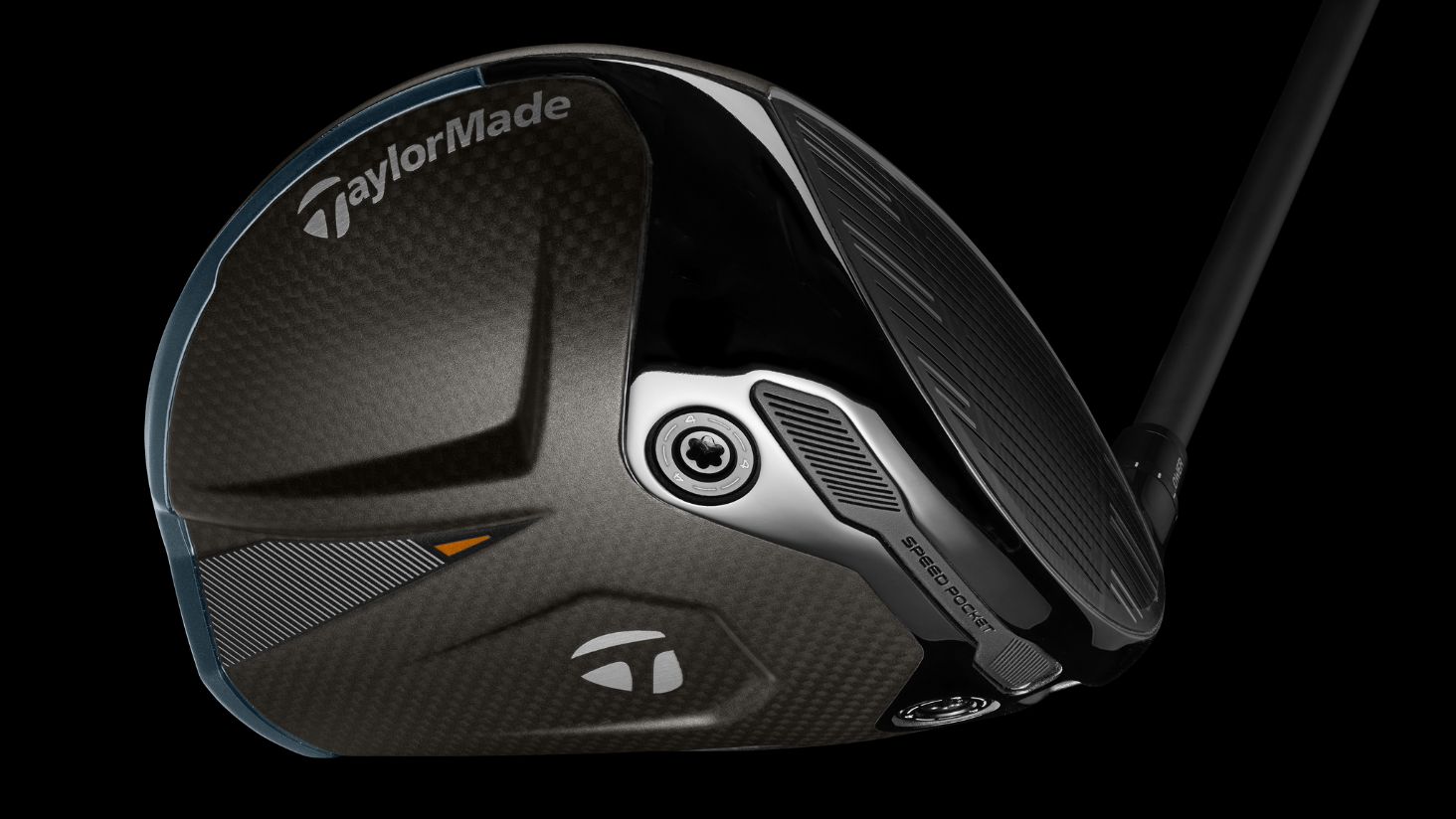
TaylorMade Qi4D – The Technological All-Rounder
With the Qi4D, TaylorMade has launched the fifth generation of its Carbon Face technology. The name “4D” stands for the four dimensions of distance: face, head, shaft—and fitting. That alone says a lot about the philosophy behind this Driver: it’s designed for individual customization. For the first time, the redesigned carbon face covers more than 50 percent of the surface with a high COR (Coefficient of Restitution)—which means greater ball speed even on less-than-perfect strikes.
This is complemented by a new REAX shaft system, which no longer distinguishes solely by flex classes but instead uses the face rotation rate at impact as a key parameter.
Who is it for? Female and male golfers with medium to fast swing speeds (90–110 mph) who value technology and customizability. Handicap 25 to 5.
Discover all the TaylorMade Qi4D Driver models here.
Titleist GTS2, GTS3, and GTS4 – Three Models, One System
With the GTS series (available worldwide starting in June 2026), Titleist has introduced a new generation of Drivers designed specifically for professional fitting. The three models differ clearly in their focus:
| Model | Characteristics | Target Audience |
|---|---|---|
| GTS2 | High launch, medium spin, maximum forgiveness | General public, HCP 36–12 |
| GTS3 | Precision, CG-Track for active ball flight adjustment | Advanced players, HCP 18–5 |
| GTS4 | Low Spin, Maximum Speed | Low HCP, fast swing |
A special feature of the GTS series: Shafts from earlier Titleist generations are compatible and can be easily incorporated during the fitting process. This makes an upgrade possible without having to start completely from scratch.
Who is it for? The entire GTS family is suitable for serious golfers who are willing to undergo a professional fitting. It’s worth the effort—because the series only delivers its full value through the right combination of model, loft, and shaft.
Read more here: Titleist GTS, GTS3, and GTS4 Drivers in Detail.
Ping G440K – Forgiveness Meets Customizability
Ping describes the G440K as the most forgiving Driver the brand has ever built—and that’s not just an empty marketing claim. With the correct weight adjustment, the head achieves an MOI of over 10,400 g/cm², making it one of the most stable Drivers on the market. The new Dual Carbonfly Wrap construction, featuring a carbon crown and carbon sole, saves weight that can be strategically allocated to maximize forgiveness.
The key innovation: the so-called CG Shifter—a high-density tungsten weight that can be locked into three positions (Draw, Neutral, Fade). This allows you to customize your ball flight without sacrificing the head’s fundamental stability.
Who is it for? Golfers seeking maximum forgiveness without compromising on adjustability. Ideal for handicaps 36 to 12.
Learn more here about the record-breaking forgiveness of the Ping G440 K Driver.
Callaway Quantum Max – Speed Through Material Mix
The Quantum series is the centerpiece of Callaway’s new line and is built around a technological first: The so-called Tri-Force Face consists of a composite of titanium, carbon, and a high-performance military-grade polymer (Poly Mesh)—a combination of materials never before used in golf. The result is a lighter and, at the same time, faster clubface.
The Quantum Max is the all-around model with high MOI and adjustable weights at the front and rear. Golfers who struggle with a severe Slice should opt for the Quantum Max-D, which features heel weighting to provide a pronounced Draw bias.
Who is it for? The Quantum Max is suitable for a wide range of golfers—from ambitious beginners to low-handicap players. The Max-D is the clear choice for slicers.
Here you’ll find a comparison of all Callaway Quantum drivers.
Cobra OPTM – The Newcomer with POI Technology
Cobra has taken a bold step with its 2026 OPTM series: Instead of focusing on the industry-standard MOI (Moment of Inertia) value, Cobra has optimized its new model for the so-called POI (Product of Inertia) value. While MOI describes only the rotation of the clubhead in a single plane, POI takes all three dimensions into account—and is thus intended to result in measurably greater accuracy.
The OPTM series is available in four versions:
- OPTM LS: For high swing speeds and minimal spin—the Tour model.
- OPTM X: The balanced version for skilled players who want to combine ball speed and control.
- OPTM MAX-K: Maximum forgiveness, weight concentrated at the rear. For anyone seeking the highest possible stability.
- OPTM MAX-D: Draw bias and lightweight construction for players who tend to Slice the ball and those with slower swings.
The highlight of the system is the FUTUREFIT33 —a hosel that allows for 33 different loft and lie settings, making it one of the most flexible fitting systems on the market.
Who is it for? Suitable for nearly every skill level, depending on the model. The OPTM X and MAX-K are the most versatile options.
POI technology and flexible hosel: Read more about the Cobra OPTM drivers here.
The Best Drivers of 2026 Compared
| Model | Target Audience | Special Feature | Price Range |
|---|---|---|---|
| TaylorMade Qi4D | HCP 25–5, medium to fast swings | Carbon Face, REAX shaft system | approx. €599–649 |
| Titleist GTS2/3/4 | HCP 36–0, fitting-oriented | Three models, shaft compatibility | approx. €549–699 |
| Ping G440K | HCP 36–12, forgiveness | CG Shifter, 10,400+ MOI | approx. 699 € |
| Callaway Quantum Max | HCP 36–10, all-around | Tri-Force Face, mixed materials | approx. 599–649 € |
| Cobra OPTM X/MAX-K | HCP 36–8, depending on the model | POI technology, FUTUREFIT33 | approx. 629 € |
Women’s Golf Drivers – The Best Models for Female Golfers
Many women’s drivers differ technically from men’s models: The shaft is lighter (often 40–50 grams), the loft is higher (10.5°–13°), and the standard length is shorter (around 44 inches). In addition, many women’s drivers are designed with a slight Draw bias to make the shot easier to launch and reduce Slice hits. In principle, however, all so-called men’s models can also be played with the right shaft and proper adjustments. Clubhead speed is far more important than gender.
What female golfers should pay special attention to when buying a Driver
- Loft: 11° to 12.5° is a good starting point for most female golfers
- Shaft weight: Ultra-light shafts (40–50g) allow for higher clubhead speeds
- Length: The standard 44-inch length is ideal for many female golfers; shorter options improve consistency
- Draw tendency: Helpful for female golfers who struggle with a Slice
Recommended Women’s Drivers for 2026
TaylorMade Kalea Gold: Designed based on extensive swing data from female golfers—featuring a lightweight shaft, Draw bias, and adjustable loft. Ideal for female golfers of all skill levels who want to combine distance and consistency.
TaylorMade Qi35 Max Lite: The ultra-light shaft makes this model particularly appealing for female golfers with moderate swing speeds. High forgiveness and an easy ball launch are key features.
Here you’ll find a comparison of all TaylorMade drivers for women.
Callaway Reva Rise: Callaway developed the Reva Rise specifically for female golfers—with an AI-optimized clubface (Ai10x Face) based on swing data from female golfers. The lightweight carbon crown frees up weight for a high MOI.
By women, for women: Read more about the Callaway Reva Rise driver here.
Cobra OPTM MAX-D (Women’s): The Cobra OPTM series is also available in a women’s version—with a lighter overall weight and a pronounced Draw bias.
POI design and flexible hosel: Read more about the Cobra OPTM Drivers here.
New or used? What you should know when buying a Driver
When is a new Driver worth it?
A new Driver isn’t always necessary. As a rule of thumb: If you’ve been playing the same Driver for more than two generations—that is, for more than four to six years—you’ll most likely benefit from a modern model. The technological advances in recent years have been significant: carbon faces, AI-optimized designs, and refined weighting systems offer real advantages.
On the other hand, if you’ve recently purchased a driver or are playing a setup that fits you well, you don’t need to upgrade. In this case, a professional fitting often provides more clarity than a spontaneous new purchase.
Used Drivers—A Viable Option
The used market for golf drivers is well-established. Those who buy a model from the previous generation can save a significant amount—without having to sacrifice good technology. The TaylorMade SIM2, for example, is available used for around 250–300 euros and will still offer technology in 2026 that can keep up with current models.
When buying used Drivers, golfers should check the following points:
- Condition of the clubface: Scratches on the crown are visually distracting but technically harmless. Deformations or dents on the clubface itself are a deal-breaker.
- Shaft: Is the shaft still straight? Are there any cracks in the paint finish?
- Hosel and weights: Do the adjustable elements still work properly?
Sales and Clearance Items – When Is the Right Time?
Typically, prices for the current generation of Drivers drop in late summer and fall, when manufacturers announce new models for the following year. If you’re flexible, you can often find good deals at reputable retailers during this time.
5 Steps to Finding the Right Driver – Your Personal Decision-Making Guide
All the information in one place—here’s how to proceed systematically:
1. Know or estimate your swing speed. If you don’t know your swing speed: Many driving ranges offer simple measurements. As a general rule of thumb: If you hit the Driver about 200–220 meters, your swing speed is usually around 85–95 mph.
2. Determine the right loft. Use the loft chart earlier in this article. If in doubt, opt for a slightly higher loft—that’s the most common mistake, but it’s a step in the right direction.
3. Determine the driver type. Do youstruggle with a Slice? → Choose a draw-biased model. Low handicap, fast swing speed? → Choose a Tour driver or a more compact model. Beginner or mid-handicap player? → Choose a game-improvement driver.
4. Compare models and set a budget. Current top-of-the-line Drivers cost between 550 and 700 euros. If you’re looking to save money, you can often find used models from the previous year in very good condition for 250–400 euros.
5. Test and get fitted Don’tbuy a Driver blindly. Most golf retailers and fitting studios offer demo sessions where you can compare different models. A professional driver fitting is the most reliable way to find the perfect club—read more about this in our article “Driver Fitting: Why the Right Driver Is Crucial for Your Swing.”
Frequently Asked Questions About Golf Drivers (FAQ)
Which golf driver is best for beginners? For beginners, we recommend game-improvement drivers with a 460-cc head, high loft (11°–12°), and a lightweight shaft. Current Recommendations for 2026: Ping G440K, Callaway Quantum Max, or the Cobra OPTM MAX-K. If you’re looking to save money, a used TaylorMade SIM2 Max is also an excellent choice.
What does a 10.5-degree loft on a Driver mean? Loft describes the angle of the clubface. 10.5° is the most commonly sold loft for men’s Drivers and is suitable for most golfers with a swing speed between 85 and 95 mph. Many drivers can be adjusted by up to two degrees using an adjustable hosel.
What does “cc” mean for a Driver? “cc” stands for cubic centimeters and refers to the volume of the clubhead. The maximum value is 460 cc (USGA rule). Larger clubheads offer more forgiveness, while more compact clubheads provide greater control for advanced players.
How long should a Driver be? Standard men’s Drivers are about 45.5 inches long right out of the box. Many professional golfers play with shorter shafts (44–45 inches) because they provide more consistent contact points. The optimal length depends on height, arm position, and swing style—a fitting will determine this.
Is a used golf Driver worth it? Yes —especially if the model is no more than two or three generations old. Last year’s models or those from the year before last often offer 90 percent of the performance of a current Driver at a significantly reduced price.
What’s the difference between a men’s and a women’s Driver? Women’s Drivers typically have more loft (10.5°–13°), a lighter shaft (40–50g), a shorter length (~44 inches), and often a Draw bias. Technically, however, female golfers can also play men’s Drivers—the key is always how well the club is tailored to your individual swing.
When should I replace my Driver? If your current Driver is more than two generations old (i.e., older than four to six years), it’s worth trying out a newer model. Even if your swing has changed significantly—for example, due to practice, a change in instructors, or physical changes—a new setup may be beneficial.
Conclusion: The best golf Driver is the one that fits your swing
There is no objectively “best” Driver—there is only the best Driver for you. Understanding this helps you make a smarter purchase: not the most expensive model, not the one your playing partner recommends, but the model that matches your swing speed, skill level, and ball flight tendencies.
The 2026 lineup is exceptionally strong. TaylorMade, Titleist, Ping, Callaway, and Cobra offer models that perform well at every skill level. If you take the time for a professional fitting, you’ll see the difference on your scorecard after just the first few rounds.

Brandname
Title will go here and can run on two lines
Brandname
Title will go here and can run on two lines
Brandname
Title will go here and can run on two lines
Brandname
Title will go here and can run on two lines
Brandname
Title will go here and can run on two lines
Brandname
Title will go here and can run on two lines
Brandname
Title will go here and can run on two lines
Brandname
Title will go here and can run on two lines
Release date
12 Aug 2026
photos
Here you'll find the best Drivers for golfers of all skill levels, including buying advice. (Photo: Adobe Stock)