
What Is a Driver in Golf? Basics, Construction, and Function
The Driver is the longest club in the golf bag. How does a 1-wood work, why is the ball teed up, and how does the trampoline effect occur?
At a Glance: The Driver (traditionally also known as the “No. 1 Wood”) is the longest and largest club in the golf bag. It is used specifically for the first shot—the so-called tee shot or drive—on par-4 and par-5 holes. The primary goal of the Driver is to hit the golf ball as far as possible. It is the only club in the bag that is struck with a slight upward motion and is therefore played almost exclusively from a Tee.
What Is a Driver? – Definition and Explanation
The Driver is the distance powerhouse of the sport of golf. When players stand at the tee of a long hole during a round of golf, this club is usually the one they choose.
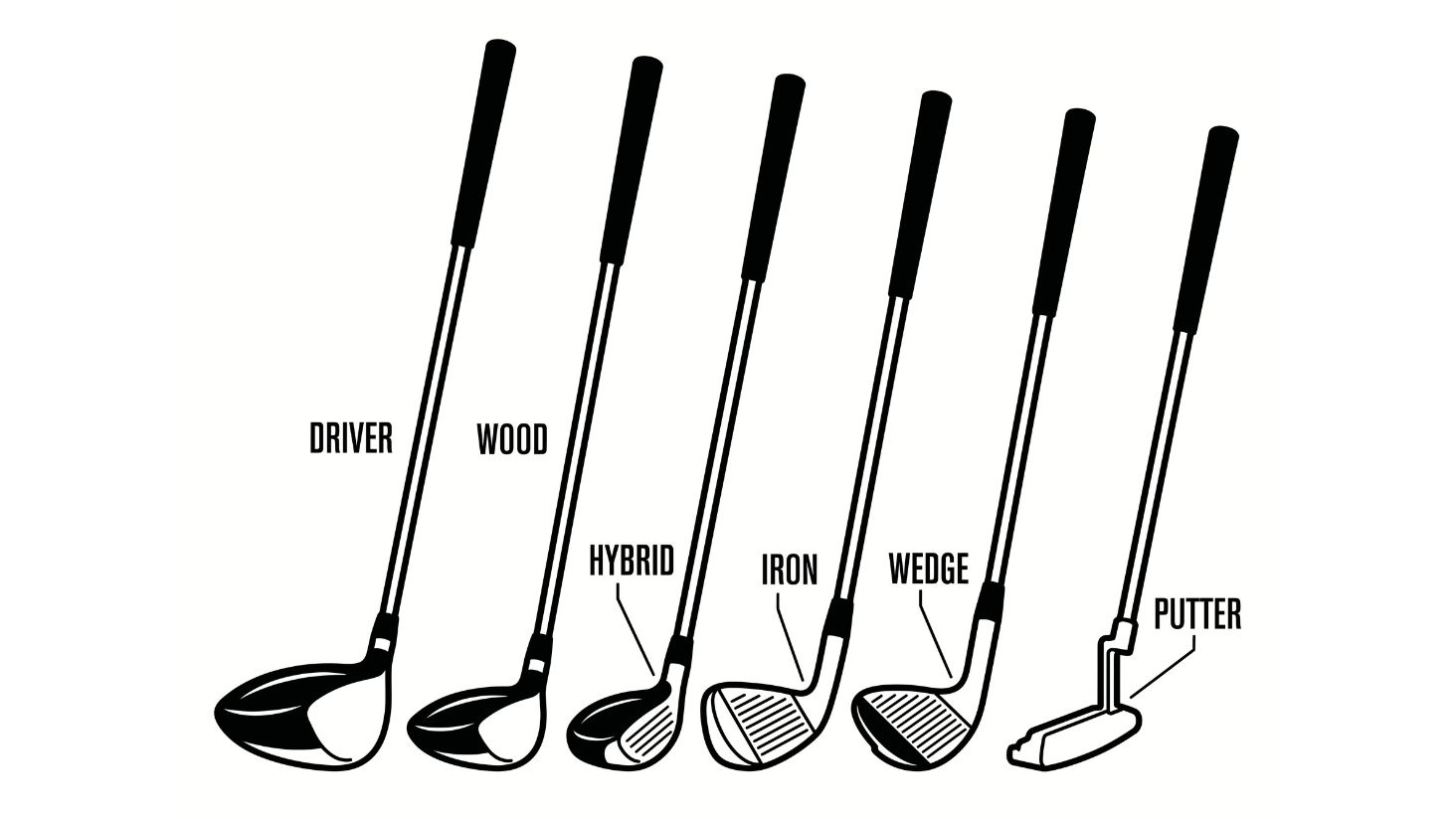
What types of golf clubs are there? Find out here which clubs, besides the Driver, are important.
Why is the Driver also called “No. 1 Wood”?
Historically, the Driver belongs to the “woods” category. Until the late 1970s, the clubheads in this category were actually made of hardwood—mostly persimmon wood. Although modern drivers have long been made of high-performance materials such as titanium and carbon, the traditional name “1-wood” has remained in golf terminology as a synonym for the Driver.
The Role of the Driver in the Golf Bag
According to the official rules, a maximum of 14 clubs may be carried on the course. While the Putter, for example, is responsible for precision on the green, the Driver takes on the opposite task: It is designed to cover as much distance as possible on long holes (par 4s and par 5s) to significantly ease the subsequent shot to the green.
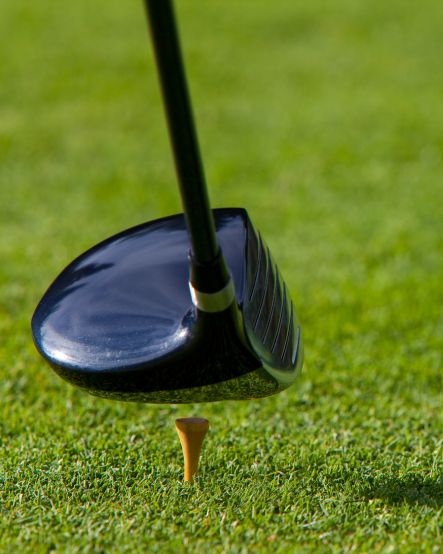
Unlike irons, wedges, or Hybrids, the Driver is used almost exclusively from the Tee. Hitting the ball directly from the Fairway without a Tee is extremely challenging due to the design of the clubhead and is usually reserved for seasoned professionals in exceptional situations.
Find out here what a Mini-Driver is.
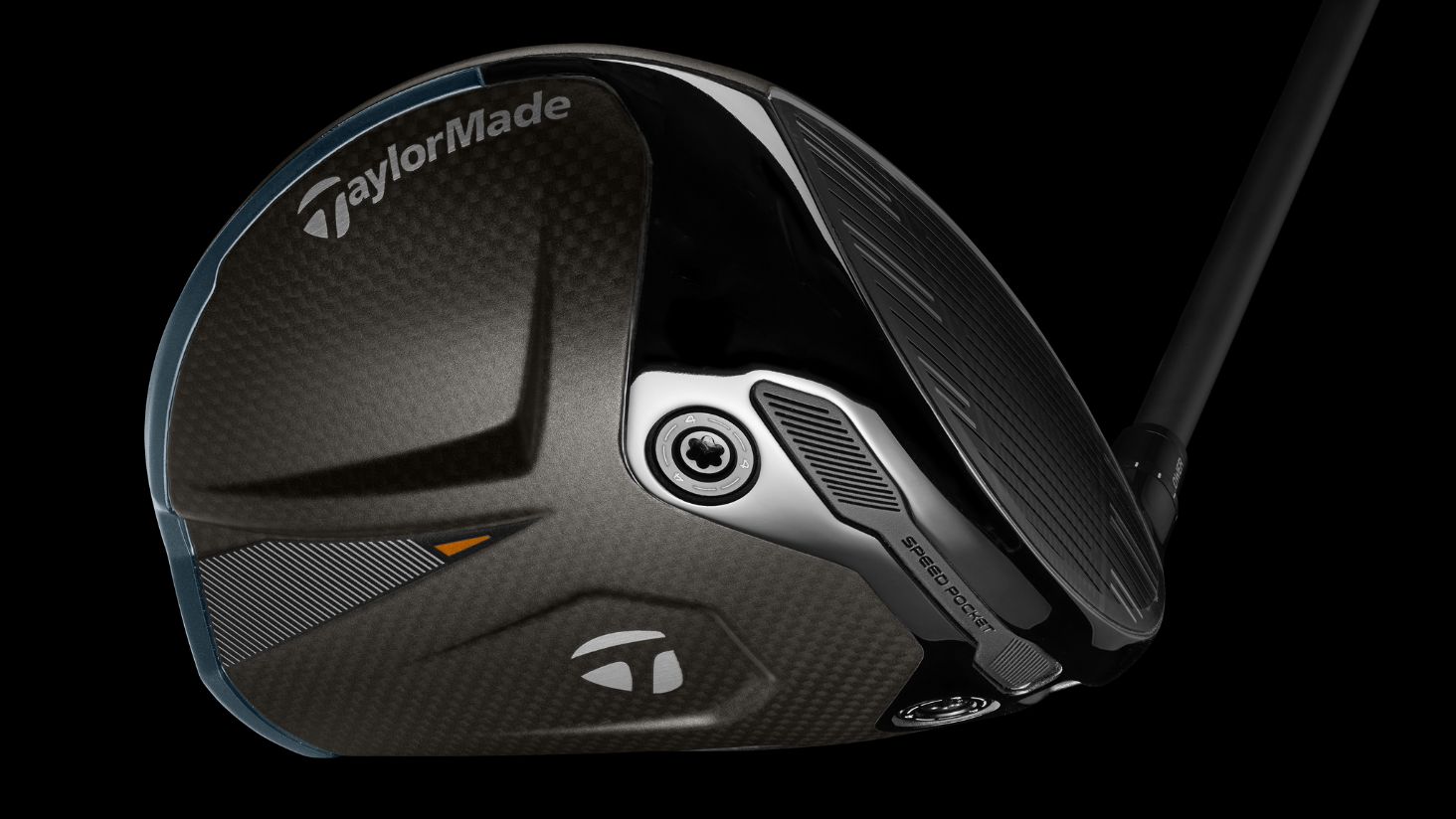
The Structure of a Driver: The Anatomy of the Club
To help golfers achieve maximum ball speeds, club manufacturers incorporate the sports industry’s most advanced technologies into the Driver. The club consists of four main components:
| ANATOMY OF THE DRIVER | |
|---|---|
| 1. CLUBHEAD | Max. 460 ccm, hollow, titanium & carbon |
| 2. HITTING SURFACE | Trampoline effect, max. COR 0.83 |
| 3. SHAFT | Longest shaft (45–46 inches), various flexes |
| 4. GRIP | Single connection point, important for release |
1. The clubhead: Maximum volume and lightweight construction
The Driver head is the largest in the entire bag. According to the official rules of golf set by the R&A and USGA, the volume is limited to a maximum of 460 cubic centimeters (cc). The head has a hollow interior. Modern manufacturers rely on multi-material constructions. Nearly all flagship models from major manufacturers are now made primarily of carbon. Titanium is used primarily in the budget segment.
- Titanium: Offers an extremely high strength-to-weight ratio.
- Carbon (carbon fiber): Is primarily used for the crown (the top of the clubhead). Thanks to carbon’s low weight, engineers save valuable mass, which is strategically placed at the edges or deep in the rear of the head to increase stability on off-center hits.
What is a Birdie in golf? Find out here.
2. The Clubface and the Trampoline Effect
The clubface of a Driver is designed to be paper-thin. At the moment of impact, the clubface gives slightly and propels the ball forward like a catapult—this process is known as the trampoline effect.
To ensure fair play, the transfer of energy is regulated by physical laws: The so-called COR value (Coefficient of Restitution) must not exceed the limit of 0.83. This means that a maximum of 83% of the energy may be transferred to the ball at the moment of impact.
What is a Bogey in golf? Find out here.
3. The Shaft: Length Generates Speed
With a standard length of about 45 to 46 inches, the Driver has the longest shaft of any golf club. The long lever allows players to generate high clubhead speed during the swing.
Shafts differ primarily in two parameters:
- Flex: Ranges from Ladies/Soft through Regular (R) to Stiff (S) and Extra Stiff (XS). The appropriate flex depends on the individual’s swing speed.
- Kickpoint: A low kickpoint helps launch the ball higher; a high kickpoint promotes a flatter ball flight.
Learn the most important golf rules here.
4. The Grip: The Underestimated Factor
The grip is the only direct connection between your body and the club. Grip thickness has a noticeable effect on ball flight:
- Grip that’s too thick: Makes it difficult to close your hands at the right moment at impact, which often leads to shots that curve to the right (Slice).
- Grip that’s too thin: Encourages excessive wrist action, causing the ball to curve unintentionally to the left (Hook).
The Physics of Ball Flight: How It Differs from a Driver Shot
Shots with Irons or Wedges are executed in a downward motion—the club strikes the ball first and then the ground. With the Driver, the physical principle is exactly the opposite.
The upward motion (attack angle)
With a Driver, the ball is placed on a Tee and positioned significantly further to the left in your stance—roughly level with the inner front heel. Thanks to this setup adjustment, the clubhead strikes the ball at the lowest point of the swing path or slightly after, i.e., in a slight upward motion (positive angle of attack). This reduces unwanted backspin and maximizes carry and roll distance.
What Can You Wear on the Golf Course? Tips and Tricks for the Dress Code.
Low loft for penetrating flight paths
Loft refers to the angle of inclination of the clubface. After the Putter, the Driver has the lowest loft in the bag—typically between 8.5° and 13°.
- Low loft (8.5°–9.5°): Produces a flat trajectory and is suitable for players with high swing speeds.
- Higher loft (10.5°–12.5°): Helps beginners and players with moderate swing speeds get the ball airborne effortlessly.
The goal is a spin rate of about 2,000 to 3,000 revolutions per minute (rpm) immediately after takeoff to achieve the optimal balance betweencarry androll on the Fairway.
Size, Diameter, Weight, Dimples: Learn everything about golf balls here.
Why is the Driver considered a challenging club?
Although the Driver visually exudes confidence due to its large clubhead, it’s considered one of the hardest clubs to control on the course. There are two physical reasons for this:
- Longer distance from the ball: The long shaft means golfers stand farther away from the ball. The greater this distance, the harder it is to consistently strike the ball in the center of the clubface (sweet spot).
- Low loft increases side spin: A club with a lot of loft (such as a Wedge) mainly imparts backspin on the ball, which stabilizes the flight path. The Driver’s low loft, on the other hand, means that off-center hits increase side spin—a slight deviation can quickly turn into a pronounced Slice (curve to the right) or Hook (curve to the left).
Tactical tip for the round: Experienced golfers tend to use the Driver primarily when the fairway is wide enough. When landing zones are very narrow or obstacles loom, opting for a smaller Wood or a long Iron may be the wiser strategic choice.
Modern club lines from renowned manufacturers address these challenges with a variety of models—ranging from extremely forgiving clubheads to compact, low-spin variants. Learn more in our detailed overviews of the Titleist GTS drivers, the TaylorMade driver series, and the latest Callaway driver models.
FAQ – Frequently Asked Questions About Golf Drivers
What is a Driver in golf?
A driver is the largest and longest golf club in the bag. It’s used for the first shot off the Tee on par-4 and par-5 holes to achieve the greatest possible distance.
Why is the Driver also called a “No. 1 wood”?
The name dates back to the early days of golf, when clubheads in this category were made from persimmon wood. Despite modern materials like carbon and titanium, the term “No. 1 wood” is still traditionally used today.
What is the typical loft of a Driver?
The loft on most models ranges from 8.5° to 13°. Beginners usually opt for models with a loft of 10.5° to 12°, while skilled players with high swing speeds prefer lower lofts.
Why do you strike the Driver during the upward swing?
Since the ball is teed up, striking it during the upward swing (positive attack angle) allows for a high launch angle while reducing backspin. This maximizes the total distance of the shot.
Brandname
Title will go here and can run on two lines
Brandname
Title will go here and can run on two lines

Brandname
Title will go here and can run on two lines
Brandname
Title will go here and can run on two lines
Brandname
Title will go here and can run on two lines
Brandname
Title will go here and can run on two lines
Brandname
Title will go here and can run on two lines
Brandname
Title will go here and can run on two lines
Brandname
Title will go here and can run on two lines
Brandname
Title will go here and can run on two lines
Release date
11 Aug 2026
photos
What is a Driver in golf? In this article, you'll learn everything there is to know about Drivers. (Photo: Adobe Stock)