The Birdie in golf: meaning, origin and tips for your game
What does Birdie mean in golf? Find out all about the counting method, the origin of the term and how golfers can score more birdies.
While watching a tournament or talking to other golfers, have you ever wondered why a "birdie" of all things is the goal of all dreams on the green? The Birdie is one of the central expressions in golf. It marks the moment when technical skill and strategic precision come together.
In this article, we explain everything you need to know about the Birdie, its significance in the scoring system and the fascinating history behind the "animal" terms of golf.
What is a Birdie in golf? The definition explained simply
In a nutshell: A Birdie means that a player finishes a hole with one stroke under Par.
The "Par" (Professional Average Result) indicates how many strokes a very good player needs on average to complete a hole. If you make it with one stroke less than the specified number, you score a Birdie.
Practical example of the counting method on the Par-3, Par-4 and Par-5
- You only need 2 shots on a Par-3 hole.
- On a Par-4 hole, you only need 3 shots.
- On a Par-5 hole you only need 4 strokes.
Birdie, Eagle, Bogey: A direct comparison of the golf scoring system
In order to correctly classify the performance on the Scorecard, the result is always set in relation to the Par of the hole. While a Birdie represents a sense of achievement, there are other terms that every golfer should know.
The table of golf scores: from albatross to double Bogey
| Term | Meaning | Result |
|---|---|---|
| Albatross | Three strokes under Par | -3 |
| Eagle | Two shots under Par | -2 |
| Birdie | One shot under par | -1 |
| Par | Exactly the target | E (Even) |
| Bogey | One stroke over Par | +1 |
| Double Bogey | Two strokes over Par | +2 |
Why Par is the most important benchmark for players
Par takes into account two putts on the green as standard. Whoever plays the Birdie has either already brought the ball extremely close to the flag with the approach shot or has converted a long, precise Putt.
Why is it called a Birdie? The fascinating history of golf terms
The origin of the word takes us back to the early 20th century. The term comes from the US slang word "bird", which at the time meant something like "excellent" or "great".
The "bird" from New Jersey: its birth in 1903
The United States Golf Association (USGA) dates its first use to 1903 at the Atlantic City Country Club. During a round with the Smith brothers and George Crump, a particularly successful shot was described as a "bird of a shot". This exclamation quickly developed into the Birdie that is now known worldwide. Today, there is a plaque on the spot where the word "Birdie" is said to have been uttered for the first time.
From Birdie to Eagle: Why the birds in golf are getting bigger and bigger
As an eagle is larger and more majestic than a small bird, this term was chosen for two shots under par. The albatross is a step up - a rare giant bird for an equally rare result. Statistically speaking, the albatross is even rarer than a hole-in-one.

3 strategies for your next Birdie on the round
Making a Birdie requires more than just luck. These three factors help players increase their chances of a sub-par score:
Improve accuracy on approach shots
The Birdie is often set up before you reach the green. The closer your ball comes to rest on the hole, the shorter and easier the decisive Putt will be.
Tactics on the green: safely making a Birdie Putt
Practice your distance control regularly. As the Par requires two putts, you ideally need to finish the hole with just one putt for a Birdie.
Mental strength: seize the chance to win the shot
Stay calm when you have the chance of a Birdie. Many golfers tense up on the decisive shot. The key here is to focus on your routine.

Frequently asked questions about a Birdie in golf (FAQ)
Which is better: a Birdie or an Eagle?
An Eagle is better than a Birdie. While a Birdie means one stroke under Par (-1), an Eagle means two strokes under Par (-2).
Is a hole-in-one always a Birdie?
No, a hole-in-one is even better than a Birdie. On a Par-3 hole, a hole-in-one is an Eagle (-2). On a Par 4 hole, it would even be an albatross (-3).
How often do amateurs play a Birdie?
For amateur golfers with an average handicap, a Birdie is a special event that occurs perhaps every few rounds. Professionals, on the other hand, achieve it several times per round.
Conclusion: Birdie as a goal for every ambitious golfer
A Birdie is more than just a number on paper - it is proof of progress and precision. The feeling of putting the ball in with one stroke less than planned makes the fascination of golf truly tangible.
Brandname
Title will go here and can run on two lines
Brandname
Title will go here and can run on two lines

Brandname
Title will go here and can run on two lines
Brandname
Title will go here and can run on two lines
Brandname
Title will go here and can run on two lines
Brandname
Title will go here and can run on two lines
Brandname
Title will go here and can run on two lines
Brandname
Title will go here and can run on two lines
Brandname
Title will go here and can run on two lines
Brandname
Title will go here and can run on two lines
Release date
02 Feb 2026
photos
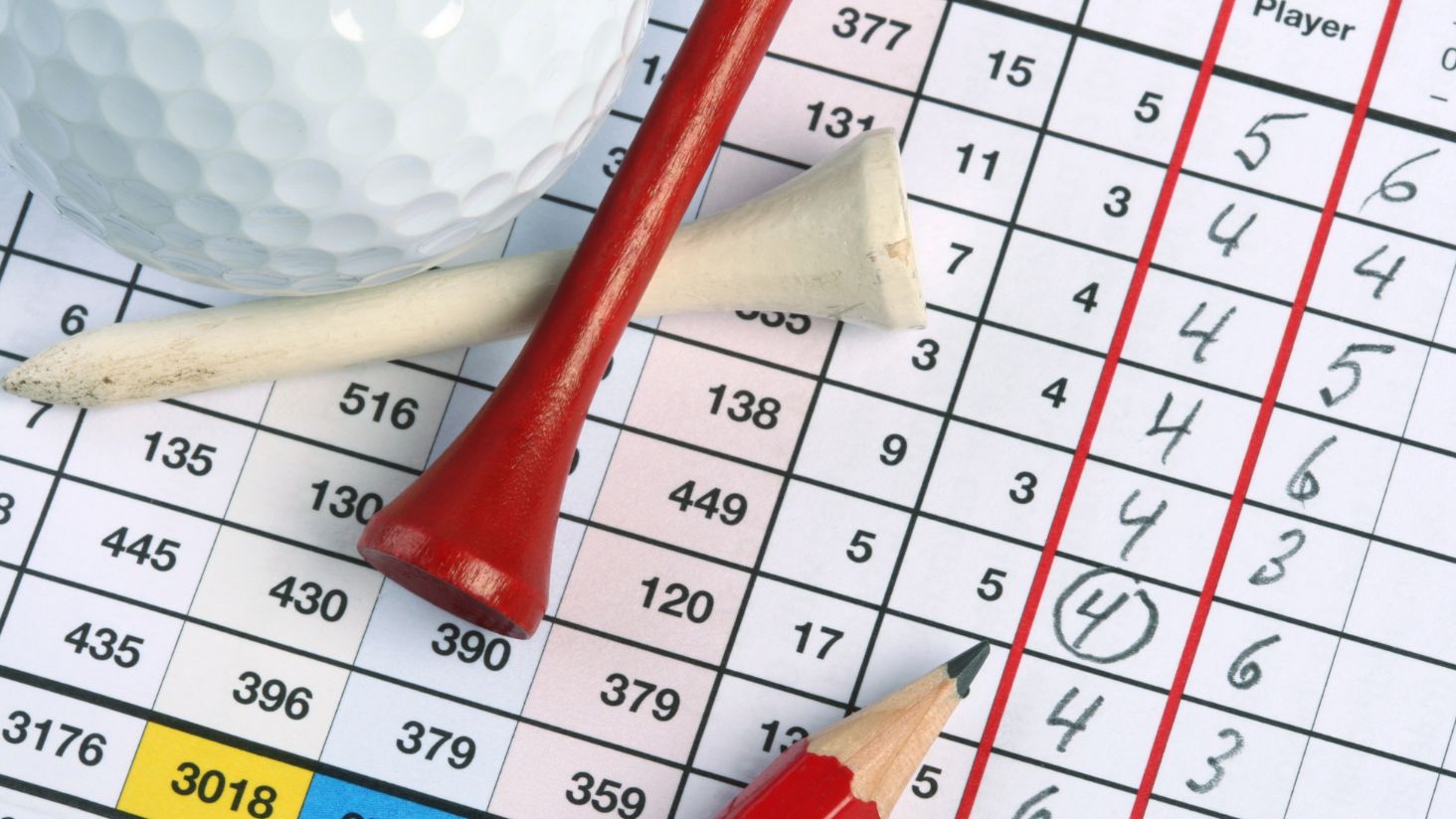
The Birdie in golf: If you hole out with a shot under Par, you play a Birdie. (Photo: Adobe Stock)