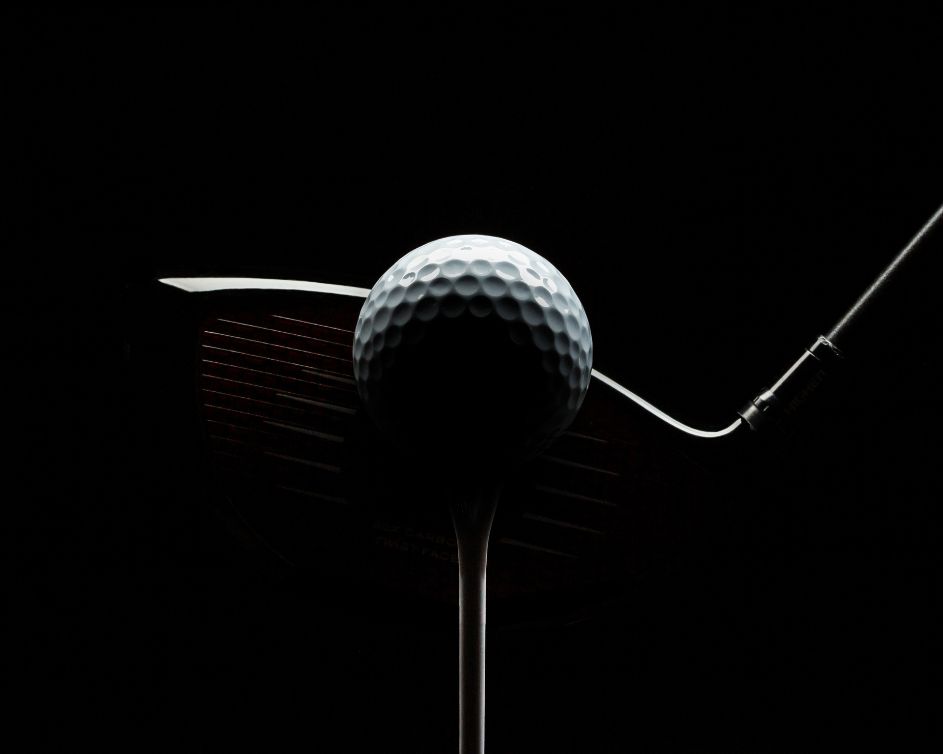

TaylorMade Drivers: An Overview of All Series—from SIM2 to Qi4D
From the Carbon Revolution to the Qi4D: We break down all the TaylorMade Driver series and help you find the right club.
TaylorMade is one of the world’s most innovative Driver manufacturers. Its latest series is called Qi4D (2026), while its predecessor, the Qi35, is currently the flagship model on the market. If you’re looking for a proven club at a more affordable price, the Qi10 or SIM2 are solid alternatives. This article provides an overview of all relevant TaylorMade Driver generations from recent years—and helps you make the right choice for your own game.
No other club manufacturer is as closely associated with the modern Driver as TaylorMade. Ever since Gary Adams introduced the first metalwood Driver in golf history in 1979, the Carlsbad, California-based brand has redefined the technological boundaries of the Driver season after season. Carbon faces, aerodynamically optimized heads, AI-driven weighting—what is standard today was often pioneered by TaylorMade.
Anyone looking to buy a TaylorMade Driver today is faced with a wide selection: current flagship series, top-performing previous models at discounted prices, and specialty clubs like the Mini-Driver. The following overview categorizes the generations, explains the technologies behind the names—and helps you find the right club.
Where are TaylorMade golf clubs manufactured? Find out here.
Brandname
Title will go here and can run on two lines
Brandname
Title will go here and can run on two lines
The Latest Generation: TaylorMade Qi4D (2026)
With the Qi4D series, TaylorMade is setting a new standard in 2026—not only in terms of forgiveness, but also in the interplay of aerodynamics, materials science, and custom fitting.
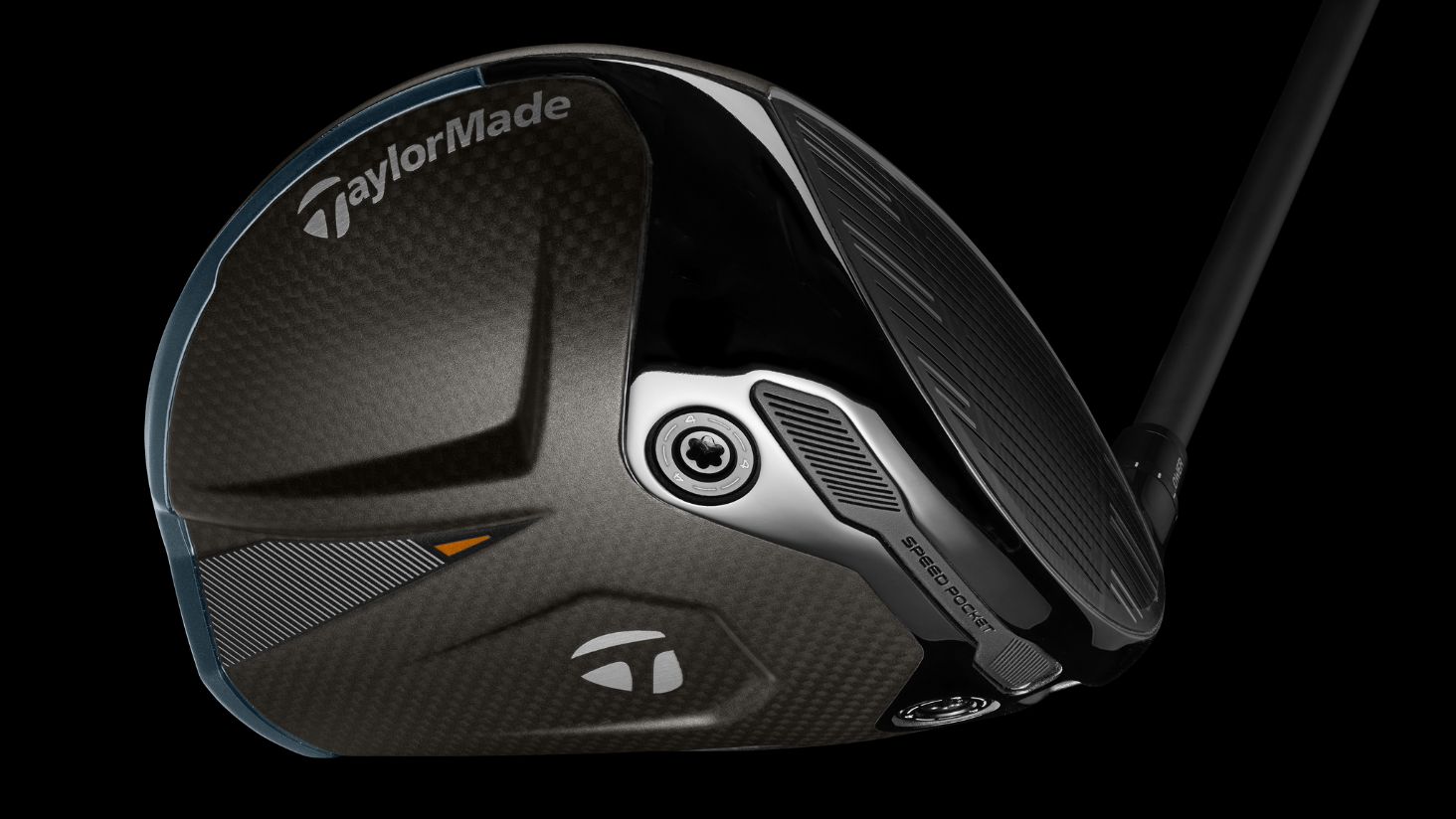
The foundation remains the proven 60x Carbon Twist Face, which TaylorMade has, however, fundamentally redesigned. The key advancement is the so-called “Reengineered Roll Radius”: A newly calculated curvature of the clubface stabilizes spin rates across the entire hitting area—even on off-center hits. The result is a significantly tighter spread. This is complemented by a Speed Pocket optimized using finite element analysis, which helps maintain ball speed—especially on shots struck too low.
The four Qi4D models:
- Qi4D – The All-Rounder: Four adjustable weights (Trajectory Adjustment System) allow for maximum flexibility in ball flight and club profile. For players who want to actively control a Draw, Fade, or neutral trajectory.
- Qi4D LS – The Low-Spin Machine: Designed with the most aggressive aerodynamics, featuring a CFD-optimized head for minimal drag. Ideal for players with high clubhead speed and excessive spin.
- Qi4D Max – The Stability Wonder: For the first time, TaylorMade uses a frame made of high-strength 7075 aircraft-grade aluminum, which shifts more mass to the edge of the head—resulting in the highest moment of inertia (MOI) in the company’s history. Maximum forgiveness for anyone who wants to stay on track even on off-center hits.
- Qi4D Max Lite – Speed Through Lightweight Construction: Consistent weight reduction in the head, shaft, and Grips increases clubhead speed. For players with slow swing speeds who need more distance.
Read more about the TaylorMade Qi4D Drivers here.
A special highlight of the Qi4D series is the new REAX shaft system: TaylorMade is moving away from the traditional flex classification and instead classifies shafts based on the face rotation rate at impact—active (HR), balanced (MR), or controlled (LR). A simple video analysis can be used to determine your individual profile.
| Model | Ideal for |
|---|---|
| Qi4D | Anyone looking for maximum flexibility and wanting to actively influence their ball flight through club setup. |
| Qi4D LS | Players with high clubhead speed who generate too much spin and are looking for a flatter, penetrating ball flight. |
| Qi4D Max | Golfers who need maximum forgiveness and want to stay on track even with off-center hits. |
| Qi4D Max Lite | Players with slower swing speeds who need extra help getting the ball in the air and achieving distance. |
The current retail series: TaylorMade Qi35 (2025)
The Qi35 is the direct successor to the Qi10 and the current standard model available in stores. Four variants cover the entire spectrum of player profiles:
- Qi35 – A balance of forgiveness and distance. A 13-gram weight is adjustable: move it forward for more distance and less spin, or backward for more stability and tighter dispersion.
- Qi35 Max – Maximum forgiveness without adjustable weights. As much mass as possible is concentrated in the rear of the head—ideal for higher handicappers who are primarily looking for consistency.
- Qi35 LS – Low spin for low handicaps and tour pros. The adjustable 13-gram weight allows you to control spin and trajectory here as well. Every conceivable flight path is possible.
- Qi35 Max Lite – For low swing speeds. A lighter head, shaft, and grip allow for greater clubhead speed. Available in men’s and women’s versions.
All models feature a loft that is adjustable by four degrees in both directions. Three of the four models are also available in a Designer Series —offering a variety of visual options as an alternative to the signature black-and-gray carbon heads.
Read more about the TaylorMade Qi35 drivers here.
The cult-classic predecessor: TaylorMade Qi10 (2024)
“Quest for Inertia 10k”—behind this name lies one of the most forgiving Drivers TaylorMade has ever built. The Qi10 achieves a moment of inertia of 10,000 g/cm², which means that even off-center hits lose hardly any directional stability.
97 percent of the crown is made of the Infinity Carbon Crown, which saves weight and strategically redistributes it to more effective positions within the head. Compared to the previous Stealth series, the impact sound has also been refined—the Qi10 sounds richer and more direct.
The three models:
- Qi10 – A versatile all-rounder with a good balance of distance and precision.
- Qi10 Max – The most forgiving Driver in the series, with slightly increased spin. Collin Morikawa switched from his long-time SIM to the Qi10 Max—a clear signal.
- Qi10 LS – Maximum distance, low launch angle, minimal spin. Rory McIlroy has already played the LS on the Tour. Less forgiving, but in the right hands, it’s a precision instrument.
The Qi10 is available today at attractive prices and offers excellent value for money for most golfers.
Read more here about the iconic TaylorMade M2 driver and whether it’s still legal today.
The Carbon Revolution: Stealth & Stealth 2 (2022/2023)
TaylorMade made golf history in 2022 with the Stealth series. For the first time, a carbon face was used in a production Driver—the 60X Carbon Twist Face, constructed from 60 different layers of carbon. Compared to a titanium face of the same size, carbon is about 44 percent lighter. The weight saved was redistributed to strategically important areas of the head.
The key technical challenge: Carbon alone would generate too little spin—the ball would plummet like a tennis topspin shot. TaylorMade’s solution is Nanotexture: A polyurethane compound on the face delivers the correct spin values and remains reliable even in wet conditions.
The Stealth 2 (2023) refined the concept: twice as much carbon in the head compared to the original Stealth, a 25-gram tungsten weight in the Inertia Generator for higher MOI, and a noticeably improved impact sound. Reviews described the sound as a crisp, satisfying “snap”—comparable to a good titanium Driver.
Anyone buying a Stealth or Stealth 2 today gets mature, proven technology—often at significantly reduced prices.
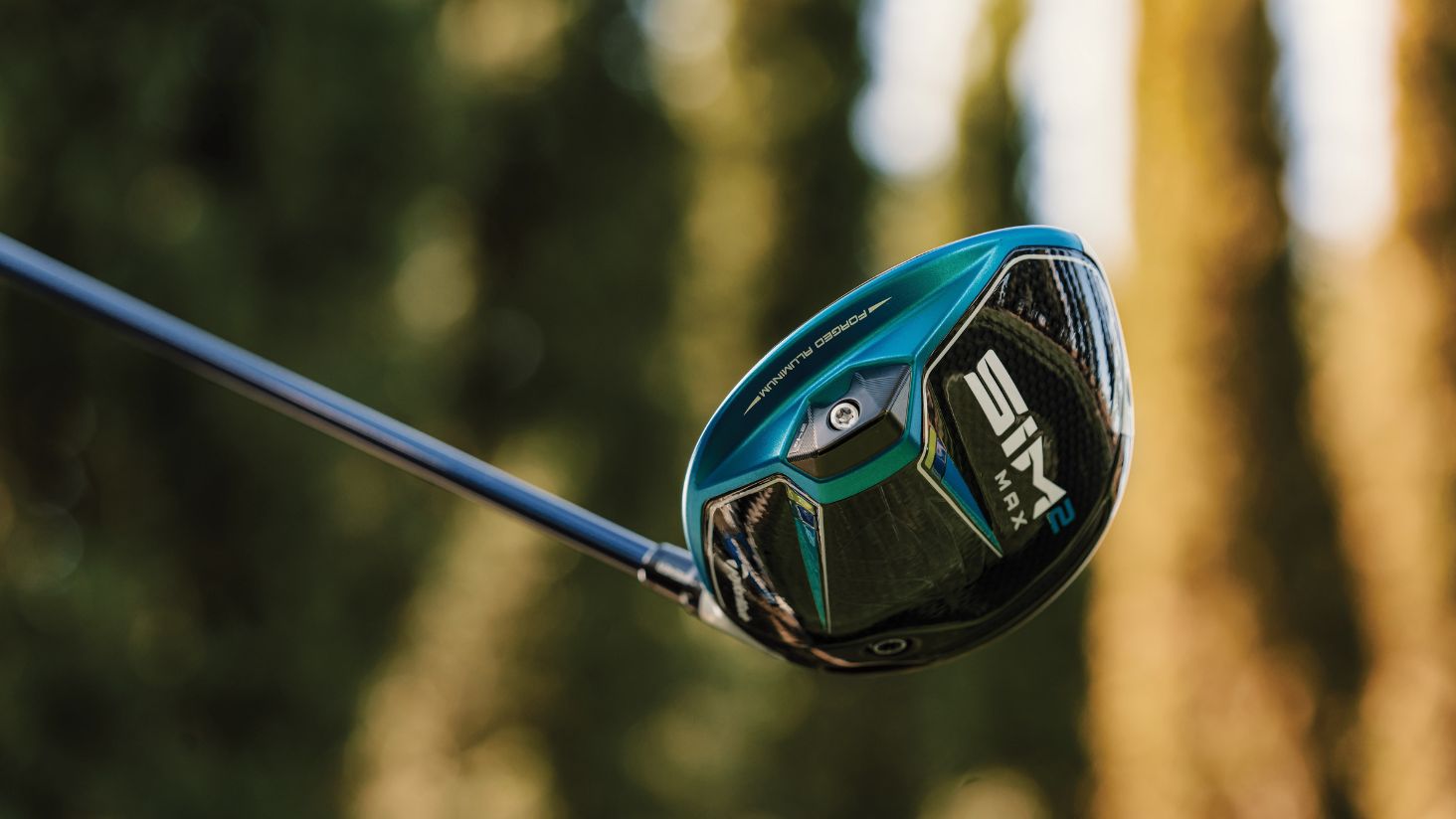
The Classic: TaylorMade SIM2 (2021)
Five years after its launch, the TaylorMade SIM2 driver is back on the best-of lists—as the value-for-money champion. With a market price of around 299 euros, it offers technology that will still impress in 2026.
At its heart is the Forged Ring Construction: a blue-anodized ring made of high-strength aluminum connects the carbon crown, carbon sole, and a heavy tungsten weight at the rear—a design that delivers a moment of inertia that falls only slightly short of even the latest models.
The titanium Speed Injected Twist Face ensures that every single clubhead is precisely calibrated to the legal limit for ball speed—a clear advantage for players who rely on consistent distance.
A comparison of the three SIM2 models:
| Model | Target Audience | Special Feature |
|---|---|---|
| SIM2 | Pros & low handicaps | Precision, low spin, maximum control |
| SIM2 Max | All-rounder (mid-handicap) | 24g tungsten weight, maximum forgiveness |
| SIM2 Max-D | Players with a Slice | Draw bias due to heel-weighted head |
Those who’d rather invest the 300 euros they save in coaching lessons will likely see the biggest difference on their scorecard.
TaylorMade Sim2 Driver: Why It’s Still Worth Buying Today
Special Case: TaylorMade R7 Quad Mini-Driver
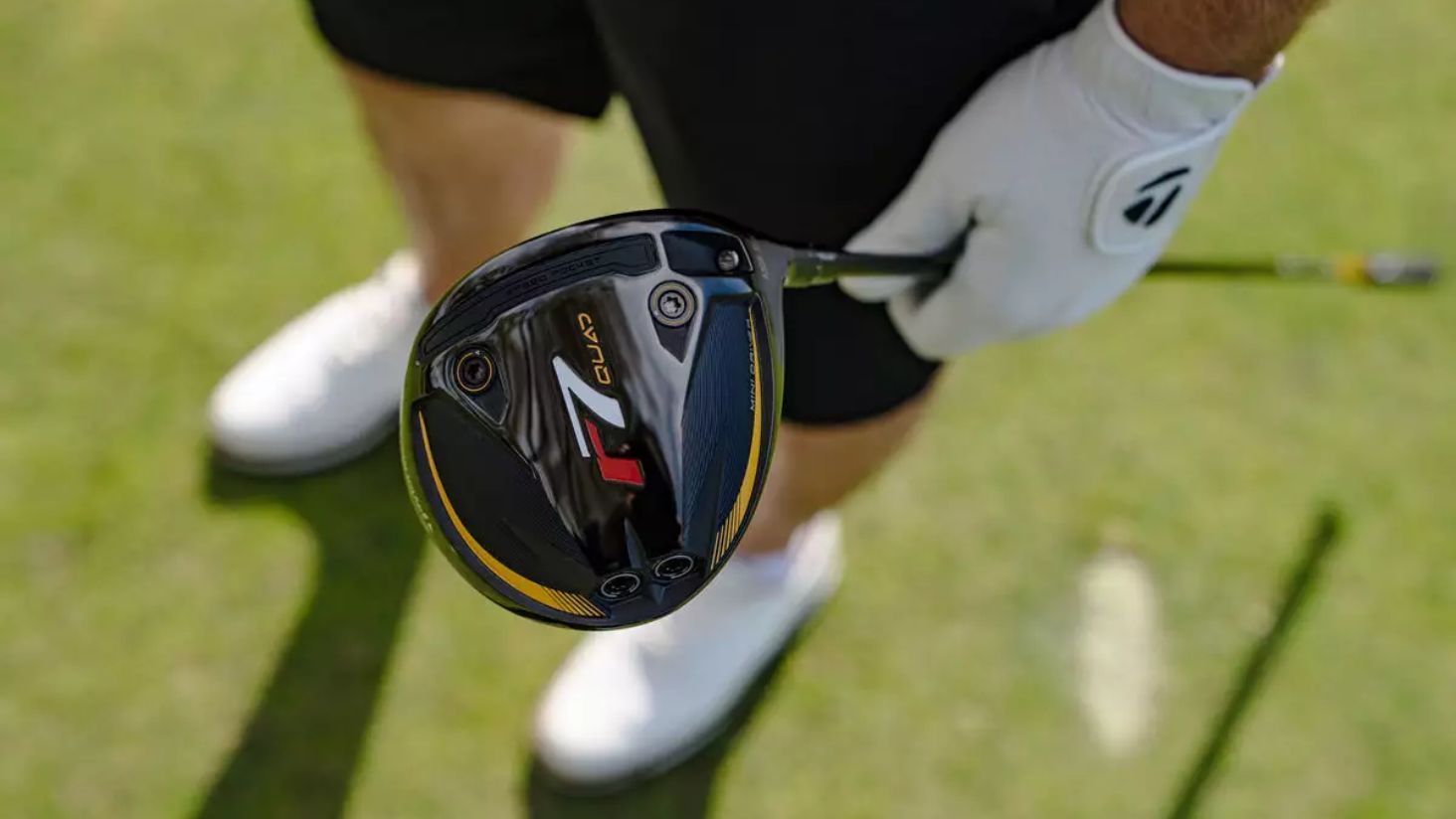
Mini-Drivers are no longer a niche product on the PGA Tour—around 20 pros use them regularly. TaylorMade has responded to this trend with the R7 Quad Mini-Driver: a tribute to the legendary 2004 R7, which was the first Driver ever to feature adjustable weights.
The R7 Quad Mini-Driver (305 cc head volume) combines this historic legacy with modern technology: The Quad Weighting System, featuring four adjustable weights (two at 13g each, two at 4g each), allows for extensive adjustments to the center of gravity. An Infinity Carbon Crown reduces mass and redistributes it to more effective positions. Twist Face and Speed Pocket technology are also incorporated.
The R7 Quad Mini-Driver is designed for golfers seeking more control on narrow fairways or who want to use the club from the Fairway as well. Its compact profile requires a certain degree of accuracy—but rewards it with versatility that no standard driver can offer.
Read more about the TaylorMade R7 Quad Mini-Driver here.
Which TaylorMade Driver is right for me?
| Player Profile | Recommendation |
|---|---|
| Beginner / High Handicap | Qi4D Max, Qi35 Max, or Qi10 Max |
| All-rounder / medium handicap | Qi35 or Qi10 |
| Low swing speed | Qi4D Max Lite or Qi35 Max Lite |
| Advanced players / low handicap | Qi4D LS or Qi35 LS |
| Budget-conscious | SIM2 Max or Qi10 |
| Looking to correct a Slice | SIM2 Max-D |
| Control / tight shots | R7 Quad Mini Driver |
An important note: No article or chart can replace a professional fitting. With the new REAX shaft system and LME (Launch-Monitor Enabled) technology for the Qi4D series, TaylorMade offers particularly precise fitting options. If you’re looking for the right driver, you should consult a specialist using a Launch-Monitor—the difference between a well-fitted older model and a poorly fitted new model is significant.
Read here to find out which TaylorMade Driver Rory McIlroy still swears by today.
Frequently Asked Questions About TaylorMade Drivers (FAQ)
Which TaylorMade driver is the latest? The latest TaylorMade driver series is the Qi4D (2026). In retail stores, the Qi35 series is currently the flagship line.
What does “LS” mean in TaylorMade drivers? LS stands for “Low Spin.” These models are designed for a flat, penetrating ball flight with low spin—ideal for players with high clubhead speed who tend to hit the ball too high or with too much curve.
Is it worth buying an older TaylorMade Driver like the SIM2? Yes —for many golfers, a well-fitted SIM2 or Qi10 is the smarter choice than an expensive new model. The technology from 2021–2024 is mature and proven, and prices have dropped significantly.
What’s the difference between the Qi10 and the Qi35? The Qi35 is the direct successor to the Qi10, featuring optimized weight distribution, a redesigned carbon crown, and an expanded model lineup (including the Max Lite). Both series offer three to four variants for different player profiles.
What is a Mini-Driver, and who is it suitable for? A Mini-Driver has a smaller head volume (approx. 300 cc) than a standard Driver (460 cc) and is used when more control is needed—for example, on narrow fairways or in difficult tee-off situations. The TaylorMade R7 Quad Mini-Driver can also be played from the Fairway.

Brandname
Title will go here and can run on two lines
Brandname
Title will go here and can run on two lines
Brandname
Title will go here and can run on two lines
Brandname
Title will go here and can run on two lines
Brandname
Title will go here and can run on two lines
Brandname
Title will go here and can run on two lines
Brandname
Title will go here and can run on two lines
Brandname
Title will go here and can run on two lines
Release date
03 Jul 2026
photos
TaylorMade drivers are popular among golfers worldwide. (Photo: Adobe Stock)