
TaylorMade M2 Driver: An Iconic Driver—But Is It Still Legal?
Rory McIlroy calls it his favorite club—but it’s just sitting in the garage now. Why the TaylorMade M2 Driver has become a cult favorite—and whether it’s still legal.
The TaylorMade M2 driver is considered by many golfers to be one of the best Drivers of all time. Rory McIlroy calls it his favorite club—but admits that he can no longer use it in tournaments. For amateur golfers, the situation is different: the M2 is still permitted on the course. What’s behind its cult status, what the technology delivers—and why a used M2 could still be a serious option even in 2026.
In February 2025, Rory McIlroy was asked at the Genesis Invitational in Torrey Pines about his all-time favorite club. The four-time major champion’s answer came without a moment’s hesitation: “Probably the M2 Driver. I sometimes stand in my garage and stare at it—and think to myself: I wish I could still use you. But it’s probably illegal at this point.”
A world-class player looking at his old Driver with a mix of nostalgia and wistfulness—that’s no ordinary moment. It’s a testament to the legacy the TaylorMade M2 Driver has left in the world of golf.
Learn more about the latest TaylorMade Drivers here.
The Birth of a Classic
The TaylorMade M2 Driver was released in early 2016—and from the very beginning, it was unlike anything TaylorMade had ever built before. The market trend at the time was all about maximum adjustability: sliding weights, adjustable hosel systems, and CG tracks in every direction. In this regard, the flagship M1 model was the most complex product in the TaylorMade portfolio.
The M2 took the opposite approach. TaylorMade completely eliminated the M1’s T-Track weight system—thereby gaining 15 grams of “discretionary weight,” which was positioned deep and far back in the clubhead. The result: a moment of inertia (MOI) that was 17 percent higher than that of the M1 460 in its most forgiving configuration. Less adjustability, more forgiveness—and more distance. In direct Launch-Monitor tests, the M2 produced measurably higher ball speed than the M1, with nearly identical clubhead speed. The reason: The fixed weight distribution was simply better suited for the average golfer than the M1’s variable settings.
The M2’s message was clear: Not every golfer needs a club they can spend weeks reconfiguring. Sometimes you just need a Driver that delivers.
Rory McIlroy says his favorite golf club of all time is the @TaylorMadeGolf M2 Driver: “I still stare at it in my garage sometimes, like I wish I could still use you, but it’s probably illegal at this point.” @TaylorMadeCA pic.twitter.com/nyeSgJqNQX
— Chris McKee (@mrmckee) February 16, 2025
Technology in Detail: What Makes the M2 Special
Speed Pocket and Carbon Crown
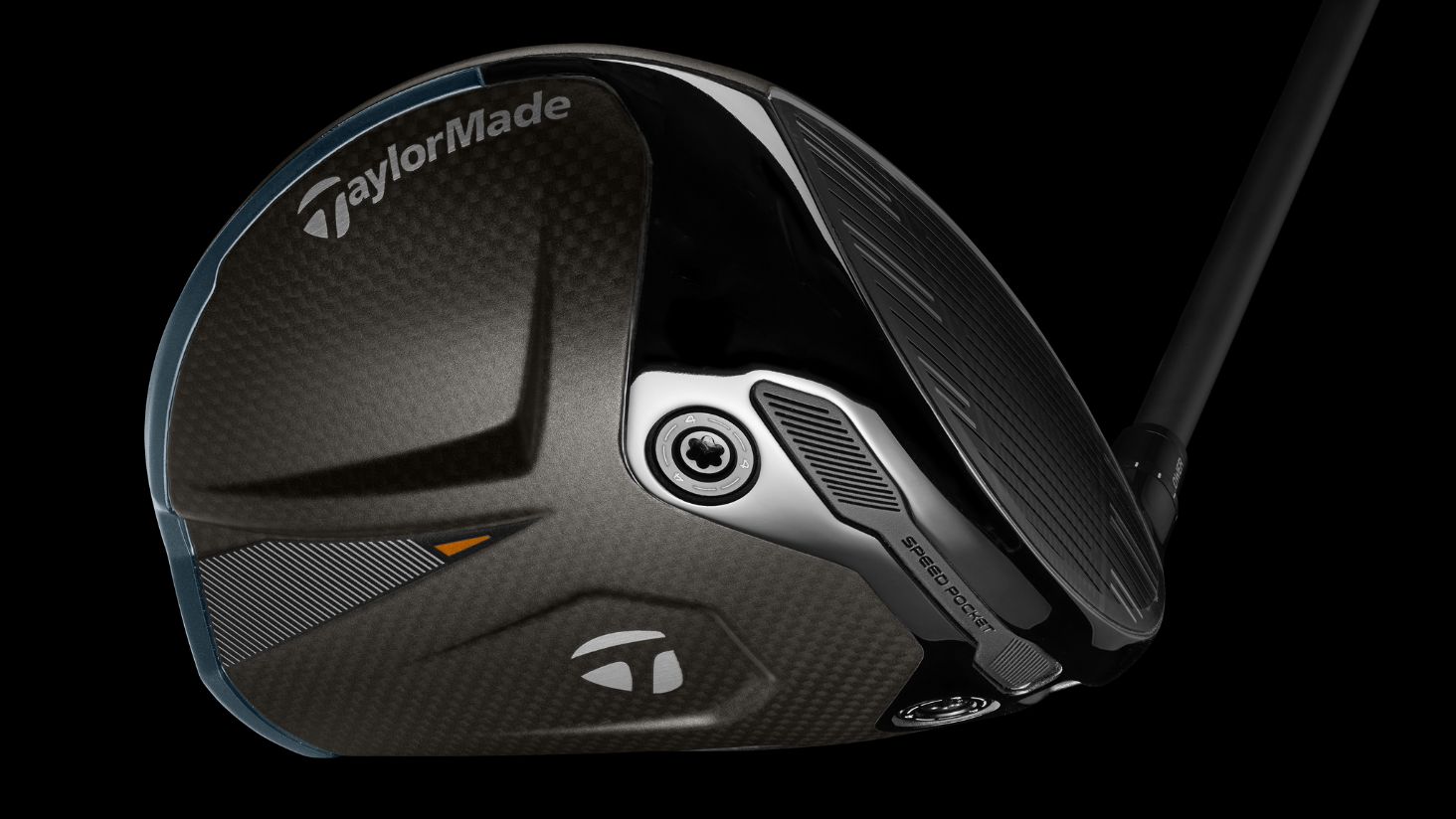
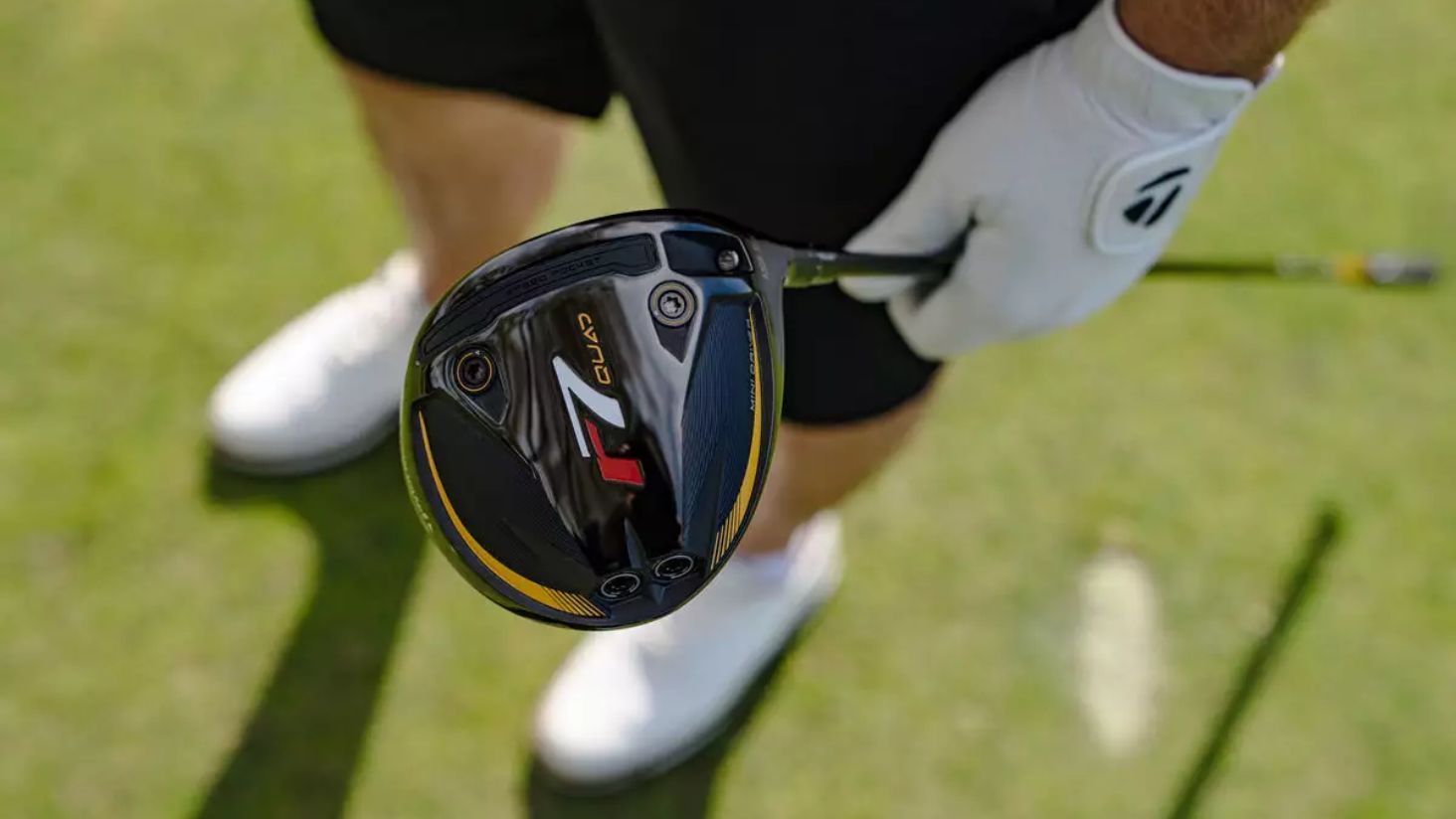
At the heart of the M2 is the Speed Pocket in the sole—a flexible slot that allows the face to flex more upon impact, especially on low-struck shots. Precisely where many golfers lose distance, the M2 preserves ball speed. The result is a high launch angle with low spin—the ideal combination for maximum distance.
The Carbon Crown, featuring six layers of carbon fiber over a titanium body, follows the same principle: saving weight to allocate it where it matters most. Together with the fixed rear weight, this creates a center of gravity that is low and far back—the physical foundation for forgiveness and ball flight.
Where are TaylorMade golf clubs manufactured? Find out here.
The 2017 Redesign: Geocoustic
In 2017, TaylorMade fundamentally redesigned the M2. The most important update was Geocoustic technology: A new, lowered sole shape—contoured in two stages—allows for a larger clubface while improving forgiveness. External sound ribs actively control the vibration patterns in the clubhead. The result is a significantly richer feel at impact and a more precise-sounding tone—without the typical muffled carbon sound of the first generation.
Technical specifications of the 2017 M2: Loft sleeve with 12 settings (±2 degrees), available in 9.5°, 10.5°, and 12°—for right- and left-handed players. A special edition is the M2 D-Type: a Draw-biased version with heel-biased weighting, increased offset, and a more upright lie angle—designed for golfers who want to correct a Slice.
It was the 2017 M2 that Sergio García used to win the Masters title. Justin Rose won the gold medal at the 2016 Olympic Games in Rio with the 2016 model. McIlroy won the 2016 Deutsche Bank Championship, the Tour Championship, and the Irish Open with the M2 in his bag.
Why is the TaylorMade M2 Driver “probably illegal”?
That’s the question that’s been on many people’s minds since McIlroy’s statement in February 2025. The answer requires a brief explanation of physics.
COR, CT, and the Trampoline Effect
Every Driver is subject to a rule limit for the so-called COR value (Coefficient of Restitution)—put simply, the trampoline effect of the clubface. The R&A and USGA limit this value to a maximum of 0.83. A related metric is the CT (Characteristic Time): It measures how long the ball remains in contact with the clubface. The limit is 239 microseconds (with a tolerance of 257 µs).
Why Wear and Tear Becomes a Problem
These limits apply to new clubs. The problem: Over time and with use, a Driver’s titanium face becomes slightly thinner and more flexible —causing the COR value to rise above the legal limit. The club literally becomes non-compliant through use—because it gets better as it ages.
This is exactly McIlroy’s situation: An M2 that has been used for years on the PGA Tour and in practice is likely to have exceeded the official limits long ago.
What This Means for Amateurs
Here’s the key distinction: For amateurs playing a round of golf, these restrictions do not automatically apply. The R&A/USGA compliance rules primarily apply to:
- Professional tournaments governed by R&A/USGA rules
- Handicap-counting rounds where the local golf club explicitly requires it
- Official amateur competitions at the national and international levels
Club members teeing off on the course with friends or in a regular club tournament may play with an M2 Driver—even an older, well-used one. Only those participating in tournaments where conforming equipment is explicitly required should check whether the club still complies with the rules.
For whom is a used TaylorMade M2 Driver still worth it today?
Since McIlroy’s statement, interest in used M2 drivers has noticeably increased. And in many cases, that interest is entirely justified. The M2 offers:
- High forgiveness thanks to a low, deep center of gravity
- Real distance thanks to the Speed Pocket and optimized ball flight
- Simplicity —no weight tuning required; the loft sleeve is sufficient for most adjustments
- An attractive used price —a club that once cost $399 is now available for a fraction of that
For beginners and players with mid-handicap levels, a well-maintained M2 is a serious option. However, those competing in club championships or official tournaments should ensure that their club is still within the tolerance limits—or opt for a current, conforming model.
A golf club fitting is still recommended for the M2: By choosing the right shaft options—TaylorMade offered over 30 shafts at no extra charge—you can get a remarkable amount of performance out of the M2.
Frequently Asked Questions About the TaylorMade M2 Driver (FAQ)
Is the TaylorMade M2 driver still legal for amateurs? Yes —there is no compliance requirement for regular rounds of golf and most club tournaments. Only in competitions that explicitly require R&A/USGA-compliant equipment might a heavily used M2 be problematic.
Why did Rory McIlroy say the M2 was “probably illegal”? Normal wearand tear causes the titanium face to thin slightly, which causes the COR (coefficient of restitution) to exceed the permitted limit. This is very likely to happen with a club that has been used at the professional level for years.
What’s the difference between the 2016 M2 and the 2017 M2? The 2017 model introduced Geocoustic technology: a redesigned sole for a larger face, external sound ribs for better feel and sound, and a Speed Pocket that’s three times more active. The 2016 model paved the way; the 2017 model refined it.
What does “M2” stand for at TaylorMade? The “M” stands for the M-Series, TaylorMade’s high-performance Driver family. The M2 was the more forgiving counterpart to the M1, which was more focused on adjustability and player control.
Is it worth buying a used M2? For beginners and golfers with a mid-handicap: absolutely. Even today, the M2 offers excellent forgiveness and distance at an attractive used price. A professional fitting will help you choose the right shaft options.
Brandname
Title will go here and can run on two lines
Brandname
Title will go here and can run on two lines

Brandname
Title will go here and can run on two lines
Brandname
Title will go here and can run on two lines
Brandname
Title will go here and can run on two lines
Brandname
Title will go here and can run on two lines
Brandname
Title will go here and can run on two lines
Brandname
Title will go here and can run on two lines
Brandname
Title will go here and can run on two lines
Brandname
Title will go here and can run on two lines
Release date
04 Jul 2026
photos
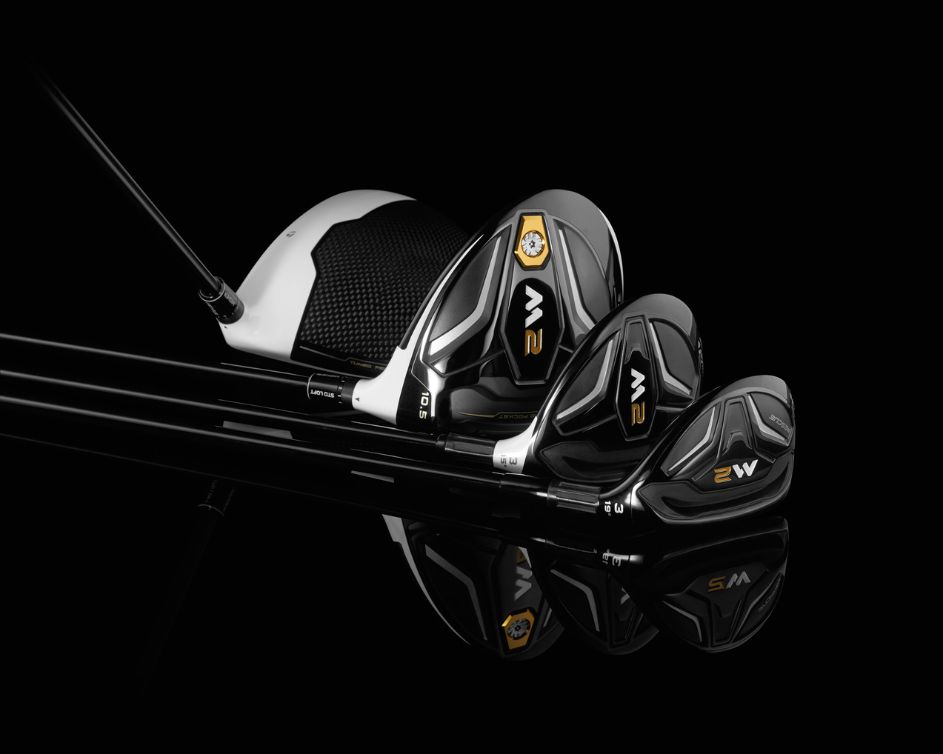
The TaylorMade M2 metalwood family. Is it still legal today? (Photo: TaylorMade)