After an accident in Florida: Tiger Woods is banned from driving for five years
Following the accident in Florida, Tiger Woods must forgo his driver's license for five years. He will not serve jail time, but he must pay a fine of $1,500.
Tiger Woods is barred from driving a car for the next five years. The Martin County Court in Florida ruled this on Wednesday, September 2, 2026, as part of a plea agreement. The 50-year-old entered a “no contest” plea to a reduced charge of reckless driving. His refusal to submit to a lawful test was also taken into account in the proceedings.
Woods must pay a total of $1,500 in fines. The original DUI charge—that is, the allegation of driving a vehicle under the influence of alcohol, medication, or other substances—did not result in a conviction. Woods did not receive a prison sentence as part of the agreement.
Judge Warns Woods Against Driving
Judge Darren Steele made it clear in court that the suspension of Woods’ driver’s license is strictly enforced. “There are no exceptions. If you were to drive for any reason, you would go back to jail immediately,” Steele said, according to a German translation of ABC News’ report. The measure is intended to ensure public safety.
According to available reports, the five-year suspensions imposed in connection with the individual charges will run concurrently, not consecutively. Woods also agreed not to apply for a hardship exemption during this period.
According to a detailed report by local station WFLX, the fine consists of $1,000 for reckless driving and $500 for refusing the test. Additional court costs and fees will also be added.
Tiger Woods just arrived at the Mountain County courthouse for his plea hearing pic.twitter.com/AYNsOJ5X53
— Tom D'Angelo (@tomdangelo44) September 2, 2026
What does “no contest” mean?
Woods initially pleaded not guilty after his arrest. At Wednesday’s court hearing, however, he no longer contested the reduced charges. A “no contest” plea—also known as “nolo contendere” —is not an explicit admission of guilt under U.S. law. The defendant, however, no longer contests the charge and accepts the resulting legal consequences. In U.S. criminal law, this plea is generally treated as a conviction.
Here’s how the accident in March occurred
The case stems from an accident on March 27, 2026. Woods was driving on South Beach Road near Jupiter Island, not far from his home. According to investigators, he attempted to pass a pickup truck towing a work or cleaning trailer. His SUV struck the trailer, veered off the road, and tipped onto its side.
Woods was alone in the vehicle. He was able to exit the wreckage through the passenger side. According to authorities, neither he nor the person in the other vehicle was injured. Property damage to the pickup truck and trailer was estimated at around $5,000 in the available reports.
Woods told an officer that he had looked at his cell phone and changed the radio station shortly before the collision. As a result, he did not notice that the vehicle in front of him had slowed down. This account reflects Woods’ own perspective on the accident and does not constitute a definitive determination of what happened.
Read more background information here on Tiger Woods’ car accident in March 2026.
Tiger Woods is set to change his plea in connection with his March 2026 DUI arrest in Florida. @VictorOquendo reports. pic.twitter.com/LFTrSidEQg
— Good Morning America (@GMA) September 2, 2026
Why the DUI Charge Was Dropped
After the accident, investigators suspected that Woods might have been impaired. Reports mention slow and lethargic movements, heavy sweating, and glassy or reddened eyes. In addition, Woods is said to have had repeated bouts of hiccups during the field sobriety test.
According to investigators, two hydrocodone tablets were found on Woods. The prescription opioid is used to treat pain. Woods told the officer that he takes several prescription medications and had taken them on the morning of the accident.
A breathalyzer test showed a reading of 0.00. Woods refused a urine test that could have been used to screen for other substances or medications. It was precisely this refusal to take the test that was also penalized as part of the agreement that has now been reached.
However, according to State Attorney Thomas Bakkedahl, there was insufficient evidence to prove that Woods was impaired by hydrocodone at the time of the accident. Two toxicologists concluded that the evidence was insufficient to prove such impairment. Furthermore, the prescription records reviewed by the prosecution confirmed that the prescription was legitimate. Bakkedahl also cited a pharmacological tolerance to painkillers that had developed over an extended period.
The prosecution therefore defended the plea agreement. “I did what I thought was right,” Bakkedahl said, according to several U.S. reports. The fact that the DUI charge was downgraded does not, therefore, imply that investigators saw no signs of possible impairment. Conversely, impairment caused by hydrocodone has not been proven.
Is Woods still allowed to drive a golf cart?
One specific question concerns the use of a golf cart. Immediately after the hearing, it was initially unclear whether the court order also covered golf carts. Bakkedahl initially stated that he would have to review the legal situation.
Later, according to the Associated Press, the office of the state attorney in charge stated that adults in Florida are generally permitted to drive a golf cart even without a driver’s license. This applies on both private and public property. However, the rules for golf carts must be distinguished from the suspension of driving privileges for cars and other vehicles requiring a driver’s license. Additionally, specific golf courses or certain roads may have additional regulations.
🐅👀🚗 JUST IN — The State of Florida says “we’ll have to look into that” regarding whether 15-time Major Champion Tiger Woods will be permitted to drive a golf cart as part of his plea deal.
— NUCLR GOLF (@NUCLRGOLF) September 2, 2026
Should Tiger be allowed to cruise the Fairways? @TWlegion pic.twitter.com/EcqHjKc75d
Woods Announced Treatment
Woods responded with a personal statement a few days after his arrest. “I am stepping back for a while to seek treatment and focus on my health,” he said on March 31. He also stated that he wanted to work on his long-term recovery and asked his family and those close to him for privacy.
A court subsequently granted Woods permission to leave the U.S. for inpatient treatment. Several reports indicate that the facility is located in Switzerland. Upon his return, Woods made his first public appearance on June 23 at the Travelers Championship. There, he introduced PGA Tour Commissioner Brian Rolapp and made no comments about the accident or the ongoing legal proceedings.
After Rehab: Here’s How Tiger Woods’ First Public Appearance Went After the Car Accident.
Multiple Accidents and Legal Problems
The current case is the most recent major incident in Woods’ driving history. Since 2009, there have been four known serious or legally relevant accidents or incidents while he was behind the wheel.
- 2009: Woods was involved in an accident in Florida while driving an SUV and was subsequently issued a traffic citation for negligent driving.
- 2017: Police officers found Woods asleep and disoriented in a vehicle in Florida. A breathalyzer test came back negative. He later pleaded guilty to reckless driving as part of a plea agreement and participated in a diversion program.
- 2021: In a single-vehicle accident in California, Woods suffered serious injuries to his right leg and ankle. According to reports at the time, no criminal charges were filed regarding impairment.
- 2026: Following the accident on Jupiter Island, Woods was initially charged with DUI resulting in property damage and with refusing a lawful test. The case has now concluded with the charges being reduced and a five-year suspension of his driver’s license.
These incidents are also linked to Woods’ long medical history. The golf star has undergone numerous surgeries on his back and legs. However, a medical history alone does not allow for a determination as to whether he was impaired by medication during the accident in March.
Woods’ athletic future remains uncertain
Woods has not competed in an official PGA Tour tournament since July 2024. Following the accident, he has primarily continued his work off the course. He remained chairman of the PGA Tour’s Future Competition Committee and was involved in planning the changes to the tour’s structure scheduled for 2028.
Whether and when Woods will be able to compete regularly in tournaments again remains to be seen. He is scheduled to host the Hero World Challenge in the Bahamas in December. However, such a role does not necessarily signify a return to tournament play.
With the agreement reached in Martin County Court, the legal proceedings following the March accident are now concluded. Woods must surrender his driver’s license for five years, is prohibited from driving during that time, and must pay $1,500 in fines. How his treatment and athletic future will unfold, however, remains to be seen.
Brandname
Title will go here and can run on two lines
Brandname
Title will go here and can run on two lines

Brandname
Title will go here and can run on two lines
Brandname
Title will go here and can run on two lines
Brandname
Title will go here and can run on two lines
Brandname
Title will go here and can run on two lines
Brandname
Title will go here and can run on two lines
Brandname
Title will go here and can run on two lines
Brandname
Title will go here and can run on two lines
Brandname
Title will go here and can run on two lines
Release date
03 Sep 2026
photos
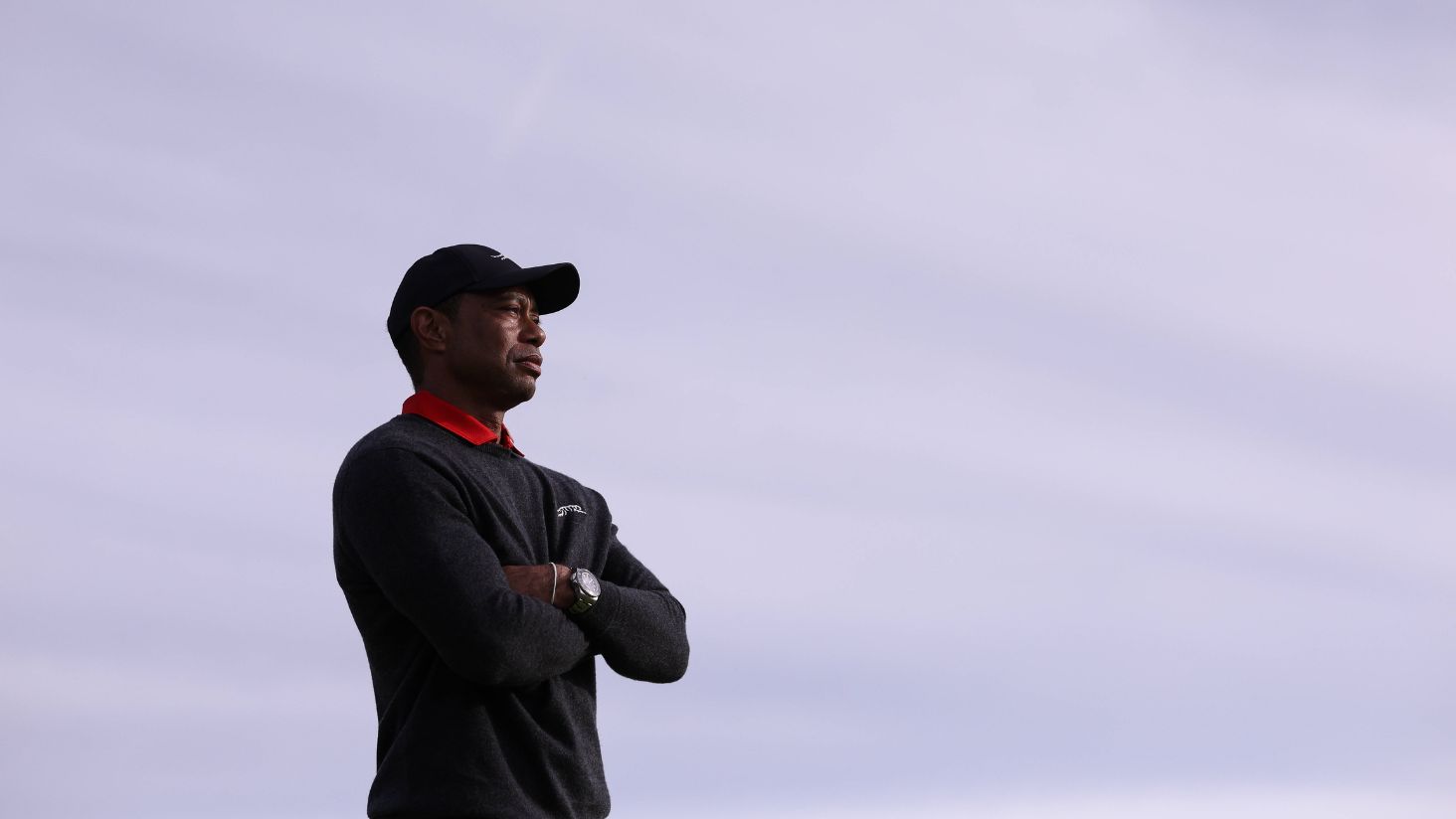
Following a court ruling, Tiger Woods has lost his driver's license for five years. (Photo: Imago / EPA)