TaylorMade P790, P770, and Qi Max—which iron set is right for me?
P790, P770, or Qi Max? A comparison of all TaylorMade iron sets—with buying advice based on handicap, player type, and swing speed.
If you look inside the golf bags on the PGA Tour, there’s one name you’ll see more often than any other: TaylorMade. Especially when it comes to Irons, the Carlsbad, California-based manufacturer has established a dominance in recent years that is second to none. But what works on the Tour isn’t necessarily the right choice for every golfer.
The range of TaylorMade irons and TaylorMade iron sets is extensive—and that’s both its strength and its challenge. On one hand, there’s the P Series: forged Players irons offering feel, control, and a design tailored to ambitious players. On the other hand, there’s the Qi Series: modern game-improvement irons that use active technology to promise more distance, straighter shots, and maximum forgiveness.
This article explains the differences, presents the three most important models— the P790, P770, and Qi Max —in detail, and provides you with a clear buying recommendation.
Two lines, one decision: P Series or Qi Series?
Before we dive into the individual models, it’s worth taking a quick look at the fundamental product philosophy behind the two lines—because they pursue different goals.
The P-Series: Feel and Control
TaylorMade’s P-Series irons—P770, P790, P7MC, P7MB—are designed for players who value a direct feel at impact, precise distance control, and a player-oriented look. They feature high-quality engineering, hollow-body construction, and modern materials—but the core principle remains that of a player’s iron: feedback and control are the top priorities.
The Qi Series: Distance and Forgiveness
The Qi irons—Qi Max and Qi Max HL—take a different approach. Here, the focus is on maximum forgiveness, active slice correction, and the highest possible launch angle. They are designed for golfers who want to improve their game and benefit from actively supportive technology.
Initial Guidance Based on Handicap and Player Type
| Player Type | Handicap | Recommended Line |
|---|---|---|
| Low-handicap players seeking control and feel | 0–10 | P770 / P7MC |
| Ambitious amateur looking for distance and feel | 5–18 | P790 |
| Average golfer, looking for forgiveness | 18–36 | Qi Max |
| Beginner, slow swing speed | 36+ | Qi Max HL |
| Tendency to Slice, looking for straighter shots | All | Qi Max |
Brandname
Title will go here and can run on two lines
Brandname
Title will go here and can run on two lines
TaylorMade P790 – Fifth-Generation Players Distance
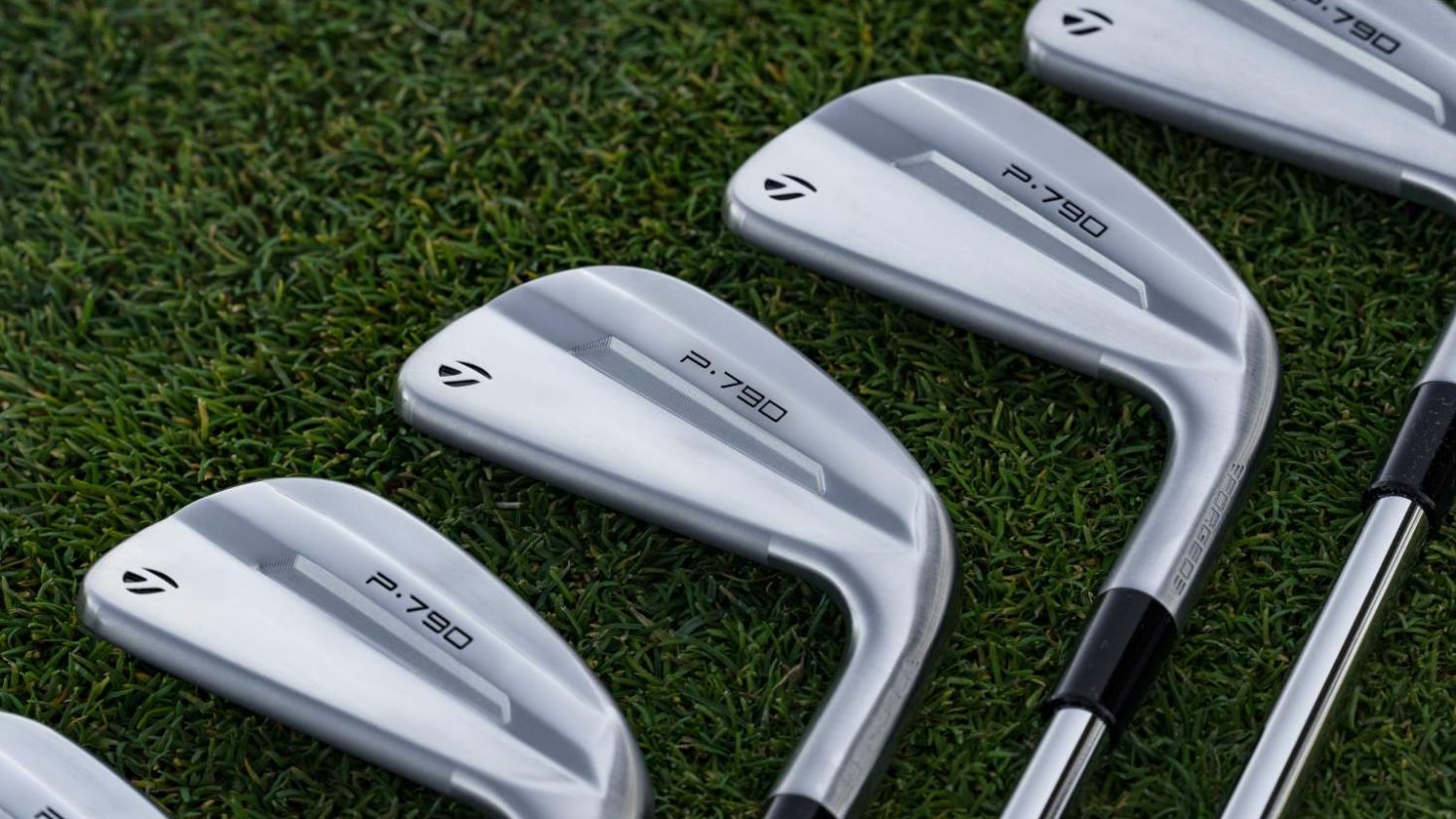
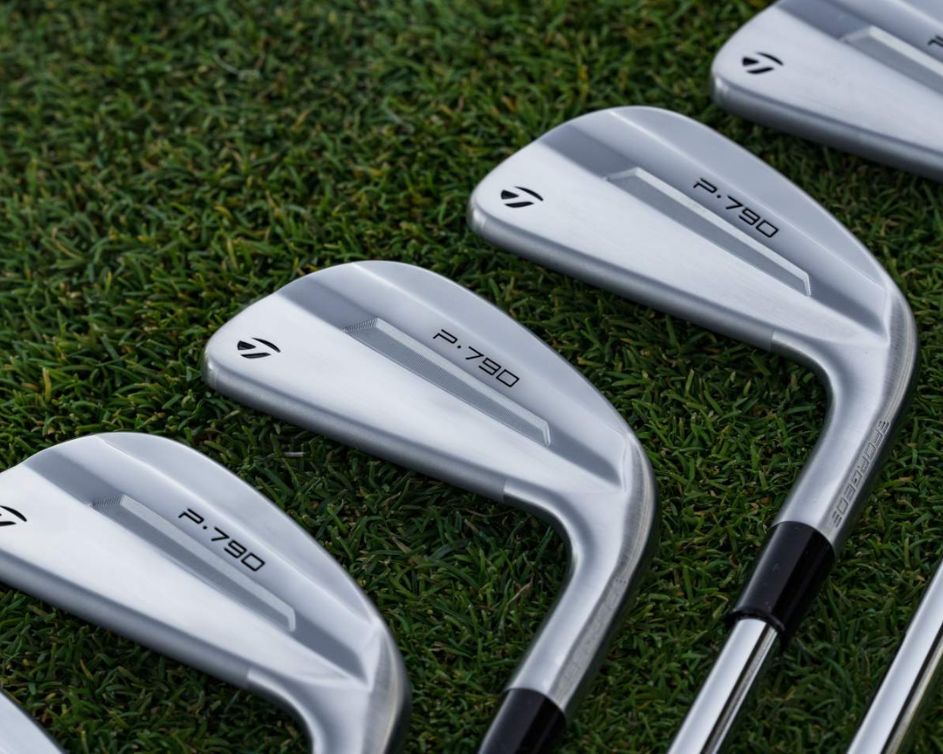
The TaylorMade P790 is arguably the most versatile Iron TaylorMade has ever built. Since its introduction, it has consistently bridged two worlds that were long considered incompatible: the sleek look and direct feel of a players’ iron with the distance and forgiveness of modern technology. The current generation is the fifth—and it is the most technically advanced yet.
Who are the TaylorMade P790 irons designed for?
The TaylorMade P790 iron set is designed for ambitious amateur golfers as well as Tour professionals looking for a versatile iron that offers both distance and precision. As a general rule, it’s suitable for players with a handicap of 18 and up, all the way down to single digits. If you’re looking for a true Blade iron, go for the P7MC or P7MB. If forgiveness is your top priority, the Qi Max is a better choice.
Learn more about TaylorMade’s Spider putters here.
Comparing the TaylorMade P790 Irons
The Technology in Detail
4340M Face Material:The biggest technical update in the current generation is the new 4340M steel face material—an ultra-high-strength material that is 20 percent stronger than that of the previous generation. The increased strength allows for a thinner face, which directly leads to higher ball speeds. At the same time, the effective sweet spot increases by up to 24 percent compared to the previous model.
FLTD CG – Flighted Center of Gravity TheFLTD CG system is at the heart of P790 technology. Strategically placed tungsten weights in each individual iron head progressively shift the center of gravity throughout the entire Set:
- Long irons (4–5): Center of gravity low and back → easier launch, more forgiveness
- Mid-irons (6–7): Center of gravity shifts forward and upward → more stability, better distance control
- Short irons (8–PW/AW): Center of gravity high and forward → more spin, more precise approach shots
Thru-Slot Speed Pocket:Irons 4–7 feature a slot in the sole that adds flexibility to the clubface and extends the sweet spot downward. This reduces the impact of off-center hits—ball speed and distance remain more consistent even with low contact.
SpeedFoam AirThecavity in the clubhead is filled with SpeedFoam Air—an ultra-lightweight urethane foam that dampens vibrations and delivers a soft, controlled feel at impact. The result is a moment of impact that, both in sound and feel, resembles forged Iron—despite the hollow-body construction.
Thick-Thin Back Wall with Honeycomb CutoutsCutoutson the back of the clubhead strategically reduce weight to reposition it deeper within the head. This increases MOI and stability on off-center hits.
Appearance and Design
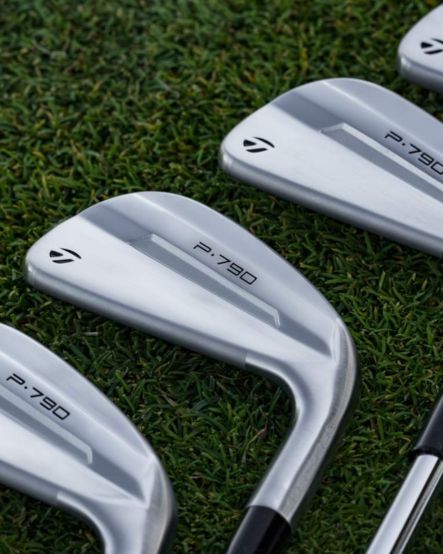
Visually, the P790 does exactly what it was designed to do: it looks like a players’ iron. The topline is narrow and clean, and the clubhead appears elegant and compact at address. The matte “Tour Satin Scratch Finish” underscores its professional character, and the P790 logo is centered on the back—a deliberate departure from the previous model, where it was located on the heel. The sole is slightly wider, which enhances playability without being distracting at address.
TaylorMade P790 Specifications (Men’s)
| Iron | Loft | Lie | Offset | Length |
|---|---|---|---|---|
| 4 | 20° | 61° | 1.9 mm | 38.50" |
| 5 | 23° | 61.5° | 1.8 mm | 38.00" |
| 6 | 26.5° | 62° | 1.75 mm | 37.50" |
| 7 | 30° | 62.5° | 1.7 mm | 37.00" |
| 8 | 34° | 63° | 1.6 mm | 36.50" |
| 9 | 39° | 63.5° | 1.55 mm | 36.00" |
| PW | 44° | 64° | 1.5 mm | 35.75" |
| AW | 49° | 64° | 1.4 mm | 35.50" |
TaylorMade P770 – A Compact Model with a Big Impact
The TaylorMade P770 is what TaylorMade itself so aptly describes as “the technology of the P790 in a more compact player’s design.” If you know and love the P790 but are looking for an even more player-oriented iron with even less offset and an even slimmer topline, the P770 is exactly what you’re looking for.
The model was developed closely based on the P790—the same materials, the same core philosophy, but with a more compact clubhead that looks and plays more like a classic Blade Iron.
Who are the TaylorMade P770 irons (P770 Iron) designed for?
The TaylorMade P770 Iron—also known as the TaylorMade P770—is designed for advanced players and low-handicappers who want the look and feel of a player’s iron but still want to benefit from modern technology. As a rule of thumb: handicaps 0–12, with solid ball-striking and a preference for a slimmer profile than the P790.
Learn more about the latest TaylorMade Drivers here.
Comparing the TaylorMade P770 irons
The Technology in Detail
Forged Hollow-Body Construction: The P770 features a forged 4140 steel face and a body made of soft carbon steel. The combination of a forged feel and a hollow-body construction delivers the direct feedback of a Blade iron—with a technological safety net underneath.
Tungsten Weight Up to 46 gAsolid tungsten weight of up to 46 grams is precisely placed within the clubhead to optimally position the center of gravity. That’s significantly more than in typical Players irons in this category—and explains why the P770 offers surprising forgiveness for its category despite its compact head shape.
SpeedFoamTheP770 uses SpeedFoam (the classic version, not the Air version found in the P790) for damping and to optimize feel inside the head.
Thru-Slot Speed Pocket & Progressive ICTTheThru-Slot Speed Pocket in the sole increases face flexibility and maintains ball speed on low hits. Progressive Inverted Cone Technology (ICT) is individually positioned in each iron—depending on the specific requirements of that iron—to maximize accuracy and ball speed on off-center hits.
Differences Between the P770 and P790 at a Glance
| Feature | P790 | P770 |
|---|---|---|
| Head size | Medium | Compact |
| Topline | Slim | Very slim |
| Offset | Moderate | Minimal |
| Blade length | Medium | Shorter |
| Strike surface | 4340M steel (new) | 4140 forged steel |
| Filling | SpeedFoam Air | SpeedFoam |
| Target audience | HCP 0–18 | HCP 0–12 |
| Forgiveness | Medium-High | Medium |
TaylorMade P770 Specifications
| Iron | Loft | Lie | Offset | Length |
|---|---|---|---|---|
| 4 | 20° | 61° | 1.9 mm | 39.00" |
| 5 | 23° | 61.5° | 1.8 mm | 38.50" |
| 6 | 26° | 62° | 1.75 mm | 38.00" |
| 7 | 30° | 62.5° | 1.7 mm | 37.50" |
| 8 | 34° | 63° | 1.6 mm | 37.00" |
| 9 | 38° | 63.5° | 1.55 mm | 36.50" |
| PW | 42.5° | 64° | 1.5 mm | 36.00" |
TaylorMade Qi Max – Game Improvement with Pro-Level Performance
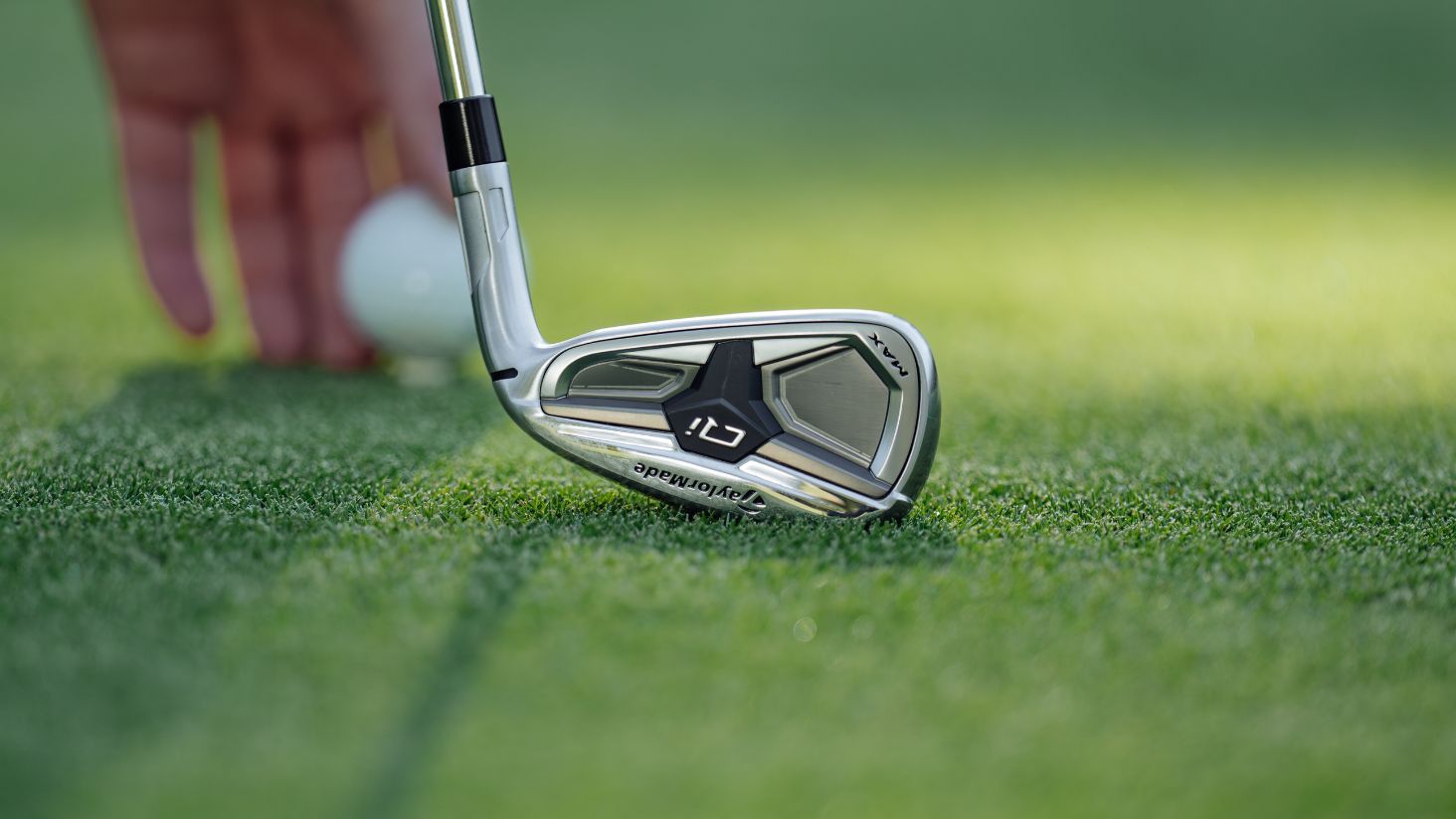
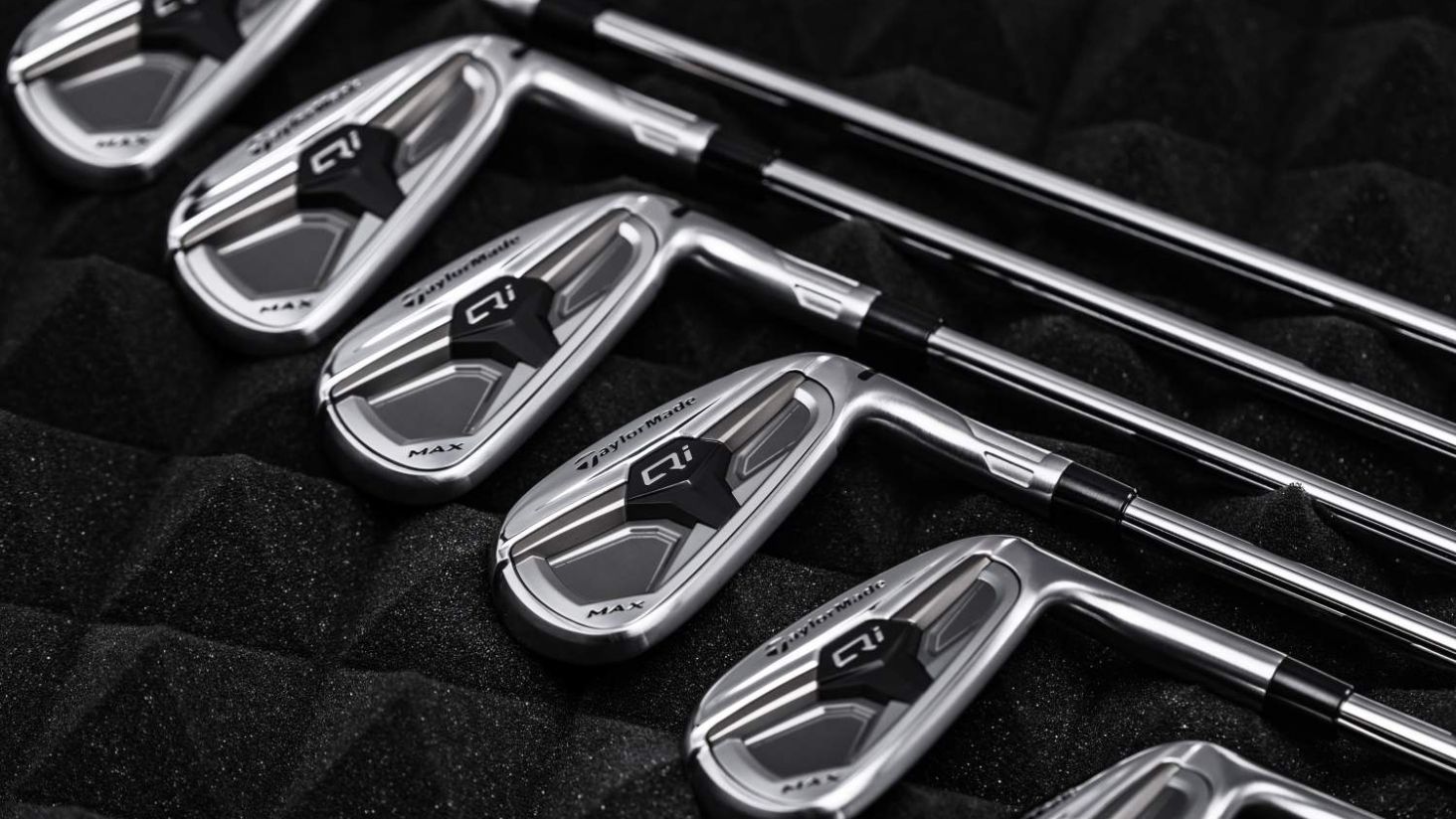
The TaylorMade Qi Max irons take a fundamentally different approach than the P Series—and that’s a strength, not a weakness. Where the P790 and P770 focus on control and feedback, the Qi Max focuses on active support: more distance, straighter shots, and a feel that’s surprisingly premium despite the large heads.
The goal is clear: these irons are designed to help golfers play better—not because they’re getting better, but because the club has gotten smarter.
The Slice Problem and the Technical Solution
Many game-improvement irons struggle with a structural problem: the face flexes more at the toe than at the heel. This uneven flex causes the face to open slightly at impact—and for right-handed players, this produces the dreaded Fade or Slice.
TaylorMade has solved this problem in the Qi Max irons with a synchronized face design. The entire face flexes evenly—which reduces cut spin and keeps the ball significantly more stable on the target line. For golfers prone to Slice, this is one of the most effective technical solutions an Iron can offer.
The Technology in Detail
FLTD CG – Flighted Center of Gravity The Qi Maxalso utilizes the progressive center of gravity system:
- Long irons: Center of gravity extremely low → higher launch, more carry
- Short irons: Center of gravity gradually higher → flatter, more controllable trajectory, more spin for stopping on the green
Sound Stabilization Bar + ECHO Damping System A metal rail connects the topline to the back of the clubhead, eliminating the hollow sound of classic cavity-back irons. The ECHO Damping System absorbs vibrations directly at the source. The result is a rich, full impact sound reminiscent of the forged P Series—even though the design principles are completely different.
Refined Players Shape Despite their game-improvement design, the Qi Max irons have a sporty, sleek appearance. A thinner topline, reduced hosel offset, and a compact Blade length ensure that these irons don’t look like beginner clubs in your bag.
Who owns TaylorMade? Find out here.
Qi Max vs. Qi Max HL—which version is right for you?
TaylorMade offers the Qi Max Irons in two versions that differ in one key aspect:
TaylorMade Qi Max (Standard) The standard model is designed for a broad audience. It has a thinner topline and a more compact profile—it looks sportier and is suitable for players with handicaps up to about 36.
TaylorMade Qi Max HL (High Launch) The HL version is specifically optimized for players with slower swing speeds. The clubheads are slightly larger, and the lofts are set about 3 degrees flatter (steeper). While this may sound counterintuitive at first, it makes physical sense: The steeper loft angle gives the ball more lift, extends the flight time, and thus ensures greater overall distance despite a slower swing speed.
| Feature | Qi Max | Qi Max HL |
|---|---|---|
| Head Size | Compact-medium | Larger |
| Loft | Standard | Approx. 3° flatter |
| Target audience | Handicap approx. 36 or better | HCP 36+, slow swing speed |
| Swing speed | Normal to fast | Slow to normal |
| Appearance | Sporty and sleek | Slightly bulkier |
Specifications: TaylorMade Qi Max
| Iron | Loft | Lie | Offset | Length |
|---|---|---|---|---|
| 4 | 18.5° | 61.5° | 5.1 mm | 39.125" |
| 5 | 21° | 62° | 4.7 mm | 38.50" |
| 6 | 24° | 62.5° | 4.3 mm | 37.88" |
| 7 | 28° | 63° | 3.9 mm | 37.25" |
| 8 | 32.5° | 63.5° | 3.4 mm | 36.75" |
| 9 | 37° | 64° | 2.9 mm | 36.25" |
| PW | 42.5° | 64.5° | 2.4 mm | 35.75" |
| AW | 48° | 64.5° | 1.9 mm | 35.50" |
The Other TaylorMade P-Series Irons: A Brief Overview
In addition to the P790 and P770, the TaylorMade P Series includes other models, each designed for specific types of players:
P7MC – Muscleback with Extra Forgiveness
The P7MC is a classic muscleback iron, forged from 1025 carbon steel using a five-stage Compact Grain Forging process under 2,000 metric tons of pressure—more than double the industry standard. It’s designed for low-handicap players who appreciate the direct feel of a Blade iron but still want a minimal margin of forgiveness. The perimeter weighting provides slightly more stability than a pure Blade—but it’s still no P7MB.
P7MB – A Pure Blade for the Best Male and Female Golfers
The P7MB is the purest iron TaylorMade builds: no cavity, no foam, no technical safety net. A milled face, aggressive grooves, minimalist design. Anyone who plays consistently well with this iron doesn’t need any assistance—and doesn’t want any either. The P7MB is aimed exclusively at very good players with a stable, repeatable swing.
P7TW – The Tiger Woods Collaboration
The P7TW is a special edition model developed in close collaboration with Tiger Woods to precisely meet his requirements. Minimal offset, extremely short Blade length, and the narrowest sole—an Iron that allows for maximum control over trajectory and ball shape. It is designed exclusively for players at the very highest level.
Where are TaylorMade golf clubs manufactured? Find out here.
P-Series Overview: A Comparison
| Model | Style | Forgiveness | Trajectory | Maneuverability | Range |
|---|---|---|---|---|---|
| P790 | Player Distance | Medium-High | Medium-High | Medium | Long |
| P770 | Modern Player | Medium | Medium | Medium-High | Mid-Long |
| P7MC | Players | Low-Medium | Medium | High | Medium |
| P7MB | Players | Low | Medium | High | Medium |
| P7TW | Players | Low | Medium | High | Medium |
Buying Guide: Which TaylorMade Iron Set Is Right for You?
Choosing the right Iron set depends on four factors: handicap, swing speed, playing priorities, and personal aesthetic preferences. Here’s a quick guide to help you decide:
You have a handicap of 0–10 and want maximum control over trajectory and ball shape: P770 or P7MC—depending on your desired level of forgiveness
If you have a handicap of 5–18 and are looking for the best balance of distance, feel, and forgiveness: TaylorMade P790—the most versatile Iron set in the lineup
If you have a handicap of 18–36 and want forgiveness without compromising on style: TaylorMade Qi Max—sporty design with active technology
If you have a slower swing speed or play a handicap of 36 or higher: TaylorMade Qi Max HL—optimized launch for less effort
You struggle with a Slice and want straighter shots: TaylorMade Qi Max—the synchronized face design is the most effective solution available
You want a pure Blade iron without any technical assistance: P7MB—but only if your swing can handle it
TaylorMade M2 Driver – Is the cult-favorite Driver still legal?
Fitting: Why It’s Even More Important for Irons Than for Putters
With putters, it’s all about alignment and stroke type. With irons, there are significantly more factors to consider—and a wrong setting here can make even the best club unplayable. You can book a no-obligation fitting at ALL4GOLF here.
Lie angle: If the clubhead isn’t lying flat on the ground at impact, the face alignment changes—and the ball flies to the left or right of the target.
Shaft Flex: A shaft that’s too stiff reduces distance and can disrupt the launch. A shaft that’s too soft leads to uncontrollable ball flights. Swing speed and transition rhythm determine the correct flex.
Club Length: Clubs that are too long or too short force you to adjust your posture—which directly affects consistency and ball contact.
Recommendation: Get fitted before buying a new Iron set. The technical differences between models only fully come into play when the lie, flex, and length match your swing.
Golf Club Care: How to Keep Your Clubs in Top Condition for Precise Shots
FAQ: The Most Common Questions About TaylorMade Irons
What’s the difference between the TaylorMade P790 and P770? The P790 has a slightly larger clubhead, more offset, and a broader target audience (HCP 0–18). The P770 is more compact, has a slimmer topline, and less offset—it appeals to low-handicap players who want to combine the look of a Players iron with modern technology. Both feature a hollow-body construction, SpeedFoam, and tungsten weighting, but differ in face material (P790: 4340M, P770: 4140) and head size.
Who are the TaylorMade P790 irons designed for? They’re ideal for ambitious amateur golfers and tour pros with handicaps between 0 and 18 who are looking for an iron that offers a Players feel, modern distance technology, and good forgiveness. The P790 is intentionally designed to be versatile—it works for a broad target audience.
What does FLTD CG mean in TaylorMade irons? FLTD CG stands for “Flighted Center of Gravity.” In this design, the center of gravity in each individual iron in the set is positioned differently through strategically placed tungsten weights: low in the long irons for a higher launch, and progressively higher in the short irons for more spin and control. The goal is to achieve an optimal ball flight for every Iron in the Set.
TaylorMade Qi Max or P790—which iron is right for me? That depends on your handicap and your priorities. The P790 is designed for players who value control and feel and have a consistent swing. The Qi Max is for golfers who primarily benefit from forgiveness, straighter shots, and a high launch—typically those with higher handicaps. If you tend to Slice, the Qi Max is the clearly superior choice.
What’s the difference between the Qi Max and the Qi Max HL? The Qi Max HL (High Launch) has larger clubheads and lofts that are about 3 degrees lower (steeper). At first, this might sound like less distance, but physically, the opposite is true: Players with slower swing speeds gain more hang time—and thus more total distance—thanks to the higher launch. The Qi Max HL is optimized for handicaps of 36 or higher and for golfers with slow swings.
Do I need a fitting for an Iron set? Yes —a fitting is especially crucial for Irons. Lie angle, shaft length, and flex directly influence how the ball flies. An iron that’s technically excellent but doesn’t match your swing can produce worse results than a less expensive but properly fitted model.
Conclusion
With the P Series and the Qi Series, TaylorMade offers two fundamentally different iron philosophies and iron sets—and within these lines, even finer gradations. This makes the selection process challenging but also precise: there’s a suitable option for nearly every type of player, every handicap, and every priority.
The P790 remains the most versatile and most widely played model in the line—an Iron that works for an exceptionally broad target audience. The P770 iron set appeals to advanced players who want a bit more of a touring iron feel. And the TaylorMade Qi Max iron set is for anyone who benefits from active support technology—without wanting to sacrifice a professional look.
Our recommendation for choosing the right TaylorMade iron set: Get fitted before you buy. The technology works—but only if the club is the right fit for you.

Brandname
Title will go here and can run on two lines
Brandname
Title will go here and can run on two lines
Brandname
Title will go here and can run on two lines
Brandname
Title will go here and can run on two lines
Brandname
Title will go here and can run on two lines
Brandname
Title will go here and can run on two lines
Brandname
Title will go here and can run on two lines
Brandname
Title will go here and can run on two lines
Release date
08 Jul 2026
photos
TaylorMade irons are among the most widely used golf clubs of all. (Photo: TaylorMade)