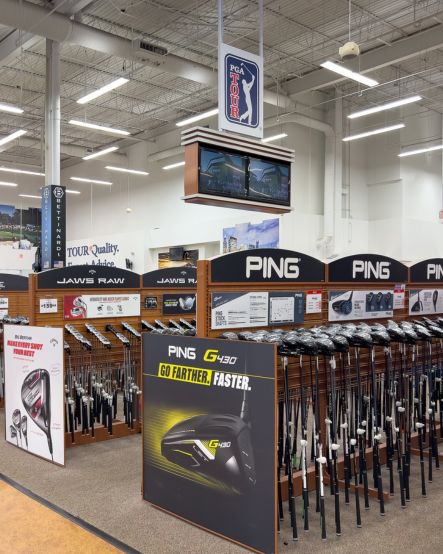
Buying a Putter: How to Choose the Right One
Blade or Mallet? Arc or SBST stroke? Our guide to buying putters explains all the factors—with model recommendations ranging from 50 to 600 euros.
More putts are missed because of the wrong Putter than because of poor technique. That may sound provocative—but it’s the plain truth in a market where golfers choose based on appearance, brand image, or special offers, rather than on the Putter that physically suits their stroke. Even the most expensive Putter in the world is of little help if it works against the user’s natural movement.
This article takes you step by step through the six key factors in choosing a Putter: from head shape and stroke type to length, lie, and loft. At the end, you’ll find specific model recommendations tailored to different player types—ranging from under 50 euros to Tour-level models—and learn why a professional fitting is the quickest way to make the right decision.
If you’d like to brush up on the basics of putting first, our article “What Is a Putter?” offers a detailed introduction to head shapes, hosel types, and roll phases. Our brand hub “The Best Putter Brands Compared” provides a complete overview of the most important putter brands.
Not a Question of Gender—a Question of Stroke
Anyone searching for a “men’s golf putter” is actually looking for the right Putter for themselves. Technically speaking, there are no inherently male or female putters. What determines a Putter’s suitability are individual factors: stroke type (straight or arcing), height, the distance from the wrist to the ground, preferred putting stance, and grip strength.
Some manufacturers market models under a “women’s” label—but technically, they’re based on the same design principles as men’s models, with only adjusted lengths or color schemes. If you base your choice on these labels, you’re unnecessarily limiting your options.
The following steps for choosing the right Putter apply equally to all golfers—regardless of gender or skill level.

Step 1 – Head Shape: Blade, Mid-Mallet, or Mallet?
The head shape is the first and most critical decision when choosing a Putter. It determines the weight distribution, the moment of inertia (MOI), the available alignment aids, and—crucially—which stroke types the Putter supports. If you skip this decision and go straight to looking at brands or prices, you’re starting at the wrong end.
Blade Putters – Maximum Feel, Clear Feedback
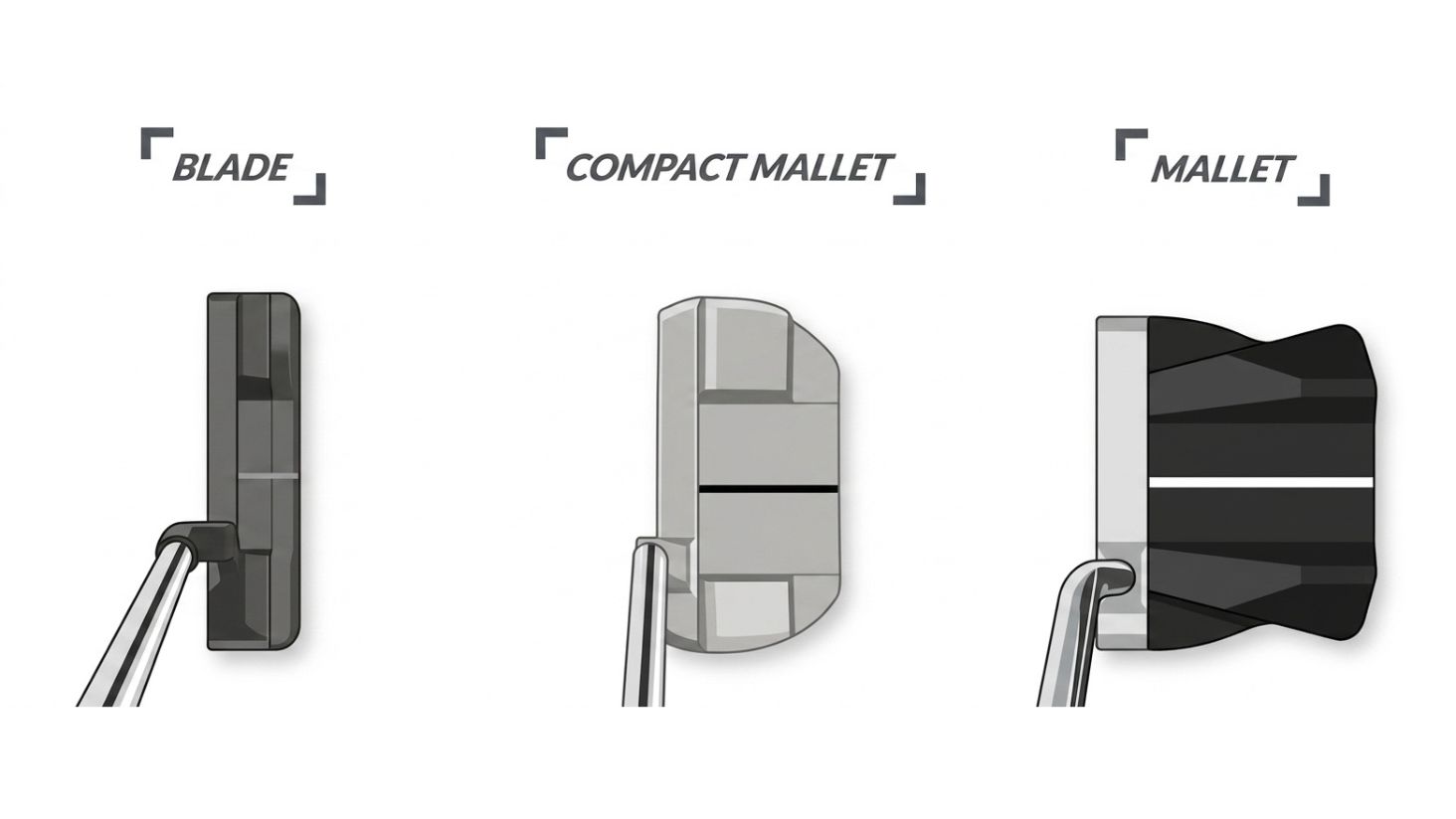
Blade putters are the most classic and traditional shape in golf: a narrow, compact head with weighting at the heel and toe (heel-toe weighting). This design creates a clear sweet spot—if you hit the ball in the center, you’ll feel it immediately. If you miss it, you’ll feel that, too.
This immediate feedback is the Blade’s greatest strength—and at the same time its challenge: Blade Putters require a consistent, repeatable stroke. The heel-toe weighting creates a natural toe hang, which supports the opening and closing of the face during an arc stroke. MOI and forgiveness are lower compared to Mallet designs.
Blade putters are particularly well-suited for experienced golfers with an arc-shaped stroke who prioritize feel and direct feedback over maximum stability. The most successful blade designs in golf history are the Scotty Cameron Newport 2 and the Ping Anser—two models that, combined, have more Tour wins than any other Putter design.
Mallet Putters – Maximum Forgiveness
Mallet putters have a large, deep head with mass deliberately placed far on the outside. This significantly increases the MOI: even with slightly off-center strikes, the head remains more stable, ball speed more consistent, and directional control more reliable. Mallet putters are usually face-balanced—the face points upward when the shaft is balanced—and thus promote a straight stroke.
The larger head offers more space for alignment aids, which makes it easier for many golfers to visually align themselves with the target line. Players who prioritize stability and consistency over direct feel, and those who benefit from alignment aids, are typically better off with a Mallet.
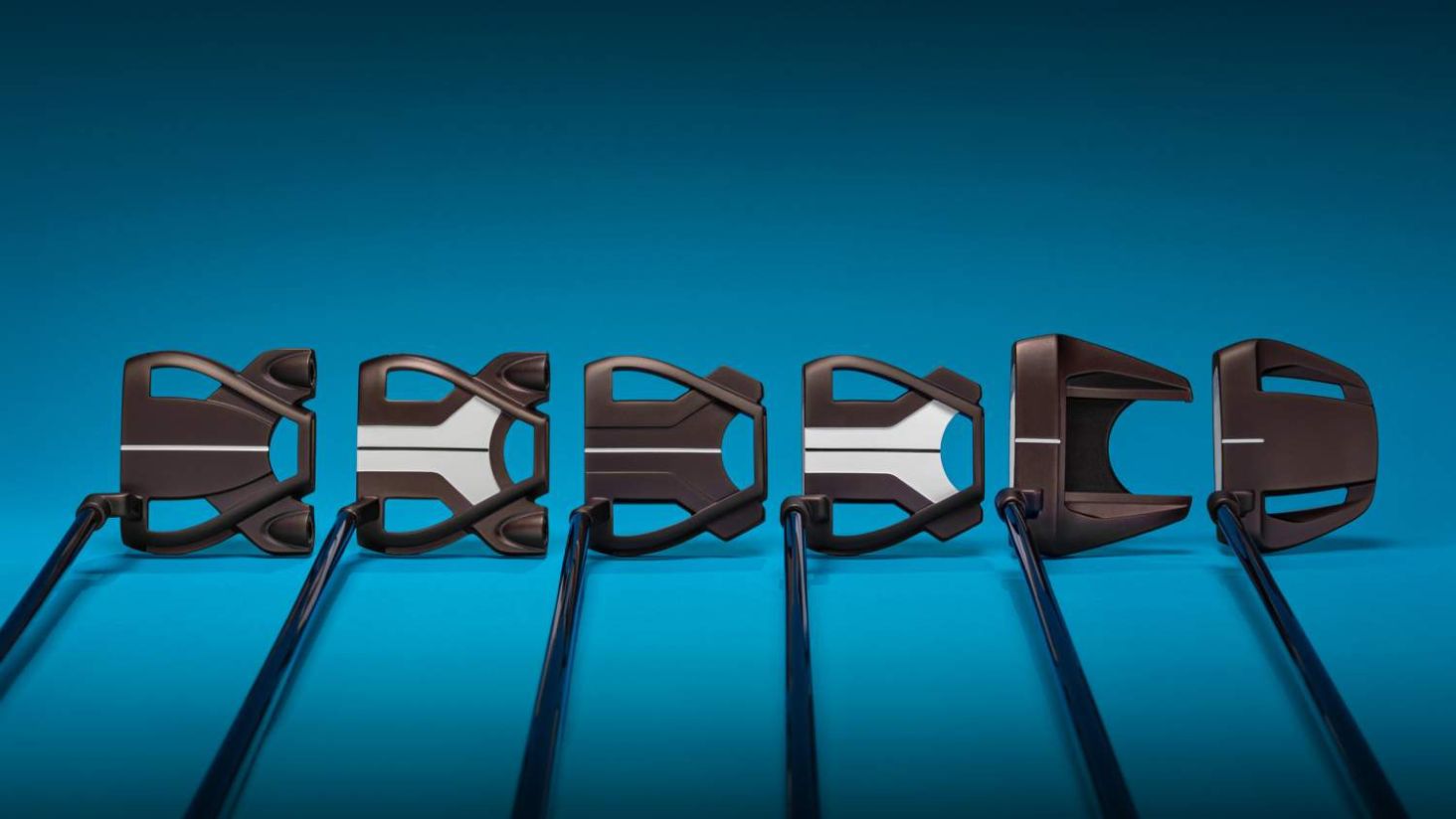
Tour references: TaylorMade Spider (more than 1.5 million units sold, regularly the most-played Mallet design on the PGA Tour) and Scotty Cameron Phantom (played by Justin Thomas, Cameron Young, and Russell Henley, among others).
Mid-Mallet – A Compromise in Its Own Right
The mid-mallet is not a compromise in the negative sense, but rather a design in its own right: larger than a Blade, smaller than a Mallet. It offers more forgiveness than the Blade without completely sacrificing the compact look and moderate toe hang. For golfers with a slight arc stroke who want to switch from a Blade to a more stable putter, the mid-Mallet is often the most compelling starting point.
For beginners who haven’t yet identified their stroke type, the mid-Mallet offers the widest range of compatibility.
Decision Guide
| Head Shape | MOI | Toe Hang | Ideal for |
|---|---|---|---|
| Blade | Low | High | Arc stroke, feel, and feedback |
| Mid-Mallet | Medium | Moderate | Light arc, for players transitioning from the Blade |
| Mallet | High | Low / Face-Balanced | Straight stroke, forgiveness |
Step 2 – Determine Stroke Type: Arc or Straight?
The stroke type is the most important factor when choosing a Putter. A poorly matched Putter works against the user’s natural movement on every single Putt—without the user even realizing it. The result isn’t a technical error, but rather a Putter-related error.
There are two basic stroke types:
Arc Stroke: The putter head swings slightly inward during the backswing, returns to parallel at impact, and swings inward again during the follow-through. More than 70 percent of all golfers have an arc stroke—most of them don’t even know it.
SBST (Straight-Back-Straight-Through): The putter head remains on the target line throughout the entire motion, with minimal rotation. This is much less common than is often assumed.
How does this mismatch occur? Ping fitting data shows that 55 percent of all golfers come into the fitting with a face-balanced Putter—that is, a Putter designed for a straight stroke. However, the majority of these golfers actually have an arc stroke. The result: The Putter suppresses the natural movement of the clubface, leading to compensatory wrist movements and inconsistent strikes.
Self-test: Play a few straight Puts from seven meters and observe what feels more natural—a straight pendulum motion or a slight opening and closing of the clubface. For a precise analysis, a professional Putter fitting with camera or sensor analysis is recommended.
Adjust Toe Hang to Your Stroke
| Stroke Type | Toe Hang | Recommended Hosel Type |
|---|---|---|
| Straight Stroke (SBST) | Face-Balanced (0°) | Double Bend, Center Shaft |
| Very slight arc | ~20° | Short Slant, L-Neck |
| Light to moderate arc | ~45° | Flow Neck, Plumber's Neck |
| Moderate to steep arc | ~60–90° | Heel Shaft, Plumber's Neck |
Step 3 – Understanding Hosel Type and Offset
The hosel—the connection between the shaft and the clubhead—is often perceived by many golfers as a purely aesthetic detail. In reality, it is one of the most important technical parameters: It determines the toe hang, the eye position at address, and thus the overall visual impact of the Putter.
Same head, different hosel—completely different balance. A Putter head can be combined with different hosels, resulting in a range from face-balanced to strong toe hang.
The five most important hosel types:
- Double Bend / S-Bend: Two bends in the shaft, head directly attached or with a short hosel. Face-balanced, minimal rotation. For a straight stroke.
- Plumber’s Neck (L-Neck): The most classic shape in golf. L-shaped bend, full shaft offset, moderate to strong toe hang. For mild to strong arc strokes. If you’re unsure where to start your search—start here.
- Flow Neck / Gooseneck: Smooth, curved transition from shaft to head. Moderate toe hang, less offset. Clean appearance at address.
- Slant Neck: The shaft meets the head at a slight angle. Low to moderate toe hang. Versatile, commonly found in TaylorMade Spider models.
- Center Shaft: Straight shaft centered directly in the clubhead. Maximum face balance. Exclusively for SBST strokes—and the basis of L.A.B. Golf’s Zero-Torque technology.
Offset refers to the horizontal distance between the center of the shaft and the clubface. More offset (e.g., Plumber’s Neck) encourages a slight forward push of the hands. Less offset (Center Shaft) creates a more neutral setup. Both influence how your eyes are positioned over the ball at address.
Step 4 – Determining the Correct Length, Lie, and Loft
Length, lie, and loft are the basic technical parameters of Putter fitting. They work behind the scenes—but if set incorrectly, they undermine every other parameter.
Length – The Most Important Fitting Variable
Putter length influences stance, eye position, and the overall stroke geometry. Standard values are 33–35 inches for men and 33–34 inches for women—but these values are starting points, not recommendations.
A putter that’s too long forces you into a posture that’s too upright: your eyes drift too far inside the target line, and the arc of your stroke changes. A putter that’s too short leads to a tense, hunched stance: your eyes drift too far to the outside. Both mistakes cause you to miss the target even before you’ve taken your first putt.
Rule of thumb: Measure the distance from your wrist to the ground (while standing upright, with golf shoes on). Subtract two inches—that gives you your starting point. The goal is an eye position that is 2.5 to 5 centimeters inside the target line.
Christopher Buck, PGA Professional and fitting specialist at ALL4GOLF, describes the first step in Putter fitting as follows: “First, the player is measured statically. We look at their height and the distance from the wrist to the ground to determine whether a shorter or longer shaft is needed.”
Read the full interview with fitting specialist Christopher Buck here.
Lie Angle—Underestimated, but Crucial
The lie angle describes the angle between the shaft and the sole; the standard is around 70 degrees. If the lie angle is incorrect, the sole does not lie flat at address: either the toe or the heel lifts off the ground. Since the Putter has loft, this causes the face to point off-line despite correct alignment. An incorrect lie angle is a common cause of systematic directional errors that cannot be corrected by technique alone. It can only be precisely determined during a fitting.
Loft—Why 3 Degrees Means More Than You Think
The standard loft of a Putter is 3 to 4 degrees. Scotty Cameron recommends 3.5 degrees as a starting point. This loft is not a design flaw, but a physical necessity: It lifts the ball out of the small indentation in the grass where it rests due to its own weight and initiates a clean roll.
What many buying guides overlook: The effective loft changes with every hand position at the moment of impact. If you push your hands forward, you reduce the loft of the clubface—the ball is pressed into the ground, bounces, and rolls too far. If you hold your hands back, you add loft—the ball lifts off, lands, and comes up short. Even a few millimeters of hand position variation can result in a 60- to 90-centimeter difference in distance on a six-meter Putt—not because of differences in swing strength, but solely due to the change in effective loft.
Step 5 – Weight and Grip
Head Weight
Most premium putters have a head weight of 340 to 380 grams. Heavier heads produce a more pendulum-like stroke with less wrist influence. EMG research shows that a head weight of 350 grams reduces stroke variation by about 19 percent compared to lighter alternatives.
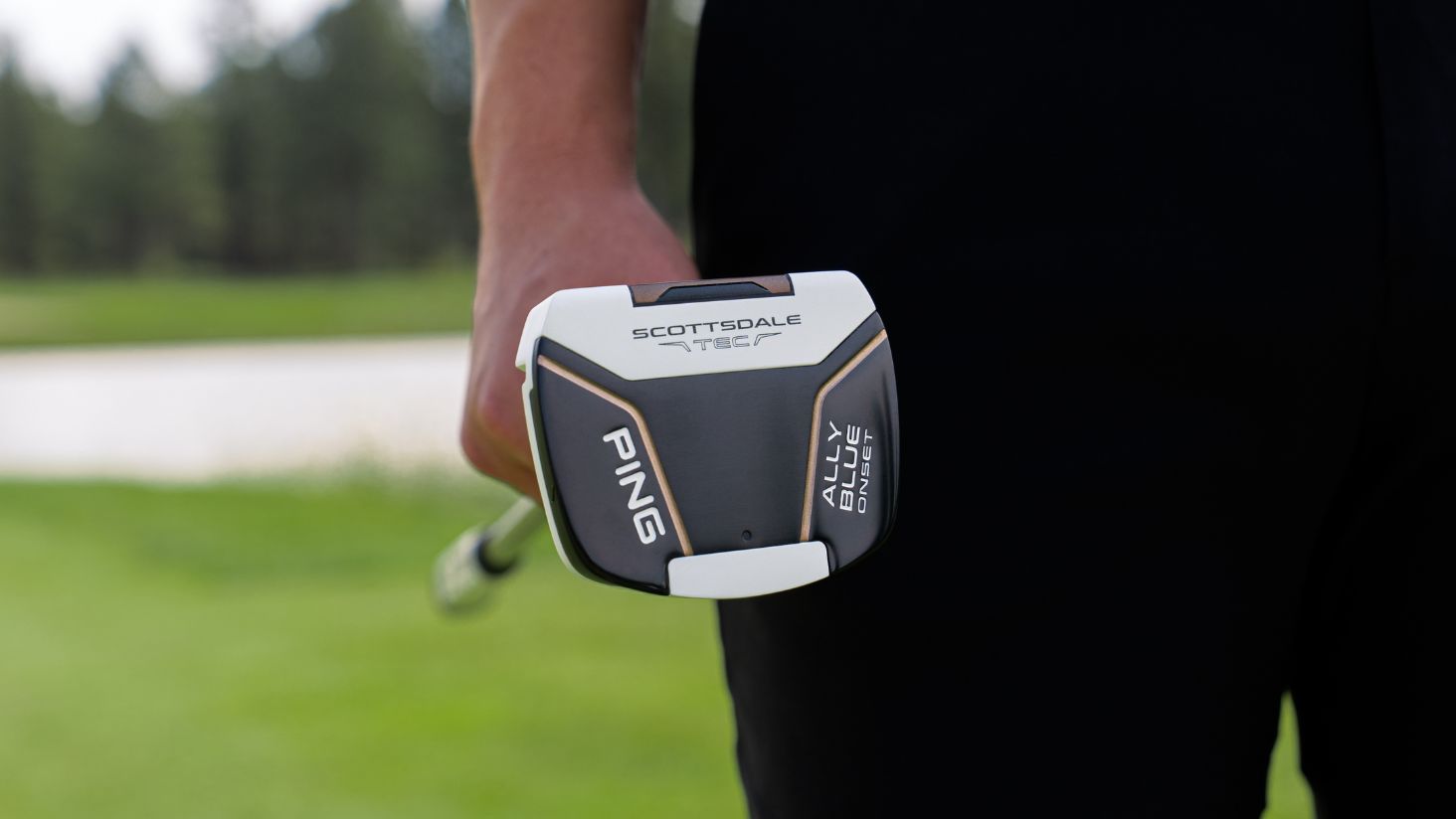
Counterbalance configurations—where additional weight is placed in the grip—shift the overall center of gravity upward and further dampen wrist movement. TaylorMade Spider, Ping Scottsdale TEC, and L.A.B. Golf offer various counterbalance (CB) models that are particularly appealing to golfers who tend to have shaky wrists under pressure.
Grip Type
The grip is the only point of contact between the hands and the Putter—and a direct factor influencing wrist movement:
- Standard (1-inch diameter): Maximum feedback, high grip control. For players who prioritize feel.
- Oversized / Jumbo: Reduces wrist movement, stabilizes the stroke under pressure. For players with uncontrolled wrist action.
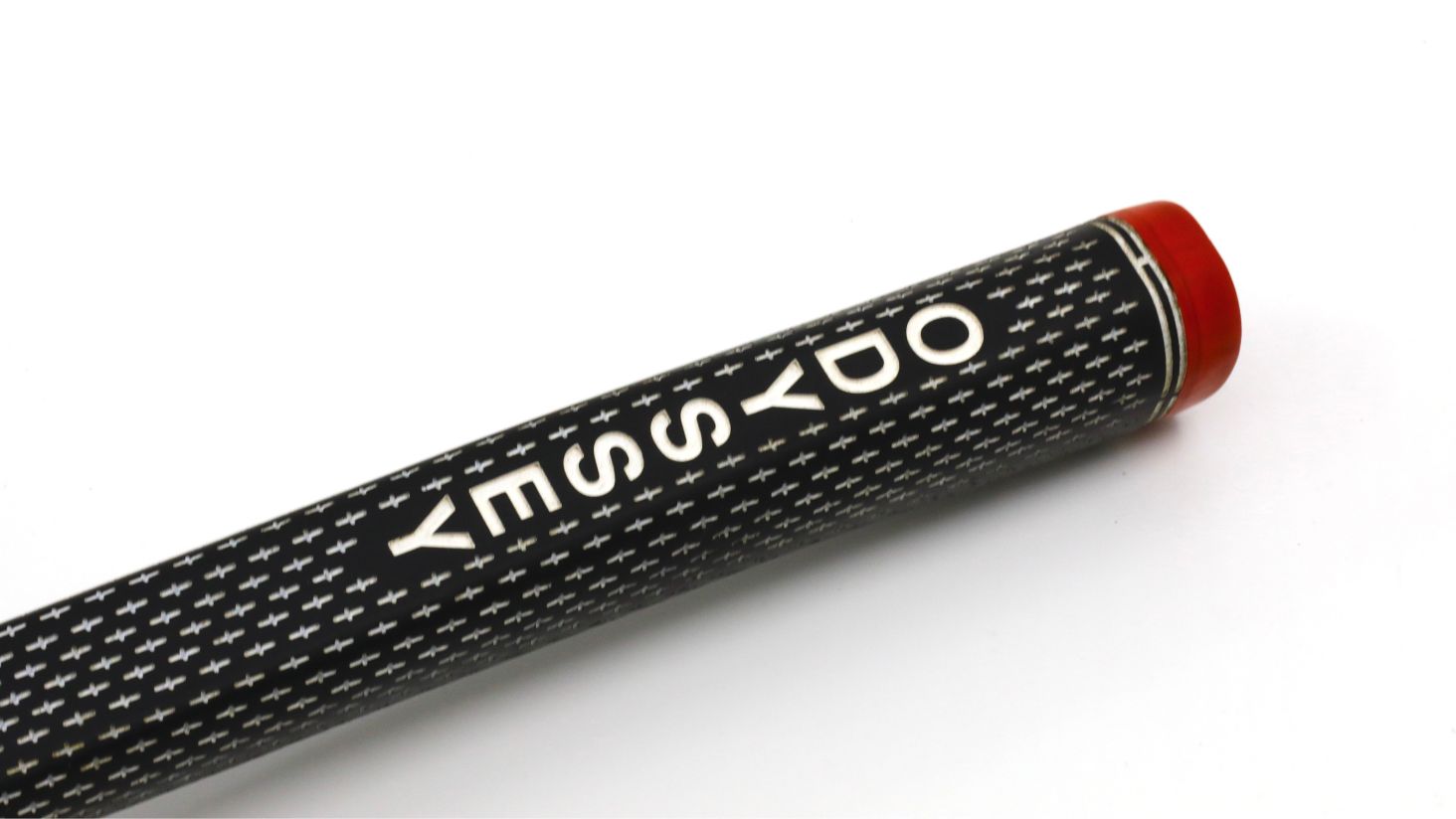
- Pistol: Ergonomic shape, tapering from narrow to wide. A classic on the Tour; controlled grip strength; promotes a consistent hand position.
- Flat-Top: Flat top or flat sides. Supports forearm alignment, reduces rotation.
No single grip type is universally superior. The key is the type of stroke you’re aiming for and which grip gives you confidence.
Step 6 – Clubface: Milled or Insert?
The face influences feel, sound, and the consistency of ball speed across the entire sweet spot—a factor that is completely overlooked in many buying guides.
Milled face: The head is precision-milled from a solid block of metal. The result is firm, direct feedback: putts struck in the center feel different from off-center strikes—which provides valuable information to experienced players. Roll consistency is high, and the feel is precise. Manufacturers such as Scotty Cameron (Studio Carbon Steel Insert), Ping (PLD Milled), Bettinardi (BB Series), and L.A.B. Golf rely on milled or partially milled faces.
Insert (polymer, urethane, PEBAX): An inserted element made of a softer material dampens the impact and produces a smoother feel at impact. The sound is more muted, and the feel is softer. Inserts such as the Odyssey White Hot (urethane), the Ping PEBAX (Scottsdale line), or the Cleveland SOFT insert normalize ball speed across the entire face—which better compensates for off-center hits and stabilizes distance control.
None is better than the others. It’s a matter of personal preference and confidence. A Putter whose feel doesn’t seem right will never fully win you over—regardless of its technical merits.
What Is the Best Putter? Recommendations by Player Type
There is no one-size-fits-all winner. What there are, however, are clear recommendations based on individual profiles—derived from the previous steps.
Beginners (Handicap 36–54)
Priority: Forgiveness, alignment aids, easy handling
Those just starting out in golf will benefit most from a face-balanced Mallet or mid-Mallet with an insert. Since their stroke style isn’t yet established, maximum forgiveness and visual alignment aids will help them through this phase. Expensive equipment isn’t the deciding factor here: A well-balanced, affordable Putter is always superior to a poorly balanced, expensive one.
Recommendation: Mallet or mid-mallet, insert, face-balanced
Specific models:
- Wilson Harmonized X5 – €47.99 – Distinctive Mallet shape, polymer insert, high forgiveness, good alignment aids
- Cleveland HB Soft 2 #1 – €134.99 – Classic Blade shape with SOFT insert, stroke-specific tuning, excellent value for the price
- Odyssey Ai-ONE #7 – AI-developed dual insert, ½-ball alignment, the world’s most-played Putter brand
Brandname
Title will go here and can run on two lines
Brandname
Title will go here and can run on two lines
Advanced Player (Handicap 18–35)
Priority: Stroke type matching, solid technology, value for money
At this skill level, systematic stroke analysis fitting begins to demonstrate its true value. Players who know their stroke type can make targeted choices regarding hosel, clubhead shape, and insert preferences. The price range between 130 and 400 euros offers the best balance of technology and investment here.
Recommendation: Analyze your stroke type first, then determine the hosel and head shape
Specific models:
- Cobra King Vintage Sport-60 – €129.99 – Blade with Flow Neck, SIK Descending Loft Technology, adjustable weights, 60° toe hang
- Cleveland HB Soft 2 Black – approx. 180 € – SOFT technology, black satin finish, multi-material shaft, 9 stroke-specific models
- Cobra MIM – approx. 235 € – Metal Injection Molding, PEBAX insert, LA Golf DLT, classic shapes
- TaylorMade Spider Tour – approx. 360 € – the world’s most proven Tour Mallet, Pure Roll Insert, True Path Alignment
- Ping Scottsdale – approx. €400 – PEBAX insert, three stroke types, WebFit Putter app for online fitting
Compare all models: Read more about the TaylorMade Spider putters here.

Brandname
Title will go here and can run on two lines
Brandname
Title will go here and can run on two lines
Ambitious female golfer / Ambitious male golfer (handicap under 18)
Priority: Precision, Feedback, Tour-Validated Technology
For players with a handicap under 18, fitting is no longer optional—it’s mandatory. At this level, the Putter no longer functions as a tool for forgiving mistakes, but rather as a precision instrument. Milled or partially milled faces and Tour-proven designs provide the feedback needed at this level.
Recommendation: Professional fitting, milled Putter, or premium insert
Specific models:
- Ping PLD Milled – milled from 303 stainless steel, over four hours of milling time per Putter, AMP Face, Customizer
- Bettinardi BB Series 2026 – $495 – VDF Face Milling (9 milling zones), tour-proven by Matt Fitzpatrick
- TaylorMade Spider ZT – Zero-Torque construction, Milled True Path, 2.5° loft, premium Mallet
- Scotty Cameron Studio Style / Phantom – approx. 500–600 € – finest milling precision, Tour-dominant faces
Brandname
Title will go here and can run on two lines
Brandname
Title will go here and can run on two lines
Tech-savvy golfers – Zero Torque as a category of its own
Anyone who consistently struggles with inconsistent putts and feels like they have to actively square the clubface could benefit from Zero Torque technology: Putters in which the shaft axis runs through the head’s center of gravity, so that no torsional forces act on the hands. The clubface automatically remains neutral—without the need for active hand compensation.
Recommendation: Zero-Torque Putters
Specific models:
- L.A.B. Golf OZ.1i HS / LINK.2.1 – approx. $499–$599 – first heel-shaft designs with Lie Angle Balance, 10 lie angle configurations
- Bettinardi Antidote Hexperimental #7 / #9 – $550 – Simply Balanced™ Zero-Torque, available for the first time in a heel-shaft design
- Wilson Infinite Zero Torque – The 606 / Lakeview – an accessible entry point into Zero Torque, MIM manufacturing, starting at approx. 200 €
- TaylorMade Spider ZT – Zero Torque within the Spider platform, proven Tour-level foundation
Zero Torque: Putter technology explained simply.
Buying Putters: Affordable Models, Sales, and New Releases for 2026
Affordable entry-level putters – which ones are recommended?
An affordable Putter doesn’t have to be a bad Putter. The decisive factor remains the same in every price range: Does the Putter suit your individual stroke? A model for 48 euros that matches your stroke type and length is better than a Putter for 500 euros that doesn’t.
| Price Range | Models | For Whom |
|---|---|---|
| Under 100 € | Wilson Harmonized X1 (€47.99), Wilson Harmonized X5 (€47.99) | Beginners, recreational golfers |
| €100–200 | Odyssey O-Works Black #1 (€99.99), Cobra King Vintage Sport-60 (€129.99), Cleveland HB Soft 2 (€134.99) | Solid technology, broad target audience |
| €200–400 | Cobra MIM (~235 €), Mizuno M.CRAFT City Series (~299 €), Ping Scottsdale (~300 €), TaylorMade Spider Tour (~360 €) | Advanced, ambitious players |
| €400+ | Scotty Cameron Studio Style / Phantom (~500–600 €), Bettinardi BB Series, L.A.B. Golf, Ping PLD Milled | Premium, tour-level |
New Putters for 2026 – What’s Currently Worth Checking Out?
The 2026 putter market is shaped by two trends: first, the spread of zero-torque technology from niche brands to mainstream manufacturers; second, the refinement of alignment technologies through scientific methods. The most important new releases at a glance:
- Ping Scottsdale TEC (March 2026): Eye Q alignment technology based on eye-tracking research (Quiet Eye), exclusively Mallet designs, white finish. Used by Wyndham Clark, who set a new PGA Tour record in Strokes Gained: Putting with this club.
- Cobra 3DP Tour and MIM (March 2026): 3D printing enables geometries that would be impossible with traditional methods—for maximum MOI with a forward-shifted center of gravity. The MIM line offers classic shapes with the highest manufacturing precision starting at $279.
- Mizuno M.CRAFT City Series (February 2026): Japanese forging expertise on the green—1025E mild carbon steel, copper underlay, deep face milling. Four models named after Shinkansen stations. Starting at 299 euros.
- Bettinardi BB Series 2026: VDF Face Milling with nine milling zones, 30 percent less distance variance. Complemented by the BB1 Fitz Flow and BB48 Fitz—developed with Matt Fitzpatrick, who has since celebrated four PGA Tour victories.
- L.A.B. Golf LINK.2.1 / LINK.2.2 (April 2026): Lie Angle Balance technology in classic heel-shafted Blade putters for the first time—one of the brand’s most significant innovations since its founding.
Brandname
Title will go here and can run on two lines
Brandname
Title will go here and can run on two lines
Putter Fitting at ALL4GOLF – Why It’s Worth It for Everyone
“Every golfer should get a fitting,” says Christopher Buck, PGA Professional and fitting specialist at ALL4GOLF. “The selection of equipment is so vast these days that it’s easy to get overwhelmed. Even just the static fitting—which determines the correct length and setup of the club—is essential. It ensures that you can play golf comfortably and pain-free.”
What Happens During a Putter Fitting at ALL4GOLF
The Putter fitting at ALL4GOLF begins with a static measurement: height and wrist-to-floor distance determine the optimal shaft length. Next, clubhead and ball speeds are analyzed, the ball flight is evaluated, and tendencies such as left or right spin, dispersion, and landing angle are identified.
For the Putter, the iPing fitting app is used, which analyzes the individual stroke type and, based on this, recommends head shape, hosel type, length, lie, and loft. The result: a precise specification based on which the Putter can be ordered directly from the manufacturer and either picked up in Hanover or shipped to you.
All fittings are conducted by two PGA professionals, both of whom are TrackMan-certified. ALL4GOLF is manufacturer-independent —Ping, TaylorMade, Callaway, Cobra, Mizuno, Wilson, Cleveland, and other brands are available on-site. The fitting is highly recommended for players of all skill levels—including beginners. This is because an improperly fitted Putter can not only reduce performance but, if the club geometry is unsuitable, can even cause physical discomfort.
Conclusion: Six Steps, One Decision
The Putter is the most-used club in the bag—and therefore deserves the most attention when purchasing. If you work through the six steps of this guide in the correct order, you’ll arrive at a decision based not on appearance or brand image, but on physically measurable criteria:
Determine stroke type → Choose head shape → Adjust hosel → Check length, lie, and loft → Adjust weight and grip → Select face based on feel preference.
If you’re unsure which step leads to which result, a professional Putter fitting is your best bet—it’s the quickest way to make the right decision.
Brandname
Title will go here and can run on two lines
Brandname
Title will go here and can run on two lines
Release date
05 Aug 2026
photos
Are you looking to buy a Putter? Then be sure to read this guide first! (Photo: Adobe Stock)