What Is a Putter? Explanation, Types, and Basics
What Is a Golf Putter? Types, Technique, Special Designs, and Rules—Everything You Need to Know About the Most Important Club in Your Bag.
More than 40 percent of all shots in a round of golf are made with a single club. The Par standard assumes two Puts per hole—that’s 36 shots on the green alone, before even a single missed Putt is factored in. No Driver, no Iron, and no Wedge is used nearly as often during a round. And yet, the Putter is the least understood club in the bag.
This article explains what a Putter is, how it works, what types are available—and why choosing the right Putter has a direct impact on your scorecard.
What Is a Putter? – Definition and Function
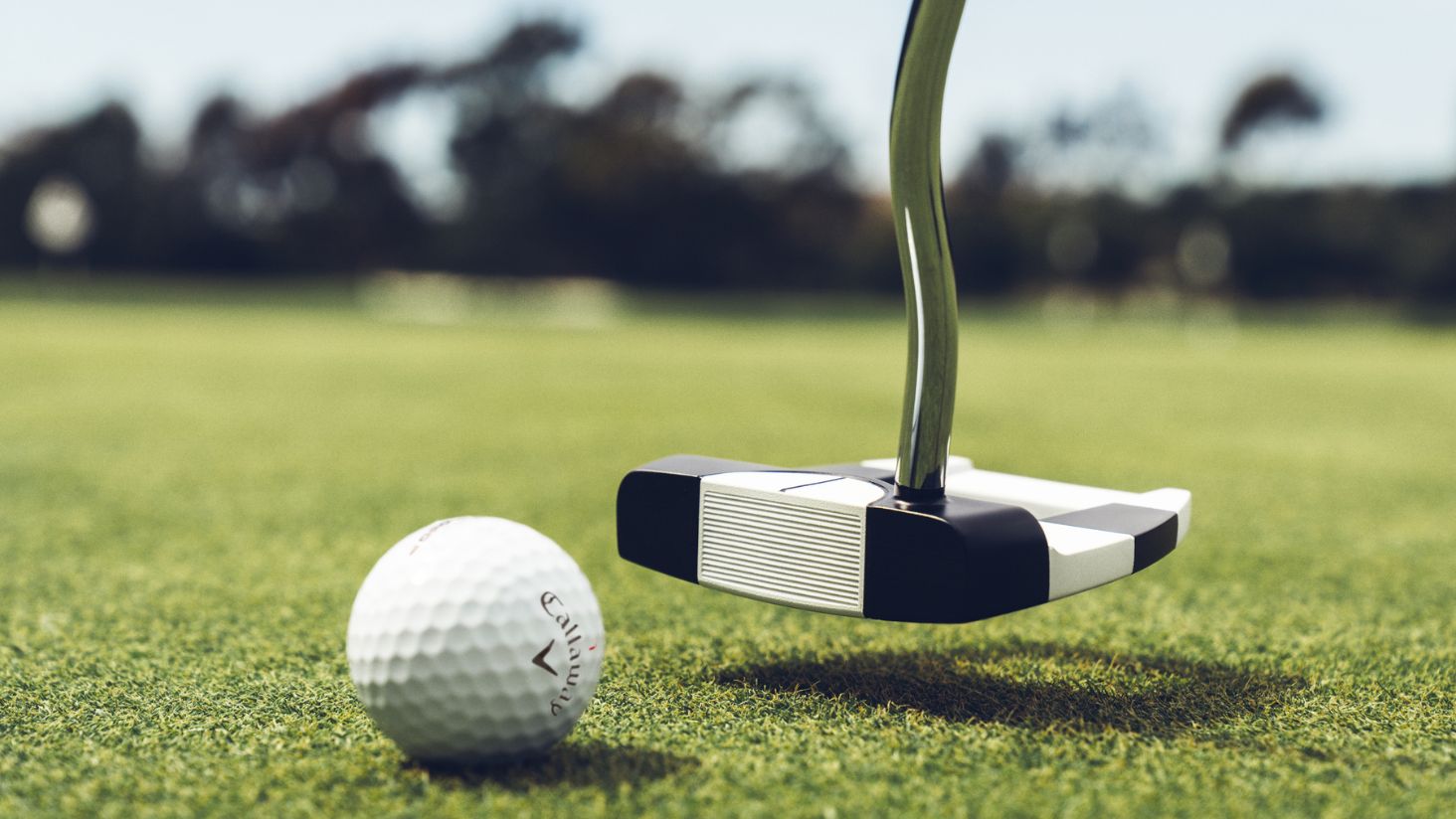
A putter is a golf club designed specifically for shots on the green. Unlike Drivers, Irons, or Wedges, the putter isn’t meant to launch the ball into the air—its purpose is to roll the ball in a controlled manner across the grass, as precisely as possible toward the hole.
This process is called putting in golf. The result of a successful Putt is the ball in the hole—or at least close enough that the next Putt is a formality.
The Putter is the only club in the bag that is used almost exclusively for short distances. There is one exception to this rule in golf terminology: the “Texas Wedge.” If the Putter is used not from the green but from the approach area or even the Fairway, this is called a Texas Wedge—a technique that can be particularly useful on dry, firm courses.
According to the official rules, up to 14 clubs are allowed in a golf bag—and the Putter is in nearly every bag, as it is by far the most frequently used club.
Size, weight, dimples—everything you need to know about golf balls.
An Overview of the Four Head Shapes
Putters come in an enormous variety of shapes and designs—but they can all be traced back to four basic head shapes. Choosing the right head shape is one of the most important decisions when buying a putter.
Blade putters—the classic
Blade putters are the oldest and most traditional head shape in golf. Their design is sleek, compact, and clean—a narrow head, often with slightly more weight toward the toe (toe-hang weighted). Blade putters offer experienced golfers a direct feel at impact and a refined sense of distance—but they require a more precise technique than larger models.
A milestone in the development of the blade putter was the Ping Anser, developed in the 1960s by Ping founder Karsten Solheim. It revolutionized Putter technology through perimeter weighting, an offset hosel, and a lower center of gravity—principles that are still at work in modern putters today.
Blade putters are particularly well-suited for golfers with an arcing stroke, in which the clubface naturally opens and closes during the swing.

Half-Mallet / Mid-Mallet – the middle ground
The half-mallet combines the best of both worlds: more compact than a Mallet, more stable than a Blade. The slightly larger head provides more space for optimized weight distribution, which increases the moment of inertia (MOI) compared to the Blade. Half-mallet putters are available in both toe-hang and face-balanced versions, making them suitable for various stroke types.
If you’re not quite comfortable with a Blade putter but find the large head of a Mallet too dominant, the half-Mallet often offers the perfect compromise.
What is a Birdie in golf? We explain it here.
Mallet Putters – Stability and Forgiveness
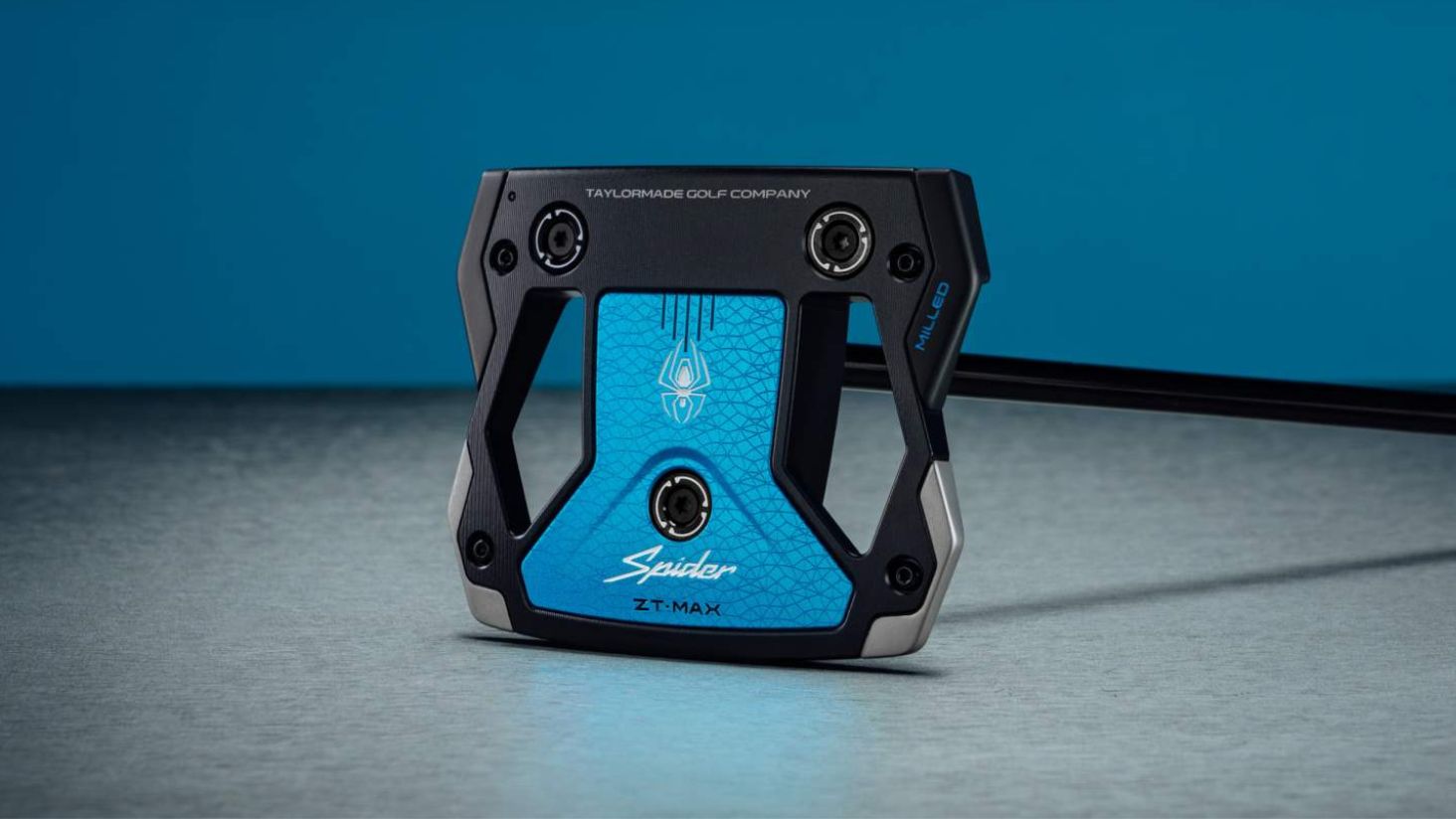
Mallet putters have a large, wide head—often with a distinctive open frame or wing design behind the putter face. The design principle behind this is clear from a physics perspective: When mass is strategically placed far outward in the head, the moment of inertia (MOI) increases. A high MOI stabilizes the putter head at impact—even if the ball isn’t struck exactly in the center, the roll remains significantly more consistent than with a Blade putter.
Mallet putters also offer more space for alignment aids on the top, which makes it easier for many golfers to align with the target line. They are usually face-balanced and are therefore particularly well-suited for a straight stroke.
The best-known Mallet family is the TaylorMade Spider Putter —one of the most widely used putters on the PGA Tour for over 15 years.
Many Mallet putters are equipped with a face insert: an embedded element made of polymer, urethane, or aluminum that makes the feel of the strike softer and the ball speed more consistent across the entire face. More on this in the “Face Technologies” section below.
High-MOI / MOI Putters – Maximum Forgiveness
High-MOI putters take the concept of perimeter weighting to the extreme. Their often unconventional, almost futuristic shapes serve a single purpose: to maximize the moment of inertia and virtually eliminate twisting at impact. This category overlaps significantly with Zero-Torque technology —you can find everything you need to know about it in our article on Zero-Torque Putters.
What Really Happens When You Putt? – The Three Rolling Phases
Many golfers assume that the ball starts rolling immediately when putting. In fact, it goes through three clearly distinguishable phases:
- Flight phase: The ball is slightly embedded in the grass due to its own weight. The Putter’s loft—typically 3 to 4 degrees—lifts it out of this small indentation. The ball initially travels a short distance through the air.
- Skidding phase: As soon as the ball touches the grass, it skids briefly across the surface before rotation begins.
- Roll phase: The ball begins to roll—ideally with a clean forward topspin that allows it to roll smoothly and in a straight line.
These three phases explain why the Putter’s loft is not a design flaw, but a physical necessity. A Putter without loft would push the ball directly into the grass and cause an uncontrolled launch.
Why tilting the putter head is harmful: If you tilt the putter head upward at the moment of impact, you increase the effective loft—the ball gains unwanted backspin, flies too far, and skids for too long before it rolls. The result: poorer directional control and inconsistent distances.
The correct position at impact: The shaft should be tilted slightly forward (1–2 degrees) at impact, while the putter head is moved slightly upward. This keeps the effective loft under control and allows the ball to start rolling earlier and more cleanly.
The Grip as a Stabilizer: A putter’s grip is flat at the front and wider at the back—this is no coincidence. The flat front ensures that the hands grip from the outside, the forearms rotate slightly toward each other, and the wrists are automatically stabilized. The grip forces a calmer, more controlled motion—without any conscious effort.

Hosel Types—The Underestimated Factor
The hosel—the connection between the shaft and the clubhead—is one of the most important, yet most frequently overlooked, factors when choosing a putter. The hosel geometry determines where the shaft enters the clubhead and directly influences toe hang as well as the optimal putting motion.
| Hosel Type | Toe Hang | Recommended Swing Type | Well-Known Examples |
|---|---|---|---|
| Double Bend | 0° (Face-Balanced) | Straight Stroke | TaylorMade Spider DB, Odyssey Ai-ONE |
| Single Bend | 0° (Face-Balanced) | Straight Stroke | Many Mallet models |
| Small Slant | ~29–30° | Mild Arc | TaylorMade Spider Slant |
| L-Neck / Plumber's Neck | ~21° | Light to moderate arc | Scotty Cameron Newport, Spider Tour X L-Neck |
| Center Shaft | 0° (Face-Balanced) | Straight Stroke | Evnroll Zero Z1 |
How do I measure toe hang myself? Balance the Putter shaft horizontally on your finger. If the clubface points upward, the Putter is face-balanced. If the toe of the club tilts downward, that’s toe hang. The greater the tilt, the more arc support the Putter provides.
Face-Balanced vs. Toe-Hang—Which Fits Your Stroke?
The choice between face-balanced and toe-hang isn’t a matter of personal preference, but rather of stroke type. There are essentially two swing patterns in putting:
- Straight-Through Stroke: The clubface remains aligned with the target line throughout the entire motion. A face-balanced Putter is ideal for this stroke type—it supports the natural motion without encouraging the clubface to rotate.
- Arced Stroke (Arc): The clubface opens slightly on the backswing and closes again on the downswing. For this stroke type, a toe-hang Putter is recommended, as it supports the natural opening and closing of the clubface.
What is a Bogey in golf? Find out here.
Scotty Cameron describes this principle as “toe flow”: the fluid opening and closing of the Putter’s toe along the swing arc, during which the clubface remains neutral (Square) to the swing path at all times. A Putter that matches your natural movement doesn’t need to be actively controlled—it just works on its own.
Self-test: Hit a few Puts from seven meters along a straight line and observe which makes it easier for you to execute a straight stroke—a face-balanced model or a Putter with more toe hang. The answer will reveal your natural stroke type.
If you’re unsure, consider a professional putter fitting —modern systems like SAM PuttLab or high-speed cameras precisely analyze your stroke and provide a data-driven recommendation.
Length, loft, and lie—the three basic technical parameters
Length
The standard length for men’s putters is 33–34 inches, and for women’s putters, 33 inches. However, the correct length isn’t a matter of clothing size but of posture: A putter that’s too long forces you into an overly upright position, with your eyes too far inside the target line. A Putter that’s too short leads to a hunched, tense posture, with your eyes drifting too far to the outside.
As a general guideline: When aligning, your eyes should be positioned 2.5 to 5 cm inside the target line —this allows for optimal perception of the Putt line and controlled execution of the stroke.
Loft
The standard loft of a Putter is 3 to 4 degrees —Scotty Cameron recommends 3.5 degrees as the ideal starting point. This seemingly small angle of loft is crucial: It lifts the ball out of the small indentation created by its own weight in the grass and initiates a clean rolling motion.
Too much loft (caused by tilting the putter head) creates backspin—the ball bounces and skids instead of rolling. Too little loft pushes the ball into the grass. The correct loft is a precise middle ground.
Lie Angle
The standard lie angle of a Putter is around 70 degrees. It describes the angle between the shaft and the sole and directly influences hand position at address. An incorrect lie angle causes either the heel or the toe of the putter head to be raised—both of which alter the clubface alignment and compromise accuracy.
All three parameters can be precisely determined and adjusted during a professional Putter fitting.
What You Need to Know: Learn the most important golf rules here.
Special Shapes – Armlock, Belly, and Broomstick
Armlock Putters (40–42 inches)
Armlock putters are longer than standard putters and are held with the grip pressed against the forearm—not anchored to the body. This technique is fully compliant with current golf rules. Well-known users include Will Zalatoris and Bryson DeChambeau. Armlock putters have more loft than standard models to compensate for the shaft angle when addressing the ball.
Belly Putters (43 inches)
Belly putters were stabilized against the navel, providing a smoother, pendulum-like motion. This technique has been banned since 2016 —Rule 10.1b of the USGA and the R&A prohibits anchoring a club to the body during the stroke.
Broomstick Putters (48–52 inches)
Broomstick putters are significantly longer than standard putters. Anchoring them to the chest or chin has also been prohibited since 2016. However, the club itself is still permitted—as long as it is not anchored to the body. This gray area continues to spark debate to this day, as seen in the case of Bernhard Langer on the Champions Tour.
Important: Rule G-10 of the USGA/R&A limits the maximum club length to 46 inches—however, this rule expressly does not apply to putters. Broomstick putters measuring 48–52 inches are therefore still permitted under the rules, provided they are not anchored.

Self-standing Putters
Due to their heavy, low center of gravity, freestanding putters have the ability to remain upright on their own. As of January 1, 2025, the intended use of this characteristic is prohibited: Anyone who sets the Putter down, lets go of it, and uses it for alignment is in violation of Rule 10.2b/3. The club may still be used—as long as it is not let go of.
An Overview of Clubface Technologies
The Putter’s face—whether milled steel or an insert—directly influences feel, ball speed, and roll:
| Technology | Characteristics | Well-Known Examples |
|---|---|---|
| Milled Steel Face | Direct feedback, clear strike pattern, traditional | Scotty Cameron, Bettinardi |
| Polymer/Urethane Insert | Softer feel, greater forgiveness, quieter | Odyssey White Hot, Ping |
| 45° grooves (Pure Roll) | Early forward rotation, more consistent roll | TaylorMade Spider (Pure Roll Insert) |
| Variable groove width (SweetFace) | Even energy distribution across the entire face | Evnroll |
| AI-optimized insert | AI-developed geometry, consistent ball speed | Odyssey Ai-ONE |
FAQ – Frequently Asked Questions About Putters
What is a Putter in golf?
A putter is a golf club specifically designed for shots on the green. It has a very low loft (3–4°) and is intended to make the ball roll controlled across the grass—not fly.
What is a Mallet Putter?
A mallet putter has a large, wide head with a lot of weight concentrated around the edges. This increases the moment of inertia (MOI) and makes the putter more stable on off-center hits. It is usually face-balanced and is particularly well-suited for a straight stroke.
What does “putting” mean?
Putting refers to playing with the Putter—that is, rolling the ball in a controlled manner across the green toward the hole.
What is a lag Putt?
A lag putt is a long putt where the primary goal is not to sink the putt, but to get the ball as close to the hole as possible—to set up an easy second putt.
What is a Texas wedge?
A Texas wedge refers to using the Putter from the apron or the Fairway—that is, off the green. This technique is particularly suitable on dry, firm ground or in short grass.
What does “face-balanced” mean?
Face-balanced means that when the shaft is balanced horizontally, the clubface points upward. This indicates that the Putter’s center of gravity lies directly in line with the shaft—ideal for a straight stroke.
How long should a Putter be?
Standard putters for men are 33–34 inches long, and 33 inches for women. The optimal length depends on height, stance, and arm length—it can be determined most accurately during a putter fitting.
Are broomstick Putters banned?
The club itself is not prohibited. Since 2016, anchoring the Putter against the body has been prohibited (Rule 10.1b). Broomstick putters may still be used as long as the upper part of the club is not pressed against the chest or chin.
Brandname
Title will go here and can run on two lines
Brandname
Title will go here and can run on two lines

Brandname
Title will go here and can run on two lines
Brandname
Title will go here and can run on two lines
Brandname
Title will go here and can run on two lines
Brandname
Title will go here and can run on two lines
Brandname
Title will go here and can run on two lines
Brandname
Title will go here and can run on two lines
Brandname
Title will go here and can run on two lines
Brandname
Title will go here and can run on two lines
Release date
04 Aug 2026
photos
In golf, the Putter is primarily used to putt the ball into the hole. (Photo: Adobe Stock)