

Putter Accessories: Choosing the Right Headcover, Grip, and Training Tools
From the right Putter grip to Headcovers and putting mirrors: Which accessories really matter—and how to use them effectively.
The Putter is the most-used club in the bag—and, paradoxically, the one that’s the least well-equipped. While golfers invest a lot of energy in choosing the right Putter model, the accessories are often left to chance: a Headcover that came with the Putter at some point, a grip that hasn’t been replaced in years, and training tools that end up in the corner after two weeks.
Yet Putter accessories are no luxury. The wrong grip sabotages your stroke just as reliably as the wrong Putter head. A good putting mirror reveals flaws that no coach can spot at first glance. And a Headcover protects the most precise striking surface in your entire bag from the very damage that renders it unusable.
This article shows which accessories really make a difference—and how to use them effectively.
Putter Covers—Protection for the Most Important Club in Your Bag
A putter headcover serves a simple but crucial function: it protects the face from scratches, dents, and surface damage that can affect how the ball rolls. That may sound trivial—but it isn’t, considering that many Putter faces are milled, fitted with insert materials, or coated with a special finish designed to ensure consistent ball speed.
Blade, half-mallet, Mallet—the Headcover must fit
Not every Headcover fits every Putter. The shape of the head determines the required size and shape of the cover:
- Blade cover: Narrow and compact, suitable for classic Blade putters with a small head volume. Often available as a slip-on cover (sock-type) or as a form-fitted hood.
- Half-mallet cover: Medium depth, suitable for mid-mallet designs. Often with slightly more volume than a Blade cover, but without the bulky shape of a Mallet cover.
- Mallet Cover: Largest volume, specifically designed for deep, frame-accentuated Mallet designs such as the TaylorMade Spider or the Ping Scottsdale TEC. Many mallet putters come with a custom-fit Headcover from the factory—but an aftermarket Headcover is still a good idea as a replacement or upgrade.
Putters, Roll Phases, Physics—Understanding the Basics of Putters.
Materials and Brands
Headcovers are available in various materials: Neoprene is lightweight and stain-resistant; synthetic leather offers more robust protection and a higher-quality look; genuine leather represents the premium segment with particularly long-lasting protection.
TaylorMade, Odyssey, Ping, Mizuno, Nike, and many others offer Headcovers designed to match their respective Putter lines—with a perfect fit and design tailored to the club. If you choose a Headcover from a different brand, you should know the head dimensions of your Putter to ensure a secure fit.
Brandname
Title will go here and can run on two lines
Brandname
Title will go here and can run on two lines
Choosing the Right Putter Grip – Focus on SuperStroke
The grip is the only point of contact between your hands and the Putter. It influences pressure distribution, wrist movement, and thus the overall stability of the stroke—yet most golfers go years without changing it.
A worn-out grip loses its texture and tactile feel: grip pressure increases unconsciously, the wrists become more unstable, and the stroke becomes more inconsistent. Rule of thumb: If you play more than 50 rounds a year, you should change your Putter grip annually.
Here’s how to find the right Putter for your game.
SuperStroke – the No. 1 in the Putter grip segment
SuperStroke is the most widely used putter grip on all major professional Tours worldwide. In 2025, SuperStroke users won 66 tournaments on the major Tours, including 25 victories on the PGA Tour. Among the brand’s most well-known ambassadors are three-time major champion Jordan Spieth and eight-time PGA Tour winner Patrick Cantlay.
At the heart of the SuperStroke philosophy is No Taper Technology: a patented, parallel grip design in which the circumference remains uniform from top to bottom—unlike standard tapered grips. The result: grip pressure is distributed more evenly across both hands, the wrists remain stable, and the stroke becomes more consistent and repeatable.
The Zenergy Line: SuperStroke’s Current Core Generation
The Zenergy line is SuperStroke’s current core generation and replaces the previous Traxion series. It combines three core technologies:
- Enhanced SPYNE® Technology: An embossed ridge on the underside of the grip guides the hands into a natural, repeatable position and makes it easier to square the clubface at impact.
- Multi-Zone Texturing: Strategically placed textures in key grip areas improve tactile feedback and grip—even in wet or hot conditions.
- Tech-Port: An opening on the top of the grip allows for the integration of the CounterCore weight system (available in three weight levels) or compatible performance-tracking sensors. CounterCore shifts the Putter’s center of gravity toward the hands—making the head feel lighter and resulting in a more pendulum-like, smoother stroke.
Find out here: These are the best Putter brands.
The Tour Series: Size Determines Stroke Character
The Zenergy Tour Series is SuperStroke’s most classic and most widely used profile—a consistently low hand profile, minimal grip pressure, and maximum stability during the stroke. Available in four sizes:
| Model | Width | Weight | Tech-Port / CounterCore | Ideal for |
|---|---|---|---|---|
| Tour 1.0 | ~2.6 cm | lighter | ✗ | Golfers who prioritize maximum feel |
| Tour 2.0 | ~3.0 cm | medium | ✗ | Stability and control, broad target audience |
| Tour 3.0 | ~3.5 cm | medium | ✓ | Less hand rotation, for arc strokes |
| Tour 5.0 | ~3.9 cm | 90 g | ✓ | Maximum damping, SBST strokes, stable wrists |
Basic rule: The larger the grip circumference, the less wrist rotation during the stroke. Golfers who tend to move their wrists actively will benefit from a larger grip profile.
The Zenergy Tour 2.0 (€39.99) is the most versatile choice for golfers who prefer a medium grip profile with solid feedback. The Zenergy Tour 5.0 (€39.99) is designed for anyone seeking maximum stability and a pendulum-like, wrist-neutral putting motion.
Zenergy Pistol GT 1.0 – Classic Shape, Modern Technology
In addition to the Tour series, SuperStroke offers the Pistol series for golfers who prefer an ergonomically shaped grip top. The Zenergy Pistol GT 1.0 (€39.99) combines the distinctive pistol shape—which locks the top hand into a stable, defined position—with all of Zenergy’s core technologies: No Taper, SPYNE®, Multi-Zone Texture, and Tech-Port with CounterCore compatibility.
Weight: 83 g, width: 2.9 cm—a compact profile with a classic feel and a modern technological foundation. Ideal for anyone transitioning from standard grips who is looking for familiar geometry with significantly improved functionality.
Discover Scotty Cameron putters here.
When is it worth changing your grip?
It’s always worth changing your grip when:
- the grip feels noticeably hard, slippery, or hardened,
- your grip pressure has unconsciously increased while Putting,
- your stroke seems increasingly erratic or inconsistent, even though your technique hasn’t changed,
- the Putter head is new, but the grip was carried over from the old club.
Changing the grip costs very little—and is often the most effective step to take before buying a new Putter.

Brandname
Title will go here and can run on two lines
Brandname
Title will go here and can run on two lines
Training Tools – Improve Your Putt with Targeted Practice
Putting is the only aspect of golf that can be practiced entirely at home—without a course, without worrying about the weather, and with minimal effort. There’s a wide variety of training tools available—the key is identifying the specific problem you want to solve.
Discover Odyssey’s putters here.
Alignment and Eye Position: Mirrors & Lasers
The most common putting mistakes don’t occur during the stroke itself, but before it: in the alignment. If your eyes aren’t directly above the ball, you’ll perceive the target line incorrectly—and adjust your stroke in the wrong direction.
A putting mirror makes this mistake immediately apparent. The Pure2Improve putting mirror (€34.99, 30 × 18 cm or 53.5 × 20 cm) reflects your eye position, shoulder alignment, and Putter alignment simultaneously—no camera, no sensor, no app required. Place it on the green, hit the ball, and the mirror immediately shows whether your eyes, shoulders, and putter face are aligned. Includes a protective zippered case for easy transport.
If you prefer a dynamic alignment aid, the Masters Laser Putting Trainer (€27.99) is a great choice: It attaches to the Putter and projects a laser guide line directly to the target. Suitable for right- and left-handers, ideal for practicing at home on a Puttingmatt.
Accuracy and Power: Gate Trainers & Targets
The PuttOut Premium Trainer (€34.99) is a compact, foldable training device with a parabolic track: A perfectly struck putt stays in the small target cup—a putt that’s too hard or too soft rolls back to the corresponding distance. The smaller target dots along the edge help improve accuracy, while the alignment slot at the end of the arch allows you to insert alignment sticks for even more precise alignment. The result is direct, honest feedback on power and line—no interpretation needed. A solid basic tool for use at home and on the go.
Puttingmatt: Consistency Through Regular Practice
A high-quality Puttingmatt is more than just a mat with a hole. The Wellputt Puttingmatt (e.g., 4.0 m, €159.99) is an example of a training system with an educational approach: seven different feel zones train various aspects of the Putt, the Zebra Zone prevents shortening the stroke, and the mat can be used on both sides. Speed: between 9.6 and 10.6 Stimpmeter, depending on the putting direction—tournament speed at home. Includes the free training app with 50 exercises, developed by Coach Cameron McCormick. Rollable and compact for storage.
What is a broomstick Putter? Find out here.
Simulators: Data-Driven Putting Training
For ambitious golfers who want to not only practice but also analyze their game, putting simulators offer a whole new dimension. The ExPutt EX500D Pro (€499.99) is an example of this approach: A high-speed camera captures ball speed, angle of impact, direction of strike, and Putter path in real time. The data is transmitted to a TV or mobile device, allowing you to Putt on over 70 real courses—including Pebble Beach (Spyglass Hill GC). Three game modes (Practice, Play 9, Challenge) add variety to your training. Suitable for the studio, office, or home—anywhere you want to practice regular, data-driven putting.
Brandname
Title will go here and can run on two lines
Brandname
Title will go here and can run on two lines
Ball Markers – Small, but Important for Rules
The ball marker is the most inconspicuous piece of equipment in golf—and at the same time, a rule-relevant aid that many golfers do not fully understand.
What Can Be Used as a Ball Marker?
The Rules of Golf don’t set strict requirements: In principle, anything can be used as a marker as long as it’s small and accurately marks the ball’s position. In practice, flat, small coins or specially made golf markers have become the norm—easy to place, easy to remove, and unobtrusive during play. A Tee is also rule-compliant, but is used less frequently.
TaylorMade Spider Putter: All Models, Differences, and Buying Guide.
The most important rules at a glance
Proper Marking: The marker is placed directly behind the ball before the ball is picked up—not next to it, not in front of it.
Moving the Marker: If the marker lies in another player’s putting line, it may be moved upon request. To do this, the marker is moved one or two putter head lengths to the side—the original position must be exactly restored before the ball is replaced.
Ball Hits Marker: Since the 2019 rule revision, there is no penalty if the ball struck after a Putt hits another player’s Ballmarker. The ball is played as it lies.
Marker is moved: If the marker is accidentally moved—by the wind, another player, or while addressing the ball—it is replaced in its original position. No penalty stroke.
Hitting Your Own Equipment: Since 2019, accidentally hitting your own equipment (clubs, bag, Trolley) after a stroke is also penalty-free. The ball is played as it lies.
Read more here about the rules of golf regarding equipment, Ballmarker, and more.
Brandname
Title will go here and can run on two lines
Brandname
Title will go here and can run on two lines
Think of the Right Accessories as a System
Putter accessories are most effective when not viewed in isolation. A Headcover protects the putter you’ve carefully selected. A well-fitting grip transmits what your hands are trying to communicate to the head. And regular practice with the right tool turns a Putter that’s theoretically right into one you can actually trust on the green.
The first step is simple: check when you last replaced your Putter grip. If you can’t remember—then it’s time.
All the products mentioned are examples from the ALL4GOLF lineup. For every training tool, grip, and Headcover, there are alternatives that may be a better fit depending on your preferences, budget, and skill level. Use the product previews in this article as a starting point—and feel free to contact us if you’d like a personalized recommendation.
Brandname
Title will go here and can run on two lines
Brandname
Title will go here and can run on two lines
Release date
09 Aug 2026
photos
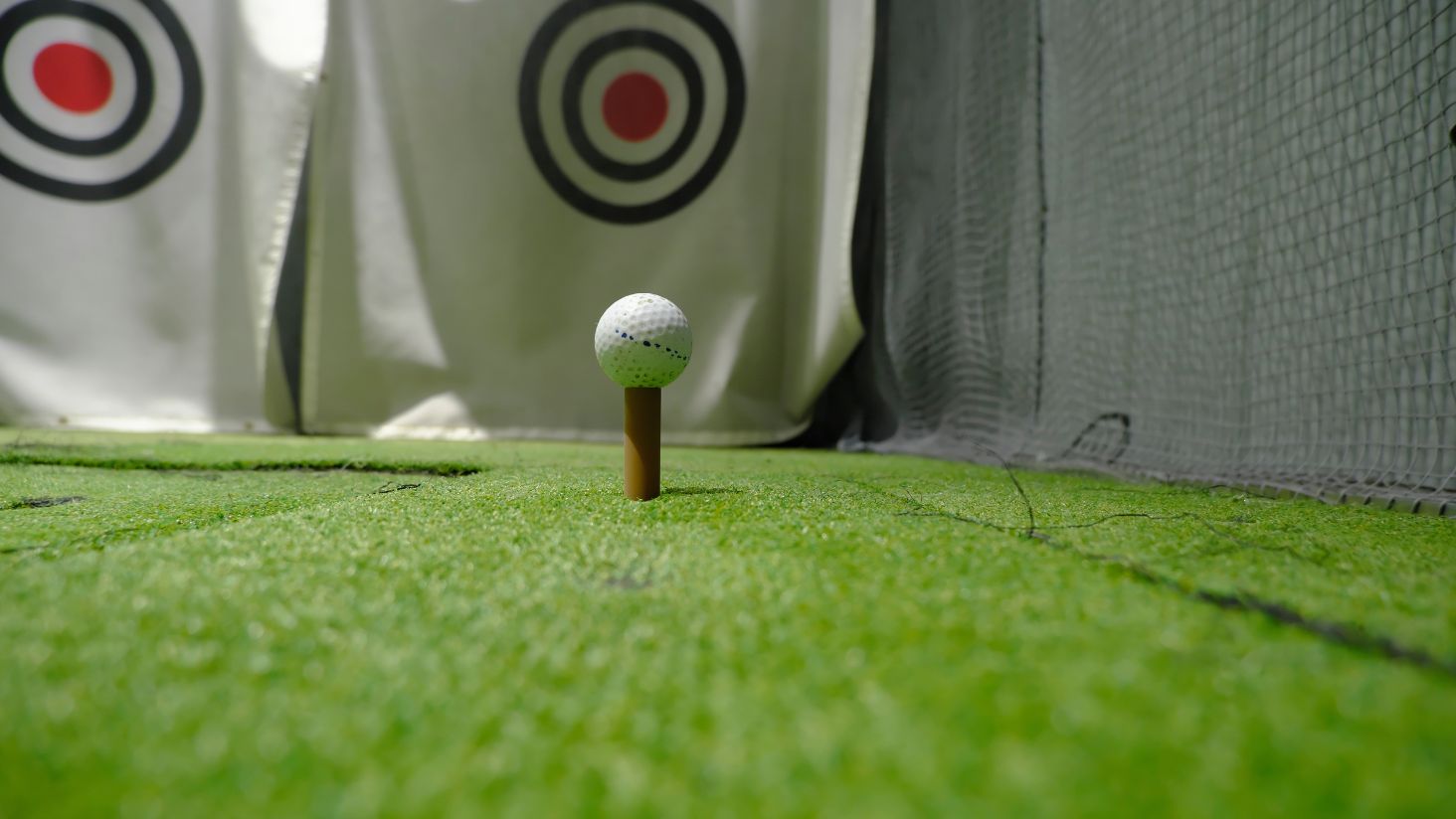
The right accessories for your Putter protect your equipment and can improve your game. (Photo: Adobe Stock)