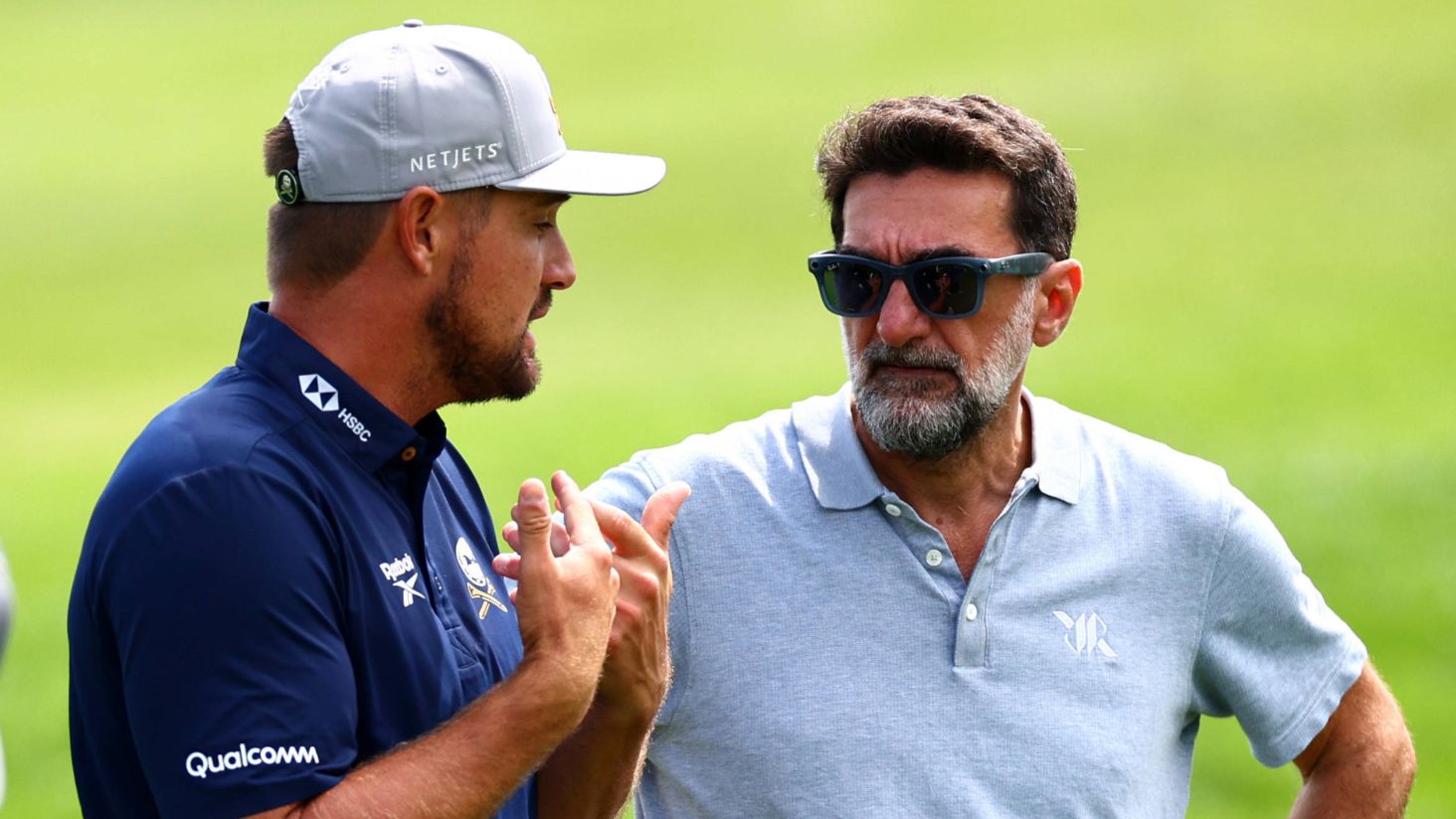
Reports: Saudi PIF ends LIV Golf funding after 2026 season
Several media report: The Saudi sovereign wealth fund PIF no longer wants to finance LIV Golf after 2026. Players and Tour will have to reorient themselves.
LIV Golf is facing a turning point. Several media reports assume that the Public Investment Fund (PIF), the Saudi sovereign wealth fund and main financier of the league, will cease its support after the 2026 season. According to the reports, players and employees will be informed about the upcoming change of course at short notice - in some cases, a briefing "by Thursday" is mentioned. For the Tour, which was only launched in 2022 and aimed to reorganize professional golf with high guaranteed sums, a team format and huge prize money, the withdrawal of the central sponsor would raise existential questions.
LIV Golf on the brink of extinction? What is being reported - and what remains unclear
The starting point of the current dynamic is a report in the Wall Street Journal, to which several editorial offices refer. According to this, LIV Golf plans to inform the tour staff and the players' side promptly that the PIF will end its funding after the current 2026 season. Golfweek writes that an "official announcement" to staff and players is expected on Wednesday evening or Thursday; this should formally clear the way for LIV CEO Scott O'Neil to look for alternative sources of funding.
The Guardian also reports that LIV officials are close to confirming to athletes that Saudi funding will expire at the end of 2026. Without a replacement - which the paper describes as "unlikely" - LIV in its current form is on the brink of collapse.
LIV itself initially made no or only indirect comments in several reports; various media reported that they had asked for comments. Overall, the facts are therefore divided: The expected PIF withdrawal is consistently described by several sources, but a comprehensive public statement from the Tour is not (yet) available in the texts cited.
Why the news is so serious
LIV Golf was set up in 2022 as a counter-design to the PGA Tour: smaller fields, no cut, shotgun starts and a team format were intended to create a new product - supported by a financial model that was one thing above all in the first few years: highly subsidized. With large guaranteed sums and significant prize money, LIV attracted prominent names, including major winners and crowd pullers such as Bryson DeChambeau, Jon Rahm, Phil Mickelson and Dustin Johnson.
Should the PIF actually pull out, this very model would be called into question. Without Saudi money, it is almost impossible to close the gap in the short term via traditional sources of revenue such as sponsorship and ticketing; realistic options range from shrinking the Tour to a merger or the end of operations in their current form.
Leadership and signals: Al-Rumayyan to step down as Chairman
Parallel to the financing reports, there is another signal that many observers are likely to see as an indication of a realignment: Yasir Al-Rumayyan, governor of the PIF and key figure in the creation of LIV, is to step down from his role as chairman of the LIV board. Sports Business Journal reported this, citing several informed persons, according to the Associated Press; LIV plans to present a strategy for the time after the main financier on Thursday - including a new board structure and the search for external partners.
The AP report also makes it clear that decisions about Al-Rumayyan's role are ultimately closely linked to the PIF, which he has led since 2015. This is precisely why his possible withdrawal is seen by many as an indication that the Saudi side is resetting its priorities.

Economic pressure: billions invested, little security without the PIF
The figures circulating in the reports show just how great the financial leverage of the PIF is. LIV has lost more than 5 billion dollars since its debut in 2022 and has failed to attract a significant TV audience, particularly in the USA. The investment could rise to 6 billion by the end of the year.
The consequence is clear: an investor who joins after 2026 would be taking over a product that has so far been stabilized primarily by the financial strength of a sovereign wealth fund. This is precisely why the AP presentation also talks about a possible "repositioning" - possibly with fewer tournaments than before and a stronger focus on the team franchises, i.e. the element that LIV has focused on as a unique selling point from the outset.
O'Neil between optimism and "funding runway"
LIV CEO Scott O'Neil is the Tour's central public voice. In a recent interview with TNT (which has since been deleted and then re-edited), O'Neil admitted that the Tour was "funded through the season" and that they then had to "work like crazy" to build a business plan for the future. Literally, he said, "The reality is: you're funded through the season, and then you work like crazy to develop a business plan to keep us going," O'Neil said.
At the same time, O'Neil is publicly confident. In the same context, a sentence was uttered that succinctly illustrates the balancing act between PR and uncertainty: "LIV Golf is in the best shape it's ever been in its history - period, end of sentence," said O'Neil.
Signs of stress in the calendar: New Orleans postponed
Additional turmoil arose earlier this week when the LIV Golf event in Louisiana was postponed. LIV claims to have moved its June event in Louisiana to the fall due to the summer heat; the next tournament is scheduled for early May in Virginia. uSA TODAY points to the postponement as part of growing operational problems.
The postponement is not necessarily evidence of a financial crisis - there can be many reasons in a tour schedule. But in the current mix, it increased speculation about the project's stability because it coincided with reports of the end of PIF funding.
Players and agents: First contacts with the PGA Tour - but return probably more difficult
The possible end of funding raises an immediate question for many LIV pros: where will they play from 2027 - and under what conditions? Golf Digest reports that representatives of several LIV players have already contacted the PGA Tour to discuss a possible return. According to the report, a way back is conceivable in principle, but "much more restrictive" than the one Brooks Koepka received.
Koepka returned in January via a program created by the PGA Tour, which was linked to sporting criteria and only a few LIV players were able to meet at all. Apart from Koepka, only Cameron Smith, Jon Rahm and Bryson DeChambeau qualified for the so-called "Returning Member Program" - but all three did not accept the offer.
The decisive factor is a set that Golf Digest attributes to a PGA Tour source: The program is "unlikely to be renewed" because "the situation is different now". This reveals the Tour's logic: facilitating a return at a time when LIV is in danger of shrinking anyway would send a different signal than offering players a defined pathway while LIV still exists as an alternative.
PGA Tour line: rules, sanctions and scar tissue
PGA Tour CEO Brian Rolapp describes a tough stance in several sources. AFP quotes him as saying, "There were rules, and they were broken. With rules comes responsibility." And Golf Digest additionally picks up on a motif that has come up repeatedly in the debate since the LIV launch: the aftermath of the legal battles. Rolapp is quoted as saying: "I don't necessarily have scars, but there are many people on our Tour who do. That has to be taken into account in some way."
For players, this means that even if LIV only exists to a limited extent or disappears completely after 2026, a return to the PGA Tour is not automatically a foregone conclusion. The political and regulatory price - bans, conditions, categories of membership - is likely to be negotiated on a case-by-case basis.
What to expect next
The coming days could decide whether reports become an official line. Several sources expect LIV management to hold talks or briefings with players and staff in the near future. At the same time, several reports suggest that LIV could present a new board structure and a plan for the time after the main financier - including the search for investors and possible adjustments to the tournament calendar.
The sporting calendar continues for the time being: the next event is the tournament in Virginia at the beginning of May. What happens beyond that, however, depends largely on one question: Will LIV find a financier in time who is willing to either carry the existing model - or restructure the Tour to make it viable without the billion-dollar backing of the PIF?
Brandname
Title will go here and can run on two lines
Brandname
Title will go here and can run on two lines

Brandname
Title will go here and can run on two lines
Brandname
Title will go here and can run on two lines
Brandname
Title will go here and can run on two lines
Brandname
Title will go here and can run on two lines
Brandname
Title will go here and can run on two lines
Brandname
Title will go here and can run on two lines
Brandname
Title will go here and can run on two lines
Brandname
Title will go here and can run on two lines
Release date
30 Apr 2026
photos
LIV Golf CEO Scott O'Neil has a lot to explain at the moment, but has so far remained silent on the rumors that the financing of his Tour is on the brink of collapse. (Photo: Imago / AAP)