

Billion-dollar subscription: PIF investment in LIV Golf rises to 5.3 billion dollars
The PIF is not turning off the tap: 267 million dollars in fresh capital for LIV Golf. Find out why Saudi Arabia continues to invest despite weak quotas.
Despite massive losses and the media-effective departure of prominent driving forces such as Brooks Koepka, the Saudi Arabian sovereign wealth fund PIF is sticking to its Gulf project. New financial data shows: The league's "burn rate" remains astronomical, but the strategy for 2026 is clearer than ever.
While the golf world eagerly awaits a possible agreement between the PGA Tour and the Public Investment Fund (PIF), those responsible in Riyadh are creating facts. As the trade magazine Money In Sport first reported, PIF Governor Yasir Al-Rumayyan approved a new capital injection of 266.6 million US dollars for LIV Golf on February 1, 2026.
The 6 billion dollar mark in sight
This latest investment brings the total amount spent by the Saudi Arabian sovereign wealth fund on the controversial Tour to 5.3 billion US dollars. But there is no end in sight to the subsidies. The figures from Money In Sport illustrate the extent of the financial burden: in 2024 and 2025, LIV Golf recorded an average net spend of 100 million dollars per month.
If this "burn rate" remains constant in the current year, the total investment will exceed the historic mark of 6 billion dollars by the end of 2026. In view of a reported loss of 1.4 billion dollars by the end of 2025, the league's profitability is a distant prospect.
Change of strategy: more incentives for the teams
Despite the red figures, the prize money pool was increased by a further 65 million dollars for the 2026 season. The new structure gives a deep insight into the strategy of LIV boss Scott O'Neil:
- Focus on franchises: team prize money has been doubled to 10 million dollars per tournament and will now be distributed among all 13 teams.
- Captain's bonus: A new pool of $2.3 million will allow team captains to directly reward top performers on their team.
Industry experts see this as an attempt to increase the value of the individual teams as independent franchises in order to be able to sell minority shares to external investors in the long term.

Savings through player exodus
Interestingly, it is the players returning to the PGA Tour who are helping to stabilize the cost base. According to analysts, the departures of Brooks Koepka and Patrick Reed have freed up considerable capacity in terms of guaranteed salaries. While Koepka is already back teeing it up on the PGA Tour (most recently T-56 at the Farmers Insurance Open), LIV is using the funds saved to keep the pricing structure attractive for the remaining stars such as Jon Rahm and Bryson DeChambeau.
Geopolitics beats profitability
Why does the PIF continue to invest hundreds of millions in a product that is weakening in terms of viewing figures - as was recently the case in Riyadh with an average audience of just 23,000? The answer probably lies less in the balance sheet than in the "Vision 2030". US President Donald Trump formulated it as follows in an interview: The Saudis would have to diversify their economy for "geostrategic and long-term political reasons". Golf is a key tool in this, similar to investments in soccer (Saudi Pro League).
A glimmer of sporting hope?
Despite the financial issues, there have been sporting headlines recently: The awarding of World Ranking points (OWGR) for the top 10 finishers and emotional victories such as Anthony Kim's in Adelaide give the Tour a sporting legitimacy that was often lacking in the early years.
However, whether the PIF's "billion-dollar subscription" will run forever or whether LIV Golf will have to stand on its own two feet at some point remains the most exciting question of the 2026 season. The next event in Hong Kong will show whether the massive investments can also sustainably increase spectator interest.
Brandname
Title will go here and can run on two lines
Brandname
Title will go here and can run on two lines

Brandname
Title will go here and can run on two lines
Brandname
Title will go here and can run on two lines
Brandname
Title will go here and can run on two lines
Brandname
Title will go here and can run on two lines
Brandname
Title will go here and can run on two lines
Brandname
Title will go here and can run on two lines
Brandname
Title will go here and can run on two lines
Brandname
Title will go here and can run on two lines
Release date
25 Feb 2026
photos
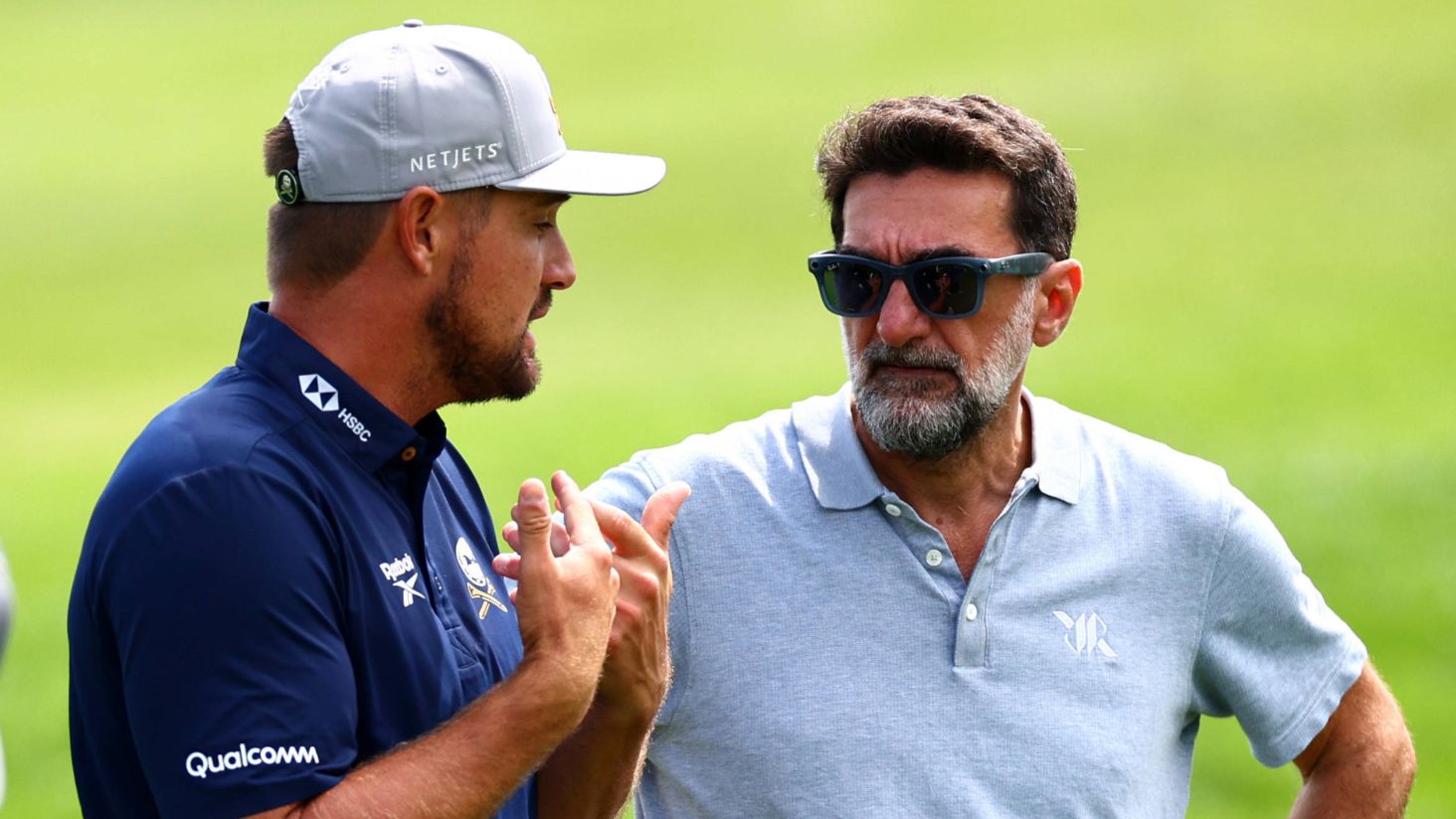
Yasir Al-Rumayyan (right), governor of the Saudi sovereign wealth fund, in conversation with professional golfer Bryson DeChambeau. (Photo: Imago / Shutterstock)


