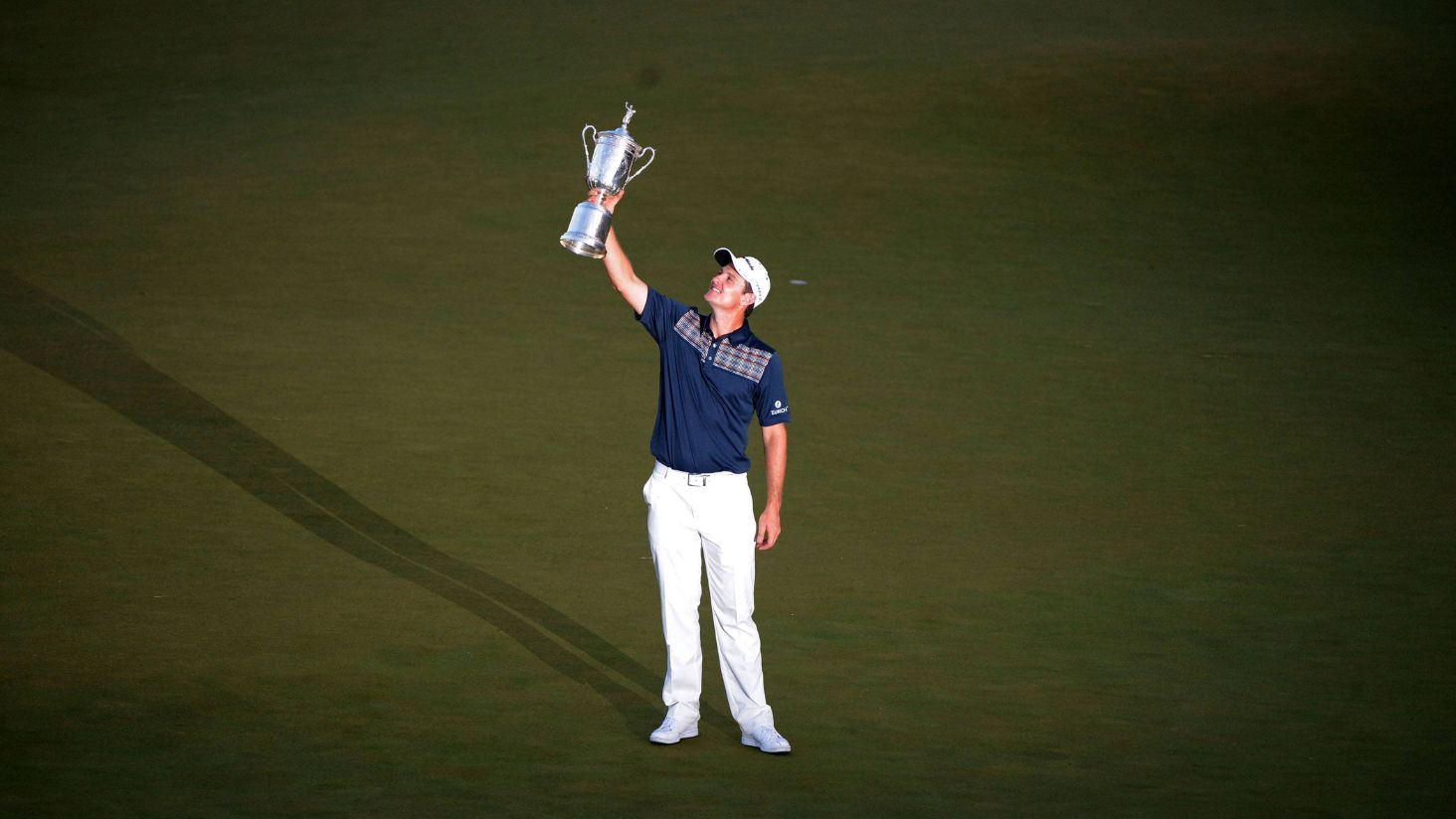
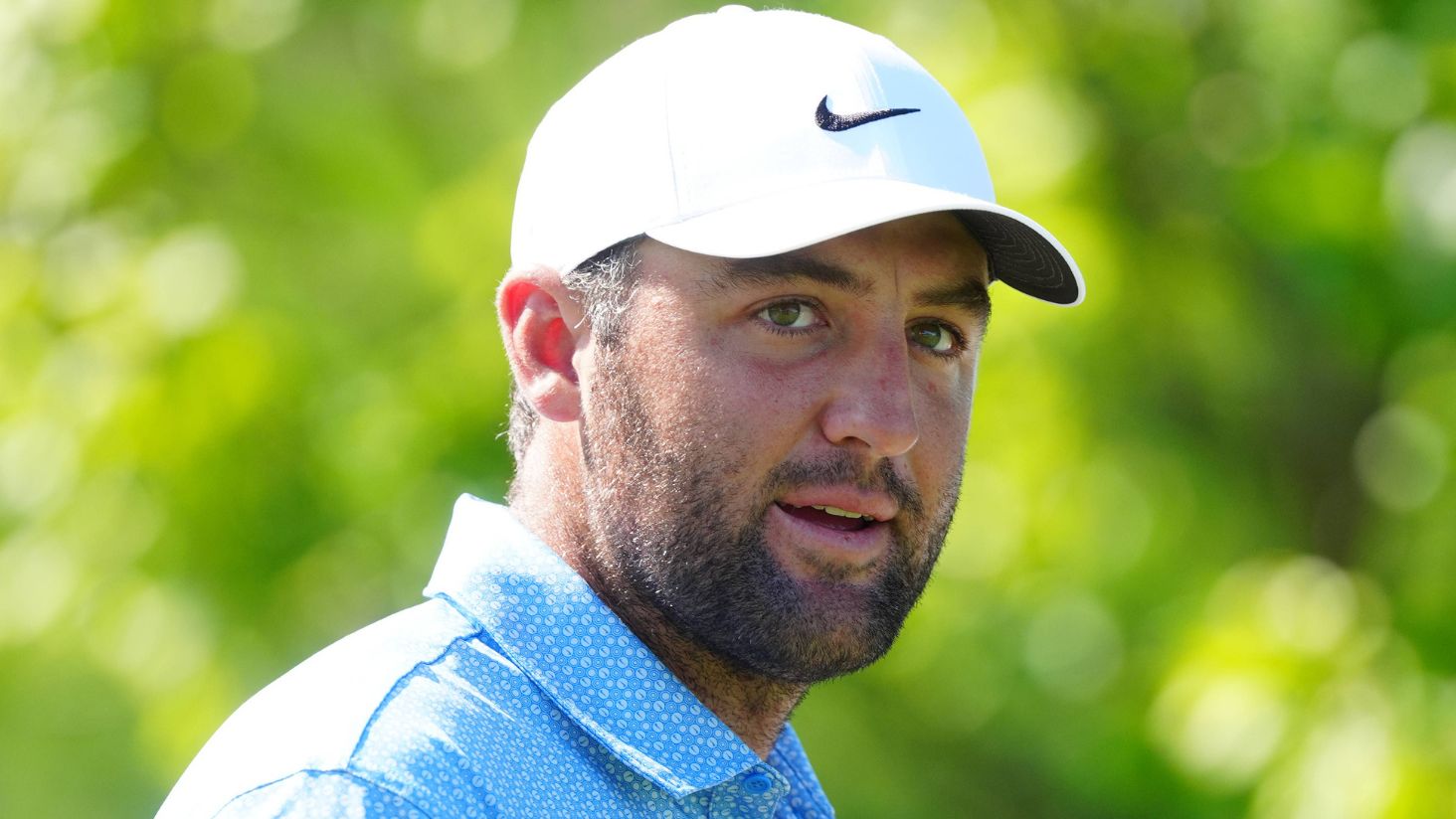
Grand Slam, Injury Concerns, Record-Breaking Anniversary: A Look at the 2026 U.S. Open
Scheffler, McIlroy, Koepka: The 2026 U.S. Open at Shinnecock Hills has it all—the hunt for a Grand Slam, injury dramas, and historic side stories.
The 126th U.S. Open Championship begins Thursday in Southampton, New York. Scottie Scheffler has the chance of a lifetime—but the course, the competition, and history tell a different story.
US Open Course Setup: Wider, but Not Easier
Anyone who thinks Shinnecock Hills will be more forgiving this year than it was in 2018 might be in for a surprise. While the fairways are slightly wider than they were at the last tournament eight years ago, the pros estimate that the greens will be exceptionally small and fast—a paradoxical combination that makes the course challenging in its own way.
After rainfall the previous week, the greens were still relatively soft heading into the week before the tournament. But with the forecasted wind, conditions could change quickly. Matt Fitzpatrick, the 2022 U.S. Open champion, was clearly not pleased about this: “To be honest, I’m a little disappointed that they’re watering the course right now,” he told the media. Fitzpatrick prefers a course that plays as dry and firm as possible—conditions under which he traditionally thrives.
The deep fescue rough along the Fairways is likely to be the main challenge once again. Anyone who ends up in that rough has virtually no realistic chance of reaching the Greens in regulation. This brings to the forefront an aspect that many underestimated before the tournament: driving accuracy off the Tee. Scottie Scheffler explicitly warned against underestimating the importance of a precise tee shot: “I’d say driving accuracy is extremely important. If there’s a 20-mile-per-hour wind blowing, those Fairways won’t play as wide given the hard ground.”
According to Scheffler, the USGA is trying to strike a balance between maximum difficulty and a fair reward system: “I feel like the USGA is doing a good job of finding a balance—between what’s as difficult as possible and what rewards really good shots.” The result is a layout that rewards accurate tee shots and penalizes inaccurate ones—and one that offers little leeway in windy conditions.
Fitzpatrick sees the key to success in meticulous preparation and patience. He’s convinced that on the course—aside from holes 10 and 11—there’s always a safe zone where an up-and-down is possible: “I believe that, with the possible exception of holes 10 and 11, you have the opportunity for an up-and-down if you miss the Greens in the right spot and have done your homework.”
Click here for the 2026 U.S. Open live leaderboard.

The Big US Open Story: Scheffler’s Grand Slam Chase
When Scottie Scheffler plays the final holes at Shinnecock Hills on Sunday, June 21, it won’t just be the end of the U.S. Open—it will be his 30th birthday. And if he’s in the lead at that point, he’ll be one victory away from something that only six men in golf history have achieved: the Career Grand Slam.
Scheffler has won the Masters (2022, 2024), the PGA Championship (2024), and The Open Championship (2022)—the US Open is the only one missing from his collection. No player has won all four majors in such a short span of time since Tiger Woods did so in 2000. And yet, expectations for the world No. 1 have risen noticeably this season—and his results have not yet fully met them.
Scheffler has won just once so far in 2026: at the American Express at the start of the year. He has finished outside the top 10 five times this season—a frequency that stands out by his standards. By comparison, in 2023, 2024, and 2025, he did so only three to five times each season. And yet: Scheffler has finished in the top 25 in 32 consecutive tournaments. He leads the PGA Tour in nearly every relevant scoring category—despite what is, by his own standards, his weakest season in terms of Approach shots since 2021. He finished second at the Masters and led after the first round of the PGA Championship.
Learn everything about the Grand Slam in golf here.
The bookmakers see it the same way: At FanDuel Sportsbook, Scheffler is the clear favorite at 11/2 odds—well ahead of the rest of the field. The pressure is immense, the stage historic. And his birthday adds an emotional dimension to the whole affair that even the most level-headed golf observers cannot ignore.
Historically speaking, his first attempt at the Grand Slam is a good omen: Tiger Woods (2000), Ben Hogan (1953), and Gene Sarazen (1935) all completed the feat on their first try. Gary Player and Jack Nicklaus needed three attempts. Rory McIlroy, who completed the Grand Slam in 2025 after eleven attempts—and years of failure at the Masters—stands as a cautionary tale of just how long this journey can be.
A Look at the Competition
Rory McIlroy – Return to Shinnecock
Rory McIlroy arrives in New York riding the momentum of an extraordinary spring. In April, the Northern Irishman successfully defended his Masters title—making him one of only four players in the tournament’s history to do so (alongside Woods, Nicklaus, and Nick Faldo). His seventh major would be within reach with a victory at Shinnecock.
McIlroy has a score to settle with this course: In 2018, during the US Open’s last appearance in Southampton, he missed the cut—his only missed cut in this tournament to date. Since then, he has finished in the top 20 in every US Open he’s played, even making the top 10 four times. The evolution of his game speaks for itself: McIlroy now excels at both the short game and long-distance shots—both of which are essential at Shinnecock.
The 12/1 odds reflect his starting position: a clear co-favorite, but trailing Scheffler by a respectable margin. McIlroy sees Shinnecock as a course that rewards versatility: “It’s a great golf course. It challenges every aspect of the game: the tee shot, the iron play—you have to be wide awake around the greens. It’s all about strategy and thoughtfulness.” He tees off on Thursday at 7:52 a.m. ET in a group with Ludvig Åberg and Tommy Fleetwood.
Find the 2026 U.S. Open tee times here.
Brooks Koepka – The Shinnecock Champion Fights His Way Back
No player is more closely associated with Shinnecock Hills than Brooks Koepka. In 2017, he won the U.S. Open at Erin Hills; in 2018, he defended his title—with a final score of 1-over-Par, one stroke ahead of Tommy Fleetwood—on this very course. He is the last player to achieve back-to-back victories at the U.S. Open, and another title would bring his total to six majors—tying him with McIlroy as the most successful active player.
Koepka returned to the PGA Tour in 2026 after spending several years playing on the LIV Golf circuit. His best finish this season is a tie for ninth place—solid, but still far from his best form.
Compounding the issue is an injury sustained shortly before the tournament began. Koepka experienced numbness in the ring and little fingers of his left hand during the RBC Canadian Open the night before the third round. Scans in Canada and New York showed no issues with his cervical spine; doctors suspect an irritated nerve. Koepka played nine holes at Shinnecock Hills on Tuesday and gave the all-clear afterward: “It’s getting better day by day. I don’t have any pain—none at all, which is kind of the strangest thing about the whole thing.” While his grip strength isn’t yet at 100 percent, he added: “It’s enough. It’s fine.”
It remains to be seen whether Koepka can get through the week with this injury. He has already proven that he is mentally capable of delivering at Shinnecock. He tees off on Thursday at 7:30 a.m. ET alongside Cameron Young and Chris Gotterup.

Matt Fitzpatrick – At a Career High with a Clear Plan
Matt Fitzpatrick arrives in Southampton with a level of confidence that’s new to his career. The 31-year-old Englishman has already won three times on the PGA Tour in 2026: at the Valspar Championship in March, at the Heritage Tournament in April, and—alongside his brother Alex—at the Pairs event in New Orleans. Most recently, he finished second at the RBC Canadian Open. He is currently ranked fourth in the world.
In 2022, Fitzpatrick won the U.S. Open in Brookline—in a final showdown that cemented his reputation as a “major player.” Now he’s staking everything on defending his U.S. Open title at a course that suits his style of play: strategic, precise, and patient. For Fitzpatrick, the combination of thick Rough and fast Greens isn’t a problem, but an invitation: “I don’t like Birdie fests. I think it’s more of a test of ball control when it’s windy and firm.”
He’ll tee off in a notable three-way pairing: Fitzpatrick, Bryson DeChambeau, and Viktor Hovland will play the first two rounds together—Thursday at 1:25 p.m. local time, Friday at 7:30 a.m. Fitzpatrick and DeChambeau know each other from their Ryder Cup singles match at Bethpage Black, where Fitzpatrick had a five-hole lead after seven holes but ultimately only managed a tie. Speaking about DeChambeau at the time, Fitzpatrick said: “Bryson’s personality—he has a lot of energy. No problems with Bryson. It was definitely a good match.”
Jon Rahm – Return to the Major Stage
Jon Rahm won the 2021 U.S. Open and knows the pressure of the tournament. After his move to LIV Golf, he temporarily fell behind the world’s best at majors. However, he made an impressive comeback at the 2026 PGA Championship: a second-place finish at Aronimink confirms his return to major form. On the LIV Tour this season, he has won twice and finished on the podium four times. Bookmakers have him at 13/1.
Bryson DeChambeau – In Search of That Spark
Bryson DeChambeau, a two-time U.S. Open champion (2020, 2024), is going through a slump. He missed the cut at both the 2026 Masters and the 2026 PGA Championship. Since his victory at Pinehurst in 2024, DeChambeau has missed the cut in majors more often (four times) than he has made it (three times).
In search of solutions, DeChambeau is turning to unusual measures: At a LIV team tournament in Korea, he used AI software (Gemini) for swing analysis. And at the start of the tournament at Shinnecock, he tested a brand-new prototype Driver from TaylorMade, the Qi4D Proto 200+, which had been added to the USGA conforming list just a few hours earlier. The 7-degree Driver, featuring two weight ports at the heel and toe and a new Project X Titan Black shaft, is designed to provide more control with his high ball flight—a response to the wind, which will play a central role at Shinnecock.
DeChambeau has slipped to 25/1 on the bookmakers’ list, after having been among the top favorites at the start of the season. His world ranking has dropped to No. 32. He has proven in the past that he’s still capable of pulling off an upset—but his current form is working against him.

Course Analysis: Why Shinnecock Demands a Complete Golfer
At first glance, the wide Fairways of the current course layout might lead one to view Shinnecock Hills in 2026 as a “bomb and gouge” test—that is, one where raw distance off the Tee is decisive. Scheffler explicitly contradicted this assessment. He explained that the combination of firmness and wind makes the Fairways appear significantly narrower than their actual width: With winds of 20 miles per hour, even wider Fairways can suddenly offer very little margin for error.
The real litmus test is the greens. Despite their physical size, they effectively play very small because balls that land on the wrong side of the flag disappear onto slopes or into the approach areas. Anyone who doesn’t know or doesn’t take into account the correct flag position will be punished with difficult Puts or Chips. Fitzpatrick, who places great emphasis on course management in his preparation, sees precisely this characteristic as decisive: “The strength of this golf course lies in the difficulty of the greens.”
Overall, this creates a challenge that demands both distance and accuracy, both power and finesse—and one that rewards precisely those players who can consistently replicate their swing under pressure and in shifting wind conditions.
Side Stories Shaping the Tournament
Adam Scott: 100 Consecutive Majors
While attention is focused on the favorites, Adam Scott is accomplishing a remarkable feat in Southampton: The Australian is competing in his 100th consecutive major championship this week. The last major Scott did not play in was the 2001 U.S. Open—at a time when Apple had just launched the first iPod and “Harry Potter” was still in theaters. Only Jack Nicklaus has a longer streak, with 146 consecutive majors. Scott is the only other player to have ever reached the 100-mark.
Arni Sveinsson: Iceland’s First Major Competitor
One of the most inspiring stories of the week comes from the far north. Arni Sveinsson, 19 years old and a sophomore at Louisiana State University, qualified for the U.S. Open last week through Final Qualifying—with rounds of 67 and 68, which earned him second place in his qualifying group. He will thus become the first Icelander in the history of the U.S. Open to compete. “I’m really proud to be from Iceland. As an underdog, I carry that with me—I have to overcome milestones and barriers that no one from my home country has ever overcome before. It’s a real honor,” Sveinsson told Golf Channel. As an All-American freshman and ranked 72nd nationally, he is among the best college golfers of his generation.
Young Talent on the Big US Open Stage
Sveinsson isn’t the only young player turning heads this week. Two 17-year-olds emerged from the qualifying tournament in Palm Beach Gardens, Florida: Miles Russell and Giuseppe Puebla—both among the rising stars of their age group. Puebla shot 69-68 in the qualifying rounds and finished as a medalist in the event. Russell qualified after shooting 71-67 and winning a playoff.
From the college ranks, Jackson Koivun (three-time SEC champion) and Preston Stout (2026 NCAA individual champion, three-time consecutive Big 12 champion) are competing as amateurs. The depth of this year’s amateur field is exceptional and should provide an exciting subplot throughout the week.
Xander Schauffele: Record Consistency at the U.S. Open
Xander Schauffele is playing in the U.S. Open for the tenth time this year—and he has never finished lower than 15th. His first five appearances yielded five consecutive top-10 finishes. This year, too, he has once again posted top-15 finishes in the first two majors. Nevertheless, the PGA Champion and Open Champion (2024) has yet to win the U.S. Open title. Hardly any other player in the field can boast a comparably long streak of consistency without a victory.
Parity: The Year of Many Winners
So far, 2026 has proven to be an exceptionally balanced year in golf. Of the seven PGA Tour signature events, each was won by a different player. The same is true for the nine LIV Golf events held so far. The two majors held so far have also had different winners: McIlroy at the Masters, and Aaron Rai—to the surprise of many—at the PGA Championship at Aronimink. Six of the last seven and 13 of the last 17 U.S. Open champions were first-time major winners. That makes the field of underdogs—Cameron Young, Ludvig Åberg, Tommy Fleetwood—particularly interesting.
LIV Golf at Shinnecock—and an Uncertain Future
Thirteen LIV Golf members are in the field this week: alongside Rahm and DeChambeau, they include Tyrrell Hatton (OWGR 21), Joaquin Niemann (80), and former world No. 1 Dustin Johnson (245). Johnson has missed the cut in two of his last three U.S. Opens; his ranking reflects an ongoing slump in form.
The LIV players’ participation is part of a larger context: According to reports, Saudi Arabia’s Public Investment Fund has announced it will cease funding the Tour after the 2026 season. The league is seeking new investors. Whether and in what form LIV Golf will continue to exist remains to be seen—an increasingly pressing question for many players who had bet on the coexistence of both Tours.
Shinnecock Hills and the U.S. Open: A Relationship of Fame and Controversy
Shinnecock Hills is one of the few courses to have hosted the U.S. Open in three different centuries—first in 1896, and now for the sixth time in 2026. The next event is already scheduled for 2036. In recent history, Shinnecock has made headlines primarily for its extreme conditions: In 2004, the USGA watered the greens during the final round because balls simply wouldn’t stay on the green; 28 players shot over 80, and no one played under Par. In 2018, the first-round average was 76.5, and Phil Mickelson caused one of the most talked-about rule violations in recent golf history with his deliberate shot at his rolling ball. Fitzpatrick, who missed the cut back then, is nevertheless skeptical of the criticism directed at the USGA: “I never believed they lost the course here. I really don’t believe that.”
Outlook: Who Will Win—and Why This U.S. Open Is Special
Rarely has a U.S. Open been packed with as many storylines as the 126th edition at Shinnecock Hills. At the center of it all is Scottie Scheffler, the world No. 1, who—despite being in an uncharacteristic slump—is aiming for his first U.S. Open title and, with it, the Career Grand Slam—all on his 30th birthday. Should he win, he would be only the seventh player in history to achieve this feat. Should he fall short, he would be in good company: Rory McIlroy, too, needed eleven attempts.
McIlroy himself is arguably the strongest contender, bolstered by his second consecutive Masters title and his hunger to win on one of golf’s great courses. A victory at Shinnecock would further cement his status as one of the preeminent figures in modern golf.
Brooks Koepka remains a force to be reckoned with despite his injury—his 2018 victory at Shinnecock was no fluke, but a testament to his character under extreme pressure. Matt Fitzpatrick is in the best form of his career and has a style of play that’s tailor-made for this course. Jon Rahm has shown that he’s once again capable of competing in majors.
Beyond that, this tournament is a stage for stories that go beyond the winner: Adam Scott’s record-breaking anniversary, Iceland’s debut at the U.S. Open, and a new generation of qualifiers showing that the next great player might already be in the field.
In 2026, Shinnecock Hills will do what it has always done: test, challenge, and ultimately reward the player who thinks most clearly and plays most precisely under the toughest pressure in golf. Four days on Long Island will reveal who that is.
Brandname
Title will go here and can run on two lines
Brandname
Title will go here and can run on two lines

Brandname
Title will go here and can run on two lines
Brandname
Title will go here and can run on two lines
Brandname
Title will go here and can run on two lines
Brandname
Title will go here and can run on two lines
Brandname
Title will go here and can run on two lines
Brandname
Title will go here and can run on two lines
Brandname
Title will go here and can run on two lines
Brandname
Title will go here and can run on two lines
Release date
17 Jun 2026
photos
The 2026 U.S. Open, the third men's major tournament, will be held at Shinnecock Hills Golf Club. (Photo: Imago / UPI Photo)