330 yards and $30 million: The 2026 PGA Tour by the Numbers
Two players surpassing 330 yards, Scheffler setting a prize money record, and Bridgeman as the putting king: The key statistics from the 2026 PGA Tour season.
Aldrich Potgieter hit the ball farther than any player before him, and Scottie Scheffler earned more money than any PGA Tour player had in a single season prior. But the statistics from the 2026 season tell more than just a story of extreme driving distance and high prize money. Above all, they show that in the end, it’s not a single spectacular strength that decides the outcome, but rather the combination of distance, accuracy, approach play, Putt, and consistency.
For the first time, two players surpassed 330 yards
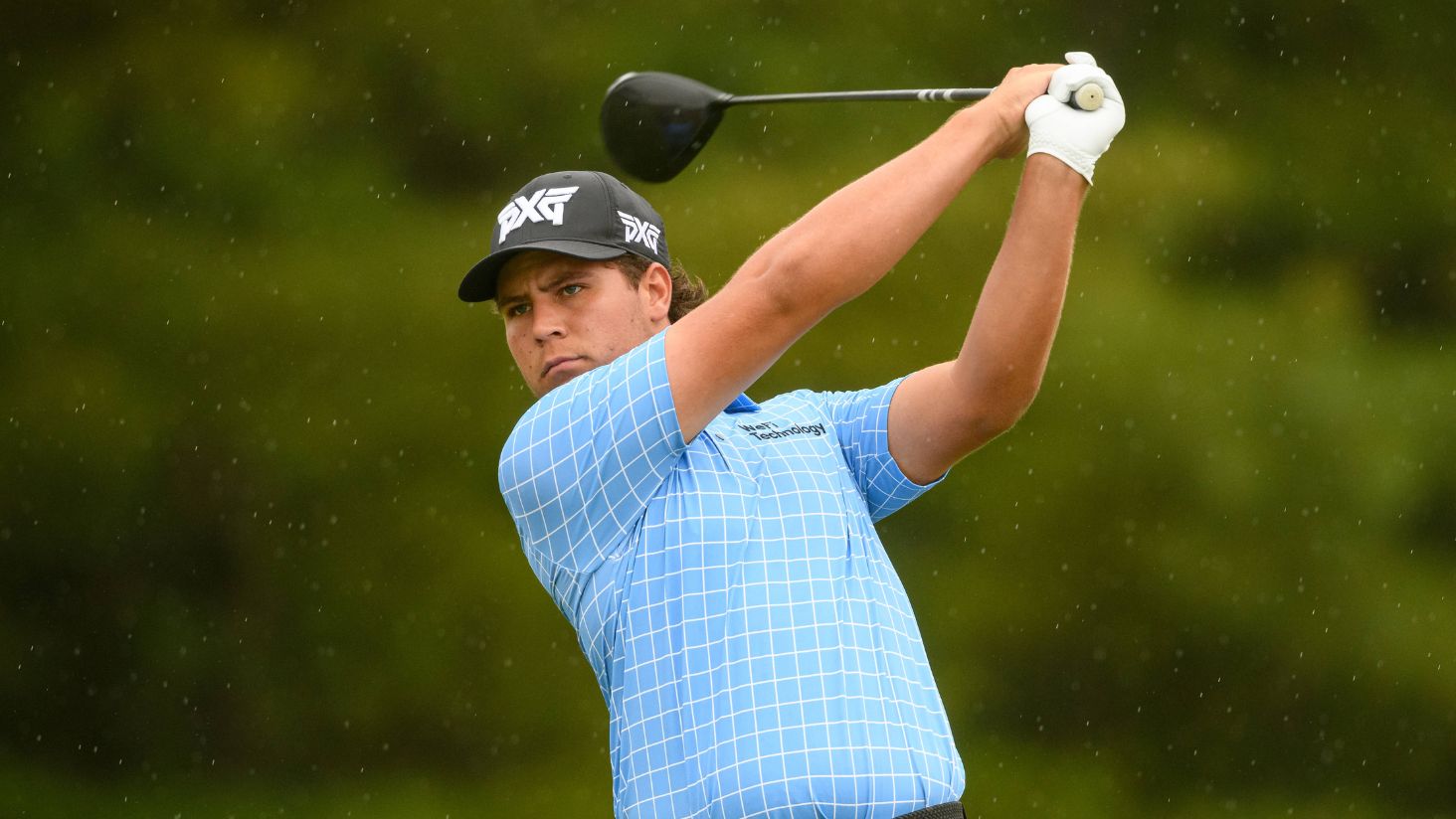
The 330-yard mark had long been considered unattainable in the PGA Tour’s driving distance statistics. In 2026, this barrier was broken twice: Aldrich Potgieter led the rankings with an average of 331.1 yards, followed by Rory McIlroy with 330.3 yards.
This marked the first time two players averaged more than 330 yards in the same season. Potgieter also surpassed his own personal best from the previous year by 6.1 yards. The South African was 7.4 yards ahead of Bryson DeChambeau’s previous record of 323.7 yards set in 2021.
This trend becomes particularly clear when looking at a few historical milestones:
| Year | Player | Average Driving Distance |
|---|---|---|
| 1980 | Dan Pohl | 274.3 yards |
| 1997 | John Daly | 302.0 yards |
| 2003 | Hank Kuehne | 321.4 yards |
| 2021 | Bryson DeChambeau | 323.7 yards |
| 2023 | Rory McIlroy | 326.3 yards |
| 2026 | Aldrich Potgieter | 331.1 yards |
When John Daly first surpassed the 300-yard average in 1997, it was a historic exception. Nearly three decades later, two players are averaging over 330 yards. Since official records began in 1980, the record has thus increased by 56.8 yards.
It’s important to note that the PGA Tour does not measure the longest single drive, but rather the average of measured drives. Drives are recorded on two selected holes per round. The holes should run in opposite directions as much as possible to compensate for the influence of the wind. The distance is measured to the point where the ball comes to rest—regardless of whether it is on the Fairway.
~190 ball speed for 21-year-old Aldrich Potgieter 😳
— PGA Tour (@PGATour) April 28, 2026
The sky’s the limit! pic.twitter.com/5rEV5c3J21
Potgieter had the longest drive—but not the most effective one
Aldrich Potgieter’s stats also make it clear why driving distance and the quality of a tee shot aren’t the same thing. The 21-year-old hit the ball farther than anyone else, but only hit 51.83 percent of the Fairways. This placed him 147th in driving accuracy.
By comparison, Russell Henley led the field in fairway accuracy at 72.59 percent. There was thus a gap of more than 20 percentage points between the longest and the most accurate player of the season.
The “Strokes Gained: Off the Tee” statistic also puts Potgieter’s record into perspective. This metric doesn’t just evaluate how far a ball flies; it also takes into account where it lands and what advantage or disadvantage that position provides for the next shot. Potgieter ranked 16th in this category. Although McIlroy hit the ball 0.8 yards shorter, he was significantly better in terms of the overall impact of his tee shots according to the available analysis and finished in the top ten.
This is one of the most important insights of the season: A long tee shot isn’t automatically a good tee shot. The extra distance only becomes a real advantage when it’s combined with control and a favorable starting position for the second shot.
Scottie Scheffler: The Most Efficient Player of the Season
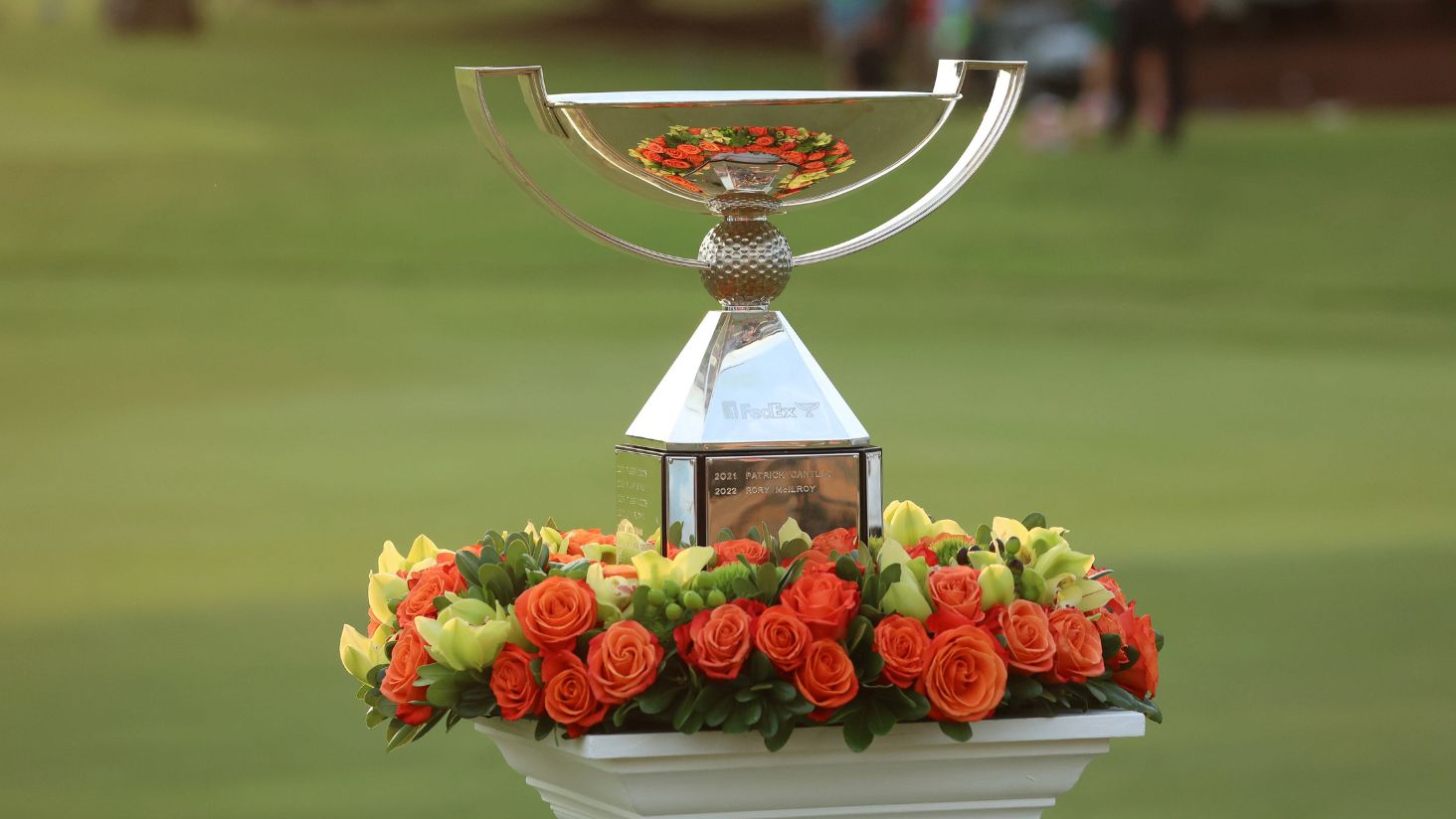
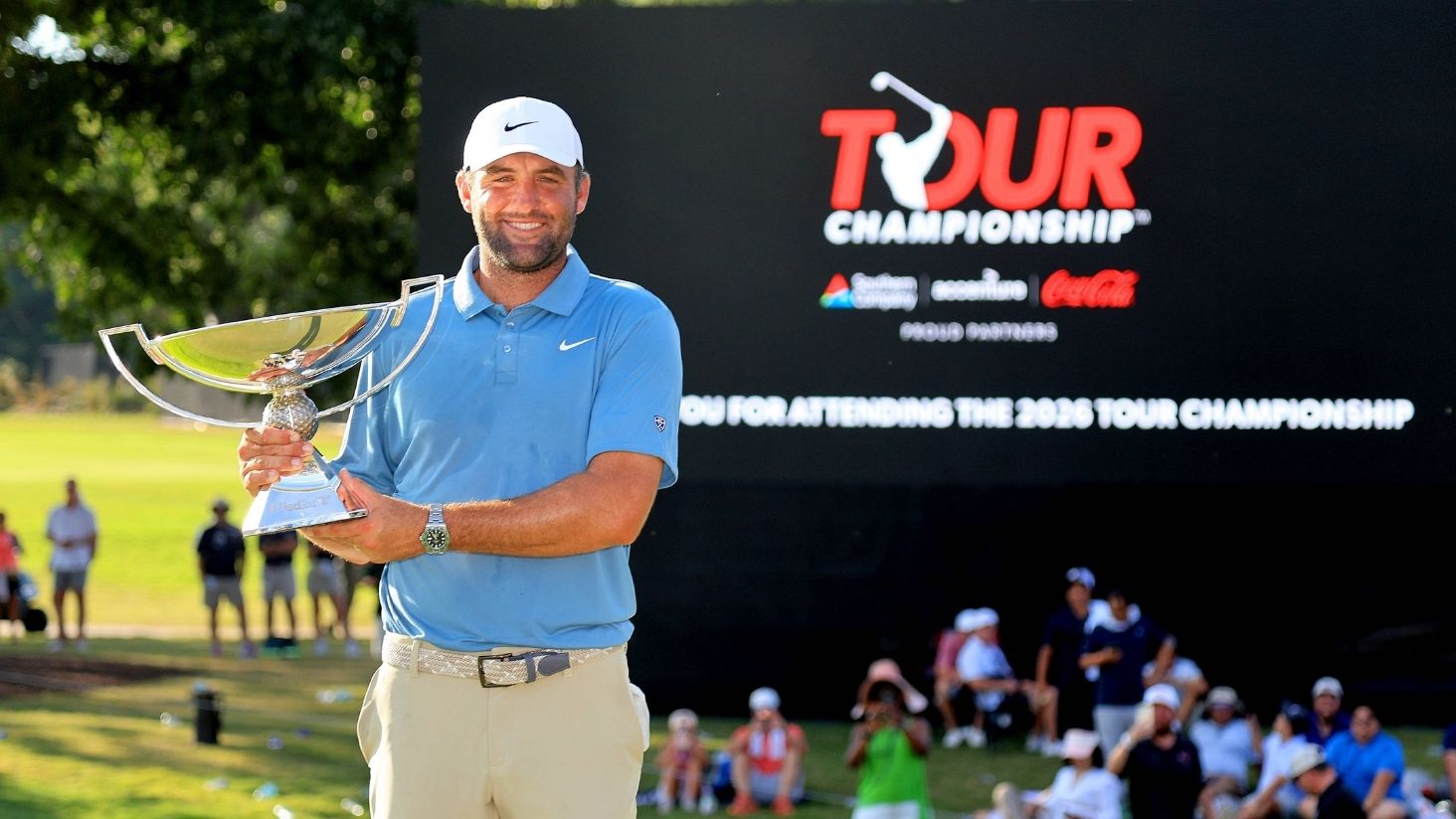
While Potgieter and McIlroy dominated the distance rankings, Scottie Scheffler set the standard for overall performance. The world No. 1 won the Tour Championship at East Lake by three strokes and racked up three victories this season.
Even more extraordinary is his prize money total. Scheffler took home approximately $30.94 million. In doing so, he became the first player in PGA Tour history to surpass the $30 million mark in a single season. His total was more than double that of Cameron Young, who finished second with approximately $15.07 million.
The top five spots in the prize money rankings:
| Rank | Player | Season Earnings |
|---|---|---|
| 1 | Scottie Scheffler | approximately $30.94 million |
| 2 | Cameron Young | approximately $15.07 million |
| 3 | Matt Fitzpatrick | about $14.68 million |
| 4 | Wyndham Clark | approximately $14.64 million |
| 5 | Rory McIlroy | approximately $11.57 million |
Nine players earned more than $10 million, and 33 earned more than $5 million. However, Scheffler wasn’t just in a league of his own financially. He also topped the official scoring average, which is adjusted for course difficulty.
| Rank | Player | Adjusted Scoring Average |
|---|---|---|
| 1 | Scottie Scheffler | 68.619 |
| 2 | Rory McIlroy | 69.342 |
| 3 | Collin Morikawa | 69.484 |
| 4 | Matt Fitzpatrick | 69.586 |
| 5 | Chris Gotterup | 69.689 |
Scheffler’s lead over McIlroy was 0.723 strokes per round. Over four rounds, that adds up to nearly three strokes—a significant margin at this level of play.
Scheffler’s season was so strong precisely because it didn’t hinge on a single spectacular category. Rather, his numbers demonstrate the value of consistency on the PGA Tour: low scores, regular top finishes, and the ability to win the most important tournaments.
Career earnings: Scottie Scheffler overtakes Tiger Woods and sets a new record.
Four players with three wins each
The victory statistics paint a slightly different picture than the prize money and scoring rankings. Four players each claimed three tournament victories in 2026: Matt Fitzpatrick, Scottie Scheffler, Wyndham Clark, and Chris Gotterup. Cameron Young won two tournaments. Twenty-four other players each claimed one victory.
| Wins | Player or Group |
|---|---|
| 3 | Matt Fitzpatrick, Scottie Scheffler, Wyndham Clark, Chris Gotterup |
| 2 | Cameron Young |
| 1 | 24 other players |
In total, this overview lists 29 different winners. The season was therefore by no means dominated by a single player in terms of tournament victories. Scheffler’s special standing stemmed from a combination of victories and exceptional consistency.
Several other names also stand out. Fitzpatrick won three tournaments, ranked third in prize money, and fourth in scoring. Gotterup also recorded three wins and surpassed the $10 million mark. Young won twice and finished second in the money list. McIlroy, on the other hand, won only one tournament but was among the leaders in scoring, driving distance, and prize money.
Read all about the four 2026 men’s golf majors here.
Jacob Bridgeman: The Best Putter of the Season
The most striking statistical category went to a player who isn’t among the established superstars. Jacob Bridgeman led the Strokes Gained: Putting category with a gain of 0.693 strokes per round. Simply put, he gained an average of nearly seven-tenths of a stroke over the field on the greens—in every round.
Bridgeman also ranked first in the Total Putting category. He ranked third in putts per green in regulation and fifth in putts per round. He was also among the best players in terms of one-putt percentage and avoiding three-putts.
His putting was the foundation for a remarkable season. In February, Bridgeman won the Genesis Invitational, defeating Rory McIlroy, among others. According to the source, it was his first victory in his 84th PGA Tour start. He finished the season ranked fourth in the FedEx Cup standings.
"Strokes Gained: Putting" is more meaningful than raw statistical counts. For example, a player who frequently has to make long putts automatically faces a higher risk of three-putting. This can be due to weaker approach shots and isn’t necessarily a pure putting problem. Strokes Gained attempts to evaluate performance on the green more independently of the other shots.
However, Bridgeman’s overall profile also shows where his next step in development lies. He ranked 77th in Strokes Gained: Off the Tee and 50th in Strokes Gained: Approach. If he can combine his outstanding performance on the greens with better tee shots and approach shots, the surprise winner could become a regular title contender.
No. 1 in SG: Putting, Jacob Bridgeman explains the reasoning behind practicing with two completely different Putters.
— PGA Tour (@PGATour) May 12, 2026
“When I’m putting really well with a Blade, I know my stroke is going to be in a position that’s miles better.” pic.twitter.com/gG2UcnaR6T
Ryan Gerard made the biggest strides on the greens
It’s not just the best absolute numbers that are interesting. The 2026 season also brought remarkable developments in putting.
Erik van Rooyen improved his Strokes Gained: Putting by 0.846 strokes per round. Over 36 holes, that translates to an advantage of about 1.7 strokes compared to his level the previous year, as calculated by Golfweek. According to the analysis, what was once a major weakness became an elite strength. However, that alone wasn’t enough for a successful season: Van Rooyen missed 11 of his 20 cuts.
For Ryan Gerard, the improvement coincided with better overall results. He improved by 0.67 strokes per round and climbed from 154th to 27th in the putting rankings. Gerard made 22 of 26 cuts, finished second at the Sony Open, the American Express, and the Memorial Tournament, among others, and placed third at the Tour Championship. His season earnings totaled more than $10 million.
Gerard’s season thus illustrates particularly well how improvement in a single category can fuel a breakthrough—provided it is accompanied by consistency in the rest of his game.
The future belongs to the most efficient players
The 2026 season has impressively confirmed the “power era” of modern golf. Aldrich Potgieter’s 331.1 yards and Rory McIlroy’s 330.3 yards mark a new dimension. The trend over the past decades shows that the PGA Tour is getting longer and longer.
At the same time, the numbers provide an important counterbalance to the pure distance competition. Potgieter’s ranking in fairway accuracy shows that length without control loses its impact. Jacob Bridgeman proves just how much an exceptional Putter can achieve. Ryan Gerard demonstrates that targeted improvement can trigger the next step, both statistically and in terms of performance.
The most compelling evidence is Scottie Scheffler: three wins, the best adjusted scoring average, and season earnings of approximately $30.94 million. He wasn’t number one in every individual statistic. However, he excelled in the areas that pay off most significantly over the course of an entire season.
The crucial question, therefore, is no longer simply who hits the farthest. It is: Who derives the greatest combined advantage from distance, accuracy, approach play, and Putting? In this discipline, Scottie Scheffler set the standard in 2026.
Brandname
Title will go here and can run on two lines
Brandname
Title will go here and can run on two lines

Brandname
Title will go here and can run on two lines
Brandname
Title will go here and can run on two lines
Brandname
Title will go here and can run on two lines
Brandname
Title will go here and can run on two lines
Brandname
Title will go here and can run on two lines
Brandname
Title will go here and can run on two lines
Brandname
Title will go here and can run on two lines
Brandname
Title will go here and can run on two lines
Release date
06 Sep 2026
photos
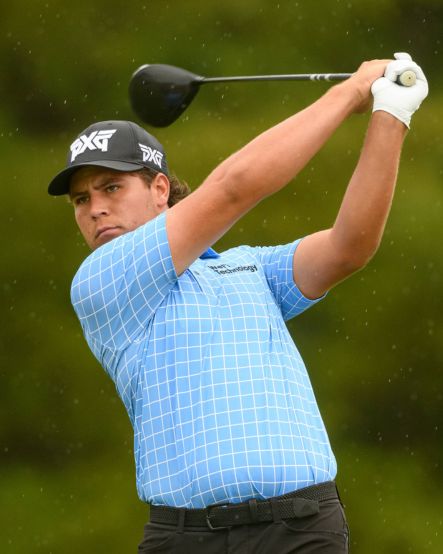
Aldrich Potgieter of South Africa hit the longest Drivers of the 2026 PGA Tour season. (Photo: Imago / Icon Sportsiwre)