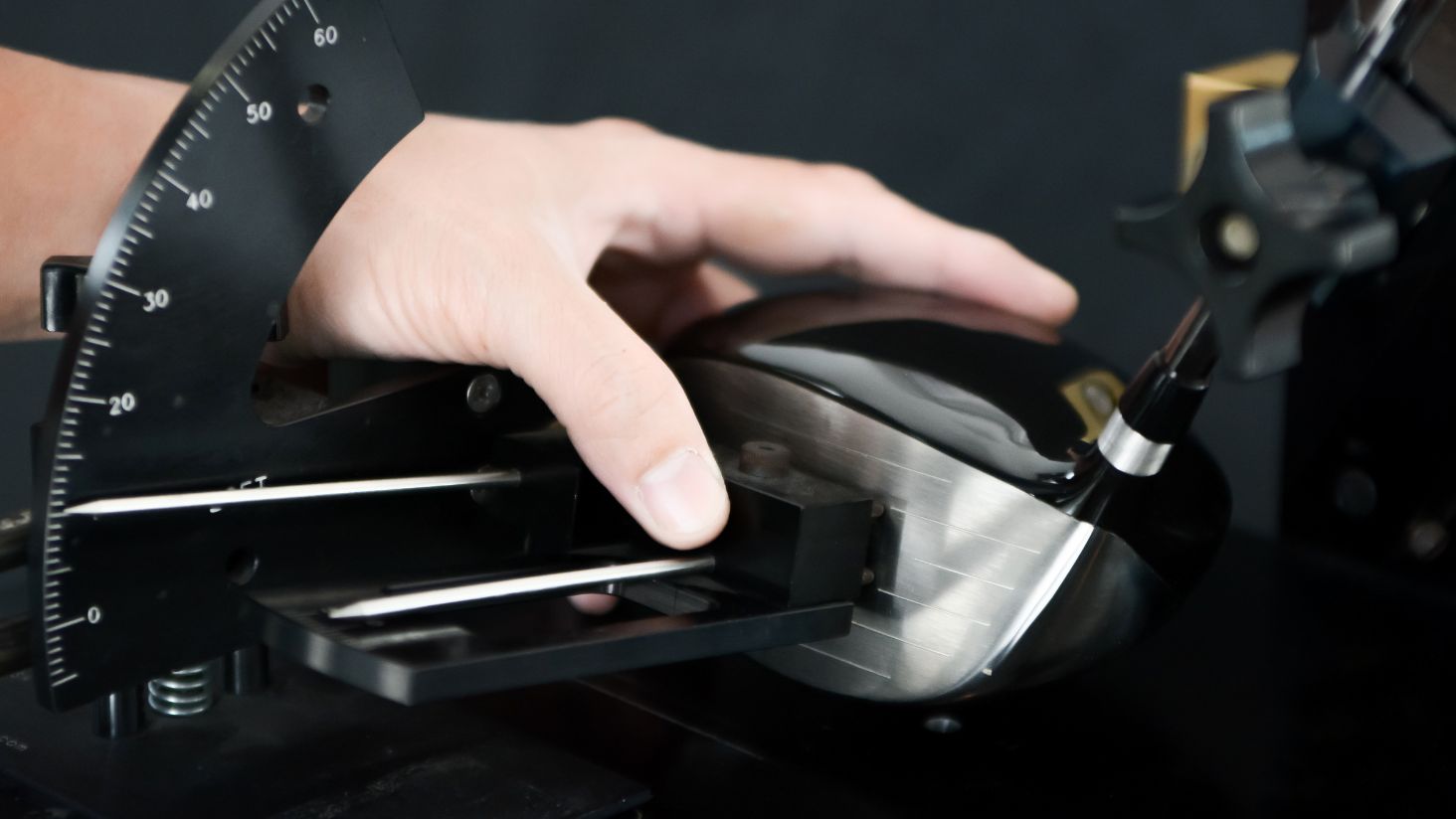
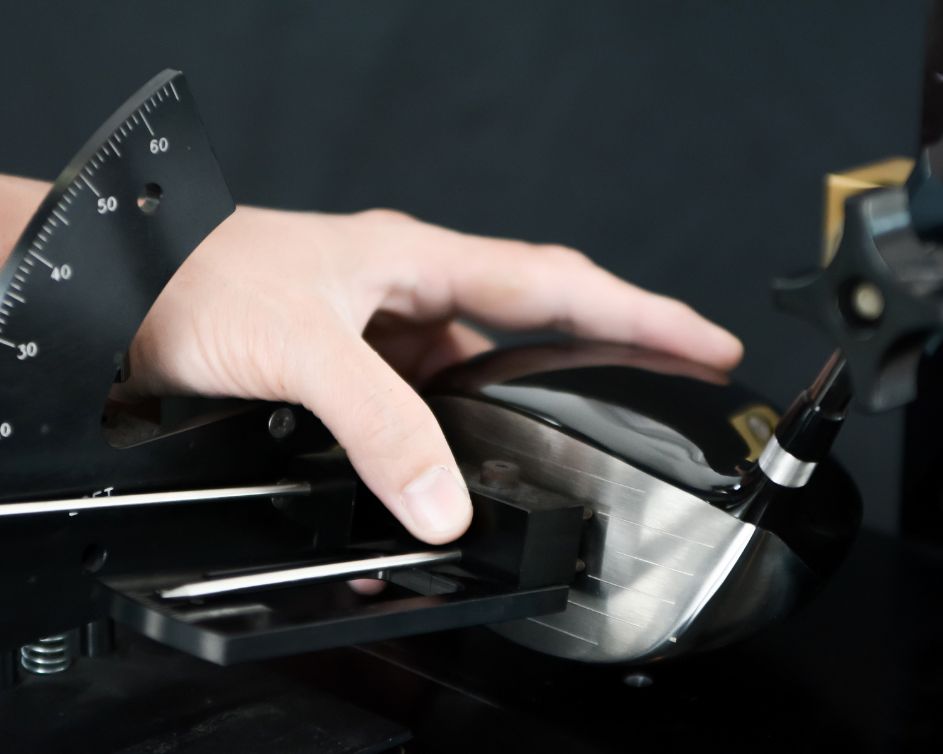
Driver Fitting – How to Find the Perfect Driver
Shaft flex, Tee height, club length: When it comes to Driver fitting, the details determine your distance and consistency on the golf course—a pro explains what matters.
Two female golfers are standing at the first tee. Both are using the same Driver, the same loft, and the same shaft. One hits the Fairway cleanly and far. The other struggles with a pronounced Slice. Same model, completely different results—because a Driver never works the same for everyone. What matters isn’t the name on the clubhead, but how well it’s tuned to your individual swing.
That’s exactly what driver fitting is all about: not finding the most expensive model, but the right one. This article explains which parameters really matter during a fitting—from shaft flex and club length to the correct Tee height and the specific process of a professional fitting. By the end, you’ll understand why a fitting is the smartest investment golfers can make for their game.
Note: If you’re still looking for the right Driver model, we recommend checking out our 2026 Golf Driver Buying Guide first—there you’ll find a complete overview of all current models and types.
What Is a Driver Fitting—and Why Is It Worth It?
A driver fitting isn’t just a service for pros or low-handicap players. It’s a structured analysis in which a golfer’s swing is evaluated using modern measurement methods, and then the optimal club—consisting of the head, shaft, and grip—is assembled.
What Happens During a Fitting
Christopher Buck, PGA Professional and fitting specialist at ALL4GOLF, describes the process as follows: “First, we test the player’s current equipment to identify areas for improvement. All the major brands are available at our fitting center, so we can try out different clubs. The goal is to find the best combination of clubhead and shaft for the player and thus optimize the ball flight.”
Specifically, a driver fitting usually proceeds as follows:
- Static measurements: Height and wrist-to-ground distance are measured to determine the optimal club length.
- Analysis of current equipment: Clubhead speed, ball speed, and ball flight are recorded using a Launch-Monitor (e.g., TrackMan).
- Identification of tendencies: Slice or Hook? Too high or too flat a launch angle? Too much or too little spin?
- Testing different combinations: Different clubheads and shafts are compared—with and without brand preferences.
- Ordering and delivery: The club, configured based on the fitting results, is custom-ordered directly from the manufacturer.
Christopher Buck comments: “We can order the clubs directly here on-site from the manufacturer. They are then produced exactly according to the specifications, the customer’s preferences, and the fitting results. You can then either pick up the club here at ALL4GOLF in Hanover or we’ll ship it to you.”

Who should get a fitting?
The short answer: everyone. Christopher Buck is unequivocal on this point: “Absolutely! Every golfer should get a fitting. The selection of equipment is so vast these days that it’s easy to lose track of what’s available.”
This applies especially to beginners. Even the so-called static fitting—which simply determines the correct length and basic setup of the club—is essential: “It ensures that you can play golf comfortably and pain-free. A club that’s too heavy, too light, too long, or too short can restrict your movement and lead to pain or injury.”
So fitting isn’t just a matter of performance—it’s also a matter of health.
How much does a driver fitting cost?
The cost varies depending on the scope of the fitting. Broadly speaking, there are three levels:
- Demo session (free to about 20 €): Various models are briefly tested on the range or in the studio. Initial orientation, but no in-depth analysis.
- Studio Fitting (approx. 50–150 €): Complete Launch-Monitor analysis, shaft and clubhead comparison, specific recommendations. The cost is often credited toward the purchase of a club afterward.
- Tour-Level Fitting (€150 and up): Maximum depth, all variables, expert fitters with a wide selection of shafts and clubheads. Especially worthwhile for ambitious players.
As a rule of thumb: If you’re willing to spend 500 euros or more on a new Driver, you should also invest 100 euros in a fitting. The difference in results almost always justifies it.
The Most Important Fitting Parameters for Drivers
Shaft Flex – The Most Important Adjustment
The shaft is the heart of every Driver—and the flex, or its bending stiffness, is the most important parameter of the shaft. It describes how much the shaft bends under the forces of the swing. A shaft that’s too soft bends too much; one that’s too stiff doesn’t give enough.
Both have specific consequences for the ball’s flight:
- Too soft a flex: The ball launches too high, and the spin is too high—resulting in a loss of distance and a tendency to Hook.
- Too stiff a flex: The ball launches too low, and there’s too little spin—also resulting in a loss of distance, often combined with a Slice tendency.
When in doubt, choose the softer flex. It’s generally more forgiving.
The five common flex categories and the corresponding swing speeds for Drivers:
| Flex | Swing Speed | Estimated Carry |
|---|---|---|
| Ladies (L) | Under 72 mph | Under 180 yards |
| Senior (A) | 72–83 mph | 180–200 yards |
| Regular (R) | 84–96 mph | 200–240 yards |
| Stiff (S) | 97–104 mph | 240–275 yards |
| X-Stiff (X) | 105+ mph | 275+ yards |
What does “X-Stiff” mean for a Driver shaft?
The X-Stiff shaft—or Extra Stiff—is the stiffest shaft available on the market and is designed exclusively for golfers with very high swing speeds of 105 mph or more. At these speeds, a softer shaft will flex too early, causing the clubface to become unstable at impact—which compromises accuracy and consistency.
Important: If you’re right on the border between Stiff and X-Stiff, you should also consider your swing speed and rhythm. A smooth, even swing at 105 mph may work better with a Stiff shaft than with an X-Stiff one. Here, too, only a Launch-Monitor can provide clarity.
The Standardization Problem: Why Flex Labels Can Be Misleading
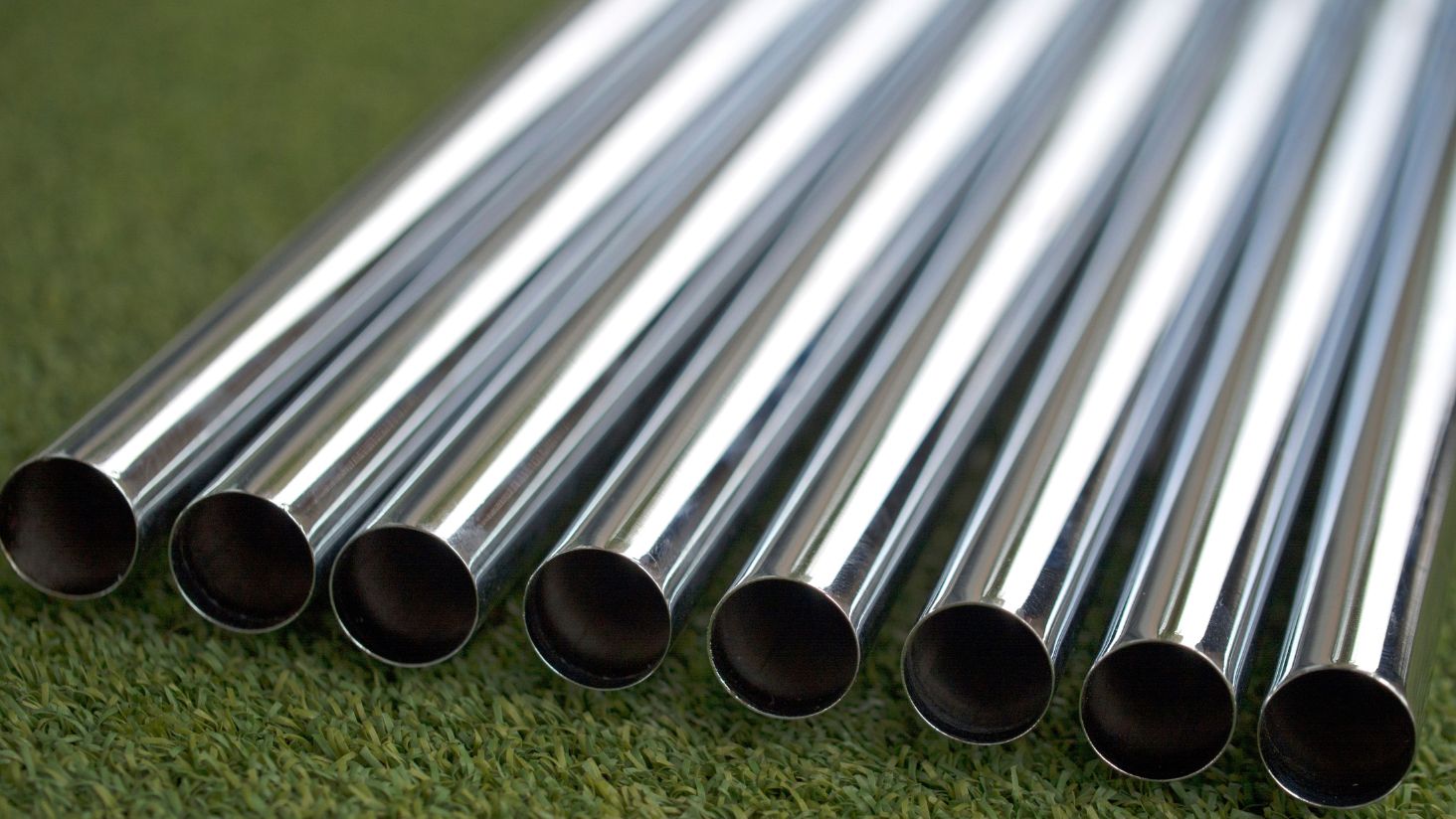
A frequently underestimated problem when buying a shaft without a fitting: There is no uniform standard for flex designations. A “Regular” shaft from Manufacturer A can be significantly stiffer than a “Regular” shaft from Manufacturer B—and even within a single brand, the actual values vary considerably depending on the product line.
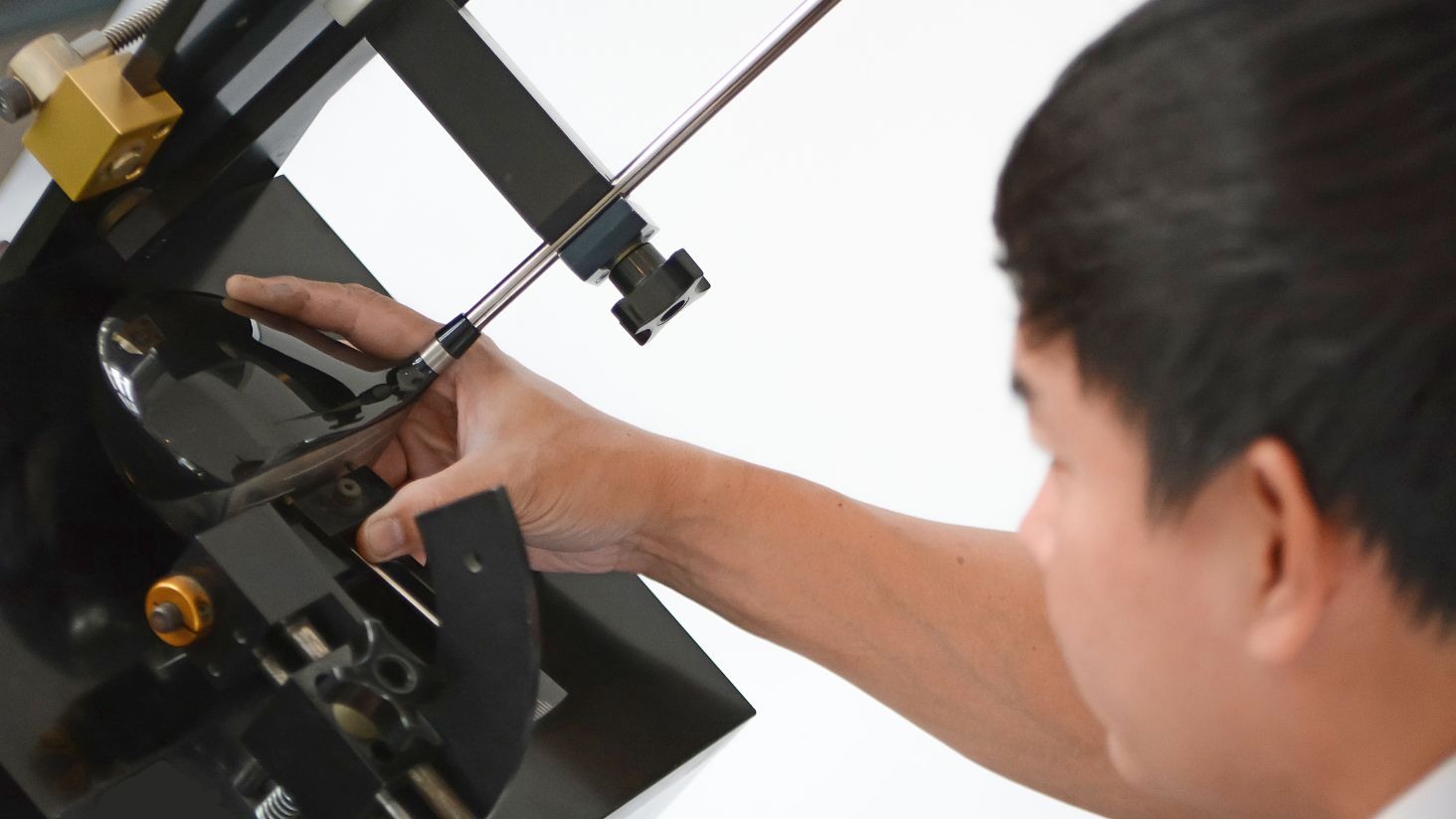
The objective measurement that professional fitters rely on is the CPM (Cycles per Minute) value. In this test, the shaft is bent under a standardized weight, and the oscillation frequency is measured: The higher the CPM value, the stiffer the shaft. High-quality aftermarket shafts have very tight manufacturing tolerances—this is crucial to ensure that the values determined during the fitting can be reproduced in the finished club.
Swing speed isn’t everything
The tempo and rhythm of the swing play just as big a role as pure speed. A player with a long, smooth swing may find a different flex works better for them than someone with a short, aggressive tempo—even with identical clubhead speed. A professional fitter evaluates both factors.
Shaft Weight – Lighter Isn’t Always Better
In addition to flex, the weight of the shaft is a key parameter. Driver shafts are generally lighter than Iron shafts—typically between 40 and 75 grams. The rule of thumb:
- 40–50 grams (ultra-light): Helps slower swings generate more clubhead speed. Common in women’s Drivers and senior models.
- 50–65 grams (medium): The standard range for most golfers.
- 65+ grams (heavy): For golfers with fast swings who prefer maximum stability and control.
Weight and flex always interact with each other. A lightweight shaft with a stiff flex can feel and perform completely differently from a heavy shaft with a regular flex—even though both have similar specifications on paper. That’s exactly why individual variables are never considered in isolation during a fitting.
Shaft Profile and Kick Point—What It Really Means
The term “kick point” is widely used in golf circles—and often misunderstood. The idea that there is a single point where the shaft “kicks” or bends to its maximum is an oversimplification. In fact, a shaft’s stiffness varies along its entire length—this is called the shaft profile.
In practical terms, this means: A shaft with a soft tip section (the lower area near the head) bends more at that point and produces a higher launch angle. A shaft with a stiffer tip section produces a more penetrating, flatter trajectory. This profile determines the individual characteristics of each shaft far more than the flex letter on the outside.
Clubhead – Does the head match the swing?
During a fitting, the head and shaft are always considered as a system, not in isolation. The position of the center of gravity (CG), the moment of inertia (MOI), and the head’s adjustability all influence how the club interacts with a specific shaft.
Modern drivers offer significant possibilities in this regard: movable weights, adjustable hosel systems, and various head shapes make it possible to fine-tune the ball flight even after purchase. The Ping G440K, for example, features a CG shifter with three different weight positions (Draw, Neutral, Fade) that can be tested directly on the range or in the fitting studio. Cobra takes it a step further with the FUTUREFIT33 system, offering 33 different combinations of loft and lie.
The only reliable way to determine which model and settings are optimal is through actual measurement data—not by test swings on the range without a Launch-Monitor.
Driver Length—Shorter for Greater Consistency
The correct driver length is a factor that’s often overlooked when buying off the shelf. Standard men’s drivers measure about 45.5 to 45.75 inches out of the factory, while women’s drivers measure about 44 inches. Interestingly, the average length on the PGA Tour is significantly lower—at around 44.5 inches. The reason: A shorter shaft significantly improves consistency in the sweet spot, even though it theoretically generates slightly less clubhead speed.
How do I measure the length of my Driver?
The correct way to measure driver length is as follows:
- Place the Driver vertically on the ground with the sole flat.
- Place the measuring tape at the heel of the sole.
- Run the tape measure along the shaft to the end of the grip—not straight up, but following the line of the shaft.
- The measured value is the official club length according to the USGA standard.
Body height and the individual arm-to-floor distance (the distance from the wrist to the floor with the arm in a natural position) serve as a rough guide for the appropriate length. In a professional fitting, this value is measured statically and compared with the dynamic data from the swing. Christopher Buck describes it this way: “First, the player is measured statically. We look at their height and the distance from the wrist to the ground to determine whether a shorter or longer shaft is needed.”

Golf Tees for the Driver—An Underestimated Detail
Choosing the right Tee—and, above all, the correct Tee height—directly influences the launch angle, spin, and thus the distance of the drive. Many golfers pay little attention to this detail—and as a result, they’re missing out on potential.
What’s the Right Tee Height?
There’s no one-size-fits-all answer—the optimal tee height always depends on your individual swing. A good rule of thumb is this: The ball should be teed up so that its upper half is above the clubhead. This works well for a neutral, consistent swing.
In addition:
- Steep swing (from above): A flatter Tee is recommended here. The ball is struck lower, reducing spin—the result is a more controlled, lower-trajectory flight with more roll.
- Flat swing (from the inside): A higher Tee accommodates the natural upward angle and allows for a clean strike with a positive angle of attack—ideal for maximum distance.
- Tight tee boxes or difficult conditions: In these situations, a deliberately flat Tee can be useful. The ball flies lower and straighter—in this case, control takes precedence over distance.
It’s worth experimenting: If you regularly hit drives that are too high or too flat, you should adjust the Tee height first before questioning your swing.
Tee Length and Tee Material
Tees with a length of about 70 to 83 millimeters (2.75 to 3.25 inches) are suitable for the Driver. Shorter tees are intended for Irons and short Woods. There are three common material options:
- Wooden tees: The classic choice—inexpensive and widely available. However, they break frequently and offer slightly more resistance at impact.
- Plastic Tees: More durable than wood, available in many lengths. Quality varies greatly.
- Zero-Friction Tees: Minimal contact between the Tee and the ball reduces resistance at impact. Widely used on the Tour because they have a minimal effect on ball flight.
Titleist Drivers – The GTS Series and the Fitting Philosophy
Few manufacturers have integrated the concept of fitting as consistently into their product philosophy as Titleist. The GTS Series, available worldwide since June 2026, was designed from the ground up as a fitting system—not as a single model.
The three variants differ specifically in their characteristics:
- GTS2: Maximum forgiveness, high launch, medium spin. For the broad majority of golfers with a handicap from 36 to 12.
- GTS3: Precision and active ball flight adjustment via a CG-Track rail. For advanced players with a handicap of 18 to 5.
- GTS4: Low spin, maximum speed. For low-handicap players with a fast swing.
A practical advantage that comes into play during the fitting process: Shafts from earlier Titleist generations are compatible with the GTS series. If you already own a high-quality aftermarket shaft, you can easily use it—this saves money and allows for highly precise customization.
For golfers looking to purchase a Titleist Driver, keep this in mind: The difference between the GTS2 and GTS3 is not marginal. It determines whether the Driver enhances or hinders your game. A fitting will provide clarity here.
The new Titleist Drivers and their predecessors: Learn more about the Titleist GTS series here.
Ping Drivers in Fitting—The G440K and the Story of a Successful Brand
For decades, Ping has been among the manufacturers that view fitting as a central element of their product philosophy. The Ping G440K driver is the current flagship model embodying this philosophy: maximum forgiveness combined with true customizability.
With the correct weight adjustment, the G440K achieves an MOI of over 10,400 g/cm²—a figure that seemed unthinkable just a few years ago. The built-in CG shifter allows the heavy tungsten weight to be locked into three positions, shifting the ball flight between Draw, Neutral, and Fade. During the fitting process, this makes it very easy to determine which setting delivers the best results for an individual’s swing.
Anyone who grew up playing the Ping G30 Golf Driver—one of the most widely used drivers of the 2010s—will recognize a familiar philosophy in the G440K: high forgiveness, solid ball speed, and a rich sound. Technology has evolved dramatically over the past ten years, but the core concept has remained the same.
During fittings at ALL4GOLF, Ping is one of the most frequently tested brands—and for good reason: The models are compatible across a wide range of player profiles and, thanks to the CG shifter, offer a truly adjustable feature that can be tested directly during the fitting.
Maximum forgiveness meets adjustability: Learn more about the Ping G440 K Driver here.
TaylorMade Qi4D – When Fitting Becomes a Science
With the Qi4D, TaylorMade has introduced a unique feature that directly targets the fitting process: the REAX shaft system. Instead of categorizing shafts solely by flex class as in the past, REAX measures the rotation rate of the clubface at impact and uses this value as a key fitting parameter.
In practice, this means that two golfers with identical swing speeds can play better with completely different REAX shafts—depending on how they rotate the clubface at impact. This is a fitting parameter that no chart in the world can replace.
The system is complemented by LME (Launch-Monitor Enabled) technology, which makes the Qi4D particularly well-suited for analysis in the fitting studio. If you really want to get the most out of this Driver, a fitting is a must.
All series at a glance: Read more about TaylorMade Drivers.
Fitting in Practice – What to Expect
The Three Fitting Levels
1. Demo Session: Themost accessible entry point. Various Driver models are tested—usually on the driving range or in a showroom. Good for initial orientation, but limited in its insights without in-depth data analysis or shaft comparisons.
2. Studio Fitting:The standard fitting in a professional fitting studio. A Launch-Monitor records all relevant parameters, and different head and shaft combinations are compared directly. For most golfers, this is the right starting point for a professional fitting.
3. Tour-Level Fitting: The most comprehensive option. Expert fitters with a wide range of aftermarket shafts analyze every aspect of the swing. For ambitious players who want to get the most out of their equipment.
What Is Measured During a Fitting
The Launch-Monitor is at the heart of a driver fitting. It records the following parameters:
- Clubhead speed: How fast is the clubhead moving at impact?
- Ball Speed: How much energy is transferred from the clubhead to the ball? Christopher Buck: “Ball speed is even more crucial to us. It shows how well the ball is struck and how efficiently the energy from the clubhead speed is transferred to the ball.”
- Smash Factor: The ratio of ball speed to clubhead speed—a measure of the efficiency of the strike.
- Launch Angle: Too flat or too steep?
- Spin (backspin in rpm): Too much spin reduces distance; too little spin makes the ball unstable.
- Dispersion: “We want to see a consistent pattern and minimize the ball’s deviation from the target while making it more consistent, ” explains Christopher Buck.
- Carry and total distance: The final result of all parameters combined.
Read the full interview with fitting specialist Christopher Buck on the topic of club fitting here.
Which brands are considered during the fitting process?
At ALL4GOLF, we conduct manufacturer-independent fittings . Christopher Buck: “We are completely manufacturer-independent and can fit all major brands. In-store, we carry Ping, Titleist, TaylorMade, PXG, Callaway, Cobra, Mizuno, Wilson, Srixon, XXIO, and Cleveland. Our selection is very broad and includes all the latest models that manufacturers have on the market.”
This is a key advantage over brand-specific fittings: The recommendation is based on your swing—not on the product lineup.
You can book a driver fitting at ALL4GOLF here.
Frequently Asked Questions About Driver Fitting (FAQ)
What is a driver fitting in golf? A driver fitting is a structured analysis that uses a Launch-Monitor to determine the optimal driver—consisting of the head, shaft, and grip—for a golfer’s individual swing.
How much does a driver fitting cost? Depending on the scope, prices range from free (demo session) to 150 euros or more (Tour-level fitting). Studio fittings typically cost between 50 and 150 euros and are often credited toward the purchase of a club.
Which shaft flex is right for me? That depends on your swing speed, tempo, and swing characteristics. As a general guide: Regular (R) for 84–96 mph, Stiff (S) for 97–104 mph, X-Stiff (X) for 105+ mph. Only a fitting with a Launch-Monitor can provide precise clarity.
What does “X-Stiff” mean for a Driver shaft? X-Stiff (Extra Stiff) is the stiffest shaft available and is suitable for golfers with a swing speed of over 105 mph. With slower swings, it results in a low ball flight and a tendency to Slice.
How do I measure the length of my Driver? Place the Driver on the ground with the sole flat and run a measuring tape from the heel of the sole along the shaft to the end of the grip. The reading corresponds to the USGA standard length.
How high should I tee up the ball for the Driver? As a starting point, the top half of the ball should be above the clubhead. For a steep swing, tee it up slightly lower; for a flat swing, slightly higher. The ideal tee height always depends on your individual swing.
Is a club fitting worth it even for beginners? Yes —especially a static fitting, which determines club length and basic settings, is beneficial for everyone. A club that’s too long or too heavy can restrict movement and lead to discomfort over time.
What is the difference between the Titleist GTS2 and the GTS3? The GTS2 is the more forgiving model with a high ball launch, designed for a wide range of players. The GTS3 is more precise and offers active CG adjustment for advanced golfers who want to actively shape their ball flight.
Conclusion: No chart can replace a real fitting
Charts, guidelines, and buying guides—including this article—provide valuable initial guidance. But there’s one thing they can’t do: analyze a golfer’s individual swing and make a precise recommendation based on that analysis.
A professional driver fitting does exactly that. It’s not a luxury service for pros, but the most reliable way to ensure that your new driver is truly the right one. Anyone willing to invest several hundred euros in a new club should also set aside the time and budget for a fitting.
The results speak for themselves: more distance, more consistency—and a Driver that actually matches your own swing.
Brandname
Title will go here and can run on two lines
Brandname
Title will go here and can run on two lines

Brandname
Title will go here and can run on two lines
Brandname
Title will go here and can run on two lines
Brandname
Title will go here and can run on two lines
Brandname
Title will go here and can run on two lines
Brandname
Title will go here and can run on two lines
Brandname
Title will go here and can run on two lines
Brandname
Title will go here and can run on two lines
Brandname
Title will go here and can run on two lines
Release date
16 Aug 2026
photos
A driver fitting makes sense for all golfers, no matter how far or well they play. (Photo: Adobe Stock)
