

Provisional ball in golf: rules, announcement, penalty and counting method
How to avoid rule traps: Provisional ball in golf explained - when to play, when not to, how to announce and what counts if the ball is lost.
A provisional ball is an additional ball that you may play if the ball you have just played is possibly out of play or possibly lost - outside a penalty area. The provisional ball is not initially your ball in play. It only becomes the ball in play if the rules stipulate this (in practice: if the original ball is out of bounds or lost).
Starting scenario
The tee shot flies towards the white stakes - or disappears into the high Rough. This is often followed by uncertainty: Should you play a provisional ball? Do you have to announce it? Does it count as a penalty stroke? And what happens if you find the original ball after all? This article will guide you through the most important rules and the most common mistakes.
Explaining the provisional ball in golf in 30 seconds
- Realistic chance of out or losing the ball outside a penalty area? → Provisional ball often makes sense.
- Announce clearlybefore the shot: "I'm playing a provisional ball."
- Play provisional ball before you go forward to search.
- Search for original ball and decide:
- Original ball found and in play → give up provisional ball
- Original ball out or lost → provisional ball becomes ball in play (with stroke and loss of distance)
What is a provisional ball?
A provisional ball is a ball that you play as a precaution in case the original ball
- could beout of bounds or
- could belost - outside a penalty area (e.g. in the woods).
The logic behind this is important:
- The provisional ball is not automatically the ball you continue to play with.
- It is a time saver so that you don't have to run back to the last spot if the original ball is actually out or lost.
Golf balls out of bounds: how to recognize it and what to do next.
When can you play a provisional ball?
A provisional ball makes sense (and is typically allowed) if you are seriously thinking after the shot:
"The ball might be out of bounds or I might not be able to find it outside a penalty area."
Typical situations:
- Ball towards white stakes, fence, road or property (suspected out)
- Ball into dense Rough, forest, thicket, high grass, foliage (lost suspicion)
- Ball over a hilltop or into an area with poor visibility where it is uncertain that it will be found
When should a provisional ball not be played?
This question comes up frequently - and is important because many mistakes are made here.
1) If the ball is likely to be in a penalty area
If your ball is very likely to be in a penalty area (marked red/yellow), a provisional ball is generally not the right option. In this case, the penalty area options apply (e.g. relief with a penalty stroke).
Rules of golf for penalty areas: water hazard, dropping and penalties explained
2) If you have already gone forward (too late "provisional")
The provisional ball must be played before you go forward to search for the original ball. If you only decide at the search location and then play another ball "for safety's sake", this often creates a rules problem (because it no longer counts as a provisional ball).
3) If it is clear that the original ball is in play
If you know for sure that the original ball is in play (e.g. you have clearly seen it lying in the Fairway), there is no sensible reason for a provisional ball.
The announcement: How to announce the provisional ball correctly
The most important practical point: You must clearly announce the provisional ball - before you hit it.
Suitable formulations
- "I am playing a provisional ball."
- "Provisional."
- "I will play a provisional ball if the ball is out or lost."
Unfavorable formulations (too unclear)
- "I'll play another one."
- "I'll play one more."
- say nothing and just hit it
Without a clear announcement, you risk the second ball being considered your ball in play. The provisional ball is also a good reason to keep an eye on your teammates' play. If you keep a close eye on the others' ball, you may save yourself and everyone else a lot of time and can help decide whether a provisional ball makes sense.

Provisional ball: procedure in practice
Step 1: Assess
Is there a realistic chance of an out or loss of the ball (outside the penalty area)? Then "provisional" is usually the wisest decision.
Step 2: Announce and play
Say "provisional ball" - and play the ball. Ideally, write down or make a quick note of
- what model/marking the provisional ball has,
- how many strokes you have made with it.
Step 3: Search and decide
Then comes the decision loop:
Case A: Original ball found and in play
→ You continue to play the original ball. The provisional ball is abandoned.
Case B: Original ball out of bounds
→ Stroke and distance applies: The provisional ball becomes your ball in play. (You save the way back)
Case C: Original ball not found (lost outside the penalty area)
→ Also Stroke and Distance: The provisional ball becomes your ball in play.
Rules of golf: Unplayable or lost ball - options and procedure
Penalty / penalty stroke: Does the provisional ball itself cost a penalty stroke?
This is one of the most frequently asked questions.
- Playing a provisional ball in itself is not automatically a penalty stroke.
- The penalty is incurred if the original ball is out of bounds or lost: you then continue to play according to stroke and distance (penalty stroke + continue from the previous position - practically with the provisional ball).
In short: The provisional ball is the safeguard, the penalty comes from "out/lost" (stroke and distance loss).
Counting method: How is the provisional ball counted?
A clear picture helps here too:
If the original ball is found and in play
Then the provisional ball no longer counts because you give it up. Only the shots with the original ball are relevant.
If the original ball is out of play or lost
Then the provisional ball becomes the ball in play. In practical terms, this means that
- The original shot counts (e.g. tee shot = 1)
- plus penalty stroke for the ball out of bounds (out of bounds)
- and then the shots with the provisional ball continue to count as normal. The first shot with the provisional ball is therefore at least your third shot.
Example (typical):
Tee shot (1) is out of bounds. You play provisionally from the Tee and hit it (this is then shot 3).
Why shot 3?
1 (tee shot) + 1 penalty shot = 2, the next shot is 3.

Provisional ball vs. penalty area (water hazard): common confusion
Many players think: "Ball towards the water - I prefer to play provisionally." In practice, however, the decisive factor is often
- If the ball is very likely to be in a penalty area, the penalty area options are the right way to go.
- A provisional ball is primarily the answer to an out or lost outside the penalty area.
Rules of golf for penalty areas: water hazard, dropping and penalties explained
Provisional ball: the most common mistakes (and how to avoid them)
Mistake 1: Not clearly announced
If the announcement is missing or too unclear, the second ball can be counted as a ball in play.
How to avoid it: Say "provisional ball" literally.
Mistake 2: Played too late
If you first go forward, search, discuss - and then play another ball "just to be on the safe side" - you are usually too late.
How to avoid it: Make the decision directly after the shot.
Mistake 3: Continuing to play a provisional ball even though the original ball is in play
If you find the original ball and it is in play, you must continue playing with it.
How to avoid it: As soon as the status "in play" is clear, end the provisional ball.
Mistake 4: Provisional vs. "second ball" confused in a rules question
A "second ball" due to uncertainty about the rules in a tournament is not the same as a provisional ball.
How to avoid it: When in doubt, communicate clearly and involve the committee in the tournament.
FAQ: Frequently asked questions about the provisional ball
What is the provisional ball for?
It saves time if the original ball is possibly out of bounds or is lost outside a penalty area.
Do I have to say "provisional ball" literally?
You must communicate it clearly. "I am playing a provisional ball" is the safest wording.
When does the provisional ball become a ball in play?
When the original ball is out of bounds or lost (outside a penalty area) - then you continue to play according to stroke and distance.
How is the provisional ball counted?
If it becomes a ball in play, its strokes continue to count as normal; in addition, the penalty stroke from stroke and distance is added (e.g. from the Tee, the provisional tee shot often becomes "stroke 3").
Is a provisional ball the same as dropping?
No. Dropping is a relief/continuation option in certain situations. Playing provisionally is a precautionary measure in case you need to continue after the stroke and distance rule.
Drop rules in golf: What is a drop - and how do you drop correctly?
Conclusion
- A provisional ball is a safeguard in the event of a possible out or possible loss of the ball outside a penalty area.
- The decisive factor is the clear announcement of the provisional ball before the shot.
- If the original ball is found in play, the provisional ball is given up.
- If the original ball is out of play or lost, the provisional ball becomes the ball in play (stroke and distance).
Brandname
Title will go here and can run on two lines
Brandname
Title will go here and can run on two lines

Brandname
Title will go here and can run on two lines
Brandname
Title will go here and can run on two lines
Brandname
Title will go here and can run on two lines
Brandname
Title will go here and can run on two lines
Brandname
Title will go here and can run on two lines
Brandname
Title will go here and can run on two lines
Brandname
Title will go here and can run on two lines
Brandname
Title will go here and can run on two lines
Release date
03 May 2026
photos
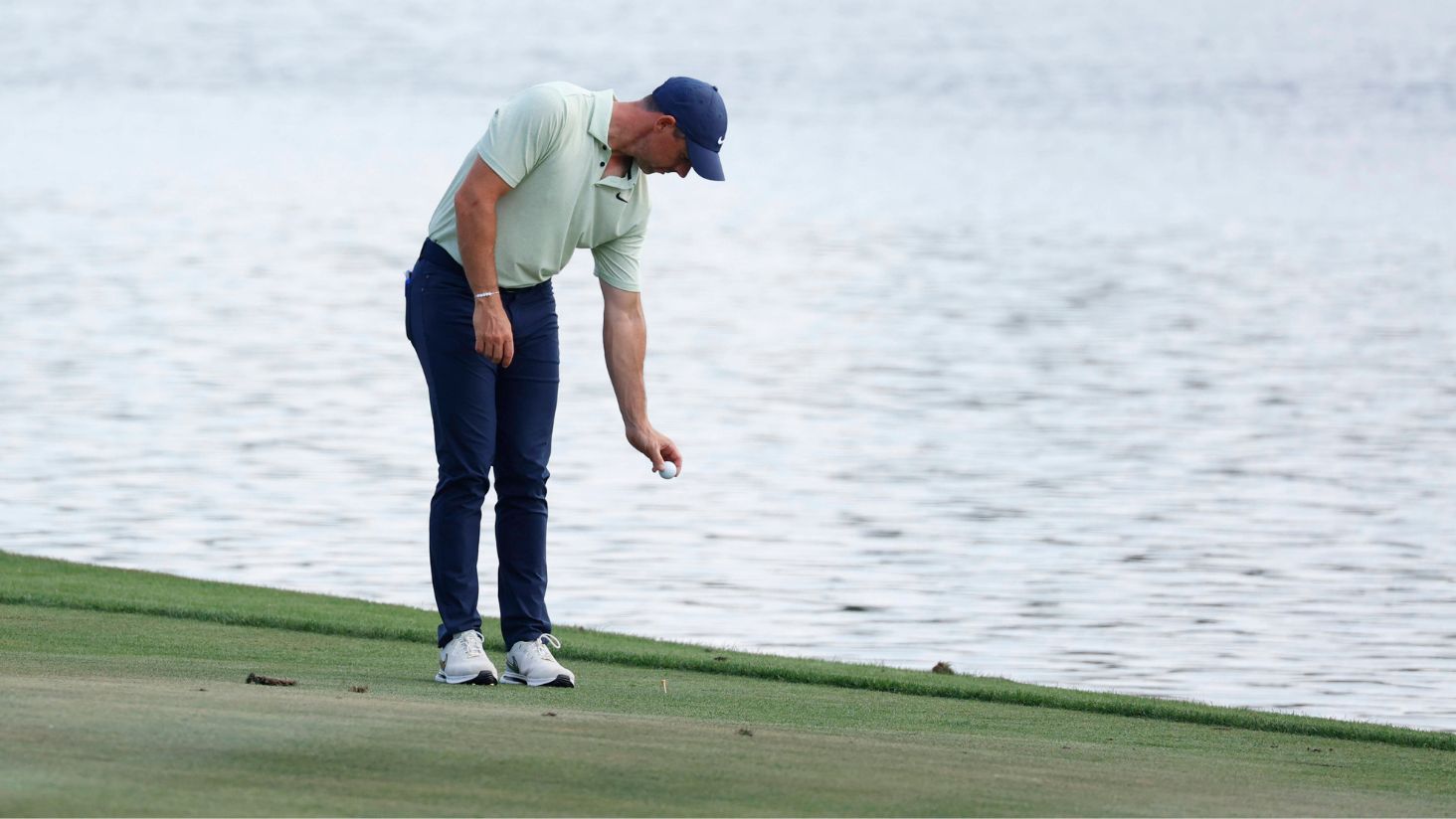
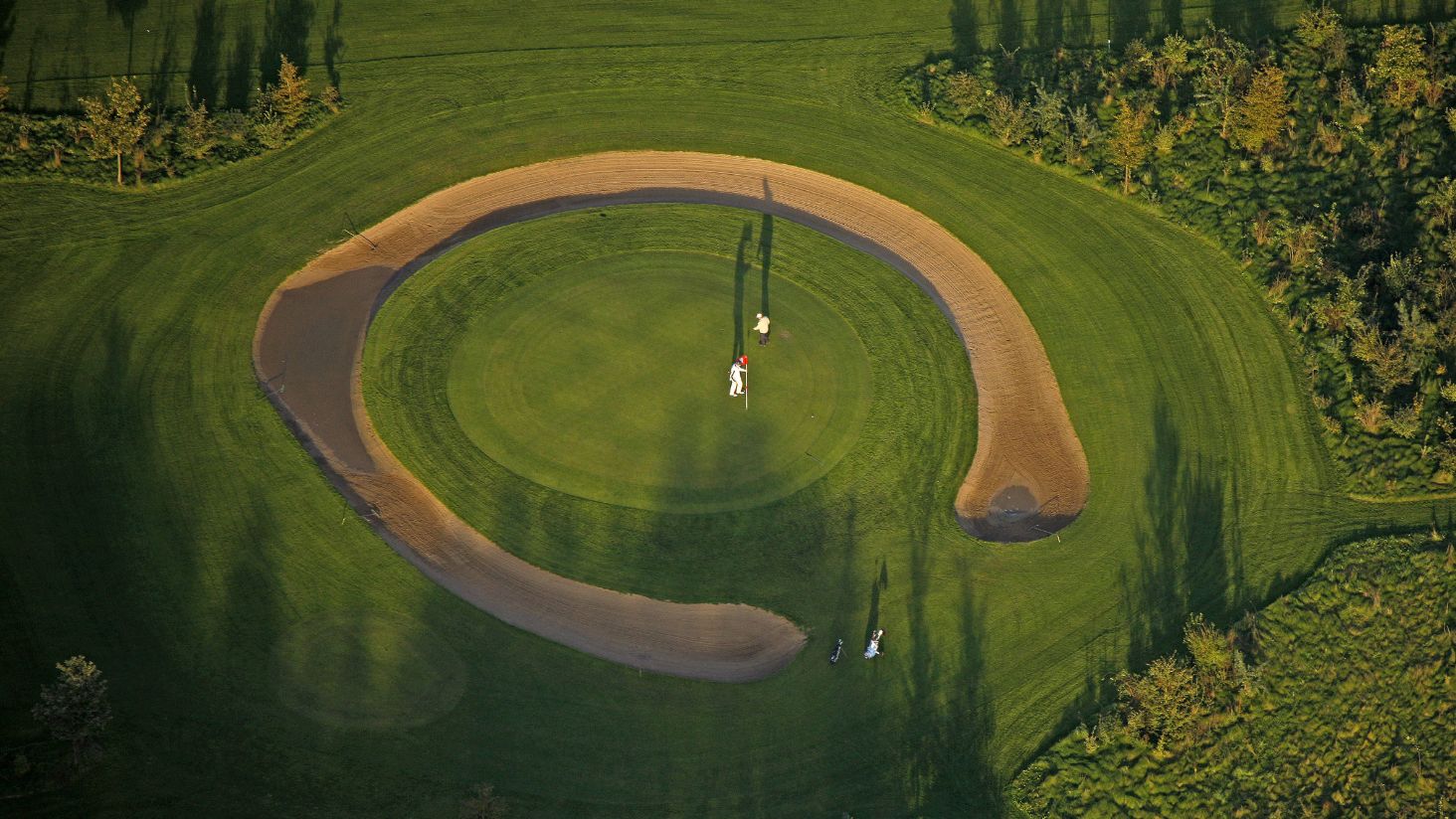
Find out here what a provisional ball is in golf and when it makes sense to play one. (Photo: Adobe Stock)