Loose obstructive natural substances in golf: rules in the Bunker, on the green and in the Rough
Are you allowed to remove stones or leaves from the Bunker? We explain loose natural materials, when removal is permitted and what penalties apply - with examples.
In the rules of golf, the precise term is loose impediments. This refers to natural objects that are loose - for example stones, leaves, twigs or pine cones. In principle, you may remove loose impediments without penalty (Rule 15.1a). However, there is one crucial point that is often misunderstood in practice:
If your ball moves when you remove loose natural materials, you must put it back - and outside the green there is usually an additional 1 penalty stroke.
(Rule 15.1b in conjunction with 9.4b) Putting the ball back is therefore not automatically "without penalty". Whether a penalty is incurred depends on where the ball was located and whether an exception applies (e.g. ball movement during the search according to Rule 7.4).
Here you will find the most important golf rules for beginners.
Getting started: The classic Bunker scenario
You are in the Bunker and there is a stone or a pile of leaves next to the ball. Many players then ask themselves:
- Am I allowed to remove the stone (safety)?
- Can I remove leaves so that I can hit the ball cleanly?
- What if the golf ball moves in the process?
- And are there situations in which you are not allowed to remove loose, obstructive natural materials?
This article will guide you through the basic logic - with clear practical rules and the most common mistakes.
Find out here which golf rules apply specifically in the Bunker.
Rules of golf: Loose obstructive natural materials explained in 30 seconds
- Is it a loose obstructive natural material (e.g. leaf, stone, twig)?
- Basic rule: You may remove it - even in the Bunker (Rule 15.1a).
- Take care not to move the ball.
- If the ball moves when you remove it:
- Put the ball back (estimate the original position if necessary) (Rule 15.1b, Rule 14.2).
- Outside the green (e.g. Bunker, Fairway, Rough): usually 1 penalty stroke (Rule 15.1b → 9.4b), unless, for example, Rule 7.4 (Search) or another exception to 9.4b applies.
- There are exceptions/restrictions as to when removal is not permitted (Rule 15.1a, Exceptions; also Rule 11.3).
- In the tournament: Ask the committee if anything is unclear.
What are loose obstructive natural substances?
Loose obstructive natural materials are natural materials that are not firmly attached to the ground. Typical examples:
- Leaves, needles, small branches/twigs
- Stones, pebbles, bark
- Pine cones, fallen fruit/seeds
The following arenot the same, for example
- firmly rooted plants/grass (not "loose")
- immovable site components (e.g. sprinkler covers, paths, posts) - different rules apply here
- Waste/artificial objects (not natural materials; often treated as foreign movable objects)
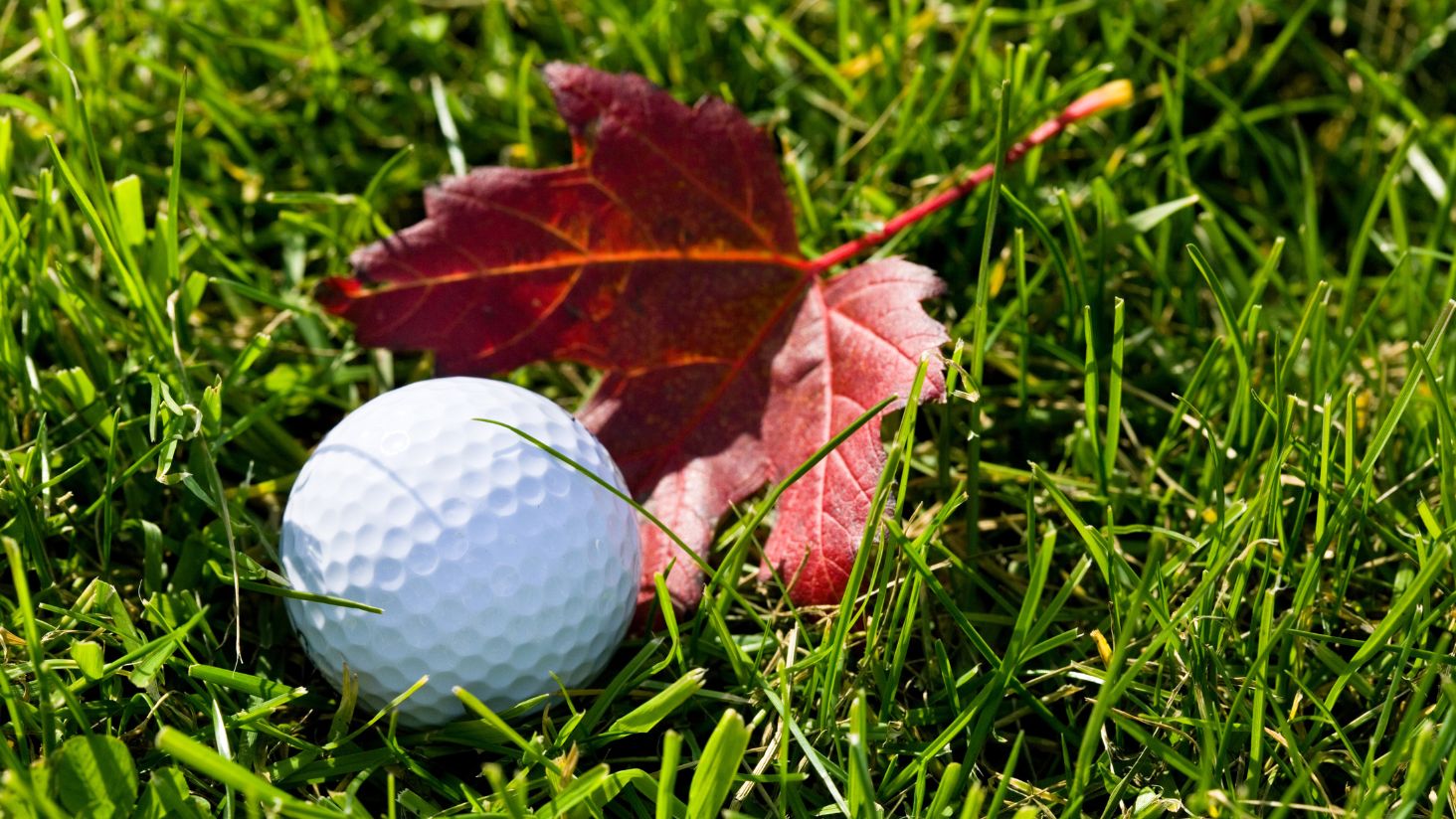
Loose obstructive natural materials in the Bunker: What is allowed?
Can you remove stones and leaves from the Bunker?
Yes, loose, obstructive natural materials may generally be removed - even in the Bunker (Rule 15.1a).
Nevertheless, the Bunker is the area where most mistakes happen in practice, because things often happen unconsciously during "tidying up" that later trigger discussions (for example: ball movement).
The most important point in the Bunker: avoid ball movement (otherwise usually a penalty)
If you remove a stone or leaves and the ball moves, the following applies:
- Return the ball to its original position (if not known exactly: estimate position) (Rule 15.1b, Rule 14.2).
- In addition, 1 penalty stroke because the ball was outside the green (Bunker) (Rule 15.1b → 9.4b), unless an exception applies (e.g. Rule 7.4 during the search).
Practical tip: Remove loose, obstructive natural materials in the Bunker in a calm and controlled manner so that you do not accidentally change the ball or its position - otherwise you will quickly lose a shot.
Where should loose, obstructive natural materials not be touched or removed?
The answer is not "never in a certain place", but depends on the situation:
- Exceptions in rule 15.1a
There are cases in which removal is restricted, e.g:
- Exception 1 (Rule 15.1a): Before putting a ball back, you may not deliberately "leave" loose natural materials that would probably have moved the ball when removed - otherwise 1 penalty stroke (and the natural materials do not have to be put back).
- Exception 2: Restrictions on removing loose natural materials with the intention of influencing a moving ball (see Rule 11.3).
- Never act with the intention of influencing a moving ball
Loose natural materials may not be intentionally removed with the intention of influencing a rolling or bouncing ball (Rule 11.3).
In principle, the removal of loose obstructive natural materials is permitted everywhere and is not punishable (Rule 15.1a). However, it is important to note that this permission does not mean that every consequence is automatically without consequences: If your ball moves because you take away a loose natural material when removing it, you do have to put the ball back, and outside the green this can usually result in a penalty stroke (Rule 15.1b in conjunction with 9.4b). In addition, there are exceptions and restrictions, for example when it comes to removing natural materials from a place where a ball must be returned (exception in 15.1a), or if someone removes loose natural materials with the intention of influencing a moving ball (Rule 11.3). Therefore, in tournament situations, if the specific case is not clear, it is safest to ask the committee before acting.
This is how penalty strokes work with the provisional ball.
Loose obstructive natural materials on the green
There are often loose, obstructive natural materials on the green (e.g. leaves, small branches). The following also applies here: removal is permitted.
Important:
- Do not accidentally move the ball or Ballmarker.
- If the ball moves during removal: put the ball back (Rule 15.1b / 14.2).
The 1-stroke penalty from 15.1b is linked to "outside the green" - which is precisely why the "green" is often the area in practice where ball movement on removal is often corrected without a penalty stroke (but must still be corrected).
Find out here what you can and cannot do on the green according to the rules of golf.
Loose obstructive natural materials in the Rough/Fairway (general area)
In the general area (Fairway/Rough), the removal of loose obstructive natural materials is usually uncomplicated in practice. Nevertheless, two basic principles apply:
- Avoid ball movement.
- If the ball is moved during removal:
→ Put the ball back (14.2) and usually 1 penalty stroke (15.1b → 9.4b), unless an exception applies.
Common mistakes (and how to avoid them)
Mistake 1: Ball moves - and you just carry on playing
This is one of the most common practical mistakes.
Better: If the ball was moved when removing a loose obstructive natural material:
Stop → determine original location (or estimate) → put ball back → check whether 1 penalty stroke is incurred (outside the green, basically yes, cf. 15.1b → 9.4b).
Error 2: "Is this even a loose obstructive natural material?"
Not everything lying around is automatically a loose obstructive natural material.
Better: Check briefly: natural + loose + not firmly connected? Then the term usually fits.
Mistake 3: Removing with the wrong aim (influencing the ball in motion)
Loose natural materials must not be deliberately removed in order to influence a rolling or bouncing ball (Rule 11.3).
Better: Wait until the ball has come to rest and only then act.
Mistake 4: "Course rule rumors" instead of rule text
Some flights have "heard" that removal is generally prohibited or generally permitted in the Bunker - without looking at the rule/definition.
Better: Remember the principle: Removal allowed - ball movement outside the green usually leads to 1 penalty stroke + putting the ball back.
FAQ: Frequently asked questions about loose obstructive natural materials
Can stones be removed from the Bunker?
Yes, loose obstructing natural materials may generally be removed (15.1a). If the ball moves, it must be put back - and there is usually 1 penalty stroke in the Bunker (15.1b → 9.4b).
Can leaves be removed from the Bunker?
Yes, leaves typically count as loose, obstructive natural materials (15.1a). Be careful not to move the ball; if you do: put it back + usually 1 penalty stroke (15.1b → 9.4b).
What happens if the ball moves when you remove it?
Then the ball must be returned to its original position (if not known: estimate) (15.1b / 14.2). Outside the green, 1 penalty stroke is usually added (15.1b → 9.4b), unless an exception applies (e.g. 7.4 during the search).
Does this also apply on the green?
The following also applies on the green: removal is permitted and ball movement must be corrected (15.1b). However, the penalty logic in 15.1b is expressly linked to "outside the green", so in many cases the green is the "penalty-free" correction zone - not the general area or the Bunker.
Conclusion
- The correct rule term is loose obstructive natural materials (Rule 15.1).
- In principle, you may remove them without penalty - even in the Bunker (15.1a).
- Important: If the ball moves when it is removed, it must be put back (15.1b / 14.2).
- Outside the green (e.g. Bunker, Fairway, Rough) there is usually an additional 1 penalty stroke (15.1b → 9.4b), unless an exception applies (e.g. 7.4 search).
- There are exceptions/restrictions (15.1a, 11.3) - if in doubt, ask the tournament committee.
Brandname
Title will go here and can run on two lines
Brandname
Title will go here and can run on two lines

Brandname
Title will go here and can run on two lines
Brandname
Title will go here and can run on two lines
Brandname
Title will go here and can run on two lines
Brandname
Title will go here and can run on two lines
Brandname
Title will go here and can run on two lines
Brandname
Title will go here and can run on two lines
Brandname
Title will go here and can run on two lines
Brandname
Title will go here and can run on two lines
Release date
09 May 2026
photos
The removal of loose, obstructive natural materials on a golf course is clearly regulated. (Photo: Adobe Stock)