
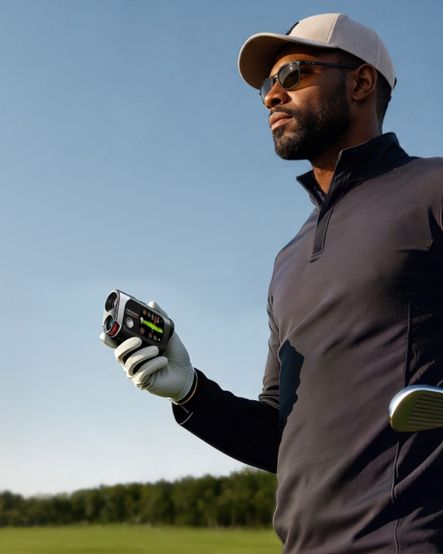
MILESEEY Golf Rangefinders: A Comparison of the G1, S1, and IONME 2
GPS, laser, long range, or pocket-sized? We’re introducing the MILESEEY GenePro G1, S1, and IONME 2 rangefinders.
A golf rangefinder is designed to do one thing above all else: provide reliable distance readings so that your next shot isn’t based solely on a hunch. Modern devices, however, now go far beyond simply measuring the distance to the flag. They combine laser technology, optical targeting, GPS course data, weather features, and digital analytics.
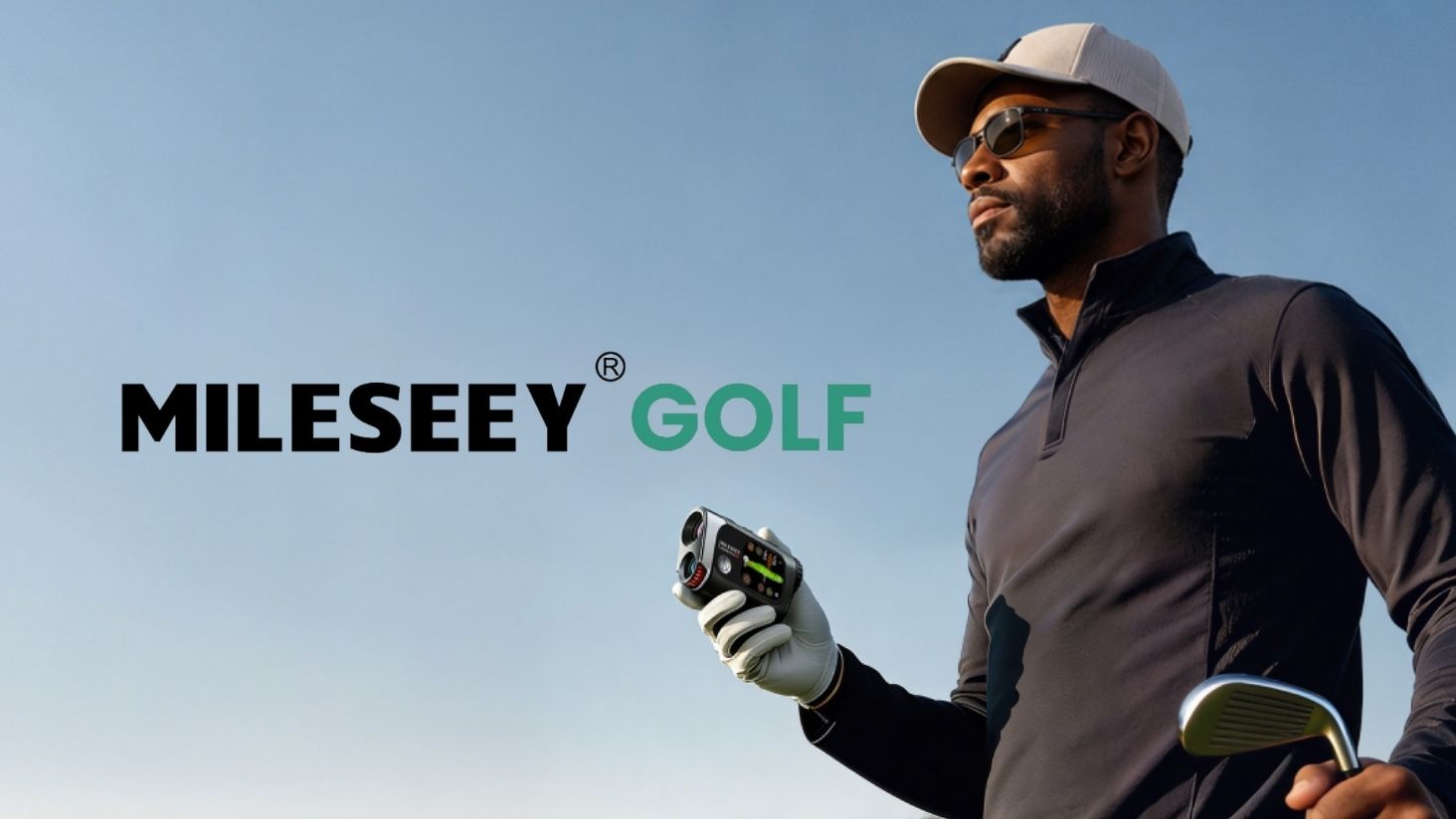
MILESEEY’s current golf product line brings together three models with different areas of focus. The GenePro G1 combines laser and GPS in a Hybrid rangefinder. The GenePro S1 focuses on optical precision with long range, high magnification, and specialized measurement functions. The compact IONME 2 prioritizes quick operation, a small form factor, and long battery life.
This overview introduces the three MILESEEY rangefinders and categorizes their technical features. The focus here is not on which model is generally the best, but rather on which technical approach suits which use case.
Who is MILESEEY?
MILESEEY has its roots in the field of precision measurement technology. According to the company, it has been involved in laser-based measurements since the 2000s and was founded in 2009. Since then, the brand has been developing laser and optical measuring devices for professional users and everyday use.
Through MILESEEY Tools, the company bundles solutions from the field of measurement technology. MILESEEY Golf applies this expertise to the sport of golf, combining laser measurements with features tailored to typical situations encountered during a round.
The brand does not focus solely on a device’s technical specifications. According to its own positioning, golf technology should, above all, help golfers reach well-informed decisions more quickly. Precise measurement, additional information about the course, and operation that is as straightforward as possible are therefore combined.
The three current models implement this concept in different ways: The GenePro G1 is designed as a connected Hybrid, the GenePro S1 as a performance-oriented laser, and the IONME 2 as a particularly compact device for quick measurements.
2026 Golf Rangefinder Test: Find a comparison and buying guide here
Comparing the Three MILESEEY Rangefinders
The following table summarizes the most important details from the provided product information. Where no reliable data is available, this is noted accordingly.
| Feature | MILESEEY GenePro G1 | MILESEEY GenePro S1 | MILESEEY IONME 2 |
|---|---|---|---|
| Basic Concept | Hybrid of laser and GPS | Long-range laser rangefinder | Compact laser rangefinder |
| Central alignment | GPS course data, touchscreen, and strategic functions | Range, magnification, and special measurement functions | Pocket-sized, easy to use, and long battery life |
| Flag-Lock Range | Up to 600 yards | Up to 690 yards | Up to 500 yards |
| Maximum measurement range | Up to 1,300 yards | Up to 2,000 yards | Not specified |
| Response time | 0.1 seconds | Not specified | 0.1 seconds |
| Display | 2.13-inch AMOLED touchscreen | Other display specifications not specified | Red-green OLED display with adaptive brightness |
| GPS and location data | GPS and more than 43,000 preinstalled locations | Not specified | Not specified |
| Special features | SmartSlope, Range Sync, Layup, Pin Pointer, Performance Tracking | Ball-to-Pin, PinPoint Green, automatic weather modes | Ball-to-Pin, Pin-Seeking, vibration feedback, weather mode |
| Weather and Device Protection | Not specified in the provided information | IP65, Rain and Fog Mode | IP65, rain and fog mode |
| Power Supply | 1,000-mAh lithium-ion battery, up to 24 hours | CR2 battery | 500-mAh lithium battery, up to 5,000 measurements |
| Mounting and Accessories | MILESEEY Golf App | Bottom-Bite magnet, waterproof hard case | Belt clip holder, USB-C charging |
The specifications regarding range, response time, and battery life are based on manufacturer or product data. In practice, these may vary depending on factors such as visibility conditions, the target, frequency of use, and the environment.
MILESEEY GenePro G1: Laser, GPS, and Touchscreen in One Device
The GenePro G1 takes the most comprehensive approach of the three models. It combines direct laser measurement with GPS course data and a 2.13-inch AMOLED touchscreen. This allows the device to not only display the distance to the flag but also provide additional information for orientation and shot planning.
Hybrid rangefinder with GPS course data
According to product information, more than 43,000 golf courses worldwide are preinstalled. On the course, dynamic distances to the front, middle, and back of the green can be displayed. This information comes from the GPS function and complements the direct laser measurement.
This can be particularly helpful when the flag is not directly visible or when the position on the green needs to be roughly estimated at first. The laser measurement then provides the distance to a specific targeted point. In this way, the G1 combines two different sources of information in a single device: the course overview and the direct distance to the target.
The product specifications list a measurement accuracy of plus or minus 0.5 yards and a response time of 0.1 seconds. These values should be understood as manufacturer specifications and not as independent test results.
SmartSlope for Compensated Distances
The GenePro G1 features the SmartSlope function. It is designed to factor elevation changes into the distance calculation. According to the information provided, the function also takes temperature and humidity into account.
In practice, this means that in addition to the direct distance, the device can display an adjusted distance when a shot is played uphill or downhill. This so-called slope compensation can make it easier to estimate the required shot length, but it does not replace your own assessment of the playing situation.
The feature can be turned on and off using a rotary switch. The visible switch is particularly convenient because it allows you to quickly check the status of slope compensation. Whether the feature may be used during a tournament depends on the applicable rules of golf and the specific regulations of the competition or golf course.
Range Sync, Layup, and Pin Pointer
The G1 supplements its distance measurement with several strategic features:
- Range Sync: The measured distance is displayed simultaneously on the touchscreen.
- Layup: This feature is designed to help with planning shots and assessing obstacles.
- Pin Pointer: The center of the green can be displayed even when the green itself is not directly visible.
These features address various situations on the course. Range Sync combines traditional measurement through the eyepiece with the on-screen display. Layup can be useful when planning an intermediate target, such as before an obstacle or on a hole with multiple strategic options. Pin Pointer is primarily designed for situations involving blind shots.
Shot Data and App Integration
According to the product information, the GenePro G1 can collect shot data during a round and synchronize it with the MILESEEY Golf app. This adds an additional analytical component to the rangefinder.
Exactly which data is recorded and how comprehensive the analysis in the app is are not explained in detail in the available information. Therefore, this feature should not be described editorially as a complete digital game analysis system. One thing is clear: The G1 is not only intended for one-time distance measurement but can also store information from the round for later review.
Battery and Usage
The G1 is specified to have a 1,000-mAh lithium battery with a runtime of up to 24 hours. This should allow the device to be used for several rounds without requiring a recharge between uses. The actual runtime depends, among other things, on the use of the touchscreen, the GPS function, and the frequency of measurements.
Brandname
Title will go here and can run on two lines
Brandname
Title will go here and can run on two lines
Editorial Review of the GenePro G1
The GenePro G1 is particularly appealing to golfers who expect more than just a single distance reading. GPS course data, a touchscreen, strategic features, and app connectivity make it the most versatile model among the three devices presented here. Its main focus is on integrating various types of information into a single device.
MILESEEY GenePro S1: Focus on Range and Optical Performance
The GenePro S1 has a different focus than the G1. In the product information provided, it is described as a laser rangefinder with a long range, high magnification, and special measurement functions. GPS course data or a comparable touchscreen interface are not mentioned for this model.
Rangefinders in Golf Tournaments: Find out here what’s allowed and what isn’t.
Long Range and High Magnification
The S1 is designed to measure targets at distances of up to 2,000 yards. The Flag Lock range is specified as up to 690 yards. This clearly places the emphasis on target acquisition over longer distances.
A 7.5x magnification and a 7.9-degree field of view are designed to make the flag more clearly visible in the viewfinder. This is particularly important when the flag is set against a busy background or must be targeted from a greater distance.
The high maximum range isn’t crucial in every situation on the golf course. For direct flag measurement, the distances are usually significantly shorter. However, it reflects the device’s technical capabilities and can play a role when locating targets or measuring to more distant points.
Ball-to-Pin for measurements between two points
With the Ball-to-Pin feature, the GenePro S1 is designed to determine the distance between any two points. The measurement target does not necessarily have to be the flag.
Possible applications include measuring the distance from the ball to an obstacle, a layup point, or another strategically relevant area of the course. This allows the feature to be used for shot planning as well. It expands upon the traditional use of a rangefinder, which often focuses solely on the distance to the flag.
PinPoint Green for Reading the Green
A special feature of the S1 is PinPoint Green. MILESEEY describes this as a particularly accurate distance measurement around the green, specifying measurements down to the centimeter.
For editorial purposes, it is important to label this information as manufacturer’s information. PinPoint Green can assist with reading the green. However, this does not automatically mean that the device independently analyzes breaks or determines the correct putting line. In the available information, the feature is primarily described as a tool for more accurate distance estimation.
Automatic Weather Modes and IP65 Protection
The GenePro S1 is designed to account for environmental factors during measurement and automatically switch to rain and fog modes in poor weather conditions. Additionally, it is rated IP65.
IP65 indicates complete protection against dust and protection against water jets from various directions. The device is therefore designed for use in changeable weather conditions. However, this protection rating does not mean that the rangefinder can be submerged or is completely waterproof in the sense of underwater protection.
Magnetic Cart Mount and Package Contents
The S1 can be attached to a golf cart using the patented Bottom-Bite magnet design. This allows for quick access between shots and reduces the need to constantly stow the device in a bag.
According to the information provided, the package includes, in addition to the rangefinder, a CR2 battery, a waterproof hard case, a user manual, and a cleaning cloth.

Brandname
Title will go here and can run on two lines
Brandname
Title will go here and can run on two lines
Editorial Review of the GenePro S1
Given its technical specifications, the GenePro S1 is designed for golfers who value range, visual assistance, and versatile measurement targets. With Ball-to-Pin and PinPoint Green, it goes beyond simply measuring the distance to the flag. Compared to the GenePro G1, however, the focus is not on connecting to GPS course data, but rather on laser-based target detection.
MILESEEY IONME 2: Compact Laser Rangefinder for On-the-Go Use
The IONME 2 is the most portable of the three devices. With this rangefinder, MILESEEY focuses on a compact, pocket-sized design, easy one-handed operation, and a built-in rechargeable battery.
Small, handy, and rugged
The IONME 2 is designed to fit easily into a pocket. According to the product specifications, the leather-like surface ensures a secure grip and complements the device’s minimalist design.
According to the manufacturer, the housing is made of high-quality alloy material and is designed to withstand a drop from a height of up to 1.5 meters. This specification describes the manufacturer’s stated construction and should not be equated with an independent stress test.
The compact design also changes how the device is used: The rangefinder can be quickly taken out of a pocket, operated with one hand, and then stowed away again. This is particularly appealing to golfers who want to carry as little extra equipment as possible during a round.
Pin-Seeking with Vibration Confirmation
The IONME 2 features a pin-seeking function for flag detection. According to the product information, the Flag Lock range is up to 500 yards, with a response time of 0.1 seconds.
When the flag is detected, the device confirms the detection with a vibration. This haptic feedback is convenient because the user doesn’t have to look exclusively at the display to verify the measurement.
The IONME 2 also supports Ball-to-Pin. This allows users to target points on the course other than the flag. The feature can be helpful, for example, when measuring the distance to an obstacle or a planned waypoint.
OLED Display with Adaptive Brightness
The distance is displayed on a red-green OLED screen. Adaptive brightness adjustment ensures that the display remains readable under varying lighting conditions.
Combined with one-handed operation, this results in a clear user experience: The IONME 2 is designed for quick measurements without having to take your eyes off the course for long.
Rain and Fog Modes, plus IP65
The IONME 2 features a rain and fog mode as well as an IP65 rating. This is intended to support reliable measurements in changeable weather and protect the device against dust and water jets.
As with the GenePro S1, the same applies here: IP65 is not a license for underwater use. In heavy rain or adverse conditions, the manufacturer’s instructions for use and care should be followed.
Built-in Battery and USB-C
The IONME 2 features a permanently integrated 500-mAh lithium battery. MILESEEY specifies a runtime of up to 5,000 measurements. This corresponds to approximately eight 18-hole rounds, although the actual number of measurements per charge depends on usage.
The battery is charged via USB-C. Compared to a device with a replaceable battery, this eliminates the need to regularly replace a button cell or camera battery. According to the information provided, the package also includes a belt clip holder, a USB-C cable, a quick start guide, a user manual, and a cleaning cloth.
Brandname
Title will go here and can run on two lines
Brandname
Title will go here and can run on two lines
Editorial Review of the IONME 2
The IONME 2 is designed for golfers looking for the most compact laser rangefinder possible. It offers the essential features for quickly measuring distances to the flag, plus ball-to-Pin, vibration feedback, weather mode, and a built-in rechargeable battery. GPS course maps or a large touchscreen are not the focus of this model.
Which MILESEEY rangefinder is right for which type of player?
The three devices cannot be meaningfully categorized based on individual specifications alone. Their differences lie primarily in the information they provide during a round and how they are operated.
GenePro G1: when GPS and course strategy are essential
The GenePro G1 is ideal for golfers who want to combine laser measurement and GPS in a single device. The large touchscreen, pre-installed course data, and features such as Layup and Pin Pointer expand classic distance measurement to include a strategic perspective.
The app integration and performance tracking also make it ideal for use where the round doesn’t end with the last measurement. For those who want to review shot data later, the G1 offers a correspondingly comprehensive solution.
GenePro S1: When Range and Optics Take Center Stage
With the GenePro S1, the focus is on optical performance and target acquisition. The long maximum range, 7.5x magnification, and wide field of view are its most striking technical features.
Ball-to-Pin and PinPoint Green extend its use beyond simply locating the flag. The S1 is therefore particularly appealing to users who value range, visibility, and additional measurement capabilities in a laser rangefinder.
IONME 2: When portability and ease of use are key
The IONME 2 focuses on the essentials and packs them into an exceptionally compact housing. Its one-handed operation, vibration feedback, and OLED display are designed for quick measurements.
The built-in rechargeable battery with a USB-C port may appeal to golfers who don’t want to deal with changing batteries. At the same time, the device’s design makes it easy to carry.
What the three models have in common
All three MILESEEY rangefinders are designed to make distances on the golf course more accessible—faster and with greater precision. While the devices differ significantly in features and operating concepts, they all follow a common underlying principle: measurement data should not be viewed in isolation but should enable a better assessment of the playing situation.
The GenePro G1 implements this concept via GPS, a touchscreen, and app features. The GenePro S1 expands on laser measurement with range capabilities, optical assistance, and special targeting modes. The IONME 2 focuses on fast measurements in a compact, easy-to-handle format.
As a result, the current product line covers a variety of usage scenarios without the models necessarily having to compete with one another. The relevant question is rather whether a digital course overview, performance-oriented optics, or the smallest possible device is needed on the course.
Three Different Approaches to Distance Measurement
MILESEEY combines expertise in precision measurement technology with three differently designed golf rangefinders.
The MILESEEY GenePro G1 is a versatile Hybrid combining laser, GPS, and a touchscreen. It provides direct measurements and additional course information, supplemented by features for shot planning and the option for later analysis.
The MILESEEY GenePro S1 focuses on range, magnification, and optical target acquisition. With Ball-to-Pin and PinPoint Green, it also offers measurement functions that go beyond the classic flag distance.
The MILESEEY IONME 2 takes a minimalist, portable approach. Its compact design, one-handed operation, vibration feedback, and built-in battery make it a handy companion for quick measurements during a round.
These three models demonstrate just how differently a modern golf rangefinder can be designed. Which approach makes sense depends less on a general ranking than on the question of what information and what type of operation are actually needed in your own game.
Frequently Asked Questions About MILESEEY Golf Rangefinders
What distinguishes the MILESEEY GenePro G1 from the GenePro S1?
The GenePro G1 combines laser measurement with GPS, pre-installed course data, and an AMOLED touchscreen. The GenePro S1 is described as a laser rangefinder with a longer range, 7.5x magnification, and special measurement functions such as Ball-to-Pin and PinPoint Green.
Does the GenePro G1 have GPS?
Yes. The GenePro G1 combines laser measurement with GPS. According to the product information provided, more than 43,000 golf courses worldwide are preloaded. The device can display distances to the front, middle, and back of the green.
What does SmartSlope mean on the GenePro G1?
SmartSlope is the GenePro G1’s slope compensation feature. This function is designed to account for elevation changes, as well as temperature and humidity, when calculating an adjusted distance. It can be enabled or disabled using a rotary switch.
What does Ball-to-Pin mean?
Ball-to-Pin is designed to allow you to measure the distance between any two points. This feature can therefore be used not only for the distance to the flag but also for obstacles, layup points, or other strategic targets.
Who is the MILESEEY IONME 2 designed for?
Based on its product positioning, the IONME 2 is primarily suited for golfers looking for a compact, one-handed laser rangefinder. Its features include, among others, Flag Lock up to 500 yards, vibration feedback, Ball-to-Pin, IP65 protection, and a built-in USB-C rechargeable battery.
Are the GenePro S1 and the IONME 2 suitable for use in bad weather?
Both models are rated IP65 and feature a rain and fog mode. IP65 indicates protection against dust and water jets. This rating does not mean that the devices are suitable for submersion.
Brandname
Title will go here and can run on two lines
Brandname
Title will go here and can run on two lines
Brandname
Title will go here and can run on two lines
Brandname
Title will go here and can run on two lines
Release date
01 Sep 2026
photos
We're featuring three laser rangefinders from the Mileseey lineup. (Photo: ALL4GOLF)