Laser or GPS watch? Which golf rangefinder is right for you?
Laser or GPS golf watch? We'll explain the differences and help you find the right type of rangefinder for your game.
Anyone facing the decision to buy a golf rangefinder for the first time will quickly run into the same question: laser rangefinder or GPS golf watch? Both technologies have their place on the course—and both have clear strengths that suit different players.
This guide will help you make the decision based on your own playing style. Instead of offering blanket recommendations, we’ll show you the situations in which each type shines—and when combining both might be the smartest choice.
Laser Rangefinders and GPS Golf Watches: The Fundamental Differences
Before we dive into the details, it’s worth taking a quick look at the basic principles of both technologies:
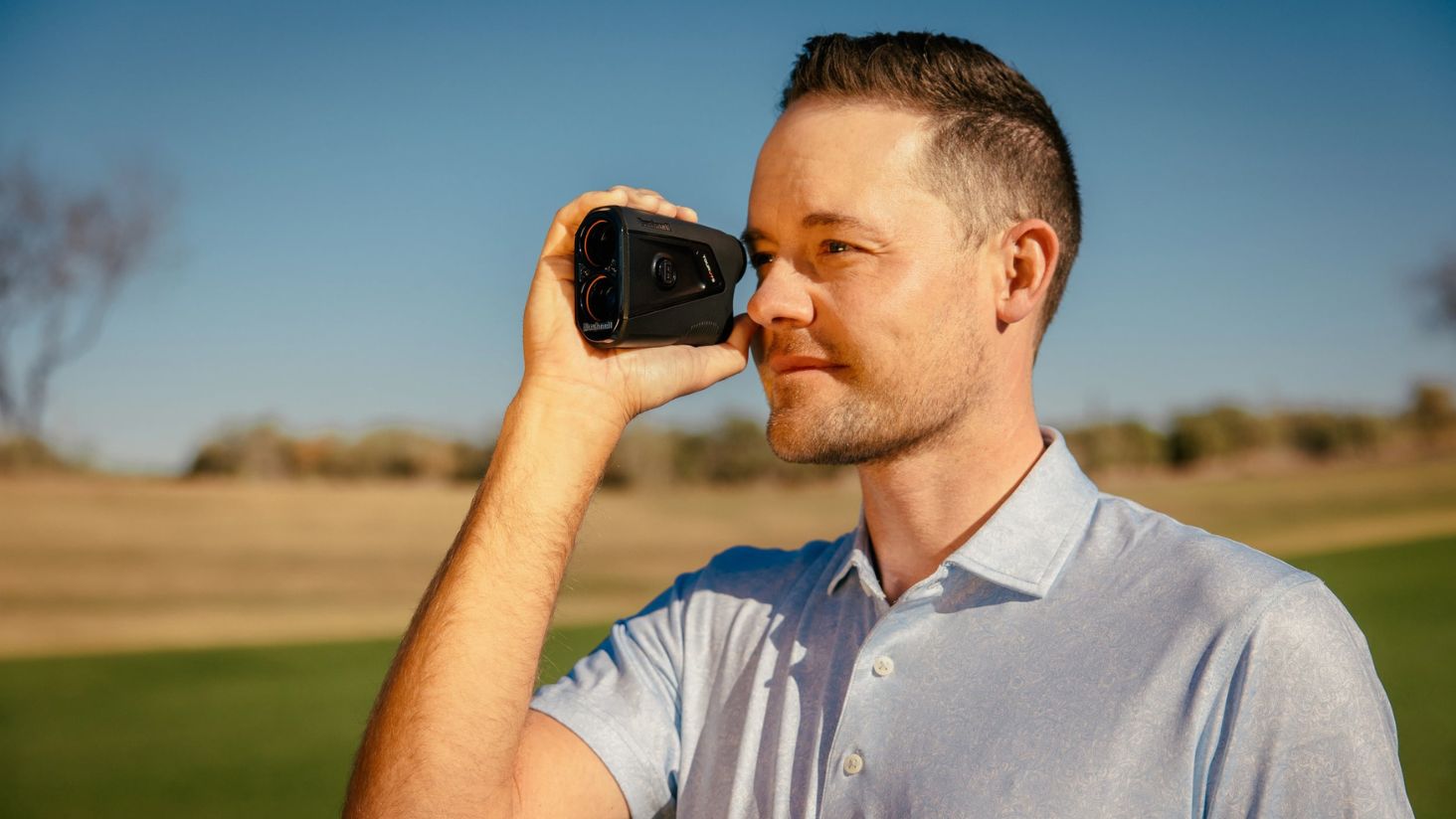
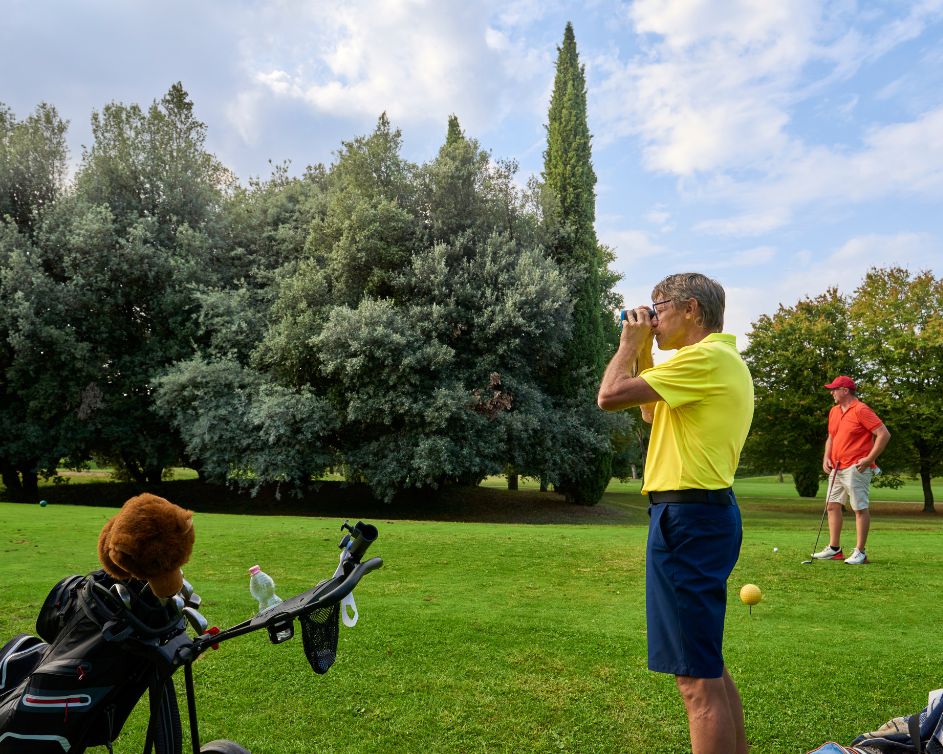
A laser rangefinder emits an invisible laser beam that is reflected back when it hits the targeted object—usually the tip of the flag. The device calculates the exact distance based on the signal’s travel time. The result: a pinpoint-accurate measurement to the exact target displayed, usually accurate to within one meter or better.
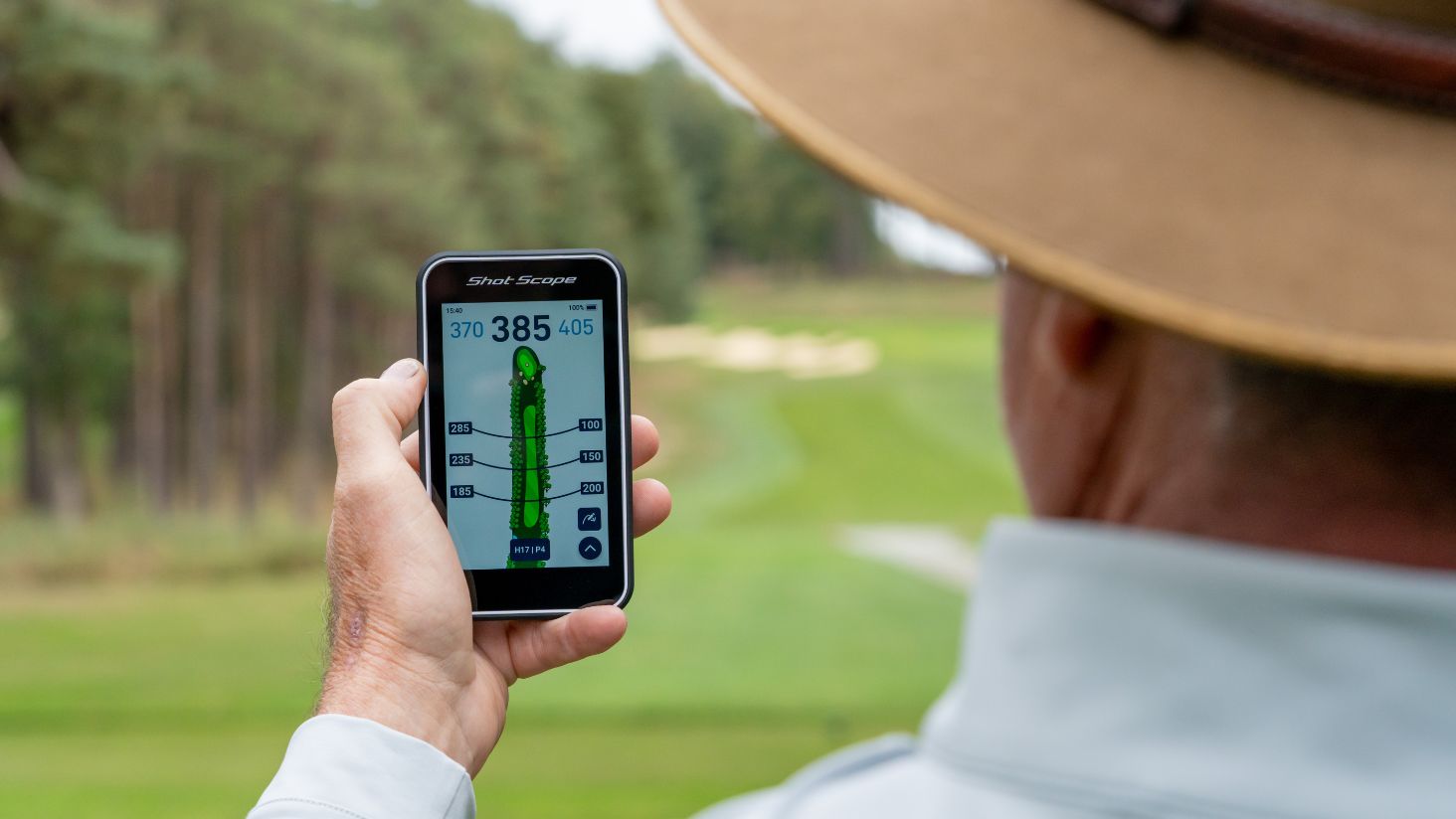
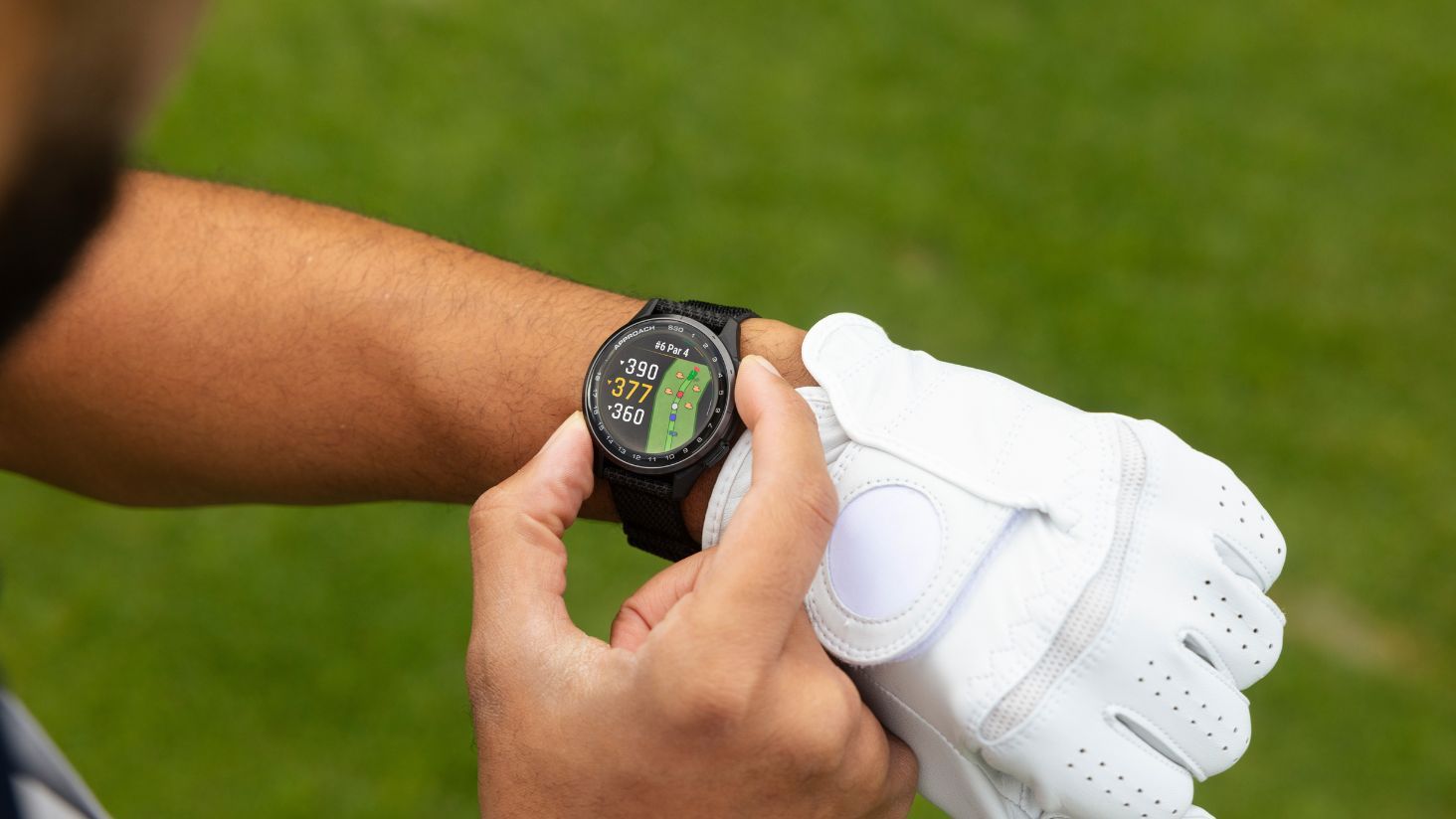
A GPS golf watch operates on a completely different principle. It derives its information from pre-installed course maps, which are synchronized with the current position on the course via a GPS signal. The device then automatically displays the distances to the front, middle, and back edges of the green, as well as to hazards, doglegs, and layup points—without any aiming or triggering required.
The key difference: The laser measures a specific point on command. The GPS watch continuously provides a comprehensive overview of the hole.
Rangefinder Test: Here you’ll find the best rangefinders and lasers for golfers.
Strengths and weaknesses of both technologies at a glance
Accuracy: A clear advantage for the laser
If you rely on absolute precision, there’s hardly any alternative to a laser rangefinder. It measures directly to the flag—not to the center of the green or to a pre-calculated point, but exactly where it’s aimed. This precision is crucial, especially on approach shots, on Par-3 holes, or when using short Irons, where a five-meter difference can mean the difference between one club and another.
GPS golf watches rely on satellite data and preloaded course maps. Their strength lies in providing a quick overview, not in millimeter-level accuracy. The distance displayed always refers to a fixed point on the course map—the actual flag position may differ from this. While this is entirely sufficient for strategic decisions, many golfers prefer laser precision for the final club selection at short distances.
Conclusion on accuracy: Laser ✅ – GPS ⚠️ (sufficient for an overview, limited for pinpoint precision)
Usability: GPS golf watches win on convenience
Here, the tables turn. You simply wear a GPS golf watch on your wrist and don’t need to do anything else during your round—the course is automatically recognized, the hole information updates automatically, and the relevant distances are visible at a glance at any time. This saves time, keeps the game flowing, and is a real advantage, especially in bad weather or during stressful playing situations.
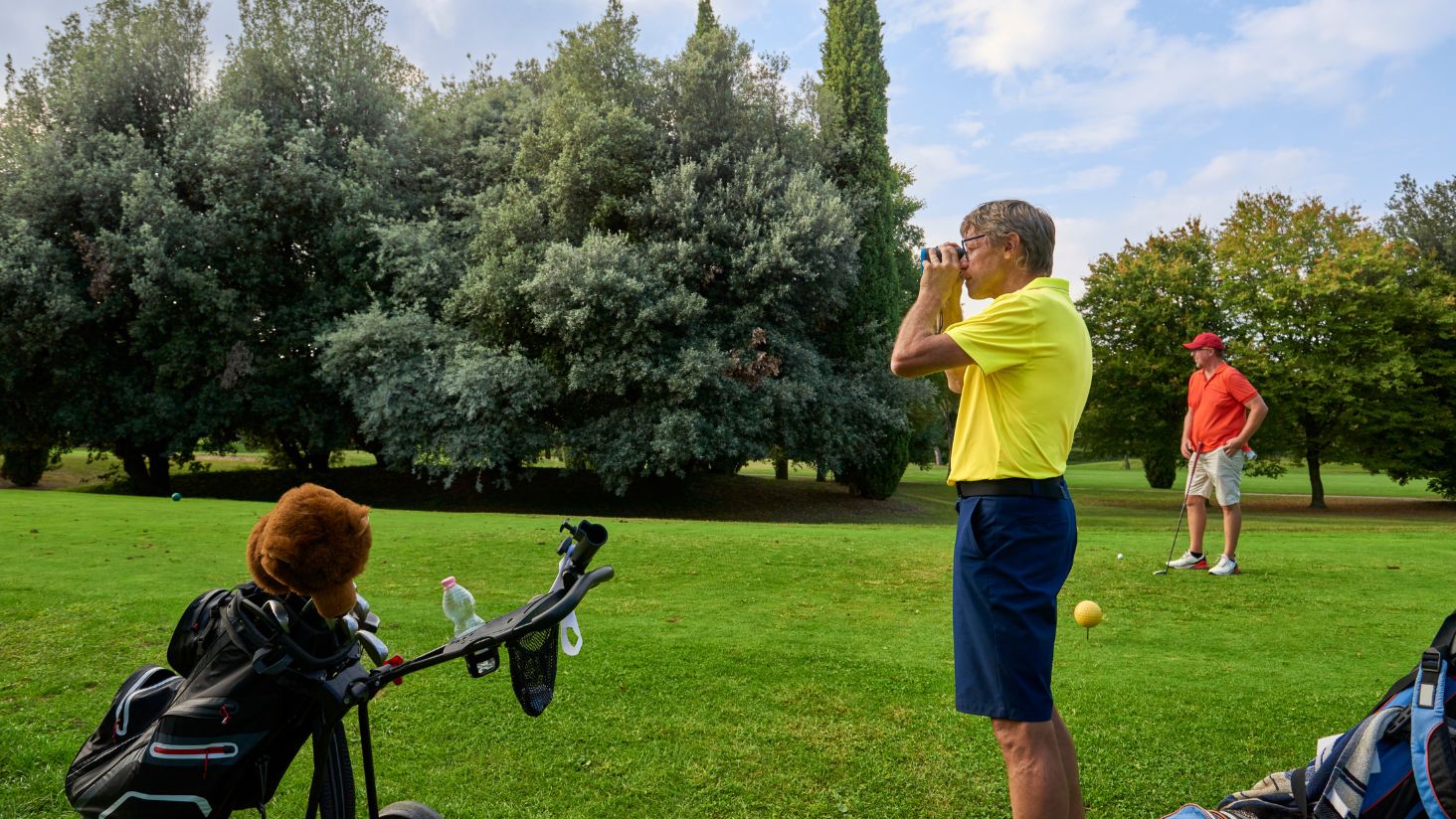
A laser rangefinder, on the other hand, requires an active step: take the device out of your pocket, stabilize it, aim, trigger it, and read the measurement. With a little practice, this can be done quickly—but it still takes a few seconds every time. Anyone who frequently plays in a foursome and wants to keep an eye on the pace of play will appreciate the convenience of a GPS watch.
Plus, GPS golf watches can also be used off the course as a regular watch, fitness tracker, or smartwatch. Laser rangefinders are exclusively for the golf course.
Conclusion on ease of use: GPS golf watch ✅ – Laser ⚠️ (easy to learn, but requires an active step)
GPS Golf Watch Review: Here are the best GPS golf watches
Depth of Information: GPS watches offer more context
A laser displays a number: the distance to the point you’ve aimed at. That’s precise—but that’s all it does.
A GPS golf watch shows the entire hole at a glance: green shape, bunker locations, water hazards, dogleg points, and safe layup zones. Especially on unfamiliar courses or in foggy conditions where you can’t directly target hazards, the strategic overview provided by a GPS watch is a clear advantage. Players who consciously manage their course strategy benefit greatly from this.
Conclusion on depth of information: GPS golf watch ✅ – laser ⚠️ (precise distance, no strategic context)
Weather Performance: Slight advantage for GPS
In heavy rain, thick fog, or very poor visibility, the laser reaches its limits: If the target isn’t clearly visible, it’s impossible to measure the distance precisely. GPS golf watches work regardless of visibility—as long as the satellite signal is available, they reliably provide information.
Conclusion on weather performance: GPS golf watch ✅ – Laser ⚠️ (limited in poor visibility)

Battery Life and Operating Costs: Differences Depending on the Model
Laser rangefinders with replaceable batteries (usually CR2) are extremely long-lasting due to their very low power consumption—a single battery often lasts several seasons. Models with built-in rechargeable batteries must be charged regularly but are easier to use in everyday situations.
Depending on the model, GPS golf watches have a battery life ranging from one to several rounds in GPS mode. Modern models can easily handle two or more full 18-hole rounds without recharging.
Conclusion on operating costs: Largely balanced—depending on the specific model.
| Criterion | Laser rangefinder | GPS golf watch |
|---|---|---|
| Accuracy to the flag | ✅ Very high (±1 m) | ⚠️ Sufficient for a general overview |
| Usability & Comfort | ⚠️ Requires active user input | ✅ A glance at the wrist is enough |
| Depth of Information | ⚠️ Limited scope | ✅ Entire hole at a glance |
| Weather resistance | ⚠️ Limited in poor visibility | ✅ Works regardless of visibility |
| Battery & Operating Costs | ✅ CR2 battery lasts a very long time | ✅ Modern models: 2+ laps |
| Everyday Use | ⚠️ For the golf course only | ✅ Smartwatch & fitness features |
| Tournament use | ✅ Allowed (disable Slope) | ✅ Allowed (disable Slope) |
When is a laser rangefinder the right choice?
A laser rangefinder is particularly suitable for you if:
- You consider precise distances to the flag to be the most important factor
- You place a high value on selecting the exact club when using short Irons and Wedges
- You play on courses you know well and need less contextual information
- You want to use the Slope function during practice to factor in elevation changes into your strategy
- You don’t want to wear a device on your wrist
When is a GPS golf watch the right choice?
A GPS golf watch is a better fit for you if:
- You frequently play on unfamiliar courses and need a strategic overview
- You value quick, straightforward distance information —without having to aim and trigger the measurement
- You’d like to use the watch in everyday life as a smartwatch or fitness tracker
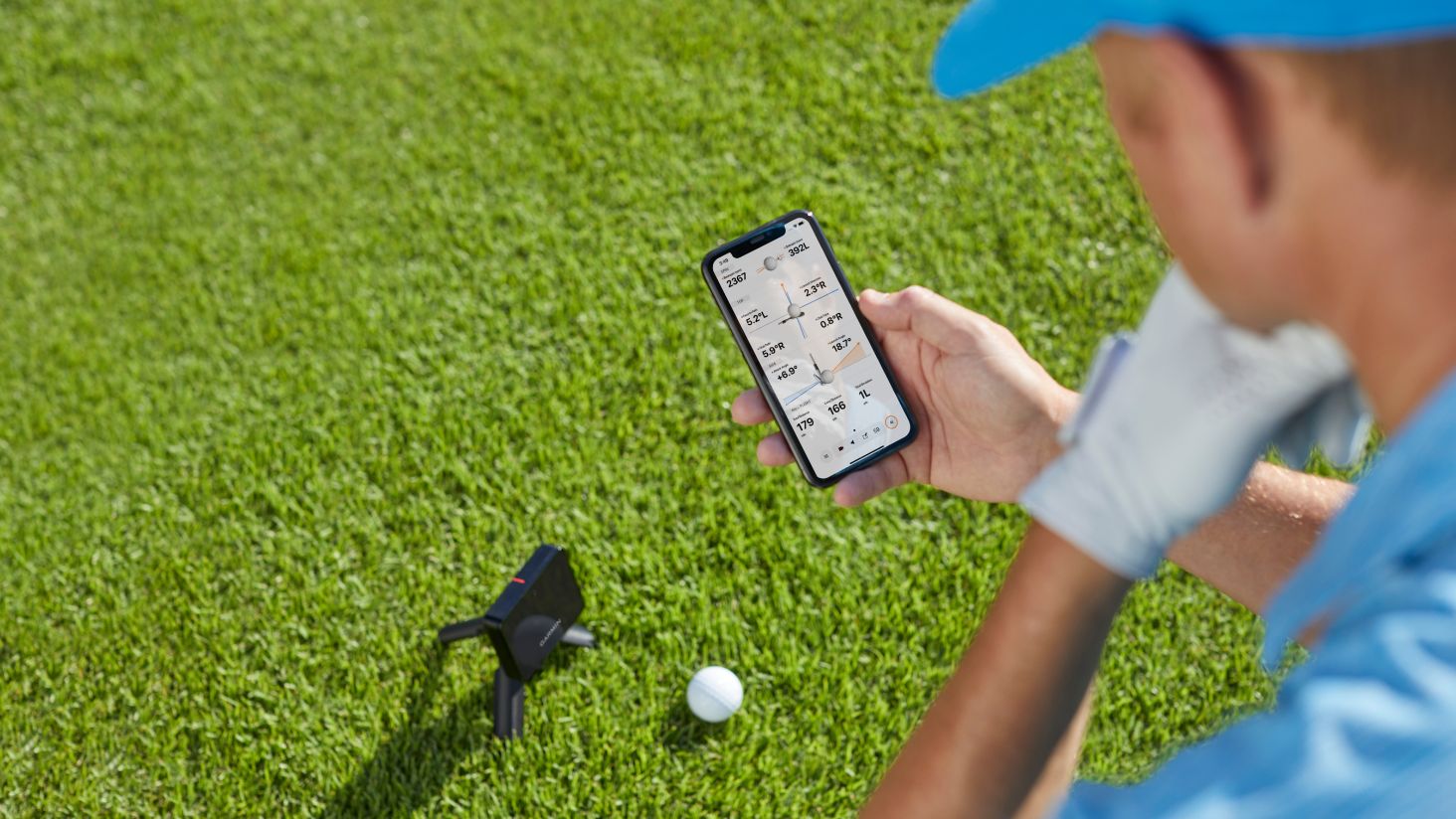
- You want to automatically track shots and record shot statistics
- You want to keep the pace of play up when playing in a foursome or in tournaments
The third option: Hybrid devices—laser and GPS in one
If you don’t want to choose between the two technologies, there’s a third option: hybrid devices that combine laser precision and GPS information in a single unit.
The Bushnell Tour Hybrid, for example, uses a laser to measure the distance to the flag and simultaneously displays GPS data for over 36,000 courses on a separate screen. The Garmin Approach Z82 overlays color course maps directly in the laser sight. The Shot Scope PRO LX+ combines a laser, a GPS handheld, and full shot tracking in a modular system.
Hybrid devices are generally more expensive than standalone laser rangefinders or GPS watches, but they offer the widest range of features without compromise. For golfers who want the best of both worlds, they are a compelling choice.
Use in Tournaments: What Do You Need to Know?
In general, both laser rangefinders and GPS golf watches are permitted in tournament play—since the 2019 rule reform by the R&A and USGA (Rule 4.3a), this has been the standard, provided the host club has not established a course rule to the contrary.
However, it’s crucial that the slope function —i.e., the distance correction based on elevation changes—be deactivated for the entire round. This applies equally to laser rangefinders and GPS watches. Likewise, club recommendations, wind data, and swing analyses are not permitted in tournaments.
Before each tournament round, check whether your device has a clearly identifiable tournament mode—and activate it before your first tee shot.
Rangefinders in Golf Tournaments: What’s Allowed, and What Isn’t?
Laser or GPS watch? – How to make your decision
Neither technology is inherently better. The right choice depends on your personal playing style, your priorities, and your budget:
| Your playing profile | Recommended Technology |
|---|---|
| Accuracy to the flag is the most important factor | Laser rangefinder |
| Strategic overview of the hole | GPS golf watch |
| Frequently playing on unfamiliar courses | GPS golf watch |
| Training with Slope Function | Laser rangefinder |
| Suitability for everyday use & smartwatch features | GPS golf watch |
| Shot Tracking & Statistics | GPS Golf Watch with Tracking Function |
| Highest Precision + Full Course Overview | Hybrid device (laser + GPS) |
| Beginners, first device | GPS golf watch or more affordable laser |
One final practical tip: Many experienced golfers use both technologies over the long term—the GPS watch for a strategic overview on the way to the ball, and the laser for the final distance to the flag just before the shot. This combination brings together the strengths of both worlds and has long been standard at the professional level.
It’s not an either/or choice, but there’s a clear trend depending on your playing style
If you’re looking for maximum precision to the flag and enjoy actively working with the device, a laser rangefinder is an excellent choice. Those who prefer to play intuitively, quickly, and with a full overview of the course will find a GPS golf watch to be the better companion. Both technologies have improved enormously in quality and convenience in recent years. The key factor isn’t which device is objectively better—but which one better suits your game.
Frequently Asked Questions About Laser Rangefinders and GPS Golf Watches
Is a laser rangefinder more accurate than a GPS golf watch? Yes , generally speaking. Lasers measure directly to the displayed target to within 1 meter or better. GPS golf watches rely on pre-installed course maps and are optimized for strategic overview, not pinpoint accuracy.
Can I use a laser rangefinder and a GPS golf watch at the same time? Yes —and this is a very popular combination. The GPS watch provides an overview of the entire hole, while the laser rangefinder gives the final distance to the flag just before the shot. Many golfers appreciate this complementary approach.
Which device is better suited for beginners? That depends on your priorities. If you want distance information quickly and easily, you’ll likely opt for a GPS golf watch. Those who prioritize precision to the flag from day one will prefer the laser rangefinder. Affordable entry-level models are available in both categories.
Are GPS golf watches and laser rangefinders allowed in tournaments? In principle , yes, since 2019 (Rule 4.3a R&A/USGA). However, the slope function must be disabled. Be sure to check the host club’s applicable course rules before every tournament.
What is a hybrid device? Hybrid devices combine a laser rangefinder and a GPS system in a single unit. They offer the widest range of features but are generally more expensive than standalone laser or GPS watches. Examples: Bushnell Tour Hybrid, Garmin Approach Z82, Shot Scope PRO LX+.
Are there special devices for women or men? No —both laser rangefinders and GPS golf watches are technically identical in design, regardless of who uses them. Differences between models lie solely in their range of features, design, and price—not in the target audience based on gender.
Brandname
Title will go here and can run on two lines
Brandname
Title will go here and can run on two lines

Brandname
Title will go here and can run on two lines
Brandname
Title will go here and can run on two lines
Brandname
Title will go here and can run on two lines
Brandname
Title will go here and can run on two lines
Brandname
Title will go here and can run on two lines
Brandname
Title will go here and can run on two lines
Brandname
Title will go here and can run on two lines
Brandname
Title will go here and can run on two lines
Release date
23 Aug 2026
photos
Golf watch or rangefinder—find out which one suits you best. (Photo: Adobe Stock)