
Golf Rangefinders Review 2026 – Comparison and Buying Guide
Which golf rangefinder is the best in 2026? We compare Garmin, Bushnell, Zoom, and others—with buying advice for every type of player.
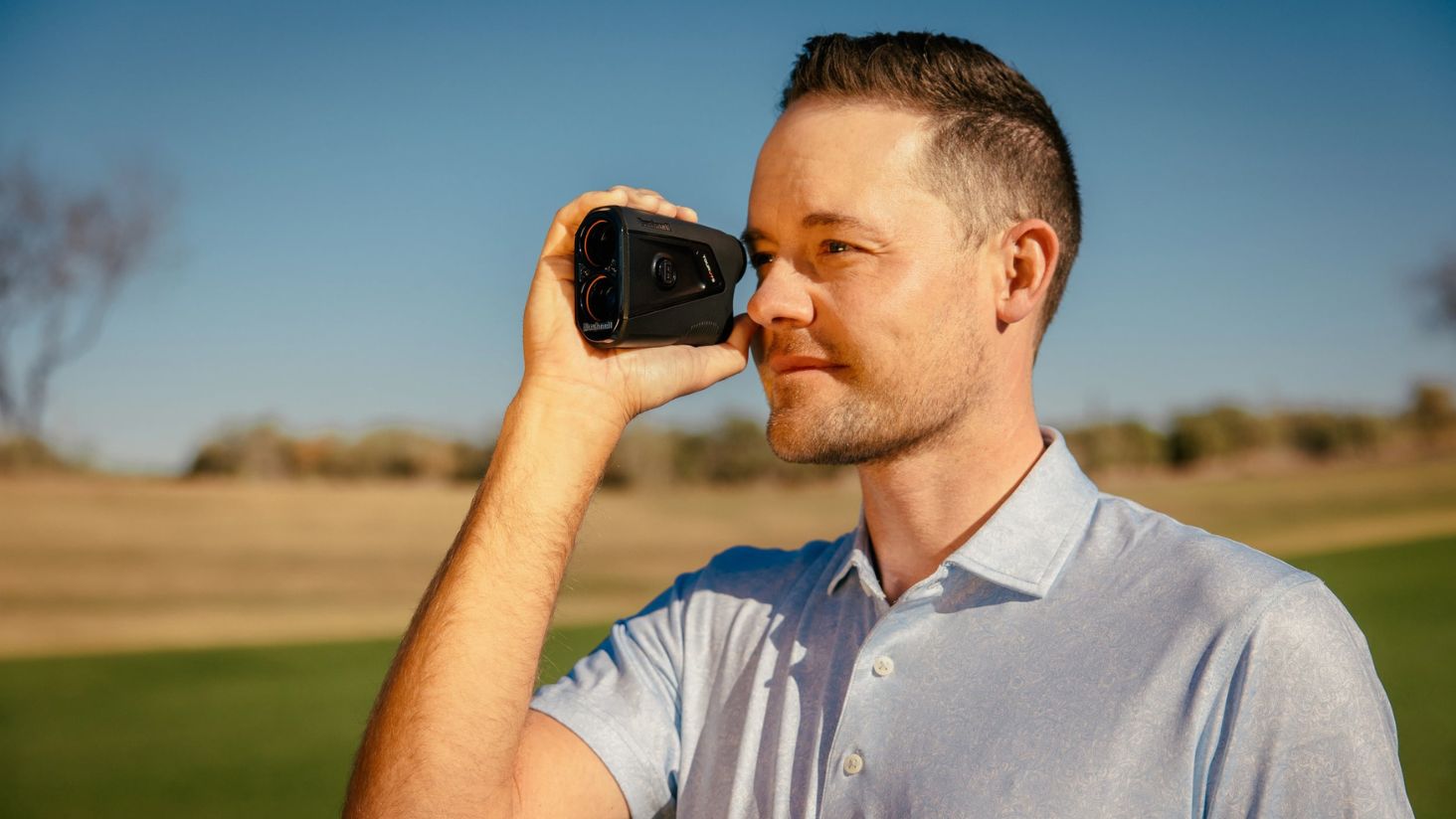
If you want to make precise decisions on the golf course, a good rangefinder is practically indispensable. Whether it’s to the flag, a Bunker, or a dogleg—modern golf rangefinders provide the distance information golfers need to choose the right club. But which device in the 2026 test truly delivers on its promises?
In this golf rangefinder test, we compared the top laser models from Garmin, Bushnell, Zoom, Blue Tees, and Shot Scope —from a solid entry-level model under 200 euros to a technically advanced premium laser. Here you’ll find a structured buying guide to help you find the device that truly suits your game and your budget.
What makes a good golf rangefinder?
Before we dive into the comparison, it’s worth taking a quick look at the most important buying criteria:
- Accuracy & Range: Most laser rangefinders measure to within 1 yard. The range varies widely—from 600 meters for entry-level models to 1,500 meters for top-of-the-line devices. For use on the course, 600–900 meters is generally sufficient.
- Laser or GPS: Laser rangefinders measure the exact distance to the targeted object, while GPS devices or GPS golf watches automatically deliver all course information right to your wrist. We explain in detail which technology is a better fit for you in our guide [Laser or GPS Watch?].
- Slope Function & Tournament Mode: The slope function calculates the distance while accounting for elevation changes—a real added value during practice. However, it must be deactivated during tournaments. All devices in our test feature a tournament mode that can be turned off.
- Optics & Magnification: Most models offer 6x magnification, while some premium and mid-range models provide 7x magnification for even clearer target acquisition. Display types range from LCD to MIP to high-contrast OLED displays.
- Rechargeable or Replaceable Battery: Built-in rechargeable batteries are more practical and environmentally friendly; devices with CR2 batteries start up more reliably at low temperatures and can be replaced quickly.
- Price: Solid entry-level models start at around 140 euros. The premium segment ranges from 400 to 550 euros.
Golf Rangefinders Tested in 2026 – An Overview of All Models
The following table provides a quick overview of all models included in the test:
| Model | Type | Magnification | Range | Slope | Power Supply | Price |
|---|---|---|---|---|---|---|
| Zoom Focus X | Laser | 6x | N/A | ✅ Can be turned off | Battery | ~140 € |
| Shot Scope PRO L2 | Laser | 6x | N/A | ✅ Can be turned off | N/A | ~160 € |
| Garmin Approach Z10 | Laser | N/A | N/A | ✅ Can be turned off | N/A | ~260 € |
| Bushnell A1 Slope | Laser | 6x | 600 m | ✅ Can be turned off | CR2 | ~300 € |
| Zoom OLED Pro | Laser | 6x | 1,100 m | ✅ Can be turned off | Battery | ~240 € |
| Blue Tees Series 4 Ultra | Laser | 7x | 900 m | ✅ Can be turned off | Battery | ~290 € |
| Shot Scope PRO ZR | Laser | N/A | 1,500 m | ✅ Can be turned off | Battery | ~300 € |
| Shot Scope PRO LX+ | Laser + GPS + Tracking | 7x | 900 m | ✅ Can be turned off | Battery | ~330 € |
| Garmin Approach Z30 | Laser | 6x | N/A | ✅ Can be turned off | CR2 | ~400 € |
| Bushnell Tour V6 Shift | Laser | 6x | 1,300 m | ✅ Can be turned off | CR2 | ~400 € |
| Bushnell Tour V7 Shift | Laser | 6x | N/A | ✅ Can be turned off | CR2 | In the store |
| Garmin Approach Z82 | Laser + GPS | 6x | 410 m | ✅ Can be turned off | Battery | ~450 € |
| Bushnell Tour Hybrid | Laser + GPS | 5x | N/A | ✅ Can be turned off | CR2 | ~520 € |
Brandname
Title will go here and can run on two lines
Brandname
Title will go here and can run on two lines
Entry-Level Models Under 200 € – A Review of Reliable Golf Rangefinders
If you’re taking a laser rangefinder out on the course for the first time, you don’t have to break the bank. Entry-level models under 200 euros offer all the essential core features—including Slope—at a fair price.
Zoom Focus X – Affordable, Lightweight, Functional
The Zoom Focus X is the most affordable model in our test and is a pleasant surprise: With a Slope function, haptic target confirmation via vibration, and a scan mode for continuous measurements, it offers all the basic features golfers need on the course. Weighing just 170 grams, it’s also the lightest device in the comparison. The built-in battery charges via Micro-USB—a minor drawback compared to USB-C models, but nothing too serious.
Ideal for: Beginners looking for a practical laser rangefinder without a lot of bells and whistles. Price: approx. €140
Shot Scope PRO L2 – An Entry-Level Model with Added Value
The Shot Scope PRO L2 offers a bit more for a bit more money. The Target Lock vibration reliably confirms flag detection, and the built-in cart magnet ensures the device is always within reach. With 6x magnification and an accuracy of one yard, the PRO L2 is on par with more expensive competitors. Those who want to use the Shot Scope app can also integrate the laser into the Shot Scope ecosystem.
Ideal for: Golfers who are already analyzing their game and interested in statistics. Price: approx. €160
Garmin Approach Z10 – Garmin’s entry-level model with a robust ecosystem (new, July 2026)
The Garmin Approach Z10 is the newest model in our test and was just introduced in July 2026. It offers clear vibration feedback when using Flag Lock, the popular PlaysLike feature for distance correction based on elevation changes, and full tournament compatibility. Those who already use other Garmin devices—such as a Garmin golf watch—will benefit from seamless integration into the Garmin Golf ecosystem.
Smart Rangefinder: Learn more about the Garmin Approach here.
Ideal for: Garmin users who want to optimally integrate their laser rangefinder with existing devices. Price: approx. 260 €
Mid-Range €200–350 – The Best Golf Rangefinders in the Test
The mid-range segment is the most exciting in our test: This is where most golfers will find the best value for their money. The selection is vast, and the differences are significant.
Zoom OLED Pro vs. Blue Tees Series 4 Ultra – OLED display meets 7x magnification
A direct comparison of two strong alternatives—depending on your priorities:
The Zoom OLED Pro impresses with its OLED display, which delivers exceptional sharpness and brightness in all lighting conditions. With a range of up to 1,100 meters, the convenient Magnetic Lock system for attaching to a cart, and a USB-C port, it’s at the cutting edge of technology.
The Blue Tees Golf Series 4 Ultra, on the other hand, features 7x magnification—one step beyond most competitors. This means a clearer, closer view of the target. It also features automatic display brightness adjustment, an accuracy of +/- 0.8 yards, IPX6 water resistance, as well as a cart magnet and carrying clip for convenient transport.
Comparison summary: If you prefer a particularly bright, high-contrast display, go for the Zoom OLED Pro (approx. €240). If you want more powerful optics and a more rugged overall package, you’re better off with the Blue Tees Series 4 Ultra (approx. €290).
Bushnell A1 Slope – Proven Bushnell quality at a fair price
The Bushnell A1 Slope is the most affordable way to enter the trusted world of Bushnell. It features reliable PinSeeker technology for precise flag detection, confirms measurements with JOLT vibration, and offers a range of up to 600 meters—more than enough for most golfing situations. The 6x magnification and simple operation make it an easy-to-use companion on the course.
Ideal for: Golfers who want to rely on the reliability of the Bushnell brand without breaking the bank.Price: approx. 300 €
Shot Scope PRO ZR & PRO LX+ – Range or All-in-One System?
Shot Scope offers two very different concepts in the mid-range segment:
The Shot Scope PRO ZR is designed for maximum range and durability. With a range of up to 1,500 meters, it outperforms all other models in this test, and the DuraShield hard shell makes it particularly resilient. For golfers looking for a no-frills laser with maximum range, the PRO ZR is the most logical choice in the mid-range segment.
The Shot Scope PRO LX+ takes a fundamentally different approach: laser, GPS, and shot tracking in a single, modular system. The laser, with 7x magnification and a range of 900 meters, can be detached from the handheld GPS unit, which in turn supports 16 tracking tags for comprehensive shot recording. For those who want to not only measure their game but also systematically analyze it, the PRO LX+ is a unique tool.
The ultimate product comparison: Learn about Shot Scope’s rangefinders here.
Comparison summary: If you want pure laser performance, choose the PRO ZR (approx. €300). If you want to combine laser, GPS, and statistics in a single device, go with the PRO LX+ (approx. €330).
Premium models starting at €400 – Top models for the highest demands put to the test
If you’re willing to invest more, you’ll get noticeably more technology, better optics, and, in some cases, true hybrid devices that combine laser and GPS.
Garmin Approach Z30 & Z82 – A Comparison of the Garmin Duo
Garmin offers two very different approaches in the premium segment:
The Garmin Approach Z30 is a compact, lightweight laser rangefinder with a CR2 battery and long battery life. Its standout feature is the Range Relay function: If you’re wearing a compatible Garmin golf watch on your wrist, the measured distance is automatically displayed on the watch—without having to look at the laser. This is complemented by PlaysLike data via a paired Garmin watch. Anyone deeply immersed in the Garmin ecosystem will love the Z30.
The Garmin Approach Z82 is the most technologically advanced pure-laser model in the test. It combines laser precision with GPS: Color 2D course map overlays, hazards, and green information are displayed directly in the viewfinder. Image stabilization, Pin Pointer, wind data via the Garmin Golf app, and a range of up to 410 meters—the Z82 is a true all-in-one tool for golfers who want maximum information on the course.
From GPS pioneer to number one: Read Garmin’s story here.
Comparison summary: The Z30 (approx. €400) for the pragmatic ecosystem user; the Z82 (approx. €450) for anyone who wants both laser and GPS information in a single device without compromise.
Bushnell Tour V6 Shift & Tour V7 Shift – Precision Lasers Compared
With the Tour V Shift series, Bushnell offers two of the most highly regarded laser rangefinders in golf:
The Bushnell Tour V6 Shift is considered one of the best standalone laser rangefinders in the test: With a range of up to 1,300 meters, crystal-clear 6x optics, and the brand’s signature Visual JOLT—a combination of vibration and a light signal to confirm the measurement—it sets the standard for precision and ease of use. The BITE magnetic mount for the golf cart rounds out the package.
The Bushnell Tour V7 Shift is the latest successor and further refines the proven design: a particularly easy-to-read OLED display with dual-color display, state-of-the-art Visual JOLT® technology, and an IPX6-certified housing for maximum weather resistance. If you’re looking for Bushnell’s latest top-of-the-line model, the V7 Shift offers the best the brand has to offer right now.
Slope display and smart connectivity: Learn more about the Bushnell Tour V7 golf laser.
Comparison summary: Both are excellent devices—the V6 Shift (approx. €400) is a proven classic, while the V7 Shift represents the current state of the art.
Bushnell Tour Hybrid – When Laser and GPS Become One Device
The Bushnell Tour Hybrid holds a special place in our test: It combines a full-featured laser rangefinder with an integrated GPS system. While the laser, with 5x magnification, displays the distance to the flag in the viewfinder, a separate side display provides GPS information for over 36,000 golf courses—distances to the green, to hazards, and more. For anyone who never wants to switch between two devices again, the Tour Hybrid is the perfect solution.
Ideal for: Golfers who value both laser accuracy and GPS overview and want everything in one device. Price: approx. €520
Rangefinders in Golf Tournaments—What’s Allowed?
Since the major rule reform by the R&A and USGA in 2019, golf rangefinders have generally been permitted in tournament play—as governed by Rule 4.3a. However, individual golf clubs may still prohibit their use via local rules. Therefore, be sure to check the applicable course rules before each tournament round.
What is allowed in tournaments?
- Measuring the straight-line distance to the flag, Bunker, water hazards, trees, and other fixed objects
- Distance information for green areas (front, middle, back)
What is prohibited?
- Slope function: The elevation correction must not be active during the entire round and must be fully deactivatable.
- Wind measurement and environmental data
- Club recommendations based on distance or swing data
- Swing analysis or technical advice during the round
Important: Anyone who accidentally activates the Slope function during a tournament round risks a general penalty—that is, two penalty strokes in stroke play or loss of the hole in match play. All models in our test feature a clearly identifiable tournament mode that reliably deactivates the Slope function.
Practical tip: Activate tournament mode before your first tee shot and check that the Slope indicator is turned off.
What’s allowed? What’s prohibited? Read more here about the use of rangefinders in golf tournaments.
Which golf rangefinder is right for you? – Our buying guide
Choosing the right device depends less on price than on your own playing style. This overview will help you make your decision:
| Your Profile | Our Recommendation |
|---|---|
| First-time buyer, tight budget | Zoom Focus X (~€140) |
| Beginner interested in statistics | Shot Scope PRO L2 (~€160) |
| Garmin users | Garmin Approach Z10 (~€260) |
| Bushnell quality, mid-range budget | Bushnell A1 Slope (~€300) |
| Best optics in the mid-range | Blue Tees Series 4 Ultra (~€290) |
| Maximum range & durability | Shot Scope PRO ZR (~€300) |
| Laser + GPS + swing analysis | Shot Scope PRO LX+ (~€330) |
| Garmin Ecosystem, Premium Range | Garmin Approach Z30 or Z82 |
| Bushnell Precision, No Compromises | Bushnell Tour V6 or V7 Shift |
| Laser and GPS in one device | Bushnell Tour Hybrid (~€520) |
Note for golfers: The question of whether to choose a “women’s rangefinder” or “men’s rangefinder” rarely comes up in practice—the technology is identical across all devices. Differences between models lie in their feature sets, design, and price—not in the gender of the target audience. So let your playing needs be the sole guide in your choice.
Conclusion—Our Verdict on Golf Rangefinders in 2026
The golf rangefinder market in 2026 is more diverse than ever—and that’s the good news: there’s a compelling solution for every budget and every type of player.
🏆 Best Value for the Money: Shot Scope PRO L2 (~€160) – robust core features, tournament-ready, ecosystem integration.
🥇 Best flagship model: Bushnell Tour V7 Shift – state-of-the-art Bushnell technology, OLED display, and maximum reliability for discerning golfers.
💡 Our insider tip: Blue Tees Golf Series 4 Ultra (~€290) – 7x magnification, IPX6 protection, and USB-C at a price well below that of comparable top-of-the-line models.
In the end, it’s not the most expensive device that makes the difference, but the one that fits your game, your habits, and your budget. Discover all the tested models and other golf rangefinders in our [ALL4GOLF Online Store].
Still undecided between a laser rangefinder and a GPS watch? In our guide [Laser or GPS Watch? – Which Type of Rangefinder Is Right for Me?], we explain and compare both technologies in detail.
Frequently Asked Questions About the 2026 Golf Rangefinder Test
Which golf rangefinder is the best in 2026? There’s no one-size-fits-all test winner—the best choice depends on your budget, skill level, and desired features. For beginners, we recommend the Shot Scope PRO L2 or the Zoom Focus X; for ambitious players, the Bushnell Tour V6/V7 Shift or the Garmin Approach Z82.
Are golf rangefinders allowed in golf tournaments? Yes , since the 2019 rule changes, laser rangefinders have generally been permitted (Rule 4.3a R&A/USGA). The Slope function must be deactivated for the entire round. Individual golf clubs may still prohibit their use via a local rule.
How much does a good golf rangefinder cost? Solid entry-level models start at around 140 euros. The best mid-range devices cost between 230 and 350 euros, while top-of-the-line models cost between 400 and 550 euros.
Laser or GPS golf watch—which is better? Laser rangefinders measure the exact distance to the flag and are ideal for determining the final distance. GPS golf watches automatically deliver all hole information right to your wrist—without having to aim. Detailed comparison: → [Laser or GPS watch? – Which type of rangefinder is right for me?]
Do I need the slope function? During practice, the slope function offers real added value—it calculates the distance while accounting for uphill and downhill gradients. In tournaments, it must be deactivated. All models in our test support this reliably.
Are there special rangefinders for women or men? No —the technology is identical across all devices. Any differences are limited to design or color but have no impact on performance or accuracy. Your choice should be based solely on feature set, price, and personal preference.

Brandname
Title will go here and can run on two lines
Brandname
Title will go here and can run on two lines
Brandname
Title will go here and can run on two lines
Brandname
Title will go here and can run on two lines
Brandname
Title will go here and can run on two lines
Brandname
Title will go here and can run on two lines
Brandname
Title will go here and can run on two lines
Brandname
Title will go here and can run on two lines
Release date
20 Aug 2026
photos
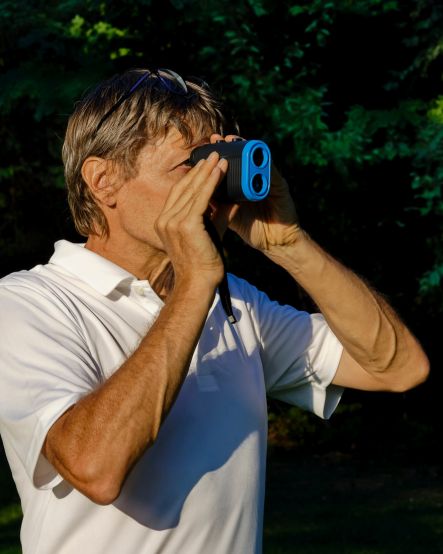
Rangefinders help golfers determine distances on the course. (Photo: Adobe Stock)