

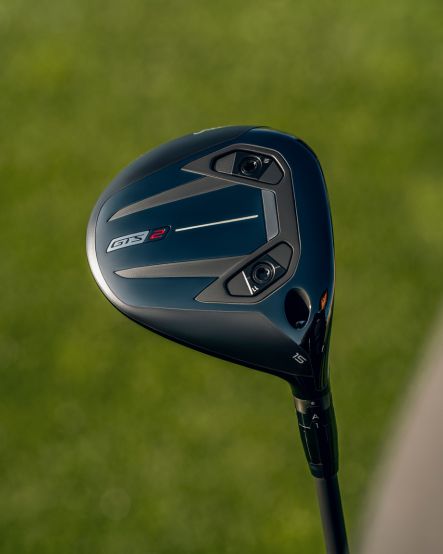
Titleist GTS Fairwaywood 2026: GTS2 and GTS3 in detail - technology, models and fitting
The new Titleist GTS Fairwaywoods 2026: more launch, less spin, more forgiveness. GTS2 and GTS3 in comparison - incl. technology and buying advice.
Fairwaywoods are among the most demanding clubs in the bag - both for manufacturers and golfers. They have to deliver length and control from the Tee, clean contact and sufficient launch from the Fairway. With the new Titleist GTS Fairwaywoods - the GTS2 and the GTS3 - Titleist presents two models that are designed to master precisely this balancing act: higher ball flight, less spin and more forgiveness, in two clearly differentiated head shapes for different player profiles.
The GTS Fairwaywoods are now available for fittings and in pre-sales, the worldwide retail launch is June 11, 2026.
What's new? GTS vs. GT - the most important improvements
Compared to the previous GT generation, the GTS series of Fairwaywoods is based on three key enhancements:
- More composite material in the crown for deeper and more rearwardly positioned centers of gravity
- Revised shapes and profiles with a clearer differentiation between the models
- New dual heel-toe weighting system in both models - the GTS3 says goodbye to the previous track weight system and gets interchangeable flat weights for the first time
In addition, there is a new look with a polished clubface, which not only looks good, but has a proven effect on the quality of the hit.
Brandname
Title will go here and can run on two lines
Brandname
Title will go here and can run on two lines
The technology behind Titleist GTS Fairwaywoods
Continuous composite crown - the foundation of better Performance
As with the GTS Drivers, the multi-material construction is the crucial first step. The new GTS Fairwaywoods use more composite material in the crown than the previous generation - and this material now also extends around the sides of the club head.
The result: around 16 grams of free weight, which Titleist engineers were able to use specifically for lower and more rearwardly positioned centers of gravity (CG).
"As with the GTS Drivers, the first key to better performance with the GTS Fairwaywoods is the multi-material construction. The new full-length crown gave us about 16 grams of available weight - and we needed that to achieve our CG goals."
- Stephanie Luttrell, Senior Director of Metalwood R&D, Titleist
A lower CG means: higher launch angle, less spin - both important for playing Fairwaywoods optimally both from the Tee and from the ground. The CG positioned further back also increases the moment of inertia (MOI) and therefore forgiveness on off-center hits.
Forged L-Cup face design - speed from the ground
The forged L-Cup face design has been specially optimized for the GTS Fairwaywoods. A high-strength stainless steel insert extends around the underside of the clubface - exactly where Fairwaywoods typically hit the ball when hitting from the ground.
The L-Cup design ensures that ball speed and launch conditions are maintained even on low-face hits - an area that is particularly relevant when playing from the Fairway and often leads to energy loss with conventional club faces.
Revised shapes and profiles - two models, two clear approaches
When developing the GTS Fairwaywoods, Titleist deliberately focused on greater differentiation between the two models. While previous generations were closer in profile and face height, GTS2 and GTS3 now offer two clearly different response patterns:
"Both on Tour and in fittings, we see players who prefer flat faces and others who like a deeper face. We wanted to differentiate the two models more to offer a clear option for both preferences."
- Stephanie Luttrell, Titleist
Both models also feature a flatter sole design that allows the leading edge to rest closer to the ground - a direct advantage when playing from the Fairway as the club can slide more cleanly under the ball.
Dual heel-toe weighting system - precise CG tuning
Both GTS2 and GTS3 are equipped with interchangeable heel-toe flat weights. In the standard configuration of both models, there is an 11 gram weight in the heel and a 5 gram weight in the toe.
If the weights are swapped, the center of gravity shifts further towards the toe - this promotes a Fade Bias and enables targeted CG adjustment across the clubface. Further weight options are also available as part of a custom fitting to tailor the performance even more precisely to the individual swing.
Important for GTS3 players: The new heel-toe flat weight system replaces the previous track weight system of the "3" models - a significant change that allows more flexibility in CG adjustment.
Polished silver face - optics with Performance effect
The GTS Fairwaywoods feature an eye-catching, polished silver face. At address, this gives golfers a better view of the clubface - and according to Titleist, this has a real impact on hit quality.
"JJ brought silver prototypes to the Tour and they had a real impact on how some players moved the club. When they saw more loft, they hit the ball steeper and hit it better overall."
- Stephanie Luttrell, Titleist

GTS2 vs. GTS3 - Which Fairwaywood suits whom?
The choice between GTS2 and GTS3 depends primarily on your own angle of attack with the Fairwaywood - and your preferred look at address.
| GTS2 | GTS3 | |
|---|---|---|
| Face height | Shallow | Deeper |
| Head profile | Larger, wider | More compact, narrower |
| Target group | Flat entry angle | Steep entry angle |
| Lofts | 13,5° - 15° - 16,5° - 18° - 21° | 15° - 16,5° - 18° - 21° |
| Standard weight system | 11 g heel / 5 g toe | 11 g heel / 5 g toe |
| Special feature | Flatter profile than predecessor GT2 | Available in 21° for the first time (7 Wood) |
GTS2 - The Fairwaywood for the flat launch angle
The GTS2 is aimed at golfers who hit their Fairwaywoods with a rather flat entry angle - in other words, who guide the club into the ball on a flatter arc. The larger head profile and flatter face height give a confidence-inspiring, generous image at address and are particularly suitable for players who expect forgiveness and consistency from their Fairwaywood.
The new face height of the GTS2 is flatter than its predecessor, the GT2, and is more closely aligned with the previous GT1 Fairwaywood - a development that is a direct result of feedback from tour players. All lofts of the GTS2 benefit from this flatter profile, with the exception of the 13.5 degree model, which retains a slightly higher face.
Available lofts: 13.5° (3-wood strong), 15° (3-wood), 16.5° (4-wood), 18° (5-wood), 21° (7-wood)
Recommended for: Players with a shallow launch angle, golfers who appreciate forgiveness and a generous address pattern, handicap 15+
GTS3 - The Fairwaywood for the steep launch angle
With its deeper face and more compact profile, the GTS3 is the choice for golfers who hit the ball at a steeper angle. The slimmer, more controlled appearance particularly appeals to players who want to use their Fairwaywood in a workability-oriented manner - in other words, who want to shape the ball flight in a targeted manner.
New in the GTS3 family: For the first time, the model is also available in 21 degrees (7 Wood loft). This means that Titleist now offers players two different head shapes in the 7-wood loft - ideal for golfers who want to choose between a larger and a more compact profile in this loft range.
Available lofts: 15° (3-wood), 16.5° (4-wood), 18° (5-wood), 21° (7-wood, new)
Recommended for: Players with a steep launch angle, golfers with a low handicap who prefer control and workability, players who found the track weight system of the predecessors too inflexible
The weighting system in fitting - what really counts
The dual heel-toe weighting system of the GTS Fairwaywoods is not just a technical feature, but a valuable fitting tool. The ability to shift the center of gravity sideways opens up the following scenarios:
| Configuration | CG position | Effect |
|---|---|---|
| Standard (11 g heel / 5 g toe) | Slightly to the heel | Slight Draw Bias, maximum forgiveness |
| Swapped (5 g heel / 11 g toe) | To the toe | Fade bias, more control for Slice tendency golfers |
| Custom Fitting | Customized | More weight options for precise tuning |
A professional fitting not only helps you choose the right model and loft, it also helps you identify the optimum weight configuration and shaft option.
Shafts: Standard and Premium
As with the GTS Driver, premium shaft options are also available for the GTS Fairwaywoods:
Standard shafts:
- Project X Titan Black
- Mitsubishi Tensei 1K White with Rip Technology
- Mitsubishi Tensei 1K Blue with Rip Technology
- Mitsubishi Tensei 1K Red with Rip Technology
Premium shafts:
- Graphite Design Tour AD DI
- Graphite Design Tour AD VF
- Graphite Design Tour AD FI
The choice of shaft has a significant influence on ball flight, control and feel - here too, it is worth fitting to find the optimum shaft flex and the right weight profile.
For whom are the Titleist GTS Fairwaywoods worthwhile?
The 2026 Titleist GTS Fairwaywoods address where fairwaywoods still leave potential for many golfers: in terms of launch from the ground, forgiveness on off-center hits and customizability. With the GTS2, golfers get a generous, forgiving Fairwaywood for the flat launch angle - with the GTS3, a compact, controllable model for the steep launch angle, which is now also available in a 21-degree loft for the first time.
Both models benefit from the same core technologies: composite crown, L-cup clubface, flat sole design and the new dual weighting system. If you want to get the best out of your Fairwaywoods, you should take the time for a professional fitting - because this is where the customization options of the GTS series really come into their own.

Brandname
Title will go here and can run on two lines
Brandname
Title will go here and can run on two lines
Brandname
Title will go here and can run on two lines
Brandname
Title will go here and can run on two lines
Brandname
Title will go here and can run on two lines
Brandname
Title will go here and can run on two lines
Brandname
Title will go here and can run on two lines
Brandname
Title will go here and can run on two lines
Release date
20 May 2026
photos
The new Titleist GTS Fairwaywood models offer two clearly distinguishable profiles. (Photo: Titleist)


