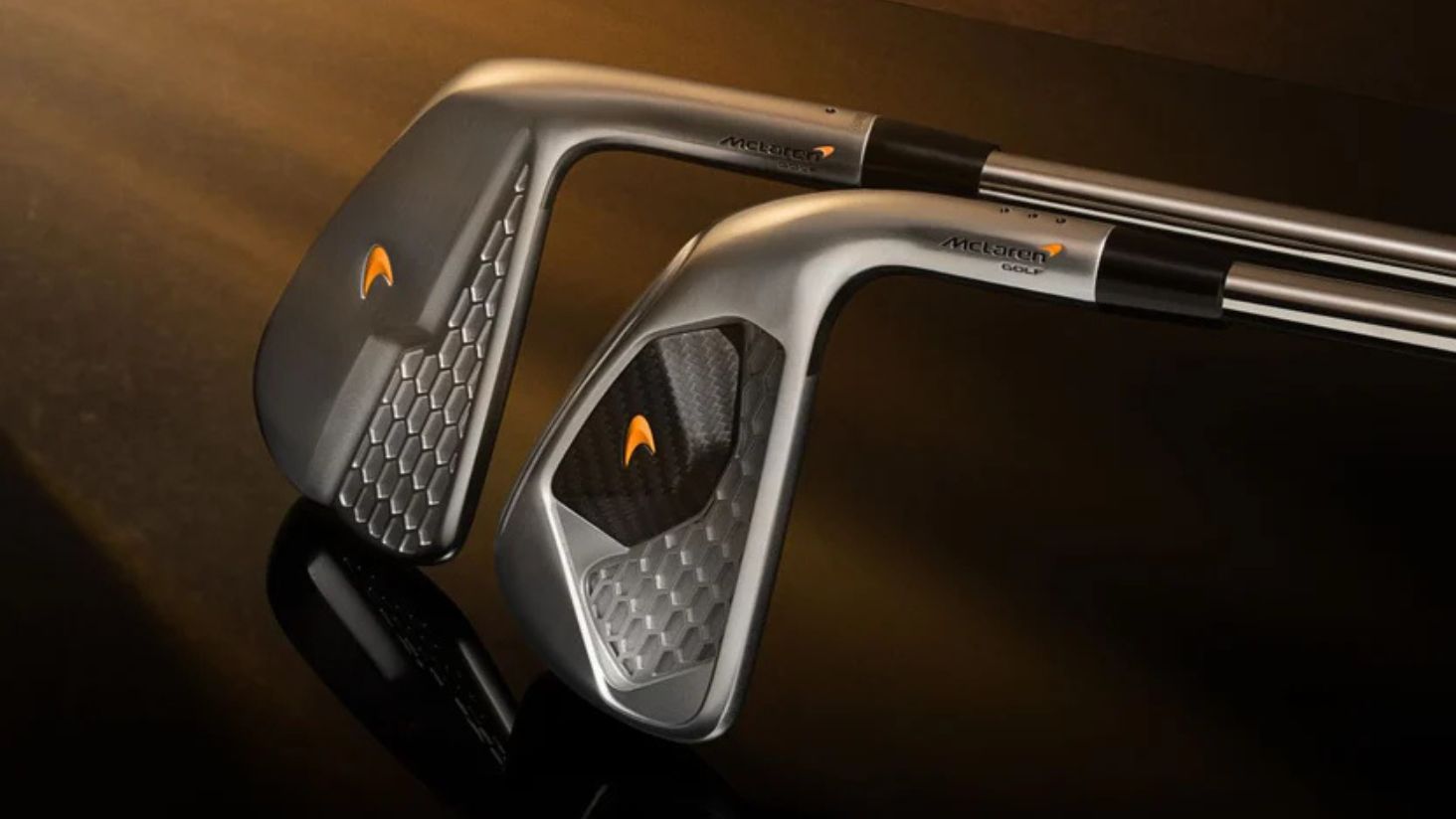


McLaren Golf: Series 1 and Series 3 Irons in check - technology, price, target group
Two premium Irons, a clear focus on technology: McLaren Golf launches Series 1 and Series 3. Plus: Justin Rose as investor and figurehead.
McLaren has been building high-performance machines for the racetrack and road for decades. Now the British manufacturer is transferring its standards of precision, material development and manufacturing quality to golf: McLaren Golf is officially launching - with two iron lines that are deliberately positioned in the premium segment. At the same time, Justin Rose is ensuring maximum attention: the world number five is an investor and global ambassador for the new brand and is already bringing the irons into play in the tournament environment.
The product story focuses not only on the question of who plays the clubs, but above all on how they are built - and which technical decisions McLaren uses to justify them.
The most important facts in brief (Quick Facts)
- Models at the start: McLaren Series 1 and Series 3 (Irons)
- Brand unveiling: around the Formula 1 weekend in Miami, with a date of April 29
- Availability: from April 30, 2026
- Price: 375 US dollars per Iron (UK: 360 pounds)
- Distribution: via selected custom fitting partners and also online; currently no big box plans
- Regions: North America, Europe, South Korea
Why McLaren is getting into golf
McLaren itself establishes the link between motorsport and golf through the common denominator: precision - plus materials, aerodynamic and manufacturing thinking. McLaren Racing CEO Zak Brown told Golf.com: "I think there are a lot of synergies between the technology of golf equipment and Formula 1 equipment: materials, aerodynamics, compression, lightweight construction, sensors - all of these play a role in golf. Both sports are all about precision."
Internally, too, the project should not be seen as a by-product. McLaren Automotive CEO Nick Collins emphasizes: "We don't do anything by halves. When McLaren does something, we do it properly. And for us, 'right' means going and winning." What this is worth in the golf market remains to be seen - but the ambition is clearly formulated.
Justin Rose: investor, figurehead - and part of the development work
Justin Rose is more than just a classic "logo player" in this launch. He is an investor and global ambassador for the brand. Rose himself particularly emphasizes the development side: he was involved in tests and feedback loops over a long period of time.
With regard to the manufacturing approach, Rose says: "It's a great opportunity to enter the market with a completely new way of building rackets - using metal injection molding. It allows us to really control the build quality, the production quality, the feel and the end product that we deliver to the consumer." And he describes the moment when development work becomes a sporting decision: "When you hit a club that's better, you notice it pretty much immediately." After Rose, Michelle Wie West was also signed as a staff player, who, like the Englishman, is also involved in the project as an investor.
Read more about Justin Rose's role at McLaren Golf here.
The staple of both series: Metal Injection Molding (MIM)
McLaren consistently relies on Metal Injection Molding (MIM) for its irons - a manufacturing process that is well known in golf, but is rarely communicated as a central design principle for complete iron lines. The advantage, so the argument goes, is that MIM enables complex internal geometries and tighter tolerances than traditional processes such as casting or forging - and therefore more precise control of mass, center of gravity and head-to-head consistency.
There is also a material aspect: McLaren speaks of a proprietary steel mix (made from powder material) that is intended to meet not only performance targets, but also sound and feel. McLaren's Head of Engineering Ryan Badgero says: "We wanted to develop a material that is soft and feels really good - and at the same time meets our performance targets. I think we've achieved that."
Badgero also describes MIM as the basis for a systemic approach: "Metal Injection Molding gives us complete control over material chemistry, geometry and mass distribution. This level of control allows us to design each Iron as part of a system."
Series 1: The Tour Blade - with the claim to be "more playable"
Series 1 is McLaren's classic muscle back: visually compact, clearly aimed at good ballstrikers. At the same time, several sources emphasize that McLaren is interpreting the Blade concept in a modern way - not with the aim of building an Iron that is "as pure as possible", but a Blade that provides additional stability and support.
The design building blocks include:
- a structural mesh structure on the back: it is intended to save weight and stabilize at the same time so that mass can be used elsewhere in an effect-oriented manner
- Tungsten weights to control the center of gravity and flight curve
- a silicone damping element that influences sound/feel and is also part of the weighting logic
Particularly exciting: The progressive offset and center of gravity decisions, which were explicitly derived from Tour feedback - with a clear goal: losing less "right" long irons. JP Harrington, responsible for iron design at McLaren, puts it this way: "A key piece of feedback was that players hate it when the long irons leak to the right. The CG placement and offset work together to make it easier to close the clubface and prevent that spin."

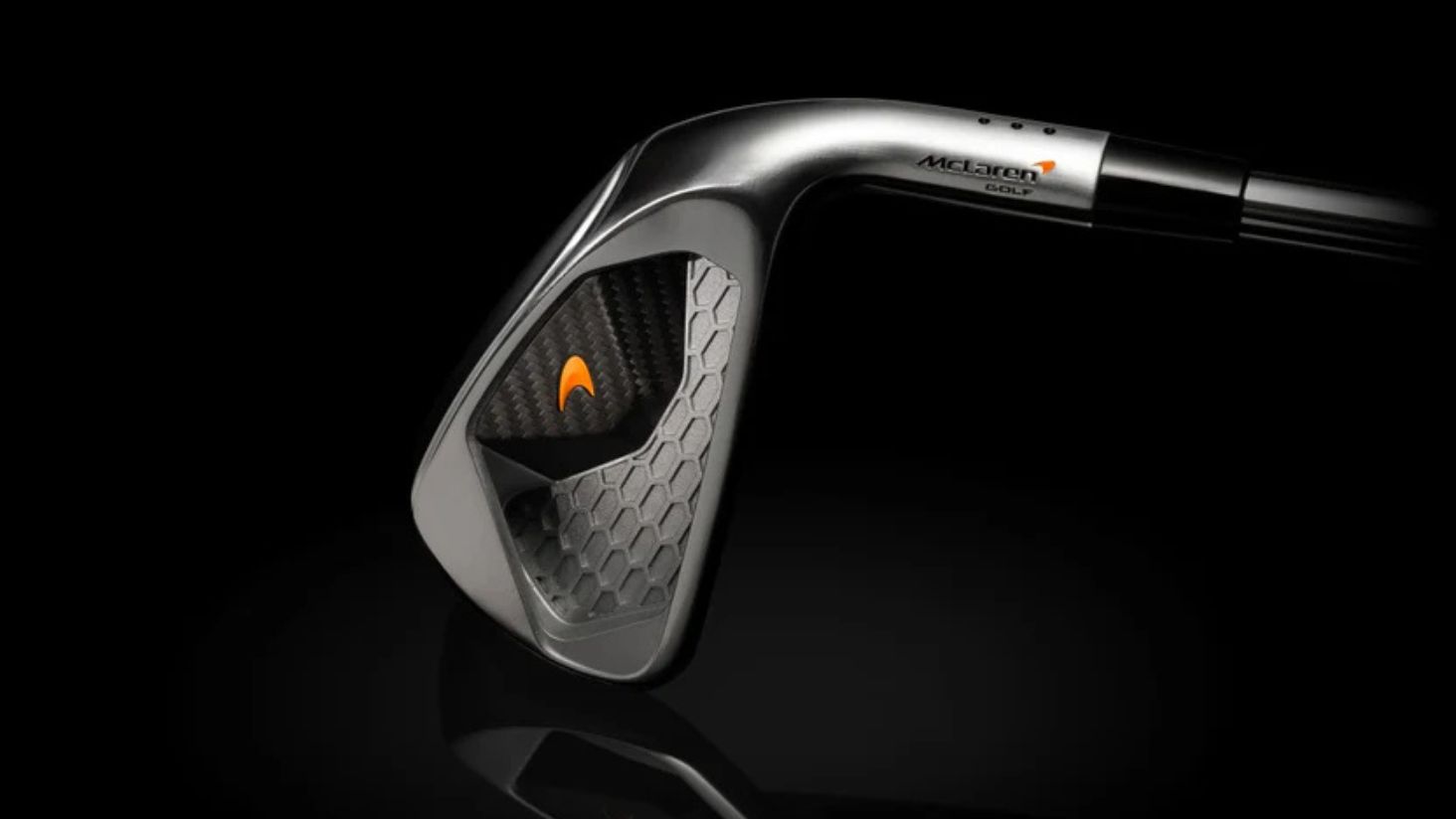
Series 3: Players distance-oriented, with carbon "bonnet" and focus on turf interaction
Series 3 is the counterpart for more forgiveness: McLaren places it in the Players Distance/Performance Cavity world. Compared to Series 1, the line is larger; the construction focuses more on perimeter/system weighting and on a sole that is designed to cushion more robust impact moments.
Core elements:
- also structural mesh + tungsten as a base
- a carbon fiber "bonnet" in the cavity area, which not only visually quotes the automotive origin, but according to the description also supports cushioning/structure and "packs" a central weight
- pronounced focus on sole design (camber/heel relief) to improve turf interaction
Blended Sets: Why Rose appears to be blending
The combo/blended set theme is not just marketing at McLaren - it also fits in with the model logic. National Club Golfer reports that Rose has hinted at playing Series 3 at the top (long irons) and Series 1 at the bottom (scoring irons). GOLF.com goes into more detail about possible long iron setups.
Translated into practice: more support in the long irons, but more control and "blade feel" in the short irons. Whether McLaren delivers this balance in everyday use for many players is ultimately a question of fitting and personal testing - but the conceptual direction is clear.
Price, availability, purchase path
The irons will be available from April 30, 2026. The price is 375 US dollars per Iron. According to the information available, distribution will be via selected fitting partners as well as direct online ordering.
Conclusion: Premium launch with a clear technology story - proof follows in the test
McLaren Golf is not launching with a "special model", but with a fully-fledged premium launch: two clearly separate iron families, a consistently communicated manufacturing philosophy (MIM), and a prominent player who not only advertises, but who, according to his own statement, was involved in the development and decision-making process.
What can be said with certainty at this stage: The positioning, production idea and design logic are unusually clear. What is still missing are independent tests: How stable are the ball flight data compared to established Player's Blades and Players Distance Irons? How is the dispersion within heads/lofts really? And how convincing is the sound/feel for players beyond the Tour?
McLaren has the stage - now it has to deliver on the Fairway.
Brandname
Title will go here and can run on two lines
Brandname
Title will go here and can run on two lines

Brandname
Title will go here and can run on two lines
Brandname
Title will go here and can run on two lines
Brandname
Title will go here and can run on two lines
Brandname
Title will go here and can run on two lines
Brandname
Title will go here and can run on two lines
Brandname
Title will go here and can run on two lines
Brandname
Title will go here and can run on two lines
Brandname
Title will go here and can run on two lines
Release date
06 May 2026
photos
The two new Iron series from McLaren Golf: Series 1 (left) and Series 3 (Photo: McLaren Golf)
